

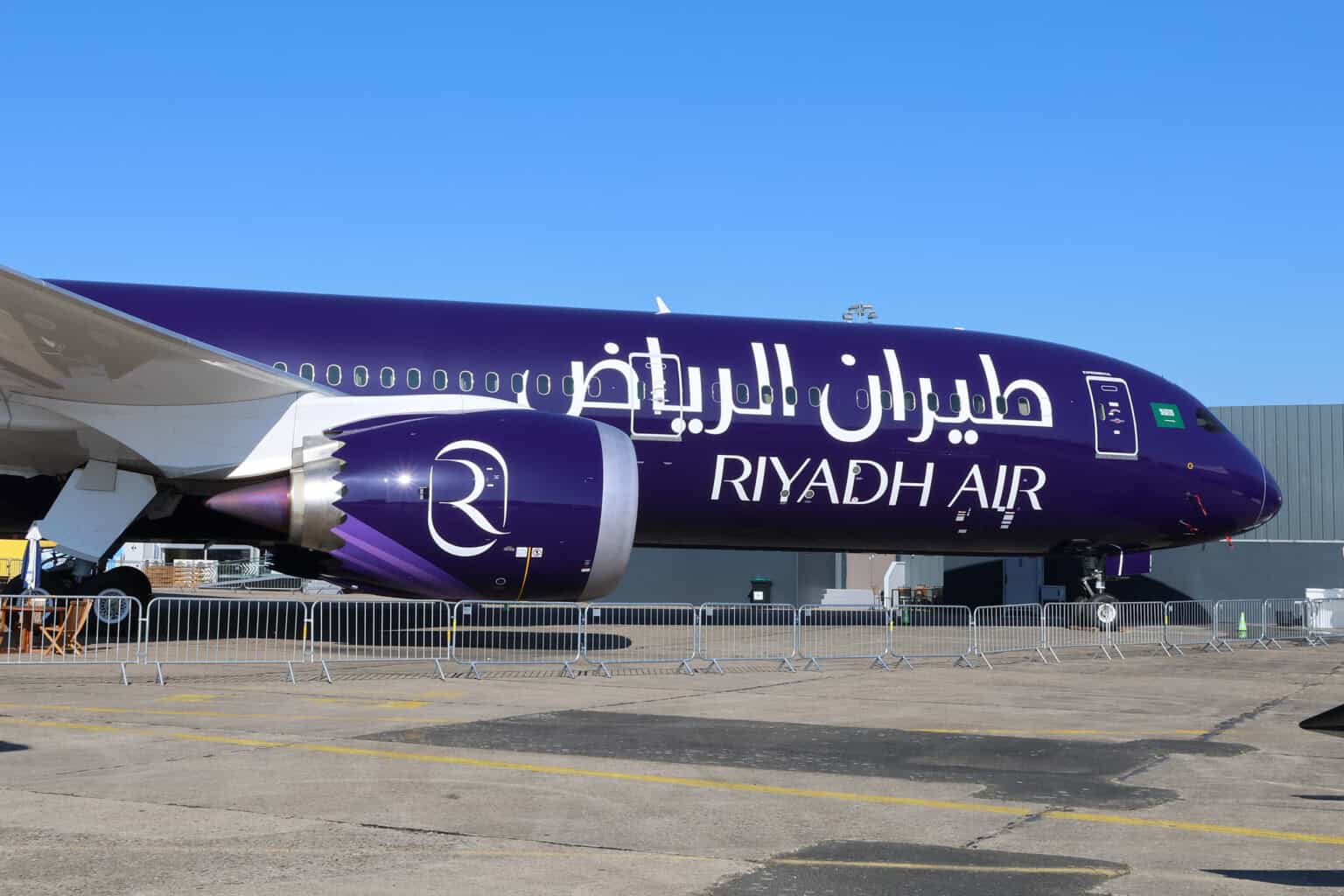
Riyadh Air began daily service between Riyadh and Manila on September 9, 2026, flying the route with a Boeing 787-9 Dreamliner. The Philippine capital is the 15th destination in the Saudi carrier’s launch network and its third new Asian route in about a month.
The route
Flight RX873 leaves King Khalid International Airport at 01:05 and reaches Ninoy Aquino International Airport in Manila at 15:55. The return, RX874, departs Manila at 17:25 and lands back in Riyadh at 22:15, according to schedule data published by AeroRoutes. Riyadh Air operates a 290-seat 787-9 on the route, in a three-cabin layout.
The airline said the service “provides an enhanced travel option for the Filipino community residing in Saudi Arabia, as well as business travelers and tourists traveling between Riyadh and Manila.” It framed the route around trade, education, and a growing Saudi interest in leisure travel to the Philippines.
That demand is real. Saudi Arabia hosted close to 22 percent of all overseas Filipino workers in 2024, more than 480,000 people, Arab News reported, and Saudi visitor spending in the Philippines rose 46 percent year over year that year. Manila follows Riyadh Air’s first Southeast Asia route, to Kuala Lumpur, which opened in early August, and new flights to Islamabad and Lahore later in the month.
Riyadh Air is not alone on the corridor. Saudia already links Manila with Jeddah and Riyadh, and Gulf competitors Emirates, Qatar Airways, and Gulf Air all serve the Philippine capital. The new arrival is betting that a single-terminal Riyadh hub and a young widebody fleet can pull connecting traffic that today routes through Dubai or Doha.
A network built around labor corridors
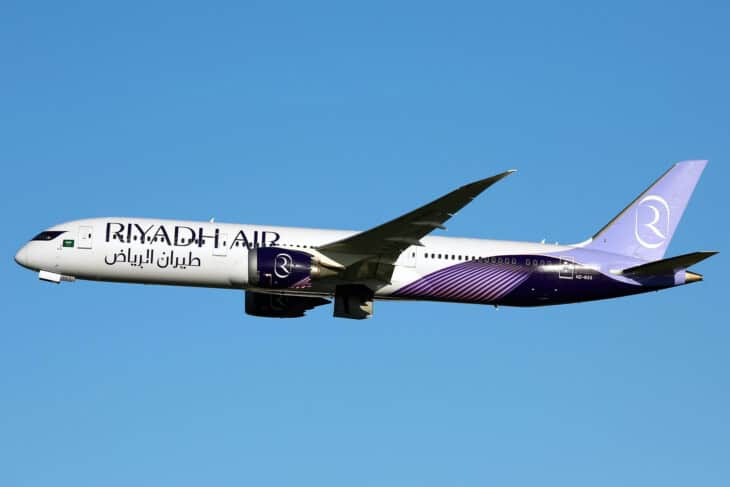
Riyadh Air is a state project. It is owned by Saudi Arabia’s Public Investment Fund, was unveiled in 2023, and flew its first commercial service, Riyadh to London Heathrow, on June 10, 2026. The launch plan calls for about 15 destinations by the end of 2026, growing to more than 100 by 2030.
The shape of that first map is telling. Alongside London, Paris, Madrid, and Manchester, the launch network leans heavily on routes that carry large expatriate workforces: Cairo, Amman, Mumbai, Dhaka, Islamabad, Lahore, and now Manila. These are high-volume, year-round markets, and funneling them through Riyadh helps fill the hub while the airline’s premium long-haul flying builds up.
Riyadh Air has the aircraft on order to grow quickly. It has taken delivery of only a handful of 787-9s so far, but holds firm orders for dozens more Boeing 787s, 31 Airbus A350-1000s, and 60 Airbus A321neo-family jets for shorter sectors. It has also signed cooperation deals with carriers it does not yet reach, including a network agreement with ANA of Japan.
Where this sits
Manila is near the end of Riyadh Air’s launch phase, not the start of a new one. The harder test comes next: filling widebody cabins on long, thin routes to Europe and eventually North America, where the airline runs straight into Emirates, Qatar Airways, and Turkish Airlines.
Sources and references used for research and fact-checking.
Get the Newsletter
The latest aviation news and stories sent to your inbox.
About the Author

Tim is the owner and lead editor of AeroCorner since 2019, overseeing aviation content covering aircraft, airlines, airports, and the broader aviation industry. Through years of researching, writing, editing, and publishing aviation-focused content, he has developed extensive practical knowledge of commercial aviation and air travel. Based in Asia and a frequent traveler himself, Tim also brings firsthand passenger experience to AeroCorner’s coverage. Outside of publishing, he has also explored aviation firsthand through hands-on flight training in New Zealand.