

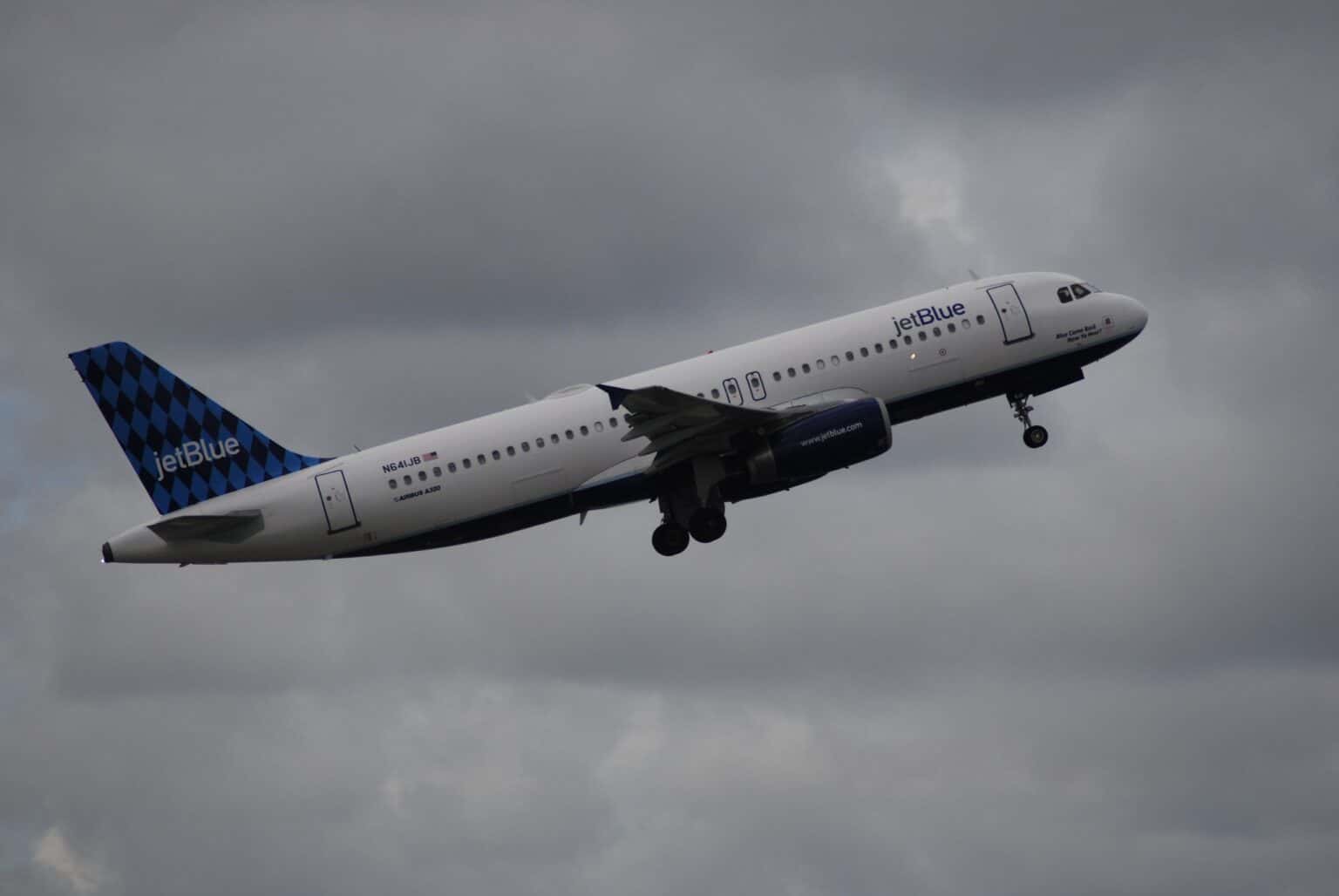
The FAA held flights bound for Fort Lauderdale-Hollywood International Airport (FLL) and Miami International Airport (MIA) at their departure airports on Wednesday morning, November 18, 2026, as thunderstorms crossed a South Florida where more than a foot of rain had fallen in places over the previous 24 hours. Both ground stops were lifted by mid-morning, but floodwater had closed some of the roads into Fort Lauderdale’s airport.
Broward County declared a local state of emergency effective 7 a.m., and Broward County Public Schools closed for the day, CBS News Miami reported.
Two short ground stops on Wednesday morning
The Fort Lauderdale stop, issued for thunderstorms, ran from 8:30 to 9:45 a.m. Eastern, the Latin Times reported. FOX Weather said the FAA’s National Airspace System Status page put the chance of an extension at 30 to 60 percent, though CBS News Miami reported it was lifted as of 9:45 a.m.
One outlet, WPBF, gave a window an hour later, from 9:30 to 10:45 a.m. The stop held flights departing from seven FAA air traffic control regions, Atlanta, Washington, Houston, Jacksonville, Fort Worth, Memphis and Miami, CBS12 reported.
Miami’s stop ran from 8:57 to 10:15 a.m. for weather and low visibility, the Latin Times reported. The airport’s own weather station showed why: at 9:13 a.m. the cloud base was broken at 1,000 feet, and by 9:49 a.m. visibility had dropped to 2.5 miles in rain and mist, with lightning to the east.
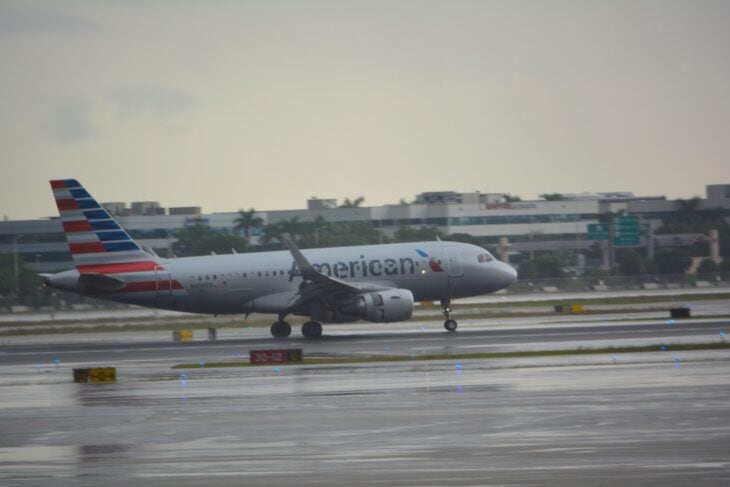

At Fort Lauderdale, the station recorded a gust of 30 mph (48 km/h) at 8:23 a.m. and lightning in the distance to the southeast. NBC 6 South Florida later reported that the ground stops at both airports had been lifted.
We could not find an official count of delayed or canceled flights at either airport for Wednesday at the time of writing.
A record day of rain at FLL
The storms arrived on top of a record. The National Weather Service’s climate report for Fort Lauderdale shows 5.72 inches (145 mm) of rain fell at the airport on Tuesday, November 17, against a previous record for the date of 1.80 inches set in 1959 and a normal of 0.12 inches.
That one day brought the airport’s November total to 10.80 inches, more than four times normal for the month so far. Elsewhere in Broward County it was worse: the weather service’s preliminary 24-hour totals on Wednesday morning topped out at 12.16 inches (309 mm) south of Plantation and 10.38 inches northwest of Hollywood.
On the ground, FLL said the Griffin Road entrance and parts of Perimeter Road were temporarily closed by flooding and standing water, and pointed drivers to U.S. 1 and Interstate 595, WPBF reported. FOX Weather reported that southbound I-95 was closed near the airport early Wednesday, and CBS News Miami said hundreds of motorists were stranded in floodwater in Broward.
The airport and Port Everglades stayed open through late Wednesday morning, according to CBS News Miami.
What a ground stop does, and why delays outlast it
A ground stop does not close an airport. Under the FAA’s own definition, flights headed to the affected airport are held at their departure point until it ends. The FAA’s training material says that prevents extended airborne holding and saturated airspace.
The FAA lists a reduced or zero arrival rate at the destination among the common triggers, and names adverse weather such as low ceilings and visibility as the most common cause of reduced rates. Our explainer on ground stops and flow control explains how the FAA meters traffic into a busy airport.
Lifting a stop does not clear the backlog at once. Flights held at their origins still arrive late, and CBS12 warned of residual delays as schedules recovered.
The South Florida stops came five days after November 13, when the FAA halted departures across the country in the nationwide ground stop after a telecommunications outage, and Wednesday’s stops were brief by comparison.
What passengers should do
Check the flight with the airline before leaving home, since the FAA says its airport status reports are not flight-specific. Anyone driving to FLL should allow extra time while flooded roads around the airport open and close.
If a flight is canceled and you decline the rebooking or voucher the airline offers, federal rule 14 CFR 260.6 requires a full refund of the fare, taxes and fees. The rule does not exempt weather, and our guide to the federal refund rules explains what counts as a significant delay.
More rain may follow. NBC 6 South Florida reported that a flood watch covers most of Miami-Dade, Broward and Palm Beach counties through Thursday evening, with drier air expected by the weekend.
Sources and references used for research and fact-checking.
- National Weather Service Miami, Climate report: Fort Lauderdale climate summary for November 17, 2026 (CLIFLL, issued 4:24 a.m. EST Nov 18)
- National Weather Service Miami, Public Information Statement: preliminary 24-hour precipitation totals (8:27 a.m. EST Nov 18, 2026)
- FAA / National Weather Service (ASOS), KMIA and KFLL METAR observations, November 18, 2026
- FAA, Air Traffic Control System Command Center advisory message help (Ground Stop, Ground Delay Program definitions)
- FAA, TFM Learning, Lesson 3: Traffic Flow Management
- eCFR / US DOT, 14 CFR 260.6, Refunding fare for flights cancelled or significantly delayed or changed by carriers
Get the Newsletter
The latest aviation news and stories sent to your inbox.
About the Author

AeroCorner News is the aviation news desk of AeroCorner.com. It covers accidents and incidents, safety rulings, airline and airport disruption, and new aircraft. It works from primary sources such as the NTSB, FAA, EASA and the manufacturers' own announcements.