

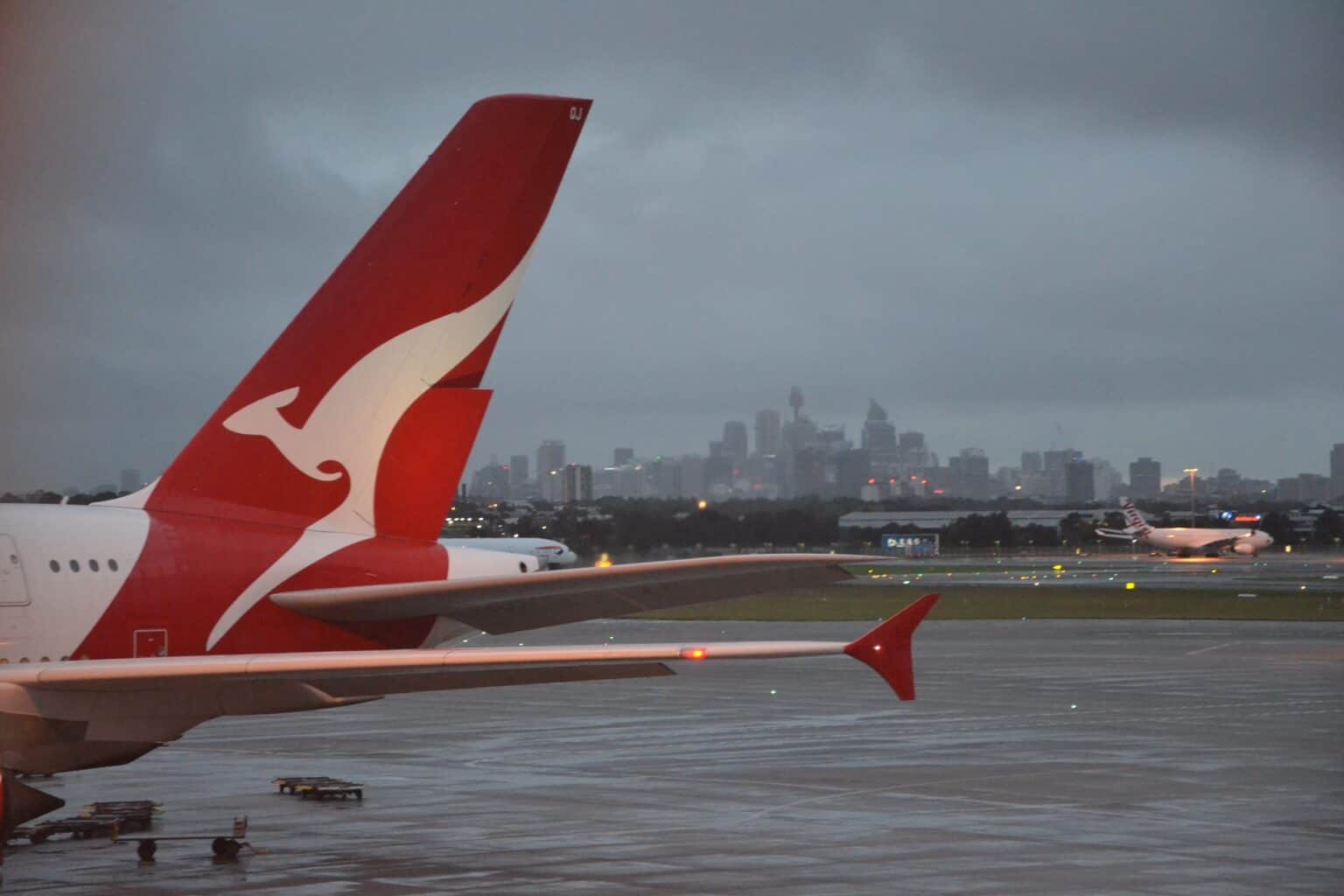
Sydney Airport lost more than 100 flights to the weather on Monday, November 16, 2026, as low cloud and wind slowed air traffic. ABC News counted 104 cancellations by Monday night, most of them on domestic routes.
By Tuesday the disruption had passed. Yahoo News Australia, which put Monday’s total at 106, reported no weather impact on Tuesday flights, though the airport still asked travelers to check with their airline.
What happened on Monday
Airservices Australia, which runs air traffic control, said that “factors including cloud and wind” were affecting operations at Sydney Kingsford Smith Airport. It said it was working with the industry “to safely manage air traffic demand throughout the day.”
Qantas said the weather led Airservices to put a ground delay program in place, which applied to every airline. “A small number of services were cancelled overnight in preparation for the ground delay program,” the airline told the ABC.
Qantas said affected customers were contacted directly and rebooked onto other flights within 24 hours of their original booking. It was also swapping in some larger aircraft to add seats and win back capacity.
A Sydney Airport spokesperson said on Tuesday that “weather-related operational restrictions resulted in a number of domestic flight cancellations” the day before.
The Bureau of Meteorology’s observations at the airport show what controllers were dealing with. A southerly wind blew at 15 to 24 knots for most of the day, gusting to 30 knots at 1:30 p.m., with passing showers and a cloud base mostly between about 800 and 1,400 feet (240 and 420 m) from 6 a.m. to 3 p.m.
Neither Airservices nor the airport said which runway configuration was in use or how many arrivals per hour the airport could accept on Monday.
Travelers stranded into the evening
Some travelers spent most of the day at the terminal. One passenger told the ABC her 10 a.m. Virgin Australia flight to Melbourne was canceled, and by 8 p.m. she had a seat on a 9:15 p.m. Jetstar flight instead.
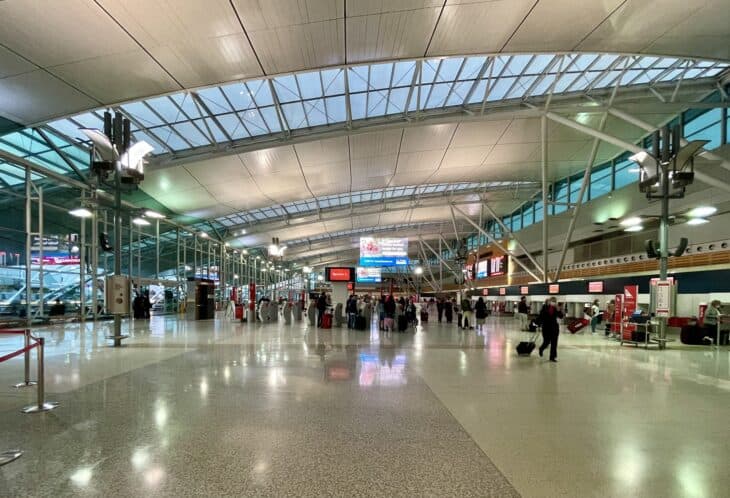

Another learned at the airport that her evening flight to Launceston was gone. Quoted $1,400 for a one-way ticket on another route, she chose to stay two nights in Sydney.
Virgin Australia ground staff also took industrial action on Monday, the ABC reported, part of a pay dispute at four airports. Virgin said it had “contingencies in place” so the action would not affect operations, and Airservices and the airport both pointed to the weather.
Why Sydney cancels flights instead of delaying them
A ground delay program holds flights at their departure airport when the destination cannot take every scheduled arrival. Airservices describes it as a tool to balance demand against capacity and cut airborne delays, so jets wait at the gate instead of circling over Sydney.
Sydney has less room than most big airports to absorb that waiting. Federal law caps it at 80 takeoffs and landings in any regulated hour and 1,360 a day, and every airline needs a slot to operate there.
Its curfew then shuts the door at night. Under the Sydney Airport Curfew Act, most aircraft cannot take off or land between 11 p.m. and 6 a.m., so a backlog cannot simply be flown off late into the evening.
That helps explain why airlines trim schedules in advance, as Qantas did overnight, rather than let delays build toward the curfew. The cost falls on the passengers whose flights are picked.
The recovery period rule
Since reforms in 2024 and 2025, the federal government can declare a recovery period after a significant disruption at Sydney, raising the cap from 80 to 85 movements an hour for up to two consecutive hours. It cannot be used during curfew hours or lift the 1,360 daily limit. The department had not published a declaration for November 16 when this story was written.
The airport’s own guidance warns that bad wind days carry a steep price. When strong westerly gusts above 20 knots force Sydney onto its single east-west runway, it says 15 to 20 flights may need to be canceled for every hour the wind persists.
Sydney now has a second option at night. Western Sydney International, which took its first passengers in October, is named in the curfew rules as available for night aircraft movements.
What travelers should expect next
The Bureau of Meteorology said on Tuesday that the storm risk over New South Wales had mostly cleared. By early Tuesday afternoon, its airport station showed a southeasterly of 10 to 12 knots and mostly clear skies.
Forecasters expect mostly settled weather in northeast New South Wales and southeast Queensland on Wednesday and Thursday. Another trough approaching from the west could bring storms again late in the week or into the weekend, so anyone flying through Sydney then should watch their airline’s app.
Sources and references used for research and fact-checking.
- Bureau of Meteorology, Sydney Airport (94767) latest weather observations
- Airservices Australia, Air traffic flow management
- Department of Infrastructure, Transport, Regional Development, Communications, Sport and the Arts, Demand Management at Sydney Airport
- Department of Infrastructure, Transport, Regional Development, Communications, Sport and the Arts, Curfew at Sydney Kingsford Smith Airport
- Sydney Airport, Weather at Sydney Airport
Get the Newsletter
The latest aviation news and stories sent to your inbox.
About the Author

AeroCorner News is the aviation news desk of AeroCorner.com. It covers accidents and incidents, safety rulings, airline and airport disruption, and new aircraft. It works from primary sources such as the NTSB, FAA, EASA and the manufacturers' own announcements.