

On November 17, 2026, Transportation Secretary Sean Duffy took a $50.1 billion request for air traffic control and airports to Senate Republicans, four days after a telecommunications fault forced the FAA to halt departures nationwide. The figure is $20 billion more than the request the administration sent Congress the day before the ground stop.
Several Senate Republicans said they do not expect to fund all of it. All 13 Democrats on the Senate Commerce Committee, meanwhile, want a full account of what went wrong before any new money moves.
What the $50.1 billion would buy
Duffy, FAA Administrator Bryan Bedford and White House budget director Russ Vought sent the request to House and Senate appropriators in a joint letter, the Department of Transportation said. The letter ties it directly to the November 13 ground stop, saying the case for the money became “undeniable” less than 24 hours after the previous ask.
The request has five lines. The table sets them against the $30.1 billion version that Duffy and Vought sent lawmakers days earlier, as broken down by AVweb and by Reuters.
| Line | Earlier ask (Nov 12) | New ask (Nov 17) |
|---|---|---|
| Digital architecture: automation, telecom, traffic flow tools | $10.1 billion | $10.1 billion |
| Control towers | About $2 billion | $10 billion, up to 140 towers |
| New en route centers | Not listed | $10 billion, five centers |
| Airports and terminals | About $18 billion | $20 billion ($10 billion infrastructure, $10 billion terminals) |
| Total | $30.1 billion | $50.1 billion |
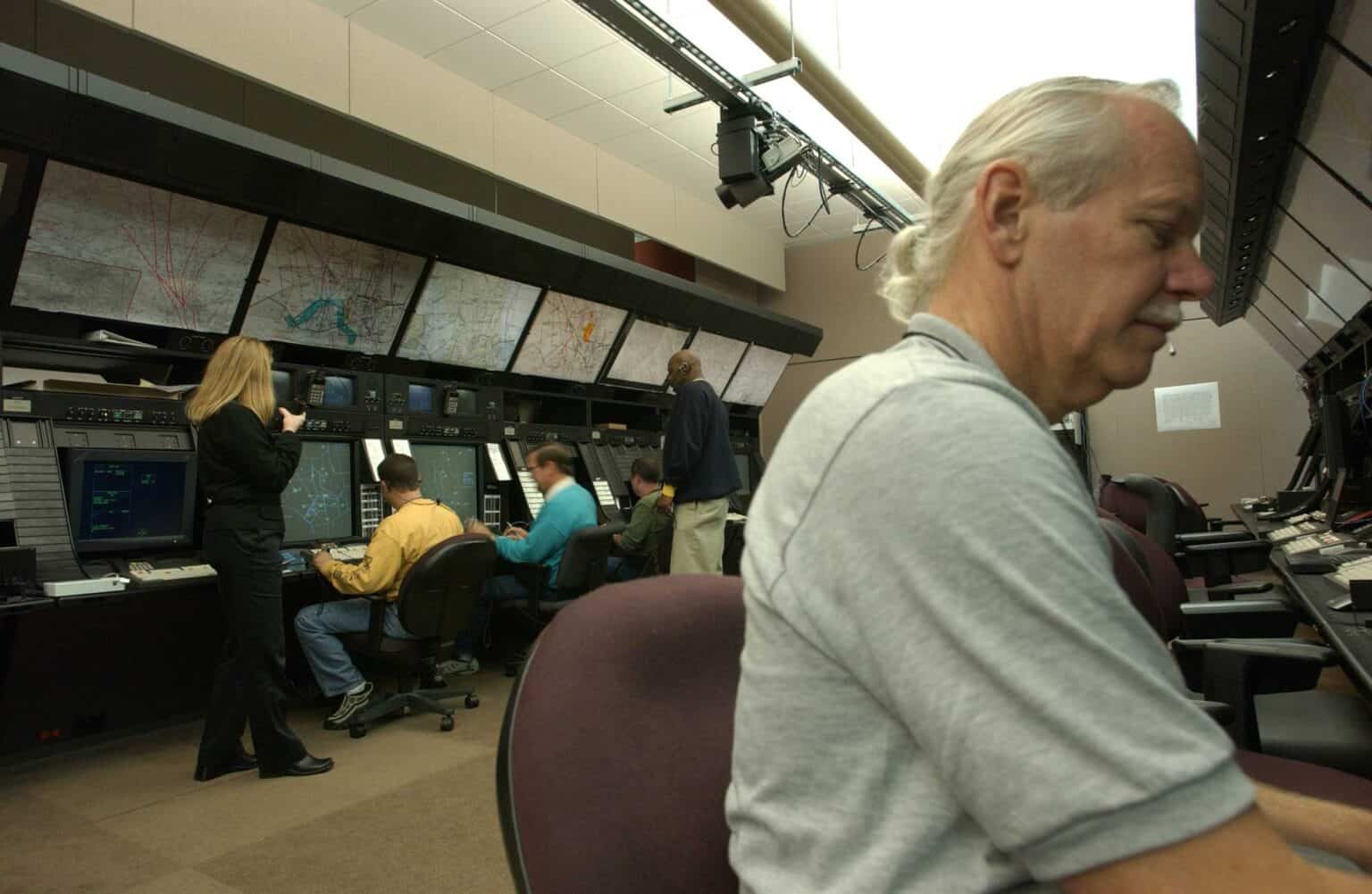
The largest new item is $10 billion for five consolidated Air Route Traffic Control Centers, which would replace the 22 centers that handle high-altitude traffic today. The newest of those was built in 1969, according to the department.
Those centers are where last week’s failure showed up. The FAA says instability hit 17 of its 22 en route centers before it stopped departures.

From $30 billion to $50 billion in eight weeks
Duffy first floated a $30 billion request on September 22, a day after a cut cable stopped flights at five Northeast airports. AVweb reports that Sen. Eric Schmitt introduced it as the Modern Skies Act on September 28.
Every version sits on top of the $12.5 billion over five years that Congress approved in the July 2025 reconciliation law. The department says all of that money is allocated and on track to be in place by the end of 2028.
Senators were less sure. Lawmakers noted that about $8 billion of the $12.5 billion has not yet been spent, Roll Call reported.
Duffy’s answer, in remarks the department published, is that the FAA pays only on delivery. He said new radars ordered from plants in Florida and Kansas have not arrived yet, so he still holds some of that money.
He also said he “wanted to put everything on the table” and that Congress would “pressure test” the list. Watchdogs had already warned that the rebuild risked cost overruns and disruptions.
What senators said
Commerce Committee chairman Ted Cruz said, “I don’t think the full $50 billion will be funded,” according to Roll Call, and added that the money should focus on safety modernization. Sen. Thom Tillis said he expects a package somewhere between $10 billion and $30 billion.
Sen. John Kennedy said he was “furious when they went from $30 billion to $50 billion,” CBS News reported. Sen. Rick Scott wrote that the airlines should “have skin in this game too.”
Schmitt, who sponsored the earlier bill, sounded more supportive, saying “the needs are pretty broad and pretty deep.” Republicans are weighing a second reconciliation bill as the vehicle, and the administration wants the money approved before Democrats take control of Congress in January.
The Democrats’ letter, led by ranking member Maria Cantwell and dated November 16, asks how additional funding would address the weaknesses exposed on November 13. “Identifying the device that failed does not establish why it failed,” the senators wrote.
Citing figures from contractor L3Harris, they say the copper-to-fiber switch means converting 3,648 routers to Juniper devices, of which 400 are installed and 69 operational. They asked for a pause on new installs and a joint briefing with the FAA, L3Harris and Juniper by November 23.
The FAA says it says its initial investigation points to a radar site in Amarillo, Texas, and a radio site in El Dorado, Arkansas, where L3Harris had been installing a new router. It has paused installing the Juniper units. Duffy said on Tuesday that the root cause is still not clear and that he asked the FBI to help analyze the router.
Where the money meets the outage
Only one of the five lines, the $10.1 billion for digital architecture, covers the telecom network that failed on November 13, and it is the same amount the administration asked for before the ground stop. The $40 billion for centers, towers and airports is mostly construction, and Democrats have asked the department to explain how the extra money would address the November 13 failure.
The two sides also disagree on the cause. The FAA says the instability came from legacy equipment and that none of its upgraded towers went down, while the Democrats wrote that the new Juniper routers “seem to be the problem.”
Sources and references used for research and fact-checking.
- US Department of Transportation, Trump Administration Calls on Congress to Fully Fund Air Traffic Control Modernization with $50.1 Billion Investment
- US Department of Transportation, ICYMI: Duffy Shares Update on Nationwide Ground Stop Investigation, Briefs Senators on Need for Air Traffic Control Modernization
- US Senate Commerce Committee (Democrats), Commerce Committee Democrats Demand Clear & Fact-Based Answers From DOT, FAA on Root Cause of Nov. 13th Nationwide Ground Stop
- FAA, Nationwide Ground Stop: Questions and Answers
Get the Newsletter
The latest aviation news and stories sent to your inbox.
About the Author

AeroCorner News is the aviation news desk of AeroCorner.com. It covers accidents and incidents, safety rulings, airline and airport disruption, and new aircraft. It works from primary sources such as the NTSB, FAA, EASA and the manufacturers' own announcements.