

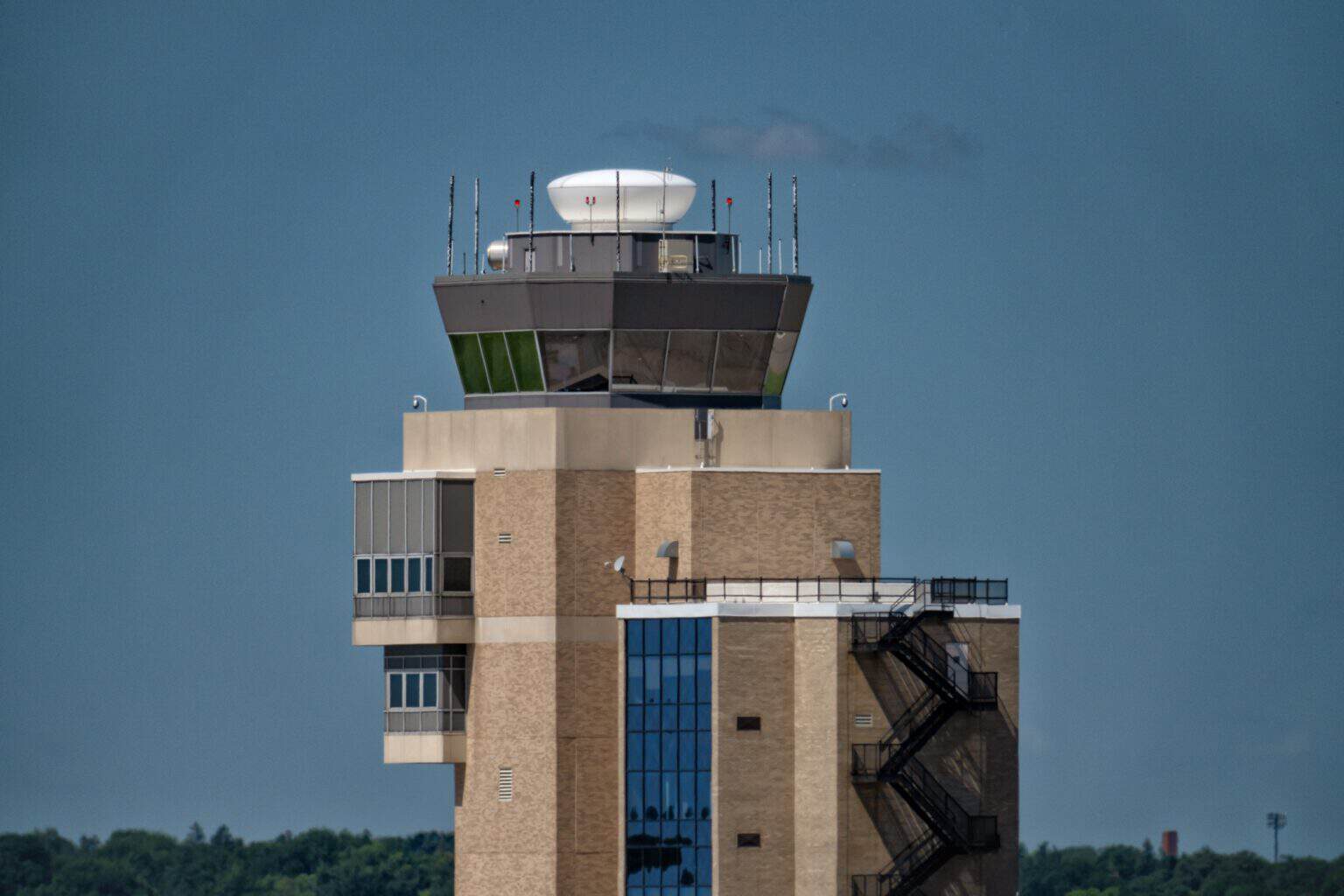
The router problem that officials say set off Friday’s nationwide FAA ground stop hit a telecommunications network that federal auditors have flagged as an outage risk for more than 15 years. On Saturday, November 14, 2026, FAA Administrator Bryan Bedford said that “every agency within the government for better than two decades has flagged this FTI system as a critical weakness,” according to Yahoo News.
The Washington Post reported the same day that the FAA had been warned for years about the risks of the repair work. The written record bears that out, from a 2010 inspector general review of an outage during an earlier fiber upgrade to a Government Accountability Office report published two months ago.
What officials say happened
Transportation Secretary Sean Duffy said the trouble began with “routine maintenance”: a copper-to-fiber upgrade by contractor L3Harris at a remote site, after which a router overloaded a critical communication system, TechCrunch reported. He said officials were still checking whether it was installer error or a faulty router.
Rebecca Guy, the FAA’s acting chief technology officer, said “two places” had been pinging the network at a very high rate. She said the FAA disabled both and has started a root cause analysis.
Bedford said the router swap was ordinary work, separate from the agency’s $12.5 billion modernization effort, CNBC reported. He said officials had not yet identified the root cause.
Duffy told reporters, “I’m stuck with L3Harris, who owns this network.” L3Harris said it is supporting the FAA’s investigation, and that it and other companies have completed more than 70% of the planned switch from copper wiring to fiber.
A 2009 outage followed a similar path
The closest precedent is in a June 2010 letter from the Department of Transportation’s inspector general to Congress. It reviewed a November 19, 2009 failure of the same network, the FAA Telecommunications Infrastructure, or FTI, which hit 129 air traffic facilities.
The cause, the inspector general found, was a temporary router that an engineer for L3Harris’s predecessor, Harris Corporation, had configured incorrectly. It happened while the network’s data services were being moved onto a new fiber optic network.
That error sent air traffic data down the wrong routes and blocked about 75% of the network’s routes for five hours, causing 820 flight delays.
The 2010 letter then looked ahead. Both FAA and Harris officials acknowledged “an inherent risk of critical outages” as more services moved onto the fiber network, and the inspector general said upgrades at sites supporting eight en route centers “could also introduce risks to network operations if not properly planned and managed.”
It also said the FAA tended to take a “reactive, rather than proactive” approach to network vulnerabilities. An independent panel the FAA convened after the outage recommended automated tools for router configuration changes and a model of the network to test changes and upgrades.
Whether Friday’s fault was a configuration error at all is not yet known: officials say they are still weighing installer error against a defective router.
Sept. 2008
First warning on configuration. The DOT inspector general recommends better controls over the contractor’s FTI equipment configuration.
Nov. 19, 2009
FTI outage hits 129 facilities. A misconfigured router during the fiber transition blocks about 75% of routes for five hours.
June 2010
Inspector general reports to Congress. FAA and Harris acknowledge an “inherent risk of critical outages” as the transition continues.
Sept. 2024
GAO counts aging systems. 51 of the FAA’s 138 air traffic systems rated unsustainable and 54 potentially unsustainable.
Sept. 14, 2026
GAO warns of disruptions. The accelerated rebuild lacks an integrated schedule for 11,389 projects.
Nov. 13, 2026
Nationwide ground stop. Officials link it to a router installed during copper-to-fiber work at a remote site.
What the GAO said two months ago
On September 14, 2026, the GAO published GAO-26-107992, its review of the FAA’s plan to rebuild air traffic control, which AeroCorner covered at the time. It said the telecommunications backbone links about 5,000 FAA facilities and still relies on copper cables from the 1960s, on technology its providers no longer support.
The FAA had planned to replace 5,170 copper lines with fiber and move nearly 30,000 services to Internet Protocol by September 2030. The rebuild pulled that deadline forward 21 months, to December 2028, and by May 2026 the agency reported 2,560 lines replaced.
The GAO’s warning was about how the work was being done. The FAA had not tied its 11,389 projects into one integrated master schedule, so separate projects were booked into the same sites repeatedly, generally without resolving conflicts or reducing disruption to air traffic control.
“In essence, the FAA is buying delivery speed at the risk of cost uncertainty and potential disruptions,” the GAO wrote. The Transportation Department only partially agreed with its two recommendations, a lifecycle cost estimate and an integrated schedule.
Why the timing of the work matters
The GAO describes this network as the communications backbone connecting FAA facilities, radars, voice systems and flight data, so a fault at one site can reach far beyond it. Bedford said the FAA ordered Friday’s nationwide stop because it could not rule out that the instability would cause a sensor to lose its connection with aircraft.
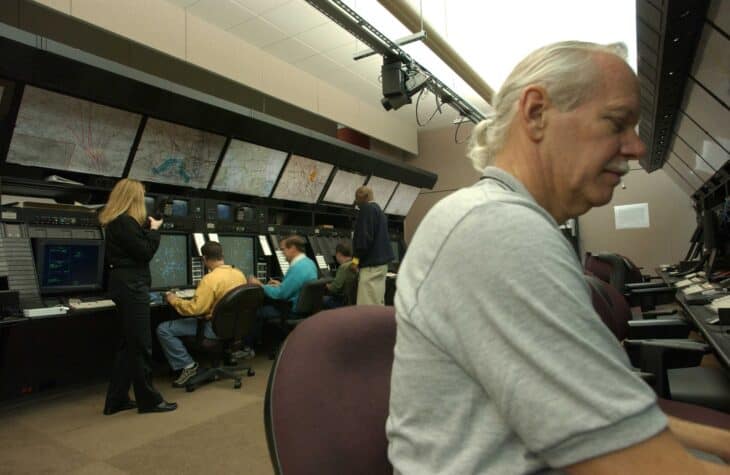

Changing equipment on a live network carries that risk every time. National Air Traffic Controllers Association President Nick Daniels said such work should be done “when there’s the fewest airplanes in the sky,” and Duffy said “there’ll be a reevaluation of when we do this work.”
Bedford was blunt about the near term: “Let’s not kid ourselves; it will continue to break until we replace it.”
Congress wants answers
House Transportation Committee leaders Sam Graves and Rick Larsen said in a joint statement that the committee will “thoroughly review the issues that led to this nationwide ground stop.”
Duffy said, “We’re going to hold people accountable.” Travelers still sorting out refunds after the ground stop faced more than 800 Sunday cancellations as of 9 p.m. ET Saturday, according to Yahoo News’ live coverage.
Sources and references used for research and fact-checking.
- U.S. Department of Transportation Office of Inspector General, CC-2010-012: Review of the November 19, 2009 FAA Telecommunications Infrastructure outage (letter to Chairmen Oberstar and Costello, June 17, 2010)
- U.S. Government Accountability Office, GAO-26-107992, Air Traffic Control Systems: Ambitious New Modernization Effort Needs to Improve Cost and Schedule Planning (Sept. 14, 2026)
Get the Newsletter
The latest aviation news and stories sent to your inbox.
About the Author

AeroCorner News is the aviation news desk of AeroCorner.com. It covers accidents and incidents, safety rulings, airline and airport disruption, and new aircraft. It works from primary sources such as the NTSB, FAA, EASA and the manufacturers' own announcements.