

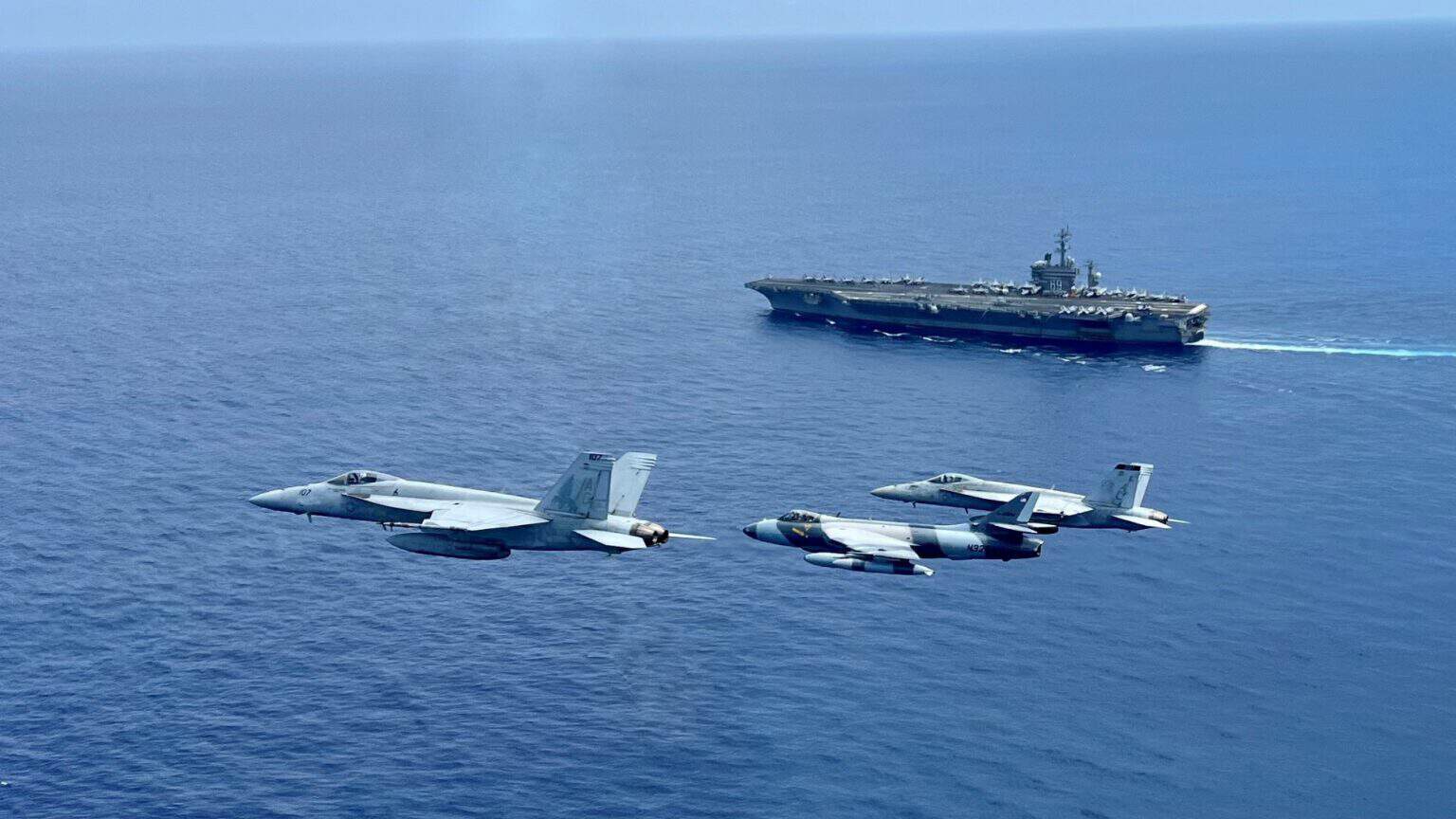
Hawker Hunter N345AX crashed into the Pacific Ocean about 6 miles (10 km) northwest of Morro Bay, California, around 6:50 p.m. local time on Tuesday, September 22, 2026. The pilot, the only person on board, ejected and was pulled from the water by the U.S. Navy.
The jet was flying for the Airborne Tactical Advantage Company (ATAC), a contractor that plays the enemy in U.S. military air combat training. After the crash, the Navy grounded every Hawker Hunter ATAC operates while the accident is investigated.
What happened off Morro Bay
The FAA said in a statement quoted by KSBY that the MK-58 Hawker Hunter went down “after the pilot reported an engine issue,” and that the FAA will investigate. On the radio the pilot declared a mayday, saying “I have lost thrust in my engine,” ABC News reported.
The Coast Guard told reporters it was notified of the downed aircraft at about 7:07 p.m. It said the pilot was rescued by the Navy, and that it found neither the jet nor any wreckage. Mariners in the area were asked to report debris or pollution to Coast Guard Sector Los Angeles-Long Beach.
ATAC’s director of global military sales, John Rupp, told ABC News the pilot was in “great condition, great spirits, and no significant injuries,” though still in a hospital in Fresno. According to ABC, the jet was based at Naval Base Ventura County and was one of four ATAC aircraft on a mission supporting the Navy and Marine Corps. The NTSB is also investigating.
Why a 1956 fighter was flying Navy training missions
ATAC, a Textron subsidiary, supplies “red air”: civilian-flown jets that simulate hostile fighters so Navy, Air Force and other U.S. military crews can train against a real opponent instead of using their own frontline jets to play the enemy.
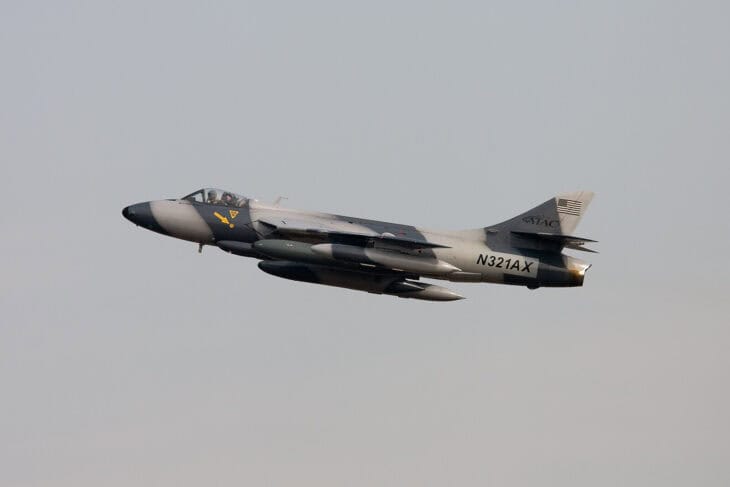
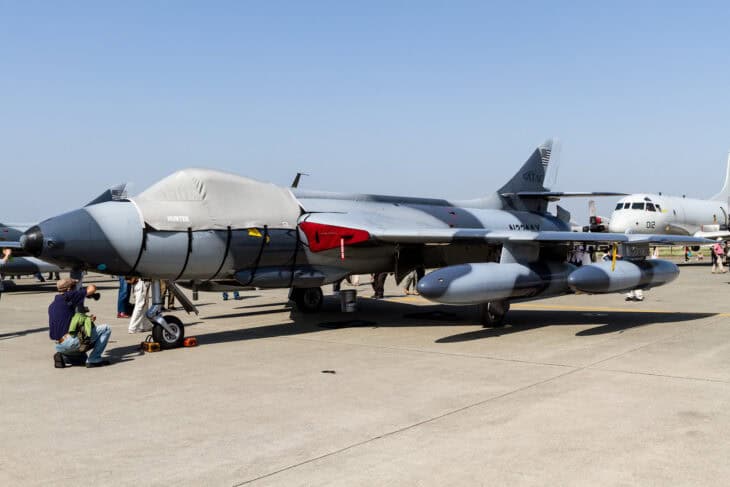
The Hawker Hunter fills that role as a single-seat jet that ATAC pitches as a transonic fighter in the air-to-air role, CBS Los Angeles noted. The catch is that it has one Rolls-Royce Avon engine, so a loss of thrust over the ocean leaves the pilot little choice but to eject. ABC reported that ATAC flies 22 Hunters.
N345AX had one of the better-known histories in the type. It was built for the Royal Air Force as XF947, rebuilt for the Swiss Air Force, and then spent two decades as the privately owned UK airshow jet G-PSST, nicknamed “Miss Demeanour,” before a Canadian contractor bought it in 2017.
1956
Built for the RAF. Delivered as Hunter F.4 XF947.
1972
Swiss service. Converted by Hawker to F.58A standard, it enters Swiss Air Force service as J-4104 and flies there until 1996.
1997
Becomes G-PSST. Bought by Jonathan Whaley, restored and flown on the UK airshow circuit as “Miss Demeanour.”
2017
Sold to Lortie Aviation. Leaves the UK register, is repainted grey and later flies as N345AX with ATAC.
September 22, 2026
Lost off Morro Bay. The pilot ejects after reporting a loss of thrust.
The second ATAC Hunter lost off California in a year
This is not the first time an ATAC Hunter has gone into the Pacific on this stretch of coast. On October 15, 2025, another ATAC Hunter came down about 5 miles (8 km) southwest of Big Sur after flying from Oxnard, AVweb reported. That pilot also ejected and was recovered by a Navy helicopter.
Two losses of the same type in under a year, both over the Pacific, is why the grounding matters. Rupp described the stand-down as a standard precaution that ATAC supports, according to ABC.
What is still unknown
The cause of the thrust loss has not been determined, the Coast Guard had found no wreckage at last report, and no date had been given for ATAC’s Hunters to return to flying. Findings will come from the FAA and NTSB investigation.
With the NTSB involved, a preliminary report on N345AX is the next public document to watch for. It usually sets out facts only, and a final probable cause takes far longer.
Get the Newsletter
The latest aviation news and stories sent to your inbox.
About the Author

Tim is the owner and lead editor of AeroCorner since 2019, overseeing aviation content covering aircraft, airlines, airports, and the broader aviation industry. Through years of researching, writing, editing, and publishing aviation-focused content, he has developed extensive practical knowledge of commercial aviation and air travel. Based in Asia and a frequent traveler himself, Tim also brings firsthand passenger experience to AeroCorner’s coverage. Outside of publishing, he has also explored aviation firsthand through hands-on flight training in New Zealand.