

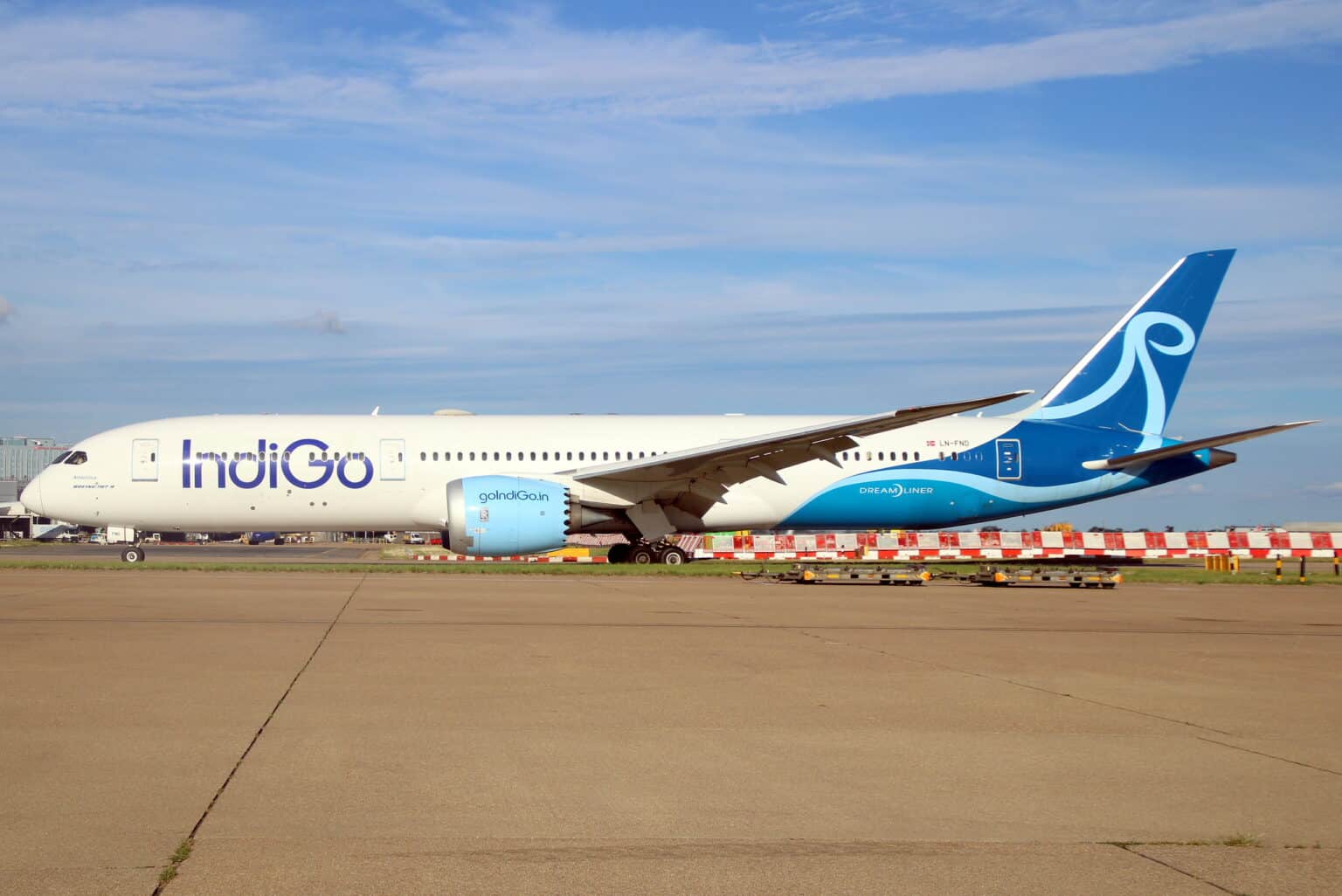
IndiGo flight 6E4 left London Heathrow for Delhi on the evening of September 22, 2026, and was back on the ground at Heathrow 78 minutes later. The Boeing 787-9 stopped its climb over the English Channel and squawked 7700, the transponder code for a general emergency.
A 78-Minute Round Trip
The aircraft, registered LN-FND, lifted off runway 27R at 20:05 BST, according to reporting by AIRLIVE. It halted its climb at 24,000 feet as it reached the Channel.
The crew then selected 7700 on the transponder. That put the flight on every controller’s screen as an emergency and gave it priority handling on the way back to London.
6E4 touched down on runway 27L at 21:23 BST. Emergency medical services met the aircraft, and fire trucks escorted it to a remote stand, where it arrived at 21:37 BST.
What is not yet known
IndiGo has not said publicly what prompted the emergency, and no official cause had been released at the time of writing. The presence of medical crews at the aircraft does not by itself confirm a medical emergency: a 7700 brings the full ground response whatever the underlying problem turns out to be.
What Squawking 7700 Actually Does
7700 is one of three emergency codes a pilot can dial into a transponder. The other two are 7600 for a radio failure and 7500 for a hijacking.
The code does one thing well: it tells everyone at once. The flight’s radar return changes on every controller’s display within range, so a crew too busy to talk on the radio still gets the message across.
What it does not do is say what is wrong. The same four digits cover an engine problem, a sick passenger, smoke in the cabin and a pressurization fault, which is why the response on the ground is built for the worst case rather than the likeliest one.
Fire crews and ambulances are typically rolled out whatever the cause turns out to be. That standard response, and the handling that comes with it, is the same one that follows any emergency a pilot declares to air traffic control.
Leveling off partway through a climb is also routine when something is unresolved. A lower altitude keeps an aircraft nearer to an airport and shortens the descent if the situation worsens, though no source has confirmed why this crew stopped at 24,000 feet.
Why an Indian Carrier’s London Flight Wears a Norwegian Tail Number
LN-FND is a Norwegian registration. The 787-9 is a Norse Atlantic Airways aircraft flying for IndiGo under what IndiGo calls a damp lease, which is why an Indian airline’s Heathrow service carries a Norwegian tail number.
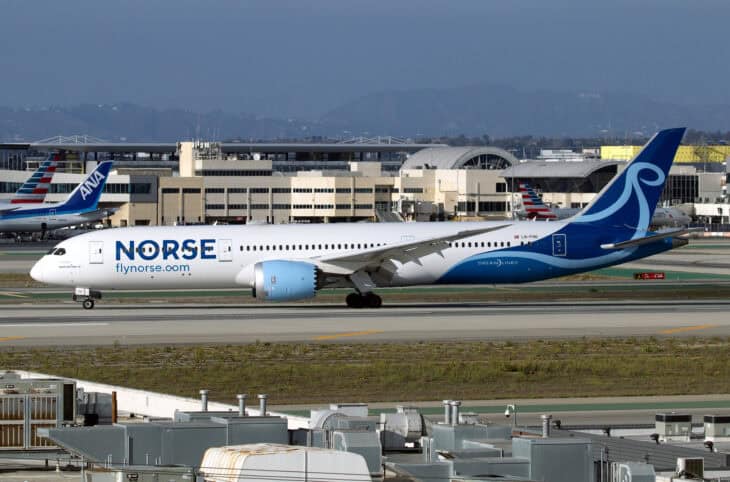
That arrangement is ending. IndiGo will suspend its widebody operations on October 25, 2026, with the leased aircraft going back to Norse around the end of the month and the agreement discontinued from November 1.
At its peak the deal covered six 787-9s. One went back to Norse in June 2026 after IndiGo dropped its Manchester route, leaving five to be redelivered.
Norse pointed to higher fuel prices, airspace disruption and the longer routings forced by the Middle East conflict, saying these had hurt the commercial case for the arrangement. IndiGo cited a challenging environment driven by geopolitical tensions.
Heathrow is one of the casualties. IndiGo plans to pause its London service pending delivery of its own Airbus A350-900s, and to move Mumbai to Amsterdam onto the narrowbody A321XLR from October 25.
Norse has said it is in ACMI discussions with several carriers covering up to five aircraft, and that its board has begun a formal process that may result in a sale, merger or partnership.
Sources and references used for research and fact-checking.
Get the Newsletter
The latest aviation news and stories sent to your inbox.
About the Author

Tim is the owner and lead editor of AeroCorner since 2019, overseeing aviation content covering aircraft, airlines, airports, and the broader aviation industry. Through years of researching, writing, editing, and publishing aviation-focused content, he has developed extensive practical knowledge of commercial aviation and air travel. Based in Asia and a frequent traveler himself, Tim also brings firsthand passenger experience to AeroCorner’s coverage. Outside of publishing, he has also explored aviation firsthand through hands-on flight training in New Zealand.