

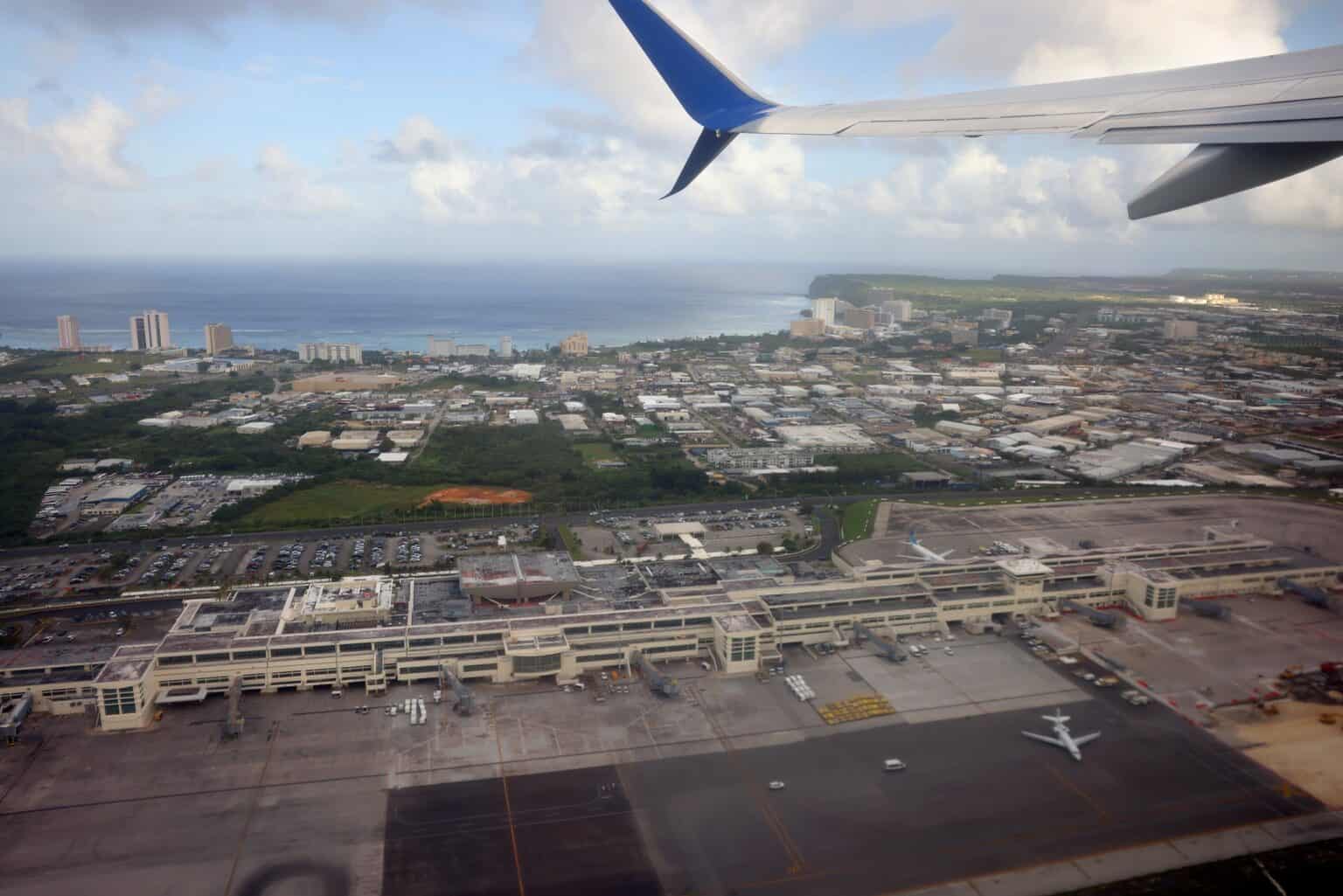
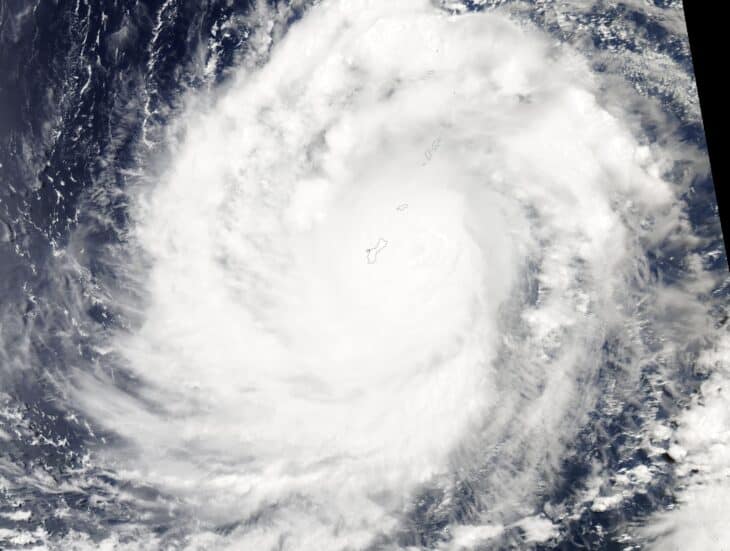
Super Typhoon Champi passed about 10 miles (16 km) south of the village of Merizo in southern Guam at around 4:26 a.m. local time on Sunday, October 18, 2026. United Airlines, Japan Airlines and Korean Air have cancelled flights to and from Guam, and the airport’s own flight board lists cancellations into midday Monday, October 19.
When AeroCorner checked the Guam International Airport board at about 5 p.m. local time on Sunday, it listed 35 cancelled arrivals and departures between late Sunday afternoon and midday Monday. United accounted for 19 of them, with Jin Air, Korean Air, Air Seoul, Air Busan, Philippine Airlines and Japan Airlines making up the rest.
Where the storm and the airport stand
Guam Homeland Security said Champi was upgraded to a super typhoon by its closest approach, with the strongest typhoon-force winds over southern Guam. RNZ reported maximum sustained winds of about 140 mph (225 km/h) as it passed, and a last-minute turn to the west that kept the eyewall largely offshore.
.jpg)
At the airport itself, sustained winds ran at about 45 to 55 mph (72 to 88 km/h), with gusts approaching 80 mph (128 km/h), RNZ reported from a briefing by National Weather Service Guam meteorologist Landon Aydlett.
Guam was still in Condition of Readiness 1, its highest typhoon readiness level, in the government’s 12:45 p.m. Sunday bulletin. Tropical storm-force winds of 40 to 50 mph (64 to 80 km/h), gusting to 60 mph (97 km/h), were expected into the afternoon, and everyone was told to stay inside a sturdy concrete building until COR 4 is announced.
On Sunday morning, the island’s Joint Information Center said President Trump had approved Governor Lou Leon Guerrero’s request for an emergency declaration, which authorizes FEMA to coordinate emergency assistance.
The Guam Power Authority said about 51% of distribution feeders were online at 9 a.m. Sunday, including those serving most of Hotel Row in Tumon, where many visitors stay. Public and Catholic schools will be closed on Monday.
What travelers on United, JAL and Korean Air can do
United has published a travel waiver for the storm, listed under the name Tropical Depression Champi (29W). It covers tickets bought on or before October 14 for travel between October 15 and 19 to or from Guam, Saipan, Chuuk, Kosrae, Pohnpei, Kwajalein and Majuro.
Affected passengers can move to a United flight departing between October 14 and October 25 with no change fee or fare difference, as long as the cabin and cities stay the same. For a different destination, United still waives the change fee, though a fare difference may apply.
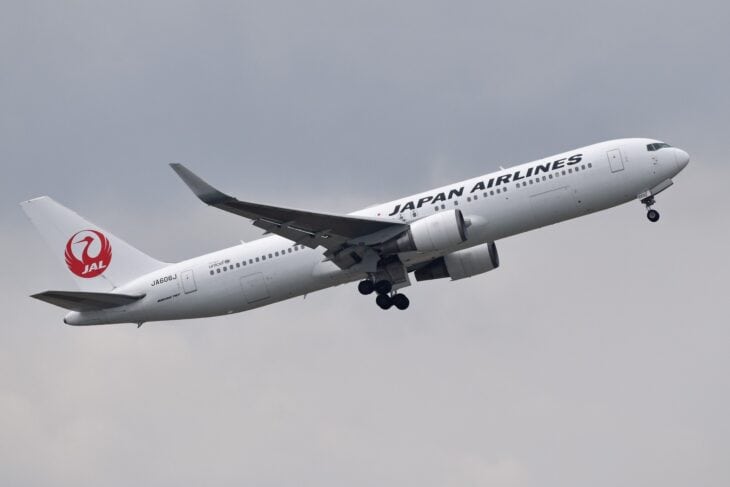
Japan Airlines cancelled its Guam and Tokyo Narita flights on October 17 and 18, Rus Tourism News reported from the airport’s schedules, and the board lists Sunday’s JL942 to Narita as cancelled. Korean Air’s Incheon flights KE416 and KE417 on Sunday and KE418 early on Monday are listed as cancelled; passengers on both carriers should check rebooking terms with the airline.
.jpg)
The board shows a restart from midday Monday, starting with a Star Marianas arrival from Rota at noon and Japan Airlines’ JL941 from Narita at 2:40 p.m. Korean Air’s KE415 from Incheon and United’s UA827 from Narita are listed to follow that afternoon.
A listing is not a promise. In an October 16 advisory, the airport authority said airlines make their own cancellation and delay calls, often within 24 hours for short-haul flights, and urged passengers to check their airline’s app before heading to the terminal.
Why an open airport does not mean flights are flying
The airport authority says the airport itself stays open through storms. Executive Manager John Quinata said in the same advisory that it “remains open 24/7, even in severe weather conditions when there is no flight activity,” but warned that services could be severely limited and told travelers to shelter elsewhere.
So the restart is an airline decision, not a reopening order. On April 16 this year, the authority declared itself fully operational while Guam was still in COR 1, and said the resumption of flights would be determined by each airline.
In July, after Bavi passed, the authority first completed an inspection of its facilities and runways, then announced on July 7 which flights airlines had told it would resume that afternoon. Even then, JL941 from Narita was pushed back from 2:40 p.m. to 5:35 p.m.
Monday’s board starts with arrivals. JL941 is due in from Narita at 2:40 p.m., and Japan Airlines’ return flight, JL942, is listed to depart for Narita at 4:40 p.m.
Our explainers cover why flights get cancelled and whether planes can fly in hurricanes.
Champi is the latest major storm to threaten the Marianas this year, after Sinlaku in April, Bavi in July and Tropical Storm Choi-wan earlier in October, RNZ noted. Government teams planned an initial damage assessment of roads, utilities and public facilities on Sunday afternoon to decide whether conditions are safe for the public.
Sources and references used for research and fact-checking.
- Guam Homeland Security / Office of Civil Defense, JIC Release No. 12: Super Typhoon Champi Made its Closest Point of Approach
- Guam Homeland Security / Office of Civil Defense, JIC Release No. 13: President Approves Emergency Declaration for Guam
- Guam Homeland Security / Office of Civil Defense, JIC Release No. 14: Tropical Storm-Force Winds Continue
- A.B. Won Pat International Airport Authority, Guam, Passengers Advised to Check Flight Status with Respective Airlines (Oct 16, 2026)
- A.B. Won Pat International Airport Authority, Guam, Flight Schedule (arrivals and departures)
- United Airlines, Travel alerts: Tropical Depression Champi (29W)
- A.B. Won Pat International Airport Authority, Guam, Guam Airport is Fully Operational (Apr 16, 2026)
- A.B. Won Pat International Airport Authority, Guam, Airport Open for Operations First flights Arriving Late Afternoon (Jul 7, 2026)
Get the Newsletter
The latest aviation news and stories sent to your inbox.
About the Author

AeroCorner News is the aviation news desk of AeroCorner.com. It covers accidents and incidents, safety rulings, airline and airport disruption, and new aircraft. It works from primary sources such as the NTSB, FAA, EASA and the manufacturers' own announcements.