

On Wednesday, August 5, 2026, U.S. Rep. Gabe Vazquez, D-N.M., sent a letter to the NTSB and the Defense Department demanding a joint briefing on what role military GPS jamming played in a medevac crash that killed four people near Ruidoso, New Mexico, in May.
“Military technology definitely had a role to play in the flight path of this tragic crash,” Vazquez said in the letter. The NTSB, in its own statement the same day, said it has “not yet determined the probable cause or any contributing factors to the accident.”
What happened on May 14
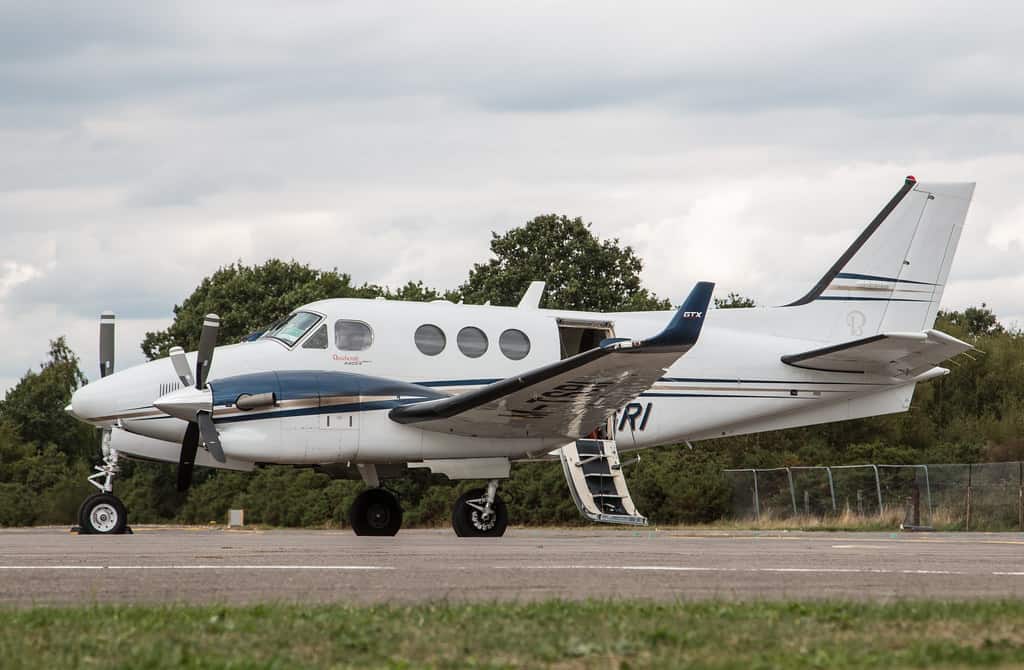
A Beechcraft King Air, registration N249CP, was flying an air ambulance mission for Trans Aero MedEvac, operated by Generations Jets. It departed Roswell Air Center shortly before midnight, bound for Sierra Blanca Regional Airport near Ruidoso to pick up a patient.
The two pilots and two flight nurses aboard were killed when the aircraft struck the Capitan Mountains at roughly 9,950 feet, minutes after air traffic control let the military resume a scheduled GPS jamming exercise at White Sands Missile Range.
00:00:26
GPS lost. The crew reports losing GPS capability and asks Albuquerque air traffic control for heading assistance.
00:01:17
Jamming-stop request. The controller calls a supervisor, who asks the military to pause the exercise.
~00:10
Jamming resumes. Believing the aircraft is on a visual approach, the supervisor tells the military it can restart jamming.
00:15
Impact. The King Air strikes terrain in the Capitan Mountains, about 250 feet from its last recorded position.
According to the NTSB’s preliminary report, released June 18, the night had zero percent moon illumination, and the automated weather system at the destination airport was out of service, leaving the crew without a local altimeter setting for either available instrument approach.
What the crew was told beforehand
NOTAMs issued ahead of the flight warned that Sierra Blanca’s automated weather system was down and that military GPS jamming was scheduled in the area, according to the NTSB. Both conditions were in effect when the crew lost navigation guidance.
The post-impact fire grew into the Seven Cabins Fire, which went on to burn more than 30,000 acres of New Mexico forest, according to KOB4.
Why a lawmaker is escalating now
Vazquez, whose district includes Ruidoso, met privately with NTSB Chair Jennifer Homendy on July 14 for an update on the investigation. Wednesday’s letter is a more public step, pulling the Defense Department into the same room as the NTSB rather than letting the two agencies brief Congress separately.
The military routinely schedules GPS jamming exercises over New Mexico test ranges and publishes them as NOTAMs so pilots can plan around the affected airspace and altitudes. The system relies on the exercise stopping and starting cleanly around live traffic.
That coordination runs through phone calls between air traffic control and range operators, exactly the link that failed in the minutes before this crash.
Trans Aero MedEvac was flying under Part 135 air ambulance rules, which allow the kind of single-pilot-capable, on-demand flying this mission needed but do not require the redundant crew and dispatch layers of a scheduled airline. Beechcraft’s King Air family is a mainstay of that mission profile across the United States.
Reality check
A congressional letter compels neither agency to act on any particular timeline, and the NTSB has not named a probable cause. A full report, which typically follows a preliminary release by a year or more, is still pending.
Neither the NTSB nor the Defense Department had publicly responded to the letter as of Wednesday evening.
Sources and references used for research and fact-checking.
Get the Newsletter
The latest aviation news and stories sent to your inbox.
About the Author

Tim is the owner and lead editor of AeroCorner since 2019, overseeing aviation content covering aircraft, airlines, airports, and the broader aviation industry. Through years of researching, writing, editing, and publishing aviation-focused content, he has developed extensive practical knowledge of commercial aviation and air travel. Based in Asia and a frequent traveler himself, Tim also brings firsthand passenger experience to AeroCorner’s coverage. Outside of publishing, he has also explored aviation firsthand through hands-on flight training in New Zealand.