

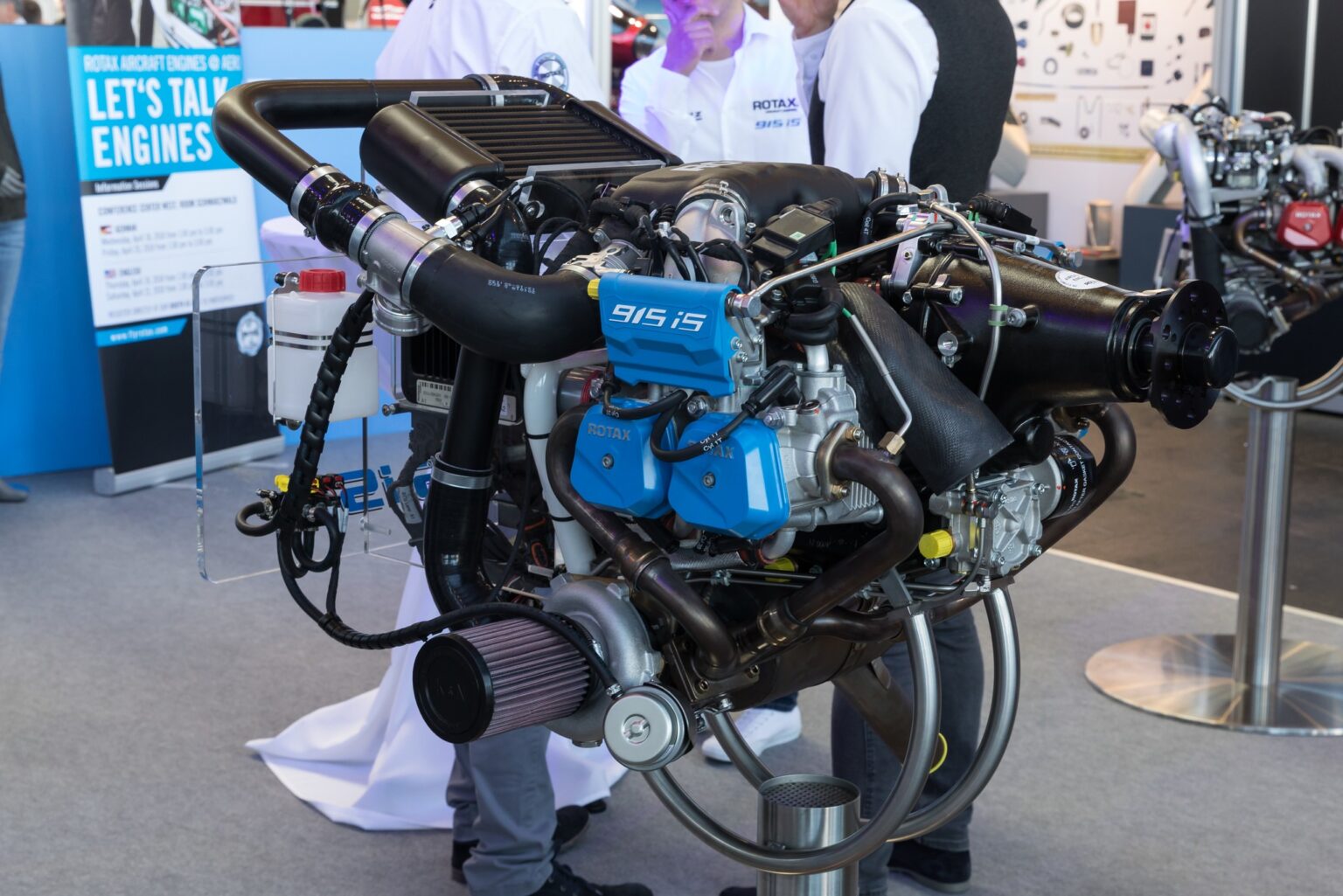
The FAA has adopted an airworthiness directive requiring owners of certain type-certificated Rotax 915 iSc and 916 iSc engines to replace a turbocharger valve housing that can crack and leak oil. AD 2026-22-03 is scheduled for Federal Register publication on Monday, November 2, 2026, and the FAA estimates it affects 51 engines on US-registered airplanes.
The FAA says the work must be done before further flight after the rule takes effect. It skipped the usual prior comment period, citing the risk and the fact that it has not determined how quickly the cracks grow.
What the AD requires
The FAA rule incorporates EASA Emergency AD 2026-0178-E, issued September 14, 2026, with two exceptions: it substitutes its own effective date and does not adopt EASA’s remarks. The requirements themselves therefore sit in the EASA document.
Replacement applies to what EASA calls Group 1 engines. Those have valve housing part number 956492 on a turbocharger whose serial number appears in Appendix 4.1 or 4.2 of Rotax Alert Service Bulletin ASB-2026-002, unless the turbocharger has already been reidentified with an engraved “C” after the fix.
Group 2 engines, which have no affected housing, still face a parts rule. From the effective date, no turbocharger with an affected housing may be installed on any engine.
A housing already replaced under the original bulletin counts toward compliance, with one condition. The turbocharger must get its engraved “C” within 30 days after the effective date, or when it is removed from the engine if that comes first.
The rule gives two effective dates
The DATES section of the rule and the Federal Register record say November 23, 2026. Paragraph (a) of the AD itself says November 4, 2026, the date also given for the incorporation by reference. The Federal Register record showed no correction as of October 31, and the compliance deadline is tied to this date, so the earlier one is the cautious one to plan around until the FAA clarifies.
| Engine models | Which directive lists them |
|---|---|
| 915 iSc2 C24, 915 iSc3 C24, 916 iSc2 A, 916 iSc3 A, 916 iSc2 C24, 916 iSc3 C24 | FAA AD 2026-22-03 and EASA 2026-0178-E |
| 915 iSc2 A, 915 iSc3 A, 916 iSc3 B | EASA 2026-0178-E only (no FAA type certificate, the FAA says) |
| 915 iS2 A, 915 iS3 A, 915 iS2 C24, 915 iS3 C24, 916 iS2 A, 916 iS3 A, 916 iS2 C24, 916 iS3 C24 | Neither; UK CAA Mandatory Permit Directive 2026-005-E |
A crack found on the production line
The rule traces to a report from the factory: during final testing of a Rotax 916i engine on the production line, oil was found leaking near the valve housing. A manufacturer investigation found cracks in the housing wall because it was too thin, the result of a non-conforming manufacturing process.
Rotax’s original bulletin, dated September 3, 2026, attributes the manufacturing issue to a supplier. It also explains the hazard: oil reaching hot exhaust components could produce smoke and, in the worst case, an engine compartment fire.
The FAA carries that chain further, to an in-flight engine shutdown and possible loss of control. The rule describes no in-flight event, only the production-line finding and the risk if a cracked housing stays in service.
Rotax revised its bulletin on September 11, EASA’s emergency AD took effect September 16, and the UK CAA’s directive followed on September 18.
Comments on the US rule remain open until December 17, 2026, and the FAA says it may amend the rule because of them. The comment period does not delay the requirement.
What owners and mechanics should check
Rotax’s original bulletin starts with paperwork: compare the serial numbers against its appendices, then check the engine logbook, because a housing may have been replaced during earlier maintenance. Spare turbocharger assemblies, part number 893102, are also in scope and need the replacement before they go on an engine.
The part number alone will not settle it. Rotax’s parts list shows the replacement housing as 956492 too, and EASA defines the affected part by the turbocharger serial number and the engraved “C”.
The FAA estimates the job at 2 work-hours at $85 an hour, plus $150 in parts, or $320 per engine and $16,320 across the US fleet. The rule notes that some of that may be covered under warranty, according to the manufacturer.
Rotax’s original bulletin offers a labor credit for work by a technician with a current applicable iRMT rating. It treats the task as heavy maintenance, ending with an engine test run and a logbook entry.
Which aircraft use these engines
The FAA rule names no aircraft and does not say which airframes carry the 51 US engines. EASA says only that the engines are known to be installed on various general aviation airplanes and powered sailplanes, either by the manufacturer or through a Supplemental Type Certificate.
One known example is the Bristell B23 Turbo, which Rotax said in 2022 was certified with the 915 iSc, without giving the exact variant. In April 2026, AFM.aero reported Bristell showing a B23-916iS, described as the first certified aircraft with the 916iS, though neither source places these aircraft on the US register.
The “c” in iSc matters here, because it marks the certified versions of these aircraft piston engines. Rotax’s June 2026 overview lists only iSc models under its FAA type certificate for this family.
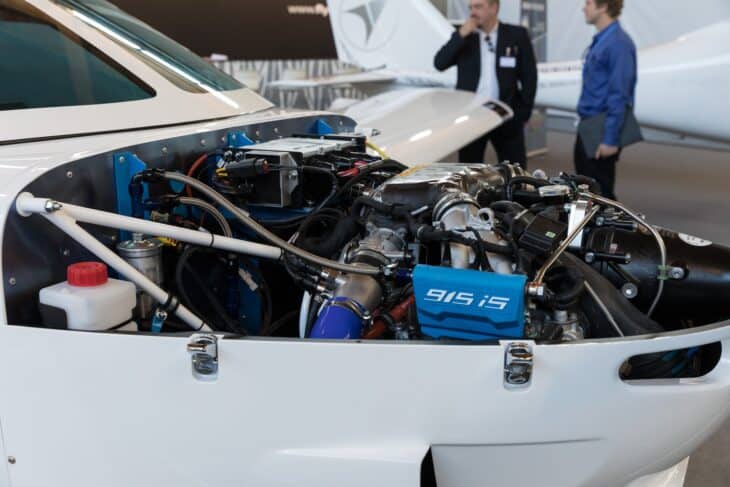

The uncertified 915 iS and 916 iS are outside the FAA’s list, but not outside the problem. Rotax’s bulletin appendix covers both certified and ASTM-compliant engines, and New Zealand’s CAA says the UK directive’s engines are known to fly on light sport aircraft, microlights and amateur-built aircraft.
Rotax’s original bulletin calls for the exchange before next flight on listed installed engines, at the latest one year from its September 3 issue.
This is at least the third FAA AD on Rotax engines published in 2026, after a March rule on a missing propeller gearbox collar nut on the 915 iSc C24 models and an August rule on 912 and 914 gearboxes missing an oil spray nozzle and screws.
Sources and references used for research and fact-checking.
- FAA / Federal Register, Airworthiness Directives; BRP-Rotax engines, AD 2026-22-03, FR Doc 2026-22307, 91 FR 68882
- EASA, Emergency AD 2026-0178-E, issued 14 September 2026 (copy hosted by the Czech CAA)
- BRP-Rotax, Alert Service Bulletin ASB_A-2026-002, initial issue, 3 September 2026 (copy hosted by aerovfr.com)
- UK Civil Aviation Authority, Emergency Mandatory Permit Directive 2026-005-E
- Civil Aviation Authority of New Zealand, Rotax series airworthiness directive schedule, issued 24 September 2026
- BRP-Rotax, Type Certification / Validation overview, June 2026
- BRP-Rotax, Bristell B23 certified with the Rotax 915 iSc, February 4, 2022
- FAA / Federal Register, Airworthiness Directives; BRP-Rotax engines, FR Doc 2026-04280
- FAA / Federal Register, Airworthiness Directives; BRP-Rotax engines and various aircraft, FR Doc 2026-16512
Get the Newsletter
The latest aviation news and stories sent to your inbox.
About the Author

AeroCorner News is the aviation news desk of AeroCorner.com. It covers accidents and incidents, safety rulings, airline and airport disruption, and new aircraft. It works from primary sources such as the NTSB, FAA, EASA and the manufacturers' own announcements.