

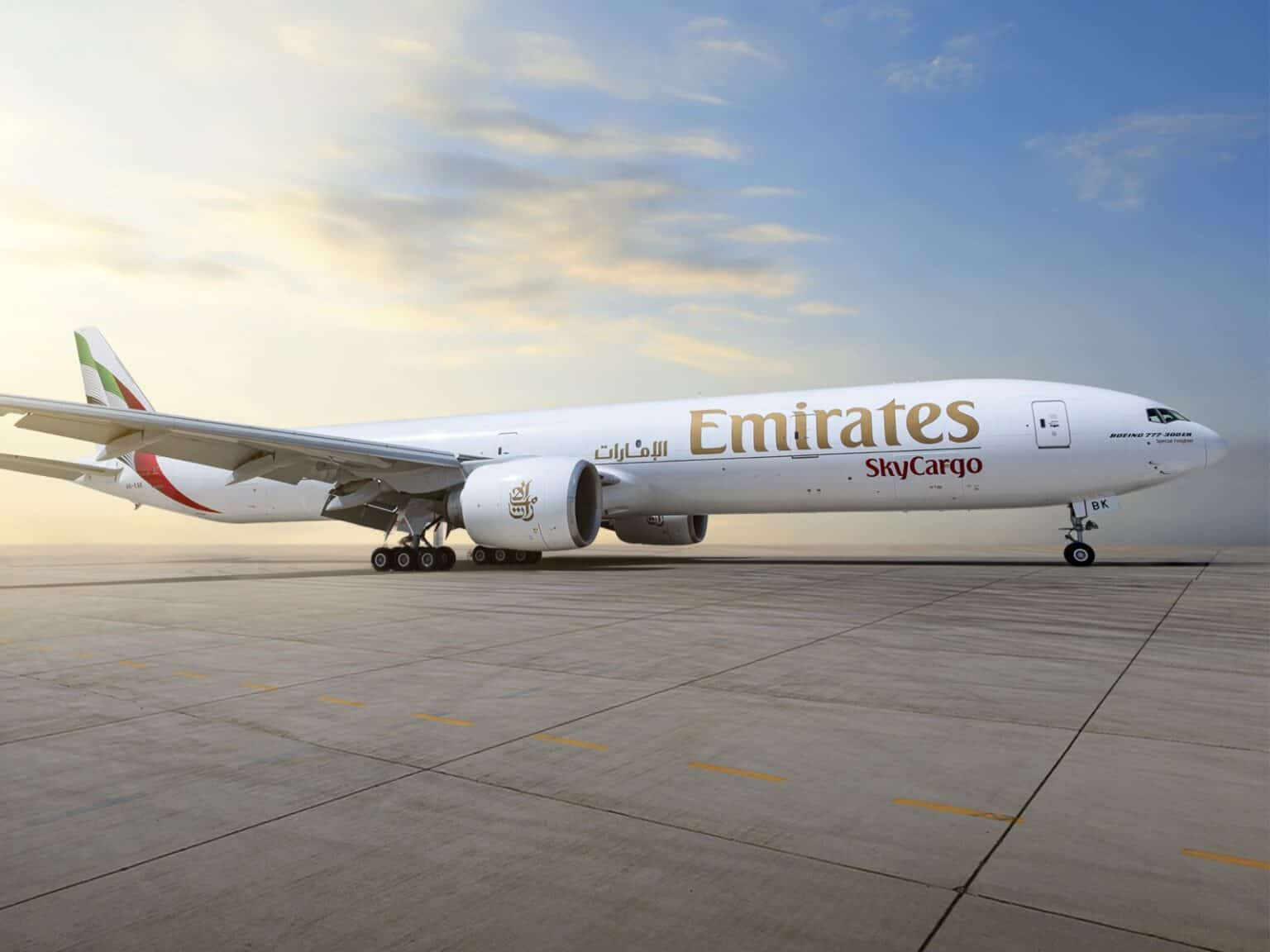
Emirates SkyCargo flight EK9774, a Boeing 777 freighter flying from Dubai World Central to Hong Kong, diverted to Muscat, Oman, on Friday morning, November 27, 2026, because of what the airline called a technical issue. Emirates said the aircraft landed uneventfully and the crew disembarked safely.
The airline has not said what the problem was. In a statement on X, it said the freighter was expected to leave for Hong Kong later the same day, after a technical evaluation.
What the tracking data shows
Flightradar24 data lists the aircraft as A6-EBK, a Boeing 777-300ER converted to a freighter (777-300ERSF). It took off from Dubai World Central at 7:07 a.m. local time (03:07 UTC), about 40 minutes ahead of its 7:45 a.m. schedule, and the site records the flight as diverted to Muscat International Airport.
The flight-tracking account Flightdrama reported that the crew set the emergency transponder code 7700 after departure and turned toward Muscat. Emirates’ statement does not mention an emergency declaration, so that detail rests on the tracking data alone.
The same account said the jet’s track dropped out over the Gulf of Oman at 03:42 UTC and that the aircraft was seen on the runway at Muscat about 13 minutes later. That puts the landing less than an hour after takeoff. Crowd-sourced tracking often loses aircraft over open water, so the gap is not, on its own, a sign of anything wrong.
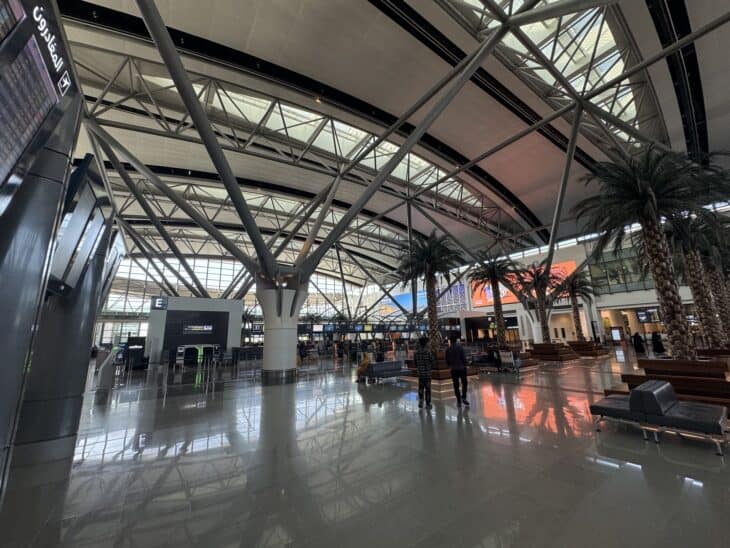
Muscat sits about 216 miles (348 km) southeast of Dubai World Central in a straight line. As of 3 p.m. local time, about seven hours after the landing, Flightradar24 showed no onward departure for A6-EBK.
The aircraft: Emirates’ first converted 777
A6-EBK is not an ordinary SkyCargo jet. Emirates announced on June 30, 2026, that this airframe was its first Boeing 777-300ER passenger jet converted into a freighter, and that it would enter commercial service with a flight from Hong Kong to Dubai carrying over 100 tonnes (220,000 pounds) of cargo.
According to that Emirates release, the converted jet carries 100 tonnes of payload in 811 cubic meters (28,640 cubic feet) of volume across 47 pallet positions. That is 10 more pallet positions and 25% more volume than Boeing’s production 777 Freighter, which suits bulky, light loads such as e-commerce parcels.
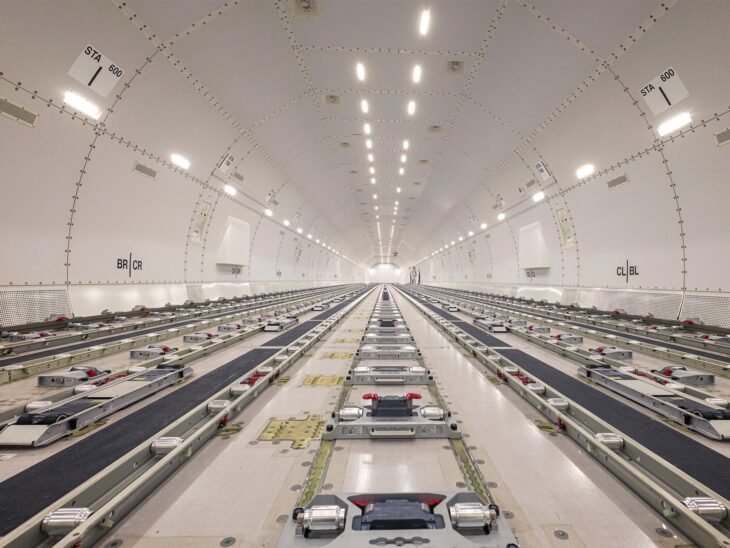
Emirates described itself as the first combination carrier, an airline flying both passengers and cargo, to deploy the 777-300ERSF. It plans to operate five converted aircraft by the end of 2027, beside a growing fleet of factory-built 777Fs.
What a “technical evaluation” usually means
A freighter carries no fare-paying passengers, so a diversion like this mainly delays cargo. The decision to divert rests with the captain, who typically picks the nearest suitable airport once a fault makes continuing the flight unwise. Our explainer on how flight diversions work covers that choice in more detail.
On the ground, engineers typically troubleshoot the system involved, repair it or defer it under the airline’s approved rules, and sign the aircraft back into service. Emirates said it expected the freighter to continue to Hong Kong the same day, but it has not said what the evaluation found.
It is not the first Emirates freighter problem this autumn. On October 8, freighter EK9648 broke off its Amsterdam approach over a landing gear warning and landed safely on another runway.
Hong Kong, EK9774’s destination, is also where an ACT Airlines 747 freighter flying for Emirates SkyCargo as UAE9788 slid off a runway into the sea in October 2025, killing two security staff on the ground. Nothing links that accident to Friday’s diversion beyond the destination.
Sources and references used for research and fact-checking.
Get the Newsletter
The latest aviation news and stories sent to your inbox.
About the Author
AeroCorner News is the aviation news desk of AeroCorner.com. It covers accidents and incidents, safety rulings, airline and airport disruption, and new aircraft. It works from primary sources such as the NTSB, FAA, EASA and the manufacturers' own announcements.