

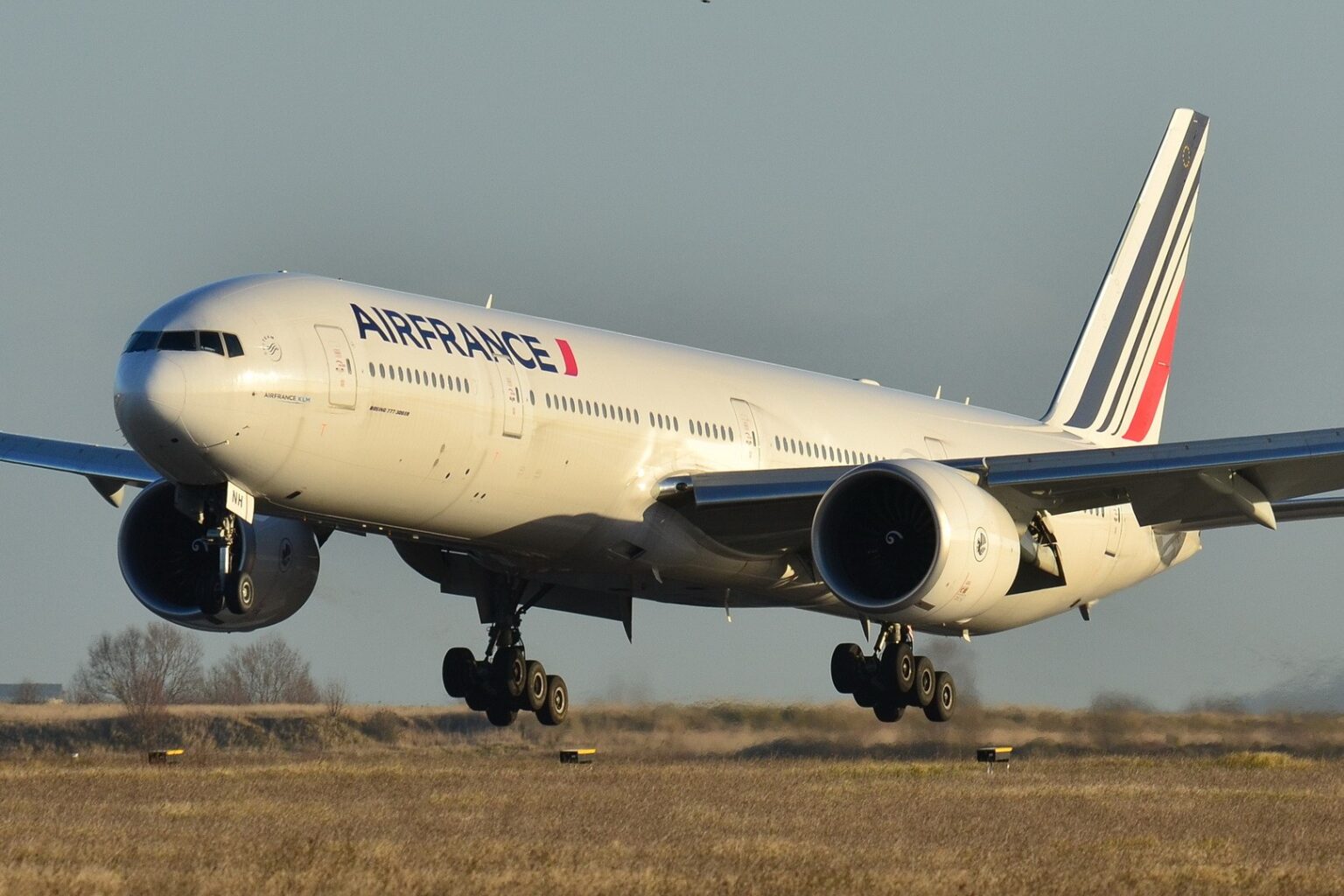
Air France flight AF256 from Paris to Singapore turned back to Charles de Gaulle on the evening of Wednesday, November 25, 2026, and landed there less than two hours after takeoff. The aircraft was the Boeing 777-300ER registered F-GZNH, Flightradar24 data shows.
Passengers flew on a replacement 777 the next morning and landed in Singapore close to 13 hours behind schedule.
The Aviation Herald reported that the crew received an indication of a fault in Channel A of the electronic engine control on the left GE90 engine. AeroCorner found no Air France statement on the flight at the time of writing, so that cause rests on the Aviation Herald’s account.
What happened to AF256
AF256 was scheduled to leave at 9:05 p.m. Paris time and took off at 9:33 p.m., according to Flightradar24. The Aviation Herald put the jet at 31,000 feet, about 300 nautical miles east-southeast of Paris, when the indication appeared.
The crew stayed at 31,000 feet on the way back, the same report said, and landed on runway 08L. Flightradar24 logged the landing at 11:26 p.m. Paris time, after 1 hour and 53 minutes in the air.
Air France put another 777-300ER, F-GZND, on the flight. That jet had arrived in Paris from Boston at 6:37 a.m. on November 26, and it took off for Singapore at 10:45 a.m. Paris time under the callsign AFR256A, Flightradar24 shows.
It landed at Changi at 5:41 a.m. local time on November 27. The original flight had been due at 4:55 p.m. on November 26, so the arrival came 12 hours and 46 minutes late.
The delay carried over to the return leg. At the time of writing, Flightradar24 showed AF257 from Singapore to Paris on F-GZND with an estimated departure about nine hours behind its 10:50 p.m. slot.
F-GZNH itself was soon back at work. It flew AF50 from Paris to Washington Dulles at 2:26 p.m. on November 26, about 15 hours after it landed, which fits the Aviation Herald’s report that the jet returned to service about 13 hours after the incident.
The return came five days after another Air France 777-300ER turnback. On November 20, AF4 to New York on F-GZNK came back from over the Atlantic after a reported fuel indication fault.
What an EEC channel fault means
F-GZNH is a 2010-built Boeing 777-300ER with two GE90-115B engines, among the largest jet engines in airline service. GE Aerospace rates the 115B at up to 115,300 pounds of thrust.
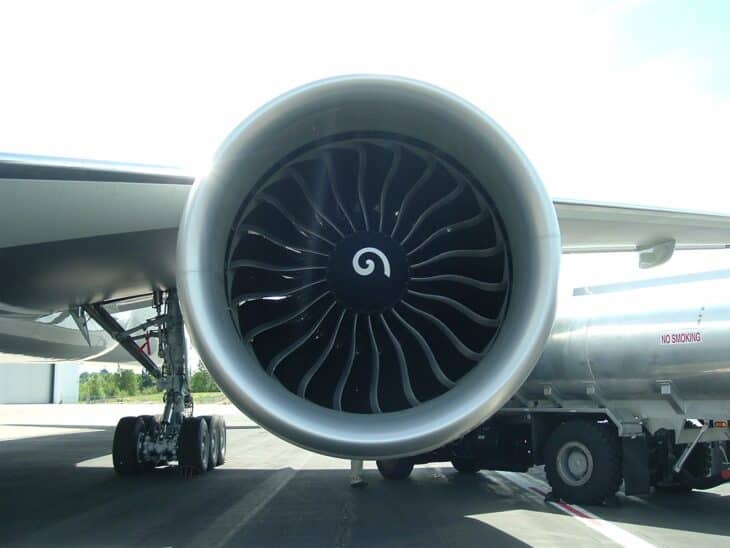

On engines of this generation, the electronic engine control is the computer of what the FAA calls a full authority digital engine control, or FADEC. It sets fuel flow and other engine settings from the pilots’ thrust lever commands.
The redundancy is built into that box. FAA guidance on engine control certification, Advisory Circular 33.28-3, says current systems are designed with dual, redundant channels or with backup systems, so that a single electronic fault does not cost the crew control of the engine.
FAA rules also require that a switch from one channel to the other happens without the engine exceeding its limits, surging or losing thrust. In a dual-channel design, a fault in one channel normally hands control to the other.
What the engine loses is its spare. With one channel down, a second fault on the same engine has nothing left to fall back on.
Why turn back rather than press on
Neither the Aviation Herald nor Air France has said why the crew chose to return, so the reasoning below is general rather than specific to this flight. AF256 is scheduled for 12 hours and 50 minutes, and the jet was still within about 300 nautical miles of Paris.
If the fault was real, continuing would have meant flying almost 12 more hours with one engine on a single control channel. Even taking off with a known control fault is allowed only under what the FAA calls time-limited dispatch, an approval the engine maker has to justify with its own analysis.
Paris was also a natural place to land. It was close, it is Air France’s main base, and the airline had another 777-300ER there by the next morning.
A return to the departure airport is a kind of diversion, and here it kept the faulty jet at home. A landing elsewhere in Europe would have left it away from its base, with a replacement still to be flown in.
What is not confirmed
Air France has not described the fault. The engine control indication, the altitude and position of the turnback and the runway come from the Aviation Herald. Flight times come from Flightradar24 tracking data. How many passengers and crew were on board has not been published.
Sources and references used for research and fact-checking.
Get the Newsletter
The latest aviation news and stories sent to your inbox.
About the Author

AeroCorner News is the aviation news desk of AeroCorner.com. It covers accidents and incidents, safety rulings, airline and airport disruption, and new aircraft. It works from primary sources such as the NTSB, FAA, EASA and the manufacturers' own announcements.