

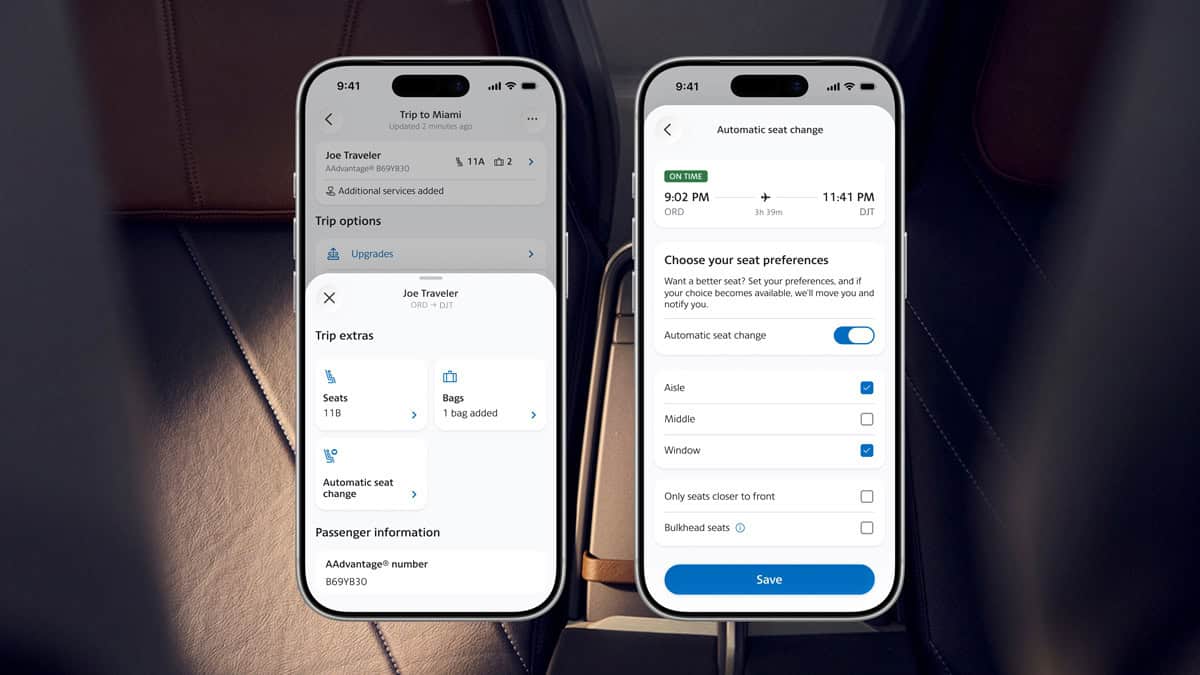
On September 28, 2026, American Airlines announced a feature in its app that watches the seat map for you. AAdvantage members tell it what kind of seat they want, and the app moves them into one when it opens up, then sends a notification.
The move costs nothing, and it replaces the old routine of opening the seat map again and again in the days before a trip.
How the Seat Monitor Works
Members opt in when they finish a booking and pick the characteristics they want: a window, an aisle or a middle seat. One Mile at a Time reports that the settings also cover a seat toward the front of the cabin and a bulkhead, and that the feature lives only in the app.
When a matching seat frees up, the app changes the reservation by itself. American says customers set the preferences that guide it and keep control of changes to their seat.
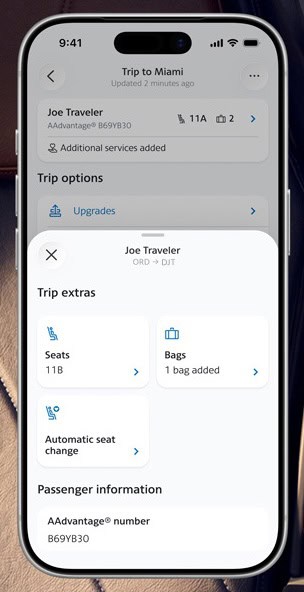
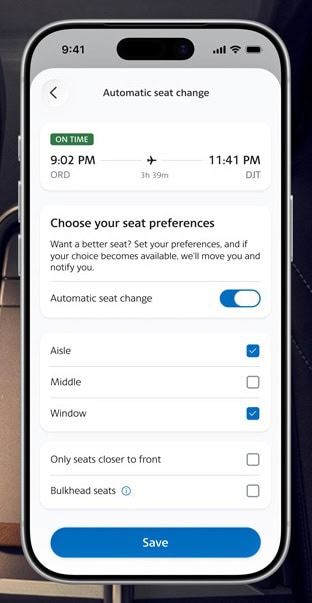
It has limits. The feature covers only single-passenger reservations that already have an assigned seat, and it stops watching 24 hours before departure.
Every move stays inside the cabin the customer booked, so it will not lift anyone from economy into first class. In a footnote, American adds that it will not move anyone into a higher-priced paid seat, even when one matching their criteria opens up.
That matters because American charges extra for some main cabin seats, such as its Main Cabin Extra extra-legroom rows, which start at $20. The monitor can move you to an open aisle or window at no cost, but it will not hand you one of those paid seats.
Who Gets the Seat When Two People Want It
American’s announcement does not say how it breaks a tie. View from the Wing reports that requests are ranked by AAdvantage elite status first and then by when each member signed up, and that exit rows are left out.
The same report says the monitor switches itself off after it makes a move, or once the customer changes seats by hand. If that ranking holds, a frequent flyer will usually get a newly opened aisle before an occasional traveler who asked earlier.
American Is Following United
United got there first. It announced an automatic seat-preference tool for its own app in March 2024, and in July of that year alone it moved more than 18,000 passengers, almost 40% of those eligible, according to Simple Flying.
One Mile at a Time put it bluntly, writing that American “is only playing catch-up here with United.” United’s version, as reported at launch, also lets passengers ask for exit rows, which American’s reportedly does not.
The launch comes a month after American said it would put seatback screens back on its narrowbody jets.
What It Means for Travelers
Seats open up before a flight for ordinary reasons: travelers change plans, cancel, or get upgraded out of the main cabin. The monitor catches those openings without anyone refreshing the seat map at midnight.
The 24-hour cutoff is the main catch. View from the Wing points out that many upgrades clear close to departure, after the monitor has already stopped watching.
One Mile at a Time also notes a cost for savvy flyers: grabbing a bulkhead seat as it opened at the 24-hour mark used to reward people who kept checking the map. Now that work is done for everyone who signs up, ranked by status.
American says the tool came from ADEPT, its two-year development program for early-career technology staff. The airline says the team used AI-enabled tools to speed up parts of the design and development work.
The rules at a glance
AAdvantage members only, on single-passenger bookings with an assigned seat. Set your preferences in the American app after booking. Moves stay in your booked cabin, carry no charge and never go into a higher-priced paid seat. Monitoring ends 24 hours before departure.
Sources and references used for research and fact-checking.
Get the Newsletter
The latest aviation news and stories sent to your inbox.
About the Author

Tim is the owner and lead editor of AeroCorner since 2019, overseeing aviation content covering aircraft, airlines, airports, and the broader aviation industry. Through years of researching, writing, editing, and publishing aviation-focused content, he has developed extensive practical knowledge of commercial aviation and air travel. Based in Asia and a frequent traveler himself, Tim also brings firsthand passenger experience to AeroCorner’s coverage. Outside of publishing, he has also explored aviation firsthand through hands-on flight training in New Zealand.