

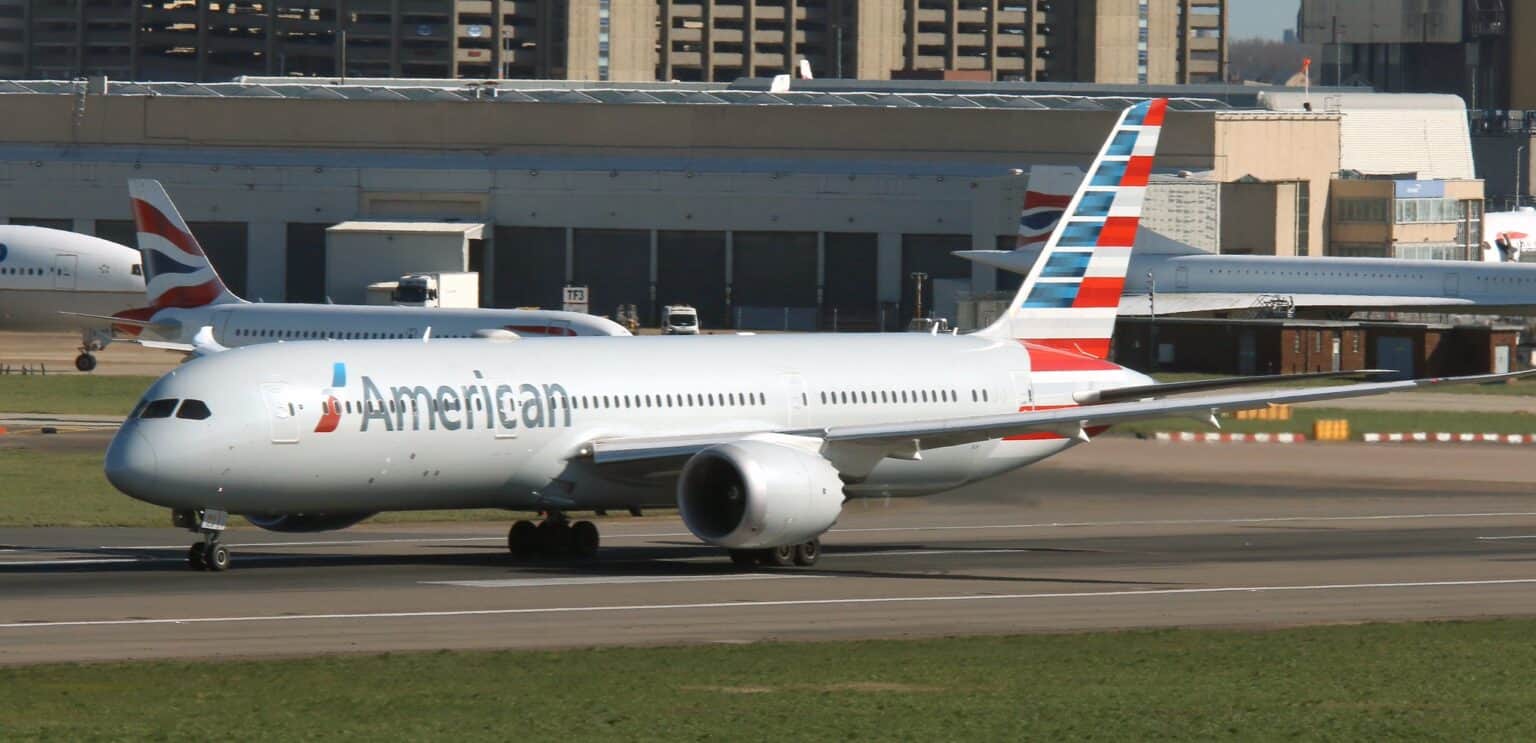
American Airlines flight AA167, a Boeing 787-9 flying from New York JFK to Tokyo Haneda, diverted to Los Angeles on September 23, 2026, after the crew identified a technical problem about five hours into the flight. It landed at LAX that evening instead of crossing the Pacific.
The aircraft, a Boeing 787-9 registered N824AN, was approaching the Alaska border on a polar routing across Canada when the fault appeared, AIRLIVE reported. American has not said what the problem was.
What happened on AA167
AA167 left JFK at 10:43 a.m. EDT and arrived in Los Angeles at 5:02 p.m. PDT, a flight time of 9 hours 19 minutes, according to FlightAware. The scheduled trip to Haneda normally takes about 14 hours.
Several outlets described the jet as airborne for more than 10 hours. The FlightAware log, which runs from departure at JFK to arrival at LAX, does not support that figure.
AIRLIVE reported that American’s operations center directed the aircraft south to Los Angeles rather than to a closer city such as Vancouver or Seattle. The jet was expected to undergo a maintenance inspection at LAX.
Passengers were due to continue to Tokyo on September 24, TheTravel reported, on another aircraft. FlightAware lists an AA167 scheduled to leave LAX for Haneda at 2:00 p.m. PDT that day.
What is not confirmed
American Airlines has not issued a public statement on AA167. The nature of the technical fault, the number of people on board, and whether the crew declared an emergency have not been published. The routing and timings above come from flight tracking and secondary reporting, not from the airline.
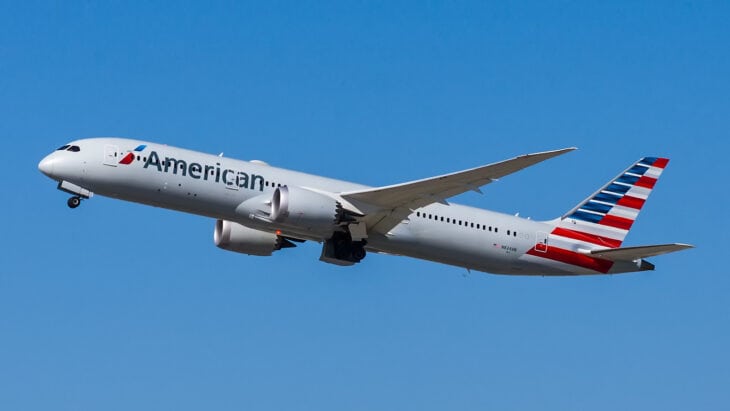
Why Los Angeles and not the nearest airport
Flying roughly four more hours to reach Los Angeles sounds odd when Canadian and Pacific Northwest airports were closer. The answer depends on what kind of problem the crew was dealing with.
Some failures leave no choice. Under 14 CFR 121.565, if an engine fails or is shut down on a twin-engine airliner such as the 787, the captain must land at the nearest suitable airport in point of time.
No report says that happened on AA167. When a fault makes it unwise to start a long ocean crossing but still leaves the aircraft safe to fly, the crew and the airline have room to choose where the flight diversion ends.
That choice is shared. On international flights, FAA rules make the captain and the aircraft dispatcher jointly responsible for planning and dispatching a flight, and the dispatcher must monitor it and can redispatch it en route.
From the operations center, the best airport is often not the closest one. Los Angeles International is one of American’s nine hubs, and AIRLIVE noted that operations centers favor major hubs for complex diversions because maintenance staff, replacement aircraft and hotel capacity are already there.
A widebody stuck at an outstation can strand passengers for a day or more while a mechanic and parts are flown in. At a hub, the airline can fix the jet or swap it and fly passengers on from there, which is what the next day’s AA167 from Los Angeles was scheduled to do.
The same logic sent American’s AA293 past Munich to Heathrow after a medical emergency last week.
Not the first AA167 detour
The same flight made a similar detour on March 31, 2025. That day a different 787-9, N829AN, turned back over the Pacific with what American called “a maintenance issue” and landed at Dallas/Fort Worth, another American hub, after about 13 hours in the air, Simple Flying reported.
The two events involved different aircraft and, as far as is known, different faults. What went wrong on N824AN will be clearer if American or the FAA says more about the inspection in Los Angeles.
Sources and references used for research and fact-checking.
Get the Newsletter
The latest aviation news and stories sent to your inbox.
About the Author

Tim is the owner and lead editor of AeroCorner since 2019, overseeing aviation content covering aircraft, airlines, airports, and the broader aviation industry. Through years of researching, writing, editing, and publishing aviation-focused content, he has developed extensive practical knowledge of commercial aviation and air travel. Based in Asia and a frequent traveler himself, Tim also brings firsthand passenger experience to AeroCorner’s coverage. Outside of publishing, he has also explored aviation firsthand through hands-on flight training in New Zealand.