

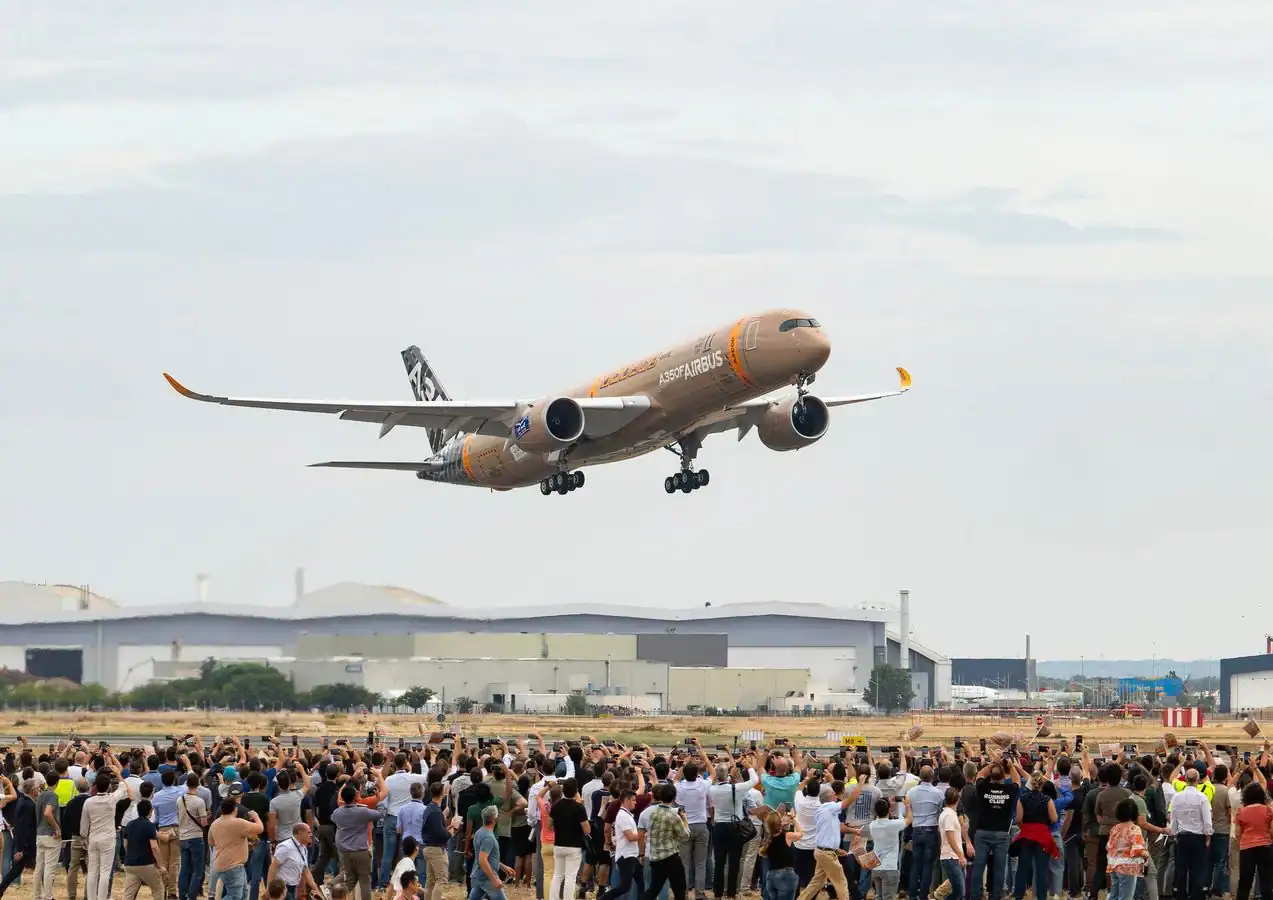
The first Airbus A350F freighter took off on its maiden flight from Toulouse-Blagnac at about 10:30 a.m. local time on September 29, 2026 (4:30 a.m. EDT). The flight opens a test campaign that Airbus puts at about 400 flight hours.
The aircraft is MSN700, registered F-WXLD, the first of two A350Fs built for flight testing. Airbus streamed the departure live, and the jet was still airborne at the time of writing, with the landing scheduled for early afternoon after roughly four hours in the air.
A first flight with the protections off
The first flight was planned to be flown entirely in Direct Law, according to Airbus. That is the most basic mode of the fly-by-wire system, in which the pilot’s inputs move the control surfaces without the flight envelope and stability protections of Normal Law.

Airbus gave a specific reason: about 10% of the freighter’s aerodynamic characteristics are still treated as an unverified model. Airbus describes the test program as opening up the control laws in steps, from Direct Law to Normal Law, as flight data verifies that model.
That is because the A350F is a new mix of existing parts. “It’s not an A350-1000 and it’s not an A350-900, but rather it’s between both,” lead flight test engineer Laurent Bussiere said in an Airbus interview published before the flight.
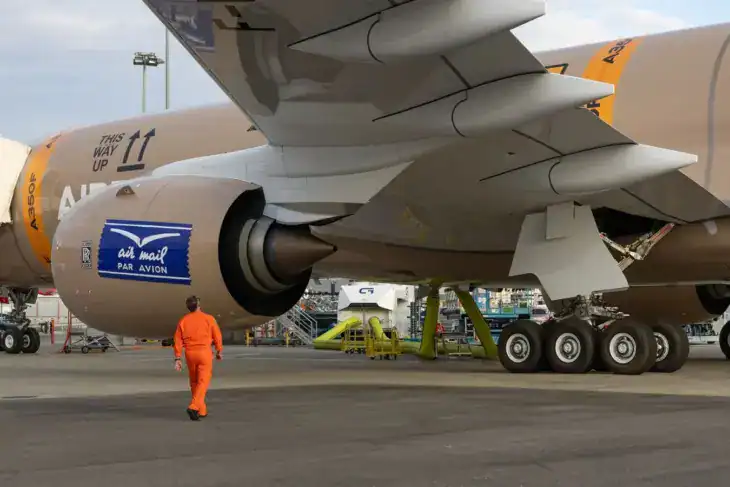
The freighter pairs an A350-900 forward fuselage with the rear fuselage and wing of the larger A350-1000. Airbus says the crew of five, two pilots, a test flight engineer and two flight test engineers, rehearsed the profile in a dedicated simulator session at the start of September.
Two jets, nine months
Airbus plans a certification campaign of about nine months using two aircraft with different test instrumentation. MSN700 covers aerodynamic performance, handling qualities and the autopilot, and carries a tail skid and bumper for takeoff performance tests.
MSN700 is meant to clear the flight control laws first, so the second aircraft, MSN701, can make its own first flight in Normal Law. MSN701 will handle systems work, including air conditioning and fire and smoke testing, plus the hot and cold weather campaign.
EASA is already reviewing and approving the flight test plan, and its pilots and engineers will fly as onboard witnesses on performance flights. Airbus says the formal certification phase is planned for 2027.
What Airbus is selling
Airbus lists the A350F at up to 111 metric tons (245,000 pounds) of payload over 4,700 nautical miles, powered by two Rolls-Royce Trent XWB-97 engines. Its main deck cargo door is 169.5 inches (4.3 m) wide, which Airbus says is 15% wider than the door on the Boeing 777F.
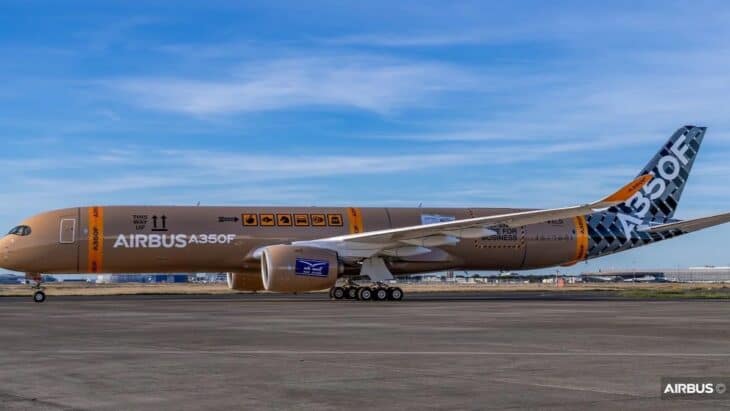
The company also claims at least 20% lower fuel burn and CO2 emissions than competing freighters. It also markets the A350F as the only freighter able to meet ICAO’s latest CO2 emissions standard.
The backlog stood at 115 firm orders at the end of August, including an order for eight more that Airbus revealed as the first flight neared. Airbus named Atlas Air Worldwide its largest A350F customer in March, with 20 on order.
Its direct rival is Boeing’s upcoming 777-8F, the freighter member of the 777X family, which is also still in development. The passenger 777-9 has itself run years late, as our look at the 777X delays explains, so neither next-generation big twin freighter is flying commercially yet.
Sources and references used for research and fact-checking.
Get the Newsletter
The latest aviation news and stories sent to your inbox.
About the Author

Tim is the owner and lead editor of AeroCorner since 2019, overseeing aviation content covering aircraft, airlines, airports, and the broader aviation industry. Through years of researching, writing, editing, and publishing aviation-focused content, he has developed extensive practical knowledge of commercial aviation and air travel. Based in Asia and a frequent traveler himself, Tim also brings firsthand passenger experience to AeroCorner’s coverage. Outside of publishing, he has also explored aviation firsthand through hands-on flight training in New Zealand.