

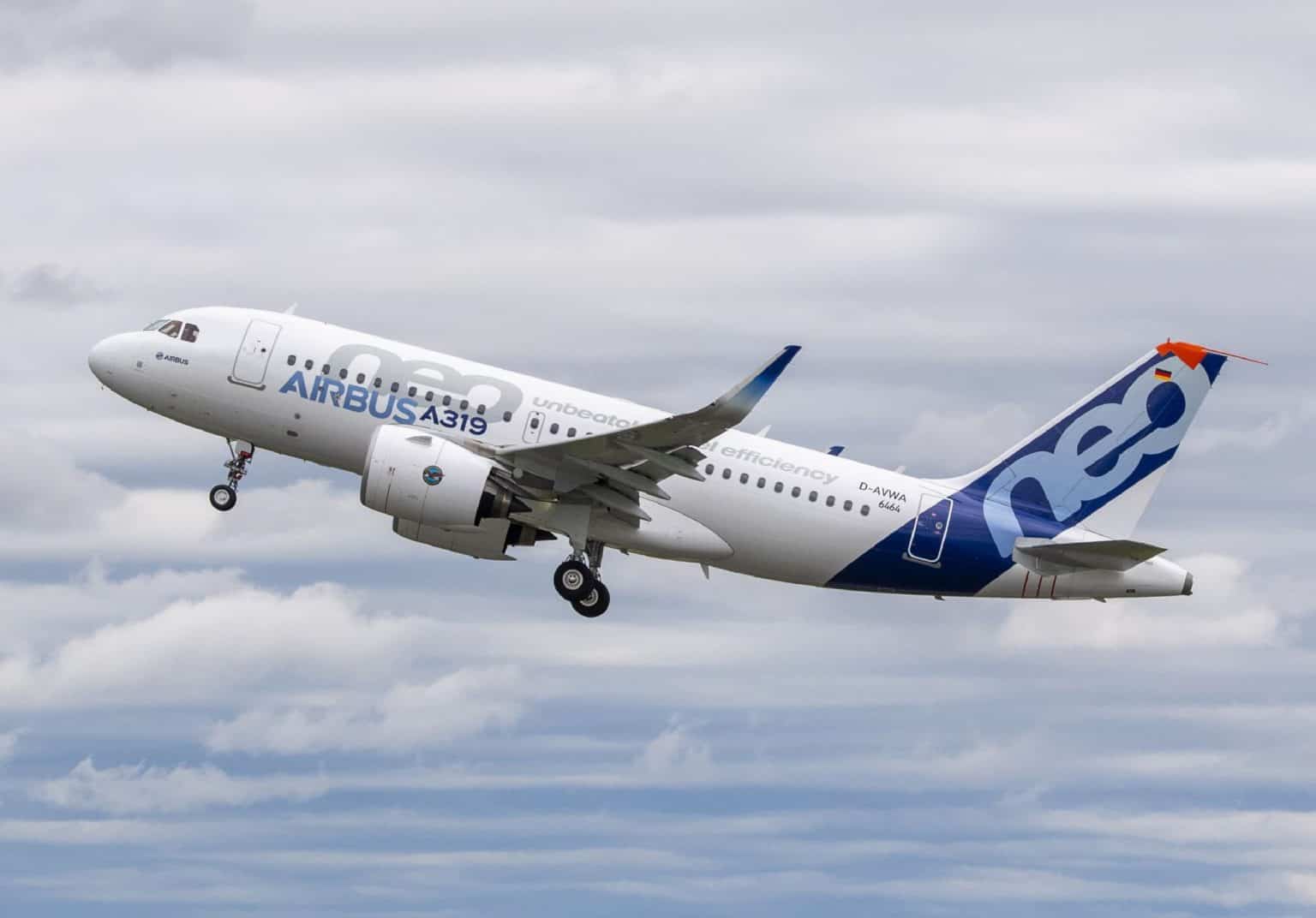
In July 2026, Airbus has stopped actively offering the A319neo to airline customers, effectively retiring the smallest member of its reengined single-aisle family. The move was first reported by FlightGlobal, and Airbus has not issued a formal press release announcing it.
The company will still build an A319neo if a customer specifically requests one, according to that reporting. In practice, though, the aircraft is no longer part of the lineup Airbus pitches to buyers.
The neo that never caught on
The A319neo was launched in 2010 as the smallest of three reengined jets, alongside the far more popular A320neo and A321neo. Over roughly 15 years it drew fewer than 60 firm orders, making it by a wide margin the weakest seller of the family.
Key figure
The A319neo attracted just 57 orders across about 15 years. Its larger sibling, the A321neo, has sold thousands and become the best-selling aircraft in the single-aisle market.
The underlying reason is a shift in what airlines want. Carriers have steadily moved toward larger single-aisle jets that spread costs across more seats on the same trip, a trend the industry calls upgauging.
That trend rewarded the stretched A321neo and left the shorter A319neo without a clear buyer. A smaller cabin means fewer seats to earn revenue while the crew, the gate slot, and much of the fuel burn stay roughly the same.

The A220 took its place
Airbus also ended up competing against itself. When it took over Bombardier’s C Series program in 2018 and rebranded it the A220, it gained a clean-sheet aircraft purpose-built for the 100-to-150-seat market the A319neo was meant to serve.
The A220 is a newer design, lighter, and cheaper to operate over comparable ranges. That combination made it the more logical choice for airlines shopping at the small end, steadily pulling demand away from the A319neo.
The A319neo held one genuine advantage: hot-and-high performance, meaning the ability to operate from high-altitude airports where thinner air limits how much a jet can carry. Airbus engineers have said improving the A320neo’s high-altitude capability could remove even that last reason to keep the smaller model in production.
The choice is already playing out in the order book. Newer customers at the small end, such as the Bermuda carrier that recently chose the A220, are picking the clean-sheet jet rather than the A319neo.
Reality check
This is not a formal program cancellation. Airbus has not publicly confirmed an end date, and trade reporting indicates a small backlog of roughly two dozen jets, including examples for Air China and Tibet Airlines and a pair of ACJ business-jet variants, is still due to be delivered. Treat the exact backlog figures as provisional.
For airlines, little changes day to day, because so few operate the A319neo in the first place. The larger significance is what it signals about the shape of the single-aisle market: demand has consolidated around bigger jets like the A320neo and A321neo, with the A220 covering everything below them.
That leaves Airbus with a tidy three-tier lineup and no real gap where the A319neo used to sit. A model launched with the family it belonged to is quietly aging out of it, without ever finding the customers it was built for.
Get the Newsletter
The latest aviation news and stories sent to your inbox.
About the Author

Tim is the owner and lead editor of AeroCorner since 2019, overseeing aviation content covering aircraft, airlines, airports, and the broader aviation industry. Through years of researching, writing, editing, and publishing aviation-focused content, he has developed extensive practical knowledge of commercial aviation and air travel. Based in Asia and a frequent traveler himself, Tim also brings firsthand passenger experience to AeroCorner’s coverage. Outside of publishing, he has also explored aviation firsthand through hands-on flight training in New Zealand.