

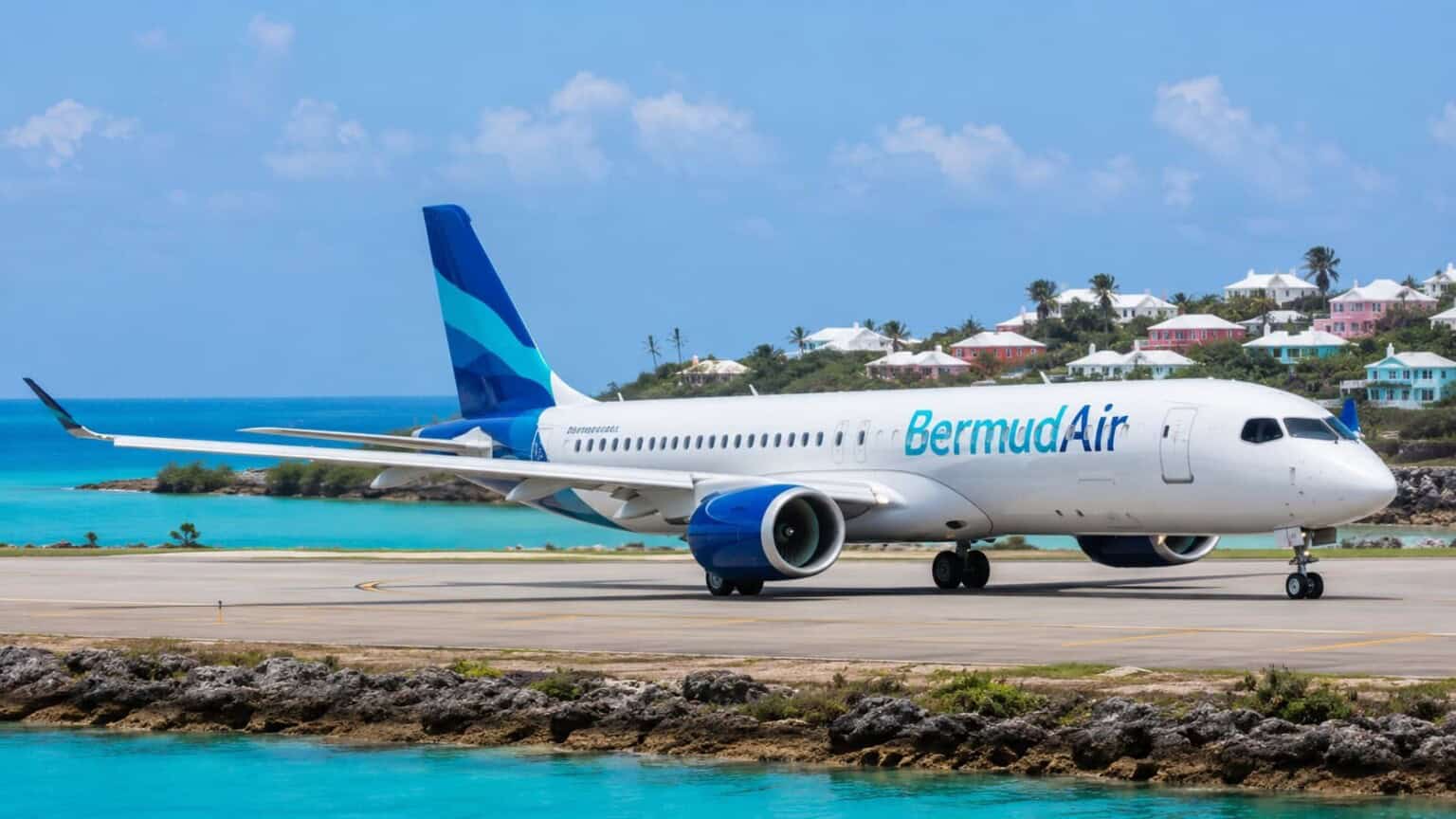
On July 22, 2026, at the Farnborough Airshow, BermudAir was revealed as the customer behind a firm order for 10 Airbus A220-300 jets. It is the first Airbus order for the three-year-old Bermuda carrier, which flies only Embraer regional aircraft today.
The deal was placed through an affiliated company in March and sat in the Airbus order book as an undisclosed order until the airshow. Airbus said BermudAir plans to add up to 20 A220s by the end of the decade.
A big step up for a boutique carrier
BermudAir launched in 2023 as the island’s hometown airline, built on a “premium leisure” model. Its Embraer E175 and E190 jets connect Bermuda with the US East Coast, the Caribbean, and Central America.
The carrier’s fleet is still small, built around a handful of Embraer jets since it began flying in 2023. Committing to 10 aircraft now, with room for 20, is one of the more aggressive fleet plans a carrier of its size has announced this year.
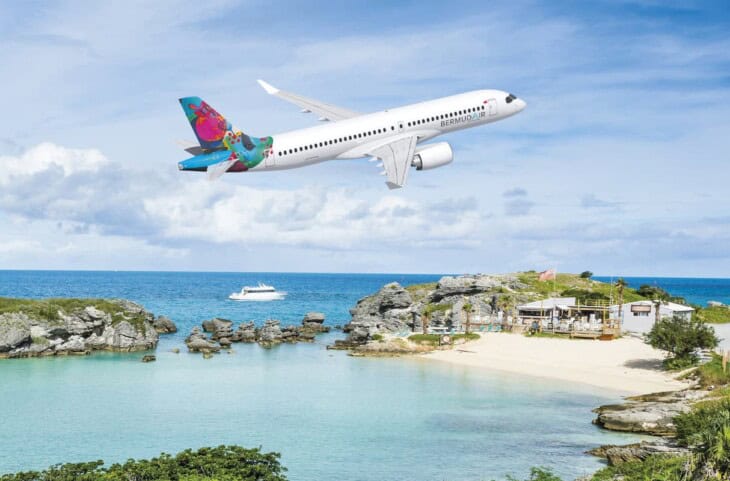
The A220-300 is a meaningful jump in size and reach. According to Airbus, BermudAir’s aircraft will seat 135 passengers across three cabins, including a dedicated premium economy, and fly up to 3,600 nautical miles.
Airbus puts the type’s fuel burn and CO2 per seat at about 25 percent below previous-generation jets. First deliveries are due in the fourth quarter of 2027, and the A220s will gradually replace the E-Jets over several years rather than all at once.
Why a small airline reaches for a bigger jet
The move is a classic case of upgauging. BermudAir’s E-Jets top out around 76 to 100 seats and shorter ranges, so the larger, longer-legged A220 lets the carrier carry more passengers per flight and open thinner long-haul routes without adding frequencies.
That matters for an island market. More range means Bermuda can be linked nonstop to destinations deeper into the Caribbean and North America, and the extra seats spread fixed trip costs across more travelers.
The A220 is well suited to that job. Originally developed by Bombardier as the C Series, it is a modern, narrow twinjet designed for exactly these long, thin routes that a larger single-aisle would struggle to fill profitably.
The order is also a notable win for Airbus in the 100-to-150-seat class, where the A220 competes directly with Embraer’s E2 family. It lands the same week Embraer’s E2 program passed 500 orders, underlining how contested the small-narrowbody segment has become.
Reality check
This is a firm order, but the ramp is ambitious for a carrier only three years old. Deliveries do not start until late 2027, and moving from regional E-Jets to a mainline-size A220 is a significant operational step, from crew training to maintenance and airport handling.
Sources and references used for research and fact-checking.
Get the Newsletter
The latest aviation news and stories sent to your inbox.
About the Author

Tim is the owner and lead editor of AeroCorner since 2019, overseeing aviation content covering aircraft, airlines, airports, and the broader aviation industry. Through years of researching, writing, editing, and publishing aviation-focused content, he has developed extensive practical knowledge of commercial aviation and air travel. Based in Asia and a frequent traveler himself, Tim also brings firsthand passenger experience to AeroCorner’s coverage. Outside of publishing, he has also explored aviation firsthand through hands-on flight training in New Zealand.