

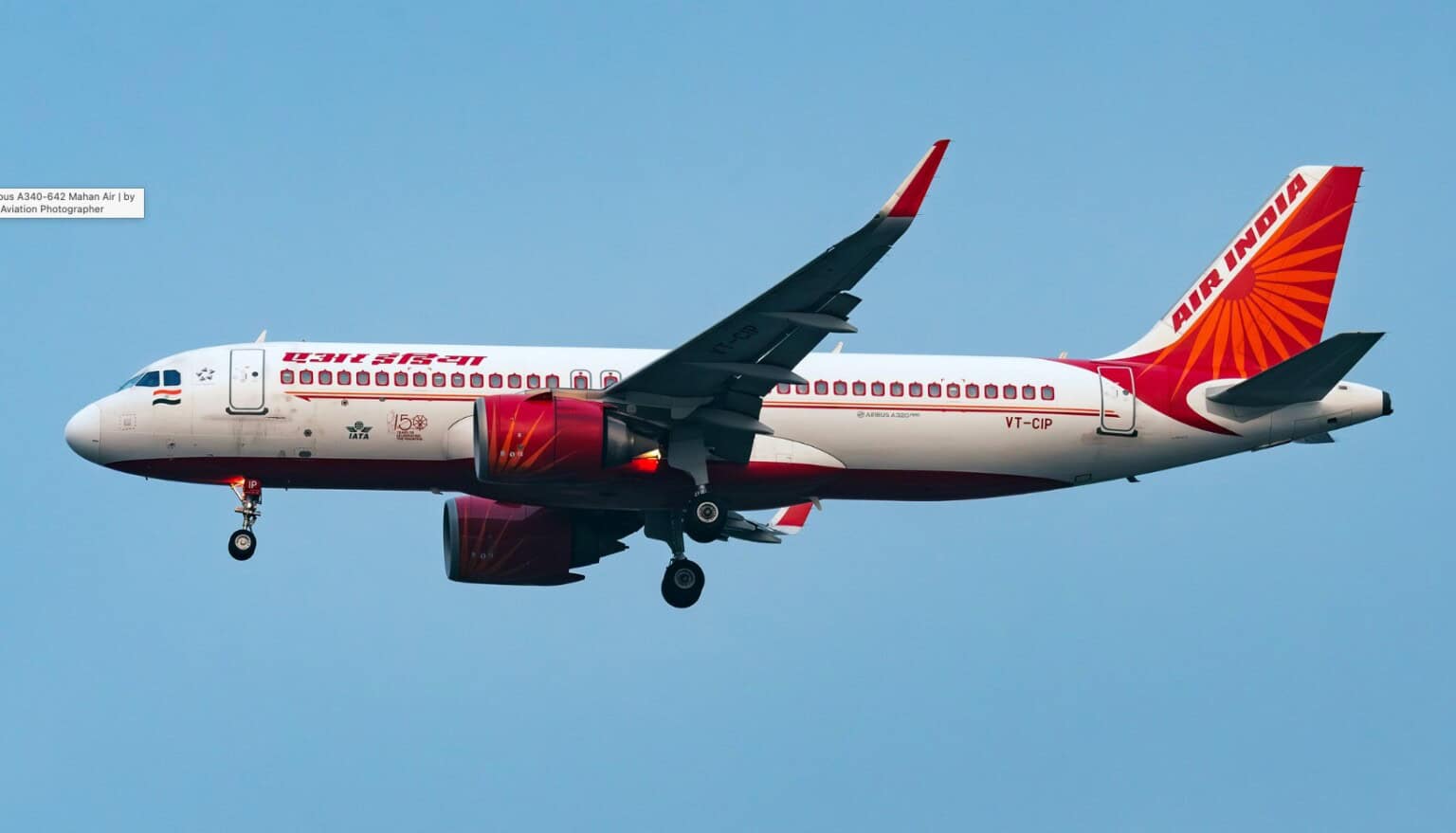
Air India flight AI2379, an Airbus A320neo flying from Phuket to Delhi, dropped about 300 feet while cruising at 36,000 feet over Odisha on August 4, 2026. Seventeen people were injured, and the aircraft landed safely in Delhi about an hour later.
India’s Directorate General of Civil Aviation has opened a formal investigation. Air India describes the event as brief turbulence, but at least one outlet reports investigators are also weighing a technical fault as a possible cause, a question the flight’s data recorders should help settle.
What happened in the cabin
The aircraft, registered VT-EXO, was carrying 137 passengers and eight crew members about 90 minutes into the flight when it hit what India’s civil aviation minister, Ram Mohan Naidu, described as four to five minutes of severe turbulence.
Thirteen passengers and four crew members were hospitalized. Naidu said some crew members suffered “spinal injuries near the tailbone and neck.” Overhead bins tore loose from their hinges, and cabin ceiling and sidewall panels cracked or came away.
As of Wednesday, August 5, all 13 hospitalized passengers had been discharged, Air India said. Four crew members remained under medical care.
Why the injuries were this severe
Most turbulence injuries happen to people who are unbuckled or standing when a sudden vertical acceleration hits, not from any structural failure of the aircraft. A 300-foot excursion at cruise altitude is enough to throw an unrestrained passenger or crew member into an overhead bin or the ceiling.
Turbulence, or a fly-by-wire fault
Air India’s public statement calls it “a brief in-flight turbulence-related event during cruise, resulting in a momentary change in altitude.” Other reporting on the flight has noted that the autopilot disengaged during the event, a detail investigators will want explained regardless of the underlying cause.
Tech Times reported that investigators are treating a suspected fly-by-wire technical fault, not weather, as the leading hypothesis. That account has not been confirmed by the DGCA, Air India, or Airbus, and it sits alongside other reporting that frames the event as ordinary clear-air turbulence, a weather phenomenon known for striking without visual warning.
On the A320neo, as on every fly-by-wire airliner, the sidestick does not move a control surface directly. It sends a request to flight control computers, which interpret it before commanding the surfaces.
A transient fault in that chain, caused by a bad sensor reading or a brief software error, can in theory move a surface without a pilot’s input or drop the autopilot abruptly. From inside the cabin, that can feel much like a sudden weather upset.
Reality check
Neither cause is confirmed. The fly-by-wire theory comes from a single outlet’s sourcing and has not been echoed by the DGCA, Air India or Airbus, while Air India’s own account points to turbulence. Flight data and cockpit voice recorders, not eyewitness accounts, will be what settles this.
What the investigation looks at next
Authorities have secured the aircraft’s flight data recorder and cockpit voice recorder, and the jet was moved to a separate hangar after landing. Investigators are expected to correlate the recorded flight path against weather and satellite data for the area to test the turbulence explanation.
The DGCA has not issued a grounding order or airworthiness directive tied to the flight, and nothing so far points to a defect affecting the wider A320neo fleet.
It joins a run of A320-family incidents this summer that investigators have had to sort between weather, mechanical faults and air data problems, including a British Airways A320 that triggered stall warnings on approach to Heathrow after an air data failure in July.
Sources and references used for research and fact-checking.
Get the Newsletter
The latest aviation news and stories sent to your inbox.
About the Author

Tim is the owner and lead editor of AeroCorner since 2019, overseeing aviation content covering aircraft, airlines, airports, and the broader aviation industry. Through years of researching, writing, editing, and publishing aviation-focused content, he has developed extensive practical knowledge of commercial aviation and air travel. Based in Asia and a frequent traveler himself, Tim also brings firsthand passenger experience to AeroCorner’s coverage. Outside of publishing, he has also explored aviation firsthand through hands-on flight training in New Zealand.