

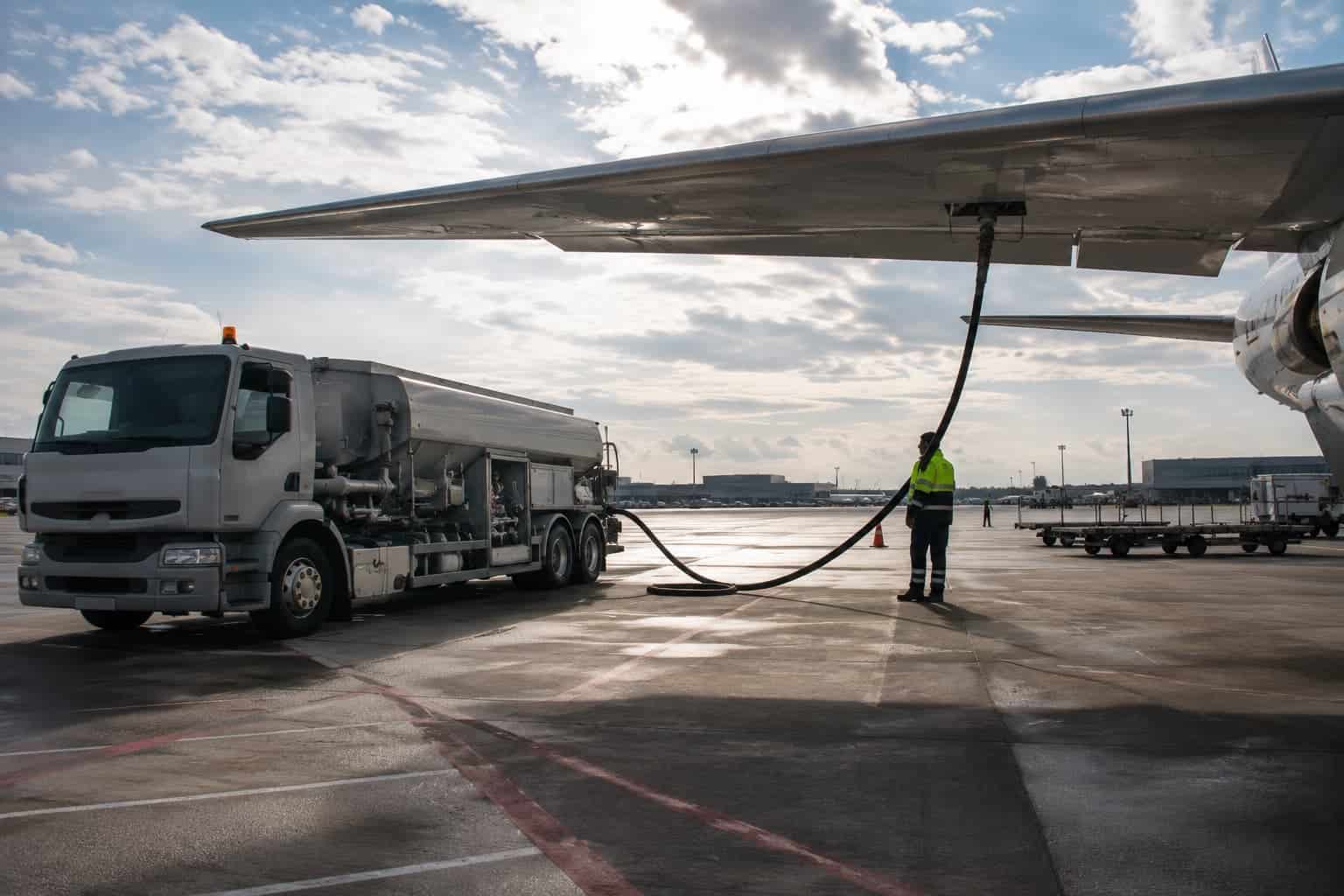
Early on Monday, August 31, 2026, a refueling truck at New York’s John F. Kennedy International Airport moved away from a parked Air China Boeing 747-8 while two fuel hoses were still attached to the wing. The truck tore the wing refueling ports and sent jet fuel spilling across the apron. No one was hurt, but the damage grounded the jumbo jet for nearly three days and forced Air China to cancel its overnight flight to Beijing.
What happened on the ramp
The aircraft, registered B-2486, is an 11-year-old Boeing 747-8 that had arrived from Beijing on August 30 as flight CA981. It was being fueled at the gate for the return leg, CA982, scheduled to leave for Beijing Capital International Airport at 2:05 a.m.
Video of the incident, first reported by Simple Flying, shows the fuel truck lurching forward with the hoses connected before the driver climbs out as fuel pours from the wing. Ground staff were later photographed inspecting the refueling ports and cleaning up the spill. The Aviation Safety Network logged the airframe damage as minor.
Air China told passengers only that the flight was cancelled because of a “fuel guarantee issue,” without mentioning the truck or the leak. Baggage was pulled from the aircraft, and the next Beijing service left the following night. The Port Authority of New York and New Jersey, which runs JFK, did not comment.
The 747-8 finally left JFK late on September 2, flying to Beijing as CA78, a non-revenue repositioning flight rather than a scheduled passenger service, according to Air Data News. Neither Air China nor any US agency has issued a formal statement on the circumstances.
Why a “minor” hit still parks a jumbo jet
Large aircraft are pressure-fueled through adapters on the underside of the wing that feed straight into the fuel tanks inside the wing structure. Damage there is not something a crew can patch on the ramp. Engineers have to check the fuel system for leaks and contamination and inspect the surrounding wing structure before the aircraft can be signed off, which is why even light contact can cost days.
A vehicle moving against a wing during fueling is also a fire risk, because it puts a running engine and hot surfaces next to spilling kerosene. Standard ramp procedure calls for the fuel truck to be chocked and positioned so it can drive forward and away, never toward the aircraft, and for hoses to be fully disconnected and stowed before anything moves.
Ground handling accidents like this are common and expensive. The International Air Transport Association estimates that ramp damage costs airlines around $5 billion a year and could reach nearly $10 billion by 2035 if nothing changes, with roughly one ground incident for every 1,000 departures. A single event can run from a few thousand dollars to about $2 million before the cost of a cancelled flight is added.
For Air China, this one meant rebooking a widebody’s worth of passengers, repositioning crew, and flying an empty Boeing 747-8 across the Pacific. It follows a string of recent apron incidents, including a fatal ground collision in Montreal and a separate fuel leak at JFK earlier this summer.
Still an early picture
The account here rests on video, tracking data, and social media posts in the days after the incident. Air China, the ground handler, and the Port Authority have not confirmed the sequence of events, and there is no published investigation.
Get the Newsletter
The latest aviation news and stories sent to your inbox.
About the Author

Tim is the owner and lead editor of AeroCorner since 2019, overseeing aviation content covering aircraft, airlines, airports, and the broader aviation industry. Through years of researching, writing, editing, and publishing aviation-focused content, he has developed extensive practical knowledge of commercial aviation and air travel. Based in Asia and a frequent traveler himself, Tim also brings firsthand passenger experience to AeroCorner’s coverage. Outside of publishing, he has also explored aviation firsthand through hands-on flight training in New Zealand.