

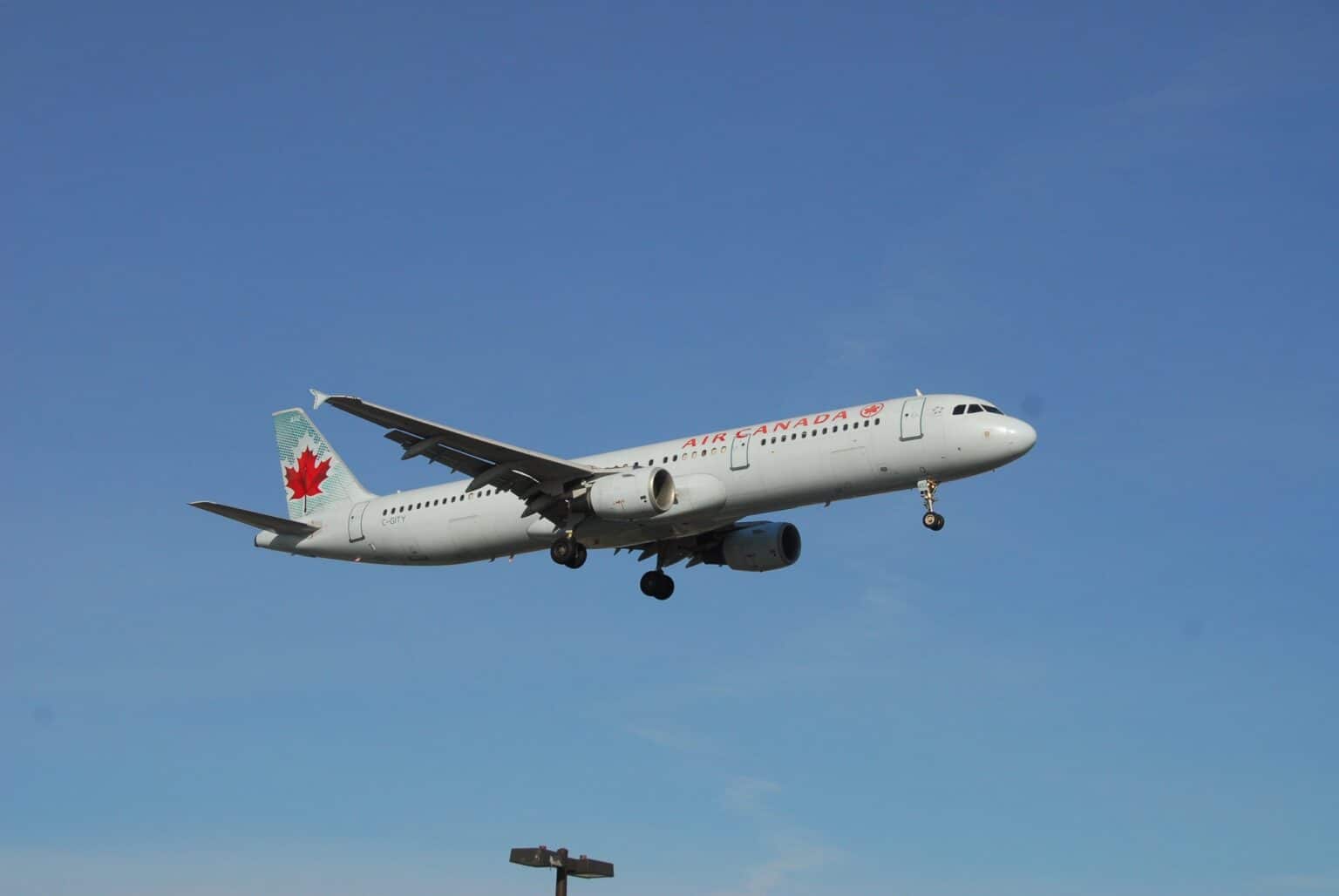
Air Canada flight AC138, an Airbus A321 bound for Toronto Pearson, declared an emergency and flew back to Calgary on Wednesday, October 28, 2026. The crew set transponder code 7700 after climbing past 30,000 feet, and the jet was back on the ground at Calgary International Airport shortly before noon local time.
Air Canada has not said what went wrong, and no official account of the flight had been published at the time of writing. What is known comes from flight-tracking data and early reporting.
What the tracking data shows
FlightStats lists the aircraft as C-GITY, an Airbus A321, on a flight scheduled to leave Calgary at 9:40 a.m. and reach Toronto at 3:35 p.m. Eastern time. The same jet had flown in from Toronto that morning as AC131, according to Plane Finder’s log for the registration.
The A321 took off at about 10:40 a.m. local time, roughly an hour late, according to AIRLIVE, which first reported the emergency. It said the crew stopped the climb at around 30,500 feet, turned back toward Calgary and squawked 7700.
FlightStats track data puts the turn over southeastern Alberta, near Medicine Hat. From there the jet descended quickly to about 10,000 feet.
It then flew roughly 175 miles (280 km) back west at that height, a leg of about half an hour, before descending into Calgary. FlightStats lists the flight as diverted to YYC.
AIRLIVE reported that fire trucks met the aircraft after touchdown and that the airline was arranging a new departure for 1 p.m. local time. The Western Standard reported that the jet landed safely and that it had asked Air Canada for comment.

The number of passengers on board has not been released. Plane Finder’s log for C-GITY showed no further flights after AC138 as of October 29.
What is not known
No statement from Air Canada, NAV CANADA or Transport Canada explaining why the crew declared an emergency had been published at the time of writing. Altitudes and positions in this story come from flight-tracking data, not from an official report, and may be revised.
What squawk 7700 and a 10,000-foot level-off mean
Code 7700 is the transponder setting for an emergency. The FAA’s Aeronautical Information Manual tells pilots facing a distress or urgency condition to squawk the code and then contact air traffic control at once.
The same manual says the code normally sets off an alarm or special indicator at every control position on the radar. It is a general alert: it tells controllers that something is wrong, not what.
AIRLIVE noted that levelling off at 10,000 feet is the standard response to a cabin pressurization problem, because the air at that height is breathable without supplemental oxygen. That fits the profile AC138 flew, but a flight path is not a cause.
Neither Air Canada nor any authority has said that pressurization was involved. By contrast, the Air France 777 that turned back to Paris in August was reported from the outset to have a pressurization fault.
Where an official account would appear
Transport Canada calls its Civil Aviation Daily Occurrence Reporting System, known as CADORS, the main source of aviation occurrence information in Canada. It says the database has run since 1985 and takes in about 16,750 incident and accident reports a year, based on 2016 to 2020.
NAV CANADA, the country’s air navigation service provider, supplies about 80% of the information behind CADORS records through aviation occurrence reports. Transport Canada describes those records as preliminary, updated as more information or corrections come in.
A CADORS entry, an Air Canada statement or a Transportation Safety Board notice would be the first sources able to say what happened aboard AC138. AeroCorner will update this story if any of them do.
Sources and references used for research and fact-checking.
Get the Newsletter
The latest aviation news and stories sent to your inbox.
About the Author

AeroCorner News is the aviation news desk of AeroCorner.com. It covers accidents and incidents, safety rulings, airline and airport disruption, and new aircraft. It works from primary sources such as the NTSB, FAA, EASA and the manufacturers' own announcements.