

Table of Contents
| Supermarine Spitfire | Hawker Hurricane | |
|---|---|---|
| Designer | R. J. Mitchell, then Joe Smith | Sydney Camm |
| First flight | March 5, 1936 | November 6, 1935 |
| Built | More than 20,351, in 24 marks | 14,487 in the UK and Canada |
| Early armament | Eight .303 in Browning machine guns (four at first) | Eight .303 in Browning machine guns |
| Construction | Stressed metal, thin semi-elliptical wing | Steel-tube fuselage covered in wood and doped linen |
| Battle of Britain share of German losses | 42 percent | 55 percent |
| Strongest at | Speed and interception | Ease of repair, ground attack, night work |
Which versions this page compares
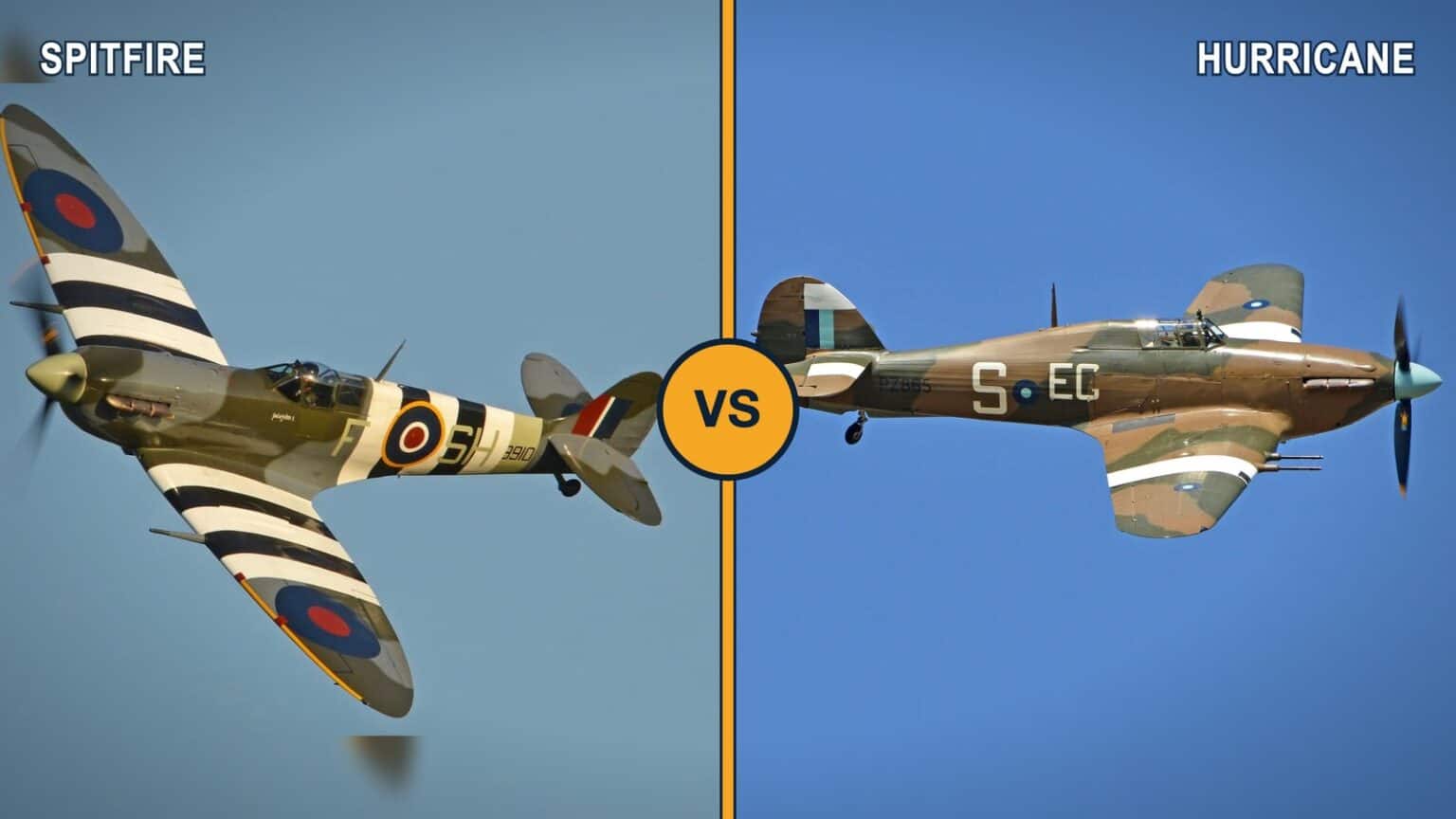
Both fighters changed a lot between 1936 and 1945, so “Spitfire vs Hurricane” means little without a version. The specification panel above lists a Spitfire with a Rolls-Royce Merlin 45 and a Hurricane with a Merlin XX. Where an earlier or later mark changes the answer, this page names it.
Spitfire vs Hurricane: the short answer
The Spitfire was the better fighter on performance. It was designed around a thin elliptical wing, and in the Battle of Britain Spitfire squadrons had a lower attrition rate and a higher victory-to-loss ratio.
The Hurricane was the more useful workhorse. It outnumbered the Spitfire throughout the battle, and Fighter Command credited it with 55 percent of the 2,739 German losses, against 42 percent for the Spitfire.
That is why the two are remembered differently. The Spitfire got the fame, while the Hurricane did more of the defensive flying.
The sources agree on the broad picture. The Spitfire had the more advanced design and the better record per aircraft, and the Hurricane had the numbers and the simpler construction.
That mix is why this is not a contest with one winner. The two fighters did different jobs well, and the RAF flew both through 1940.
Design: a modern wing against a proven airframe
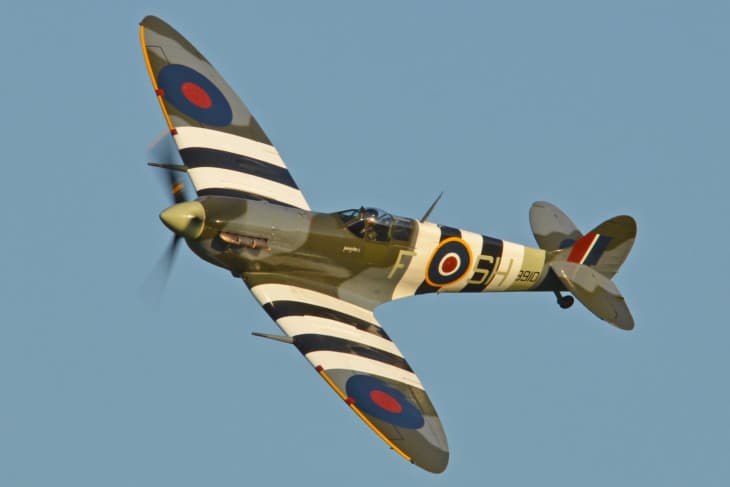
R. J. Mitchell designed the Spitfire at Supermarine and led it until his death in 1937, when Joe Smith took over. Its semi-elliptical wing was designed to be the thinnest practical section, with a thickness-to-chord ratio of 13 percent at the root and 9.4 percent at the tip.
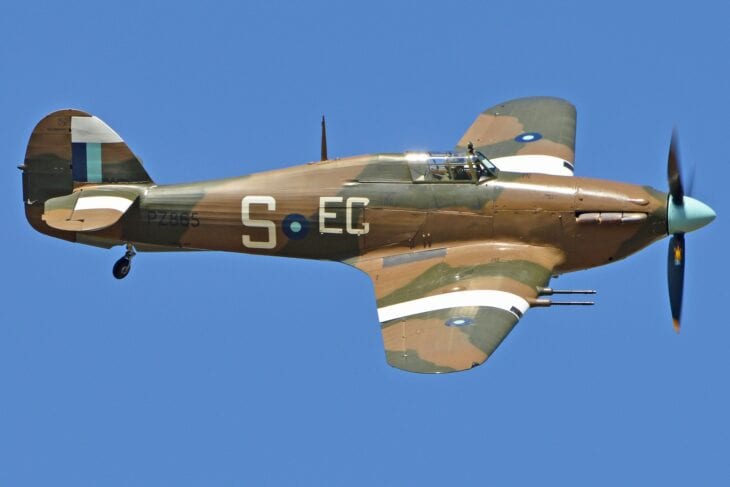
Sydney Camm’s Hurricane flew first, on November 6, 1935, with the Spitfire following on March 5, 1936. The Hurricane used a Warren truss steel-tube fuselage braced with duralumin, covered by wooden formers and stringers and doped linen.
That fabric-covered construction was already considered somewhat outdated when the Hurricane entered service. It also made the fighter easy to build and to mend.

Speed and performance: the Spitfire is quicker
The specification panel gives the Spitfire a maximum speed of 369 mph (594 km/h) and the Hurricane 339 mph (546 km/h).
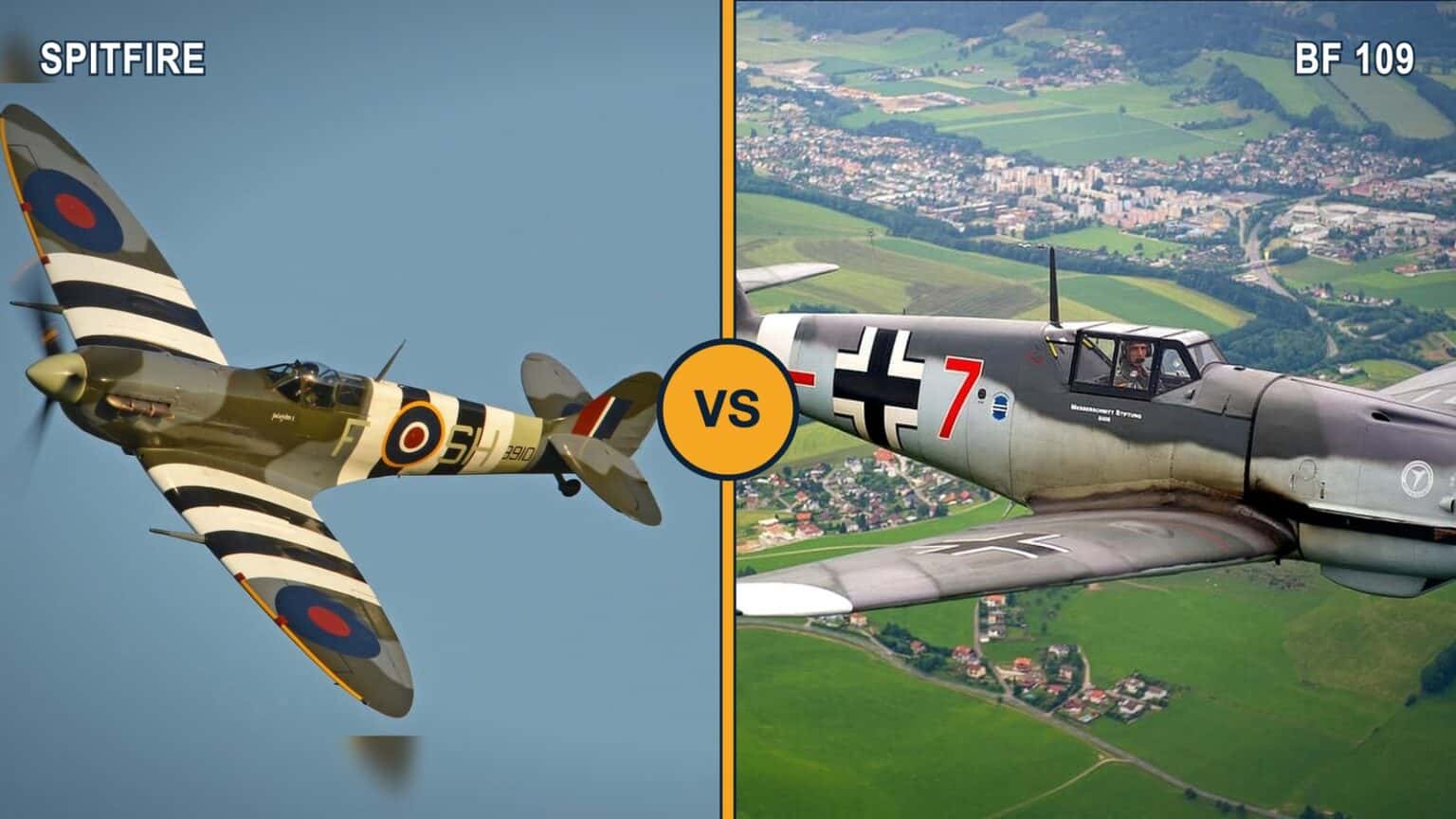
According to Wikipedia, the Bf 109 was faster than the Hurricane and climbed better, but the Hurricane could out-turn it.
In RAF trials, early Hurricanes reached 315 mph (507 km/h) at 16,200 ft (4,900 m), and a Hurricane Mk IIa reached 342 mph (550 km/h).
Firepower: the same eight guns, then cannon
Both fighters started with eight wing-mounted .303 in Browning machine guns. Early Spitfires carried only four of them at first because of a Browning shortage, and the other four were added later.
Cannon-armed Spitfire Mk IB aircraft were trialled in 1940. The Hurricane followed with a cannon-armed Mk IIC, and its fighter-bomber versions carried four 20 mm cannon and a 500 lb (230 kg) bomb load.
The Hurricane’s wide wheel track and strong airframe suited that heavier work. Its ground-attack versions, nicknamed Hurribombers, kept an edge in ground attack in North Africa.
Battle of Britain: who shot down more?
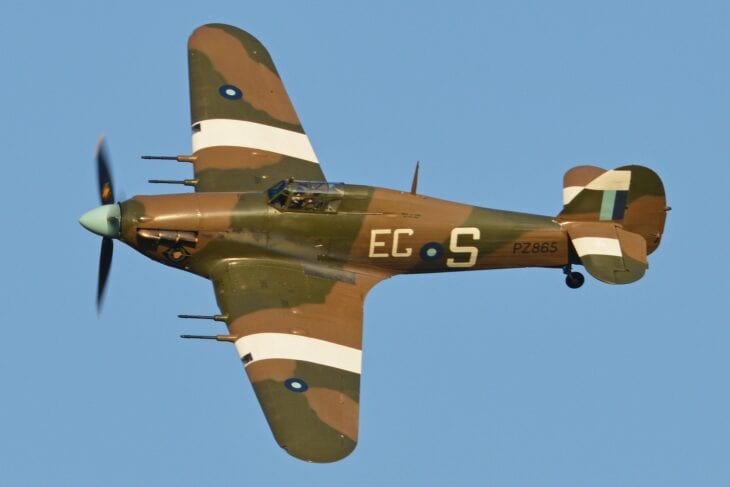
At the end of June 1940, 31 of Fighter Command’s 61 fighter squadrons flew Hurricanes. The type outnumbered the Spitfire throughout the battle.
Fighter Command credited the Hurricane with 55 percent of the 2,739 German losses and the Spitfire with 42 percent. Wikipedia’s Hurricane article also gives a figure of 60 percent for the Luftwaffe’s losses in the campaign overall, so the exact share depends on the source.
The Spitfire’s numbers look better per aircraft, because its squadrons had the lower attrition rate and higher victory-to-loss ratio. The Spitfire was a better fighter, and the Hurricane flew more of the fight. For the full story, see our article on why the Hurricane shot down more planes in the Battle of Britain.
Ease of repair and production
Hurricane manufacture and maintenance were eased by conventional construction methods. Squadrons could make many major repairs without outside support, and damage to the steel-tube structure could be fixed by ground crews with basic equipment.
The Spitfire was harder to build, but it had more room to grow. More than 20,351 Spitfires were built across 24 marks, while 14,487 Hurricanes were built from 1937 to 1944.
The last Spitfire rolled out in February 1948, while Hurricane production ended in 1944.
Roles after 1940
The Spitfire developed into a long line of fighters and reconnaissance aircraft. Its marks stayed in front-line use well past the Battle of Britain.
The Hurricane moved into other jobs. It was the principal single-seat night fighter in Fighter Command during the 1941 Blitz, and from early 1941 it patrolled German airfields in France at night. The cannon-armed Mk IIC performed intruder work in 1942.
Those jobs show the Hurricane’s strength. It did not need to be the fastest fighter to be useful.
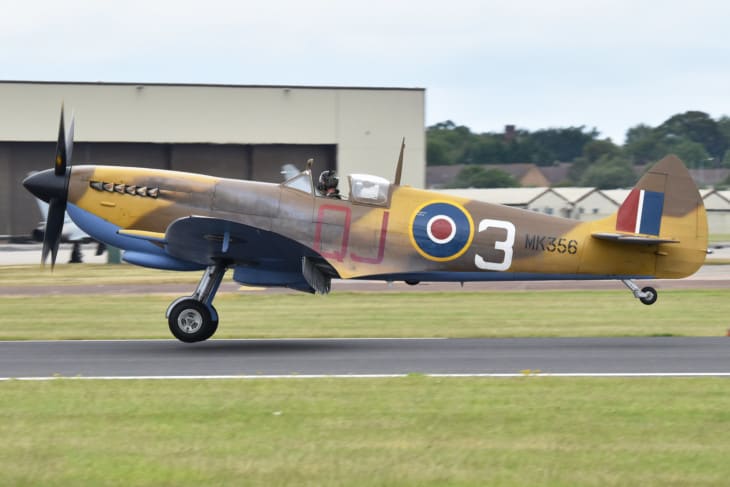
The Spitfire’s long development life is the other half of the story. Its 24 marks carried the same basic design into 1948, which is why it is the better-known name today.
The Hurricane also had a clear edge in night work. It was the principal single-seat night fighter in Fighter Command during the 1941 Blitz.
One more difference is turning. Wikipedia says the Hurricane could out-turn the Bf 109, even though the Bf 109 was faster and climbed better.
Which still fly today?
About 60 Spitfires remain airworthy as of 2025, according to Wikipedia. The Battle of Britain Memorial Flight operates five of them.
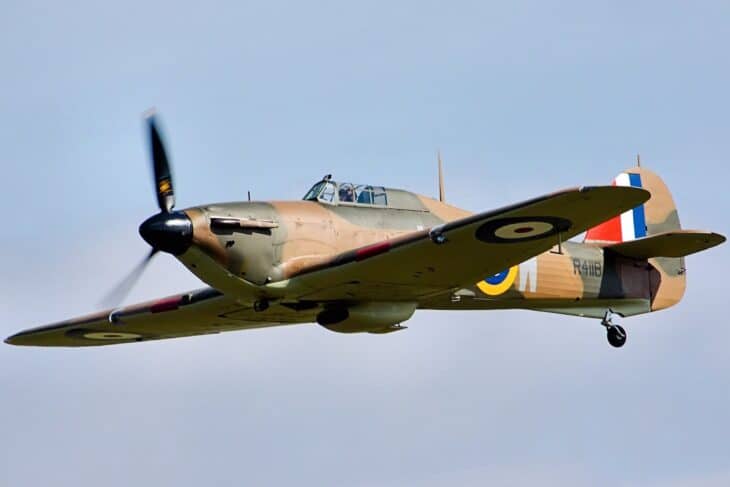
Hurricane Mk I R4118 is the world’s only airworthy Hurricane to have fought in the Battle of Britain. For the type histories, see our full guides to the Spitfire and the Hurricane.
For the Spitfire’s German rival, see our Spitfire vs Bf 109 comparison.
The myth about this matchup
“The Spitfire won the Battle of Britain” does not survive the record. Fighter Command credited the Hurricane with 55 percent of the German losses, against 42 percent for the Spitfire. The Spitfire was the better fighter, but the Hurricane flew more of the battle.
FAQ
Sources and references used for research and fact-checking.
About the Author

Tim is the owner and lead editor of AeroCorner since 2019, overseeing aviation content covering aircraft, airlines, airports, and the broader aviation industry. Through years of researching, writing, editing, and publishing aviation-focused content, he has developed extensive practical knowledge of commercial aviation and air travel. Based in Asia and a frequent traveler himself, Tim also brings firsthand passenger experience to AeroCorner’s coverage. Outside of publishing, he has also explored aviation firsthand through hands-on flight training in New Zealand.