


Table of Contents
P-40 vs Spitfire at a glance
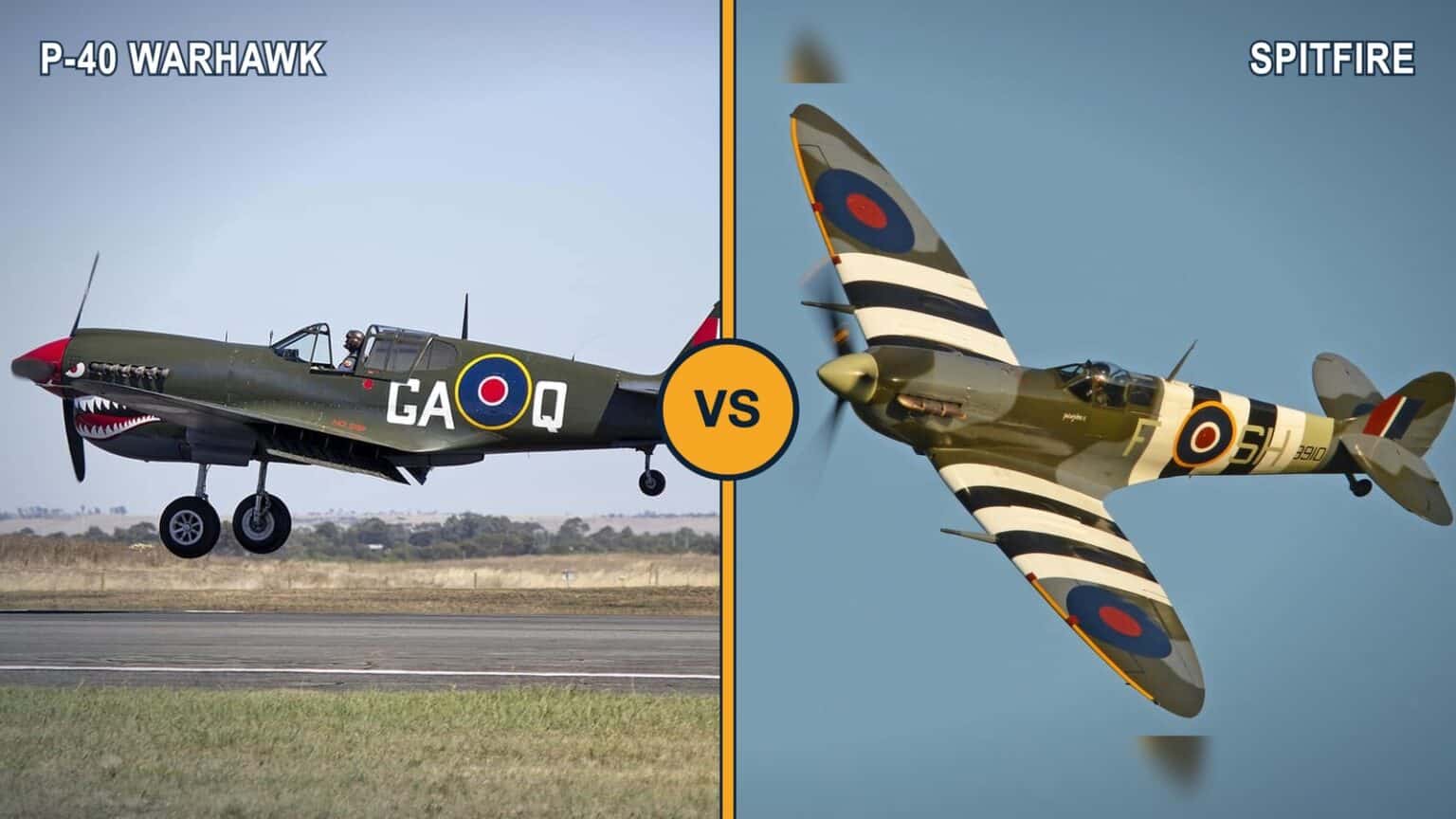
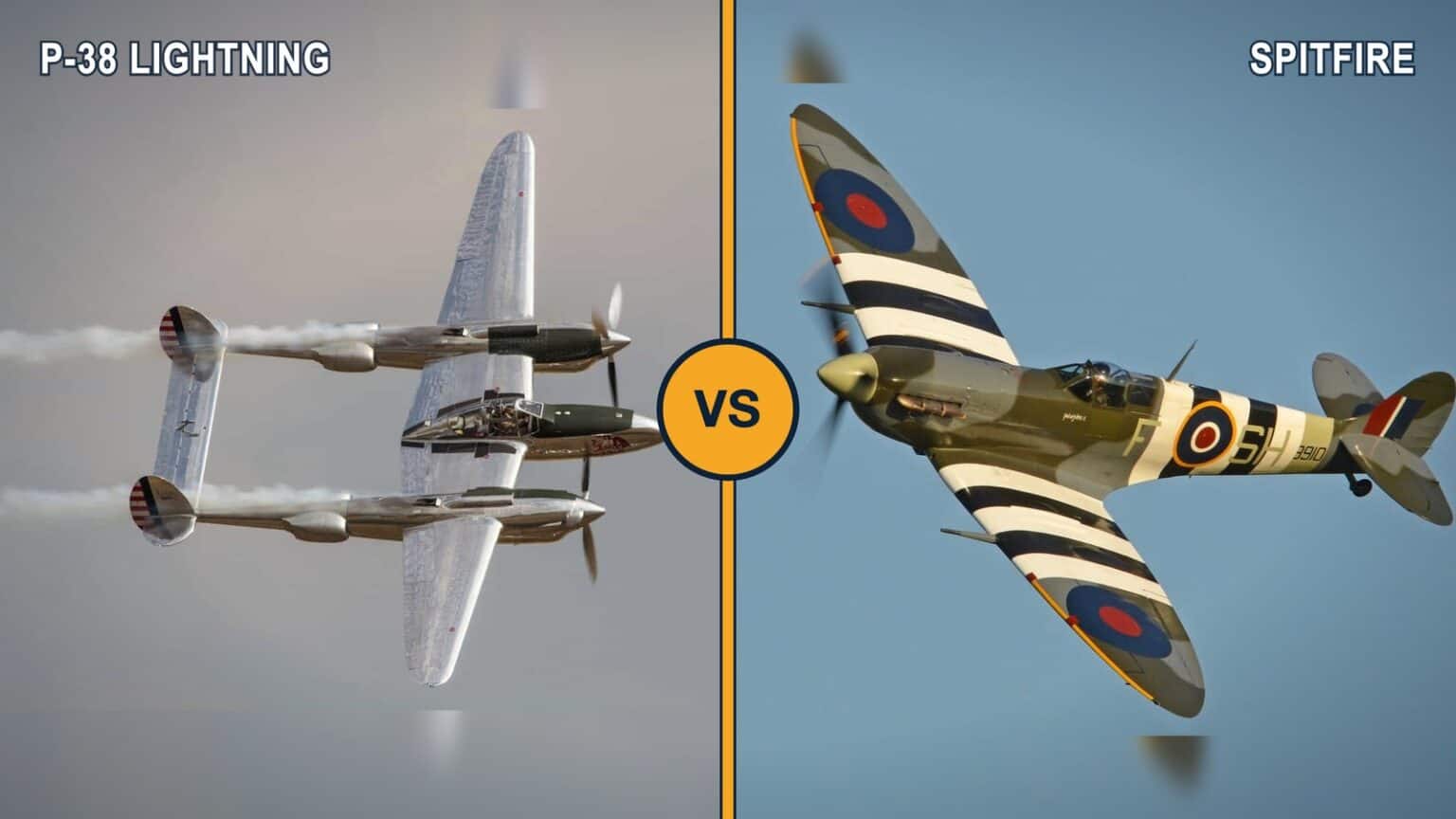
The Spitfire is the stronger pure fighter, and the gap grows with altitude. The P-40 Warhawk was the better fit for low-level fighting, and it was available in huge numbers.
| P-40 Warhawk | Spitfire | |
|---|---|---|
| First flight | October 14, 1938 (XP-40) | March 5, 1936 (prototype K5054) |
| Service entry | 1939 | August 4, 1938 (Mk I, No. 19 Squadron) |
| Number built | 13,738 | 20,351 |
| Armament | Six .50 caliber guns (P-40E) | Eight .303 inch guns (original spec), later 20 mm cannon |
| Supercharger | Single-stage, single-speed | Two-stage from the Mk IX (June 1942) |
| Airworthy today | 28 | About 60 (as of 2025) |
Altitude: where the Spitfire pulled away
The P-40 used an Allison V-1710 with a single-stage, single-speed supercharger. That made it a poor high-altitude fighter, and it was best at 15,000 feet or lower over northwest Europe. The Flying Tigers’ planes had an effective ceiling of about 25,000 feet.
The Spitfire Mk IX went the other way. It used the two-stage Merlin 61, and an RAF test report said it “will climb easily to 38,000 feet.” The LF Mk IX reached 404 mph (650 km/h) at 21,000 feet.
That is the single biggest difference between them.
Guns: six .50s against eight .303s
The P-40E carried six .50 caliber machine guns, three in each wing. Early P-40N blocks dropped one gun from each wing, leaving four, and later blocks put it back after field complaints.
The original Spitfire specification called for eight .303 inch Brownings, though early aircraft flew with only four because of a Browning shortage. Cannon came later: the B wing carried four .303s and two 20 mm Hispanos, and the C wing could carry four 20 mm cannon.
The heavier .50s hit harder than rifle-caliber .303s. Cannon-armed Spitfires closed that gap.
What the P-40 did well
The P-40 was among the fastest diving fighters of the early war. Fighting at low and medium altitude, it built a real record. Clive Caldwell of the RAAF scored 22 of his 28½ kills in P-40s, and more than 200 Allied pilots became aces in the type, at least 20 of them double aces.

The Flying Tigers (American Volunteer Group) claimed 297 enemy aircraft in about 6.5 months, for four of their own pilots lost in air-to-air combat, according to the group’s own records. Those are the group’s own claims.
On April 18, 1943, the 57th Fighter Group was credited with 74 aircraft destroyed in the “Palm Sunday Massacre” over the Mediterranean. Australia took 553 P-40Ns for the Royal Australian Air Force.


Its weak point was altitude and climb, which the sources describe as “fair to poor, depending on the subtype.” Later 1,200 hp Allisons and 1,400 hp Packard-built Merlins helped. See the full P-40 Warhawk page page for its specs.
What the Spitfire did well
The Spitfire’s elliptical wing gave the lowest induced drag for an untwisted wing. Aerodynamicist Beverley Shenstone described it as “the thinnest possible wing with room inside” for the undercarriage, guns and ammunition.
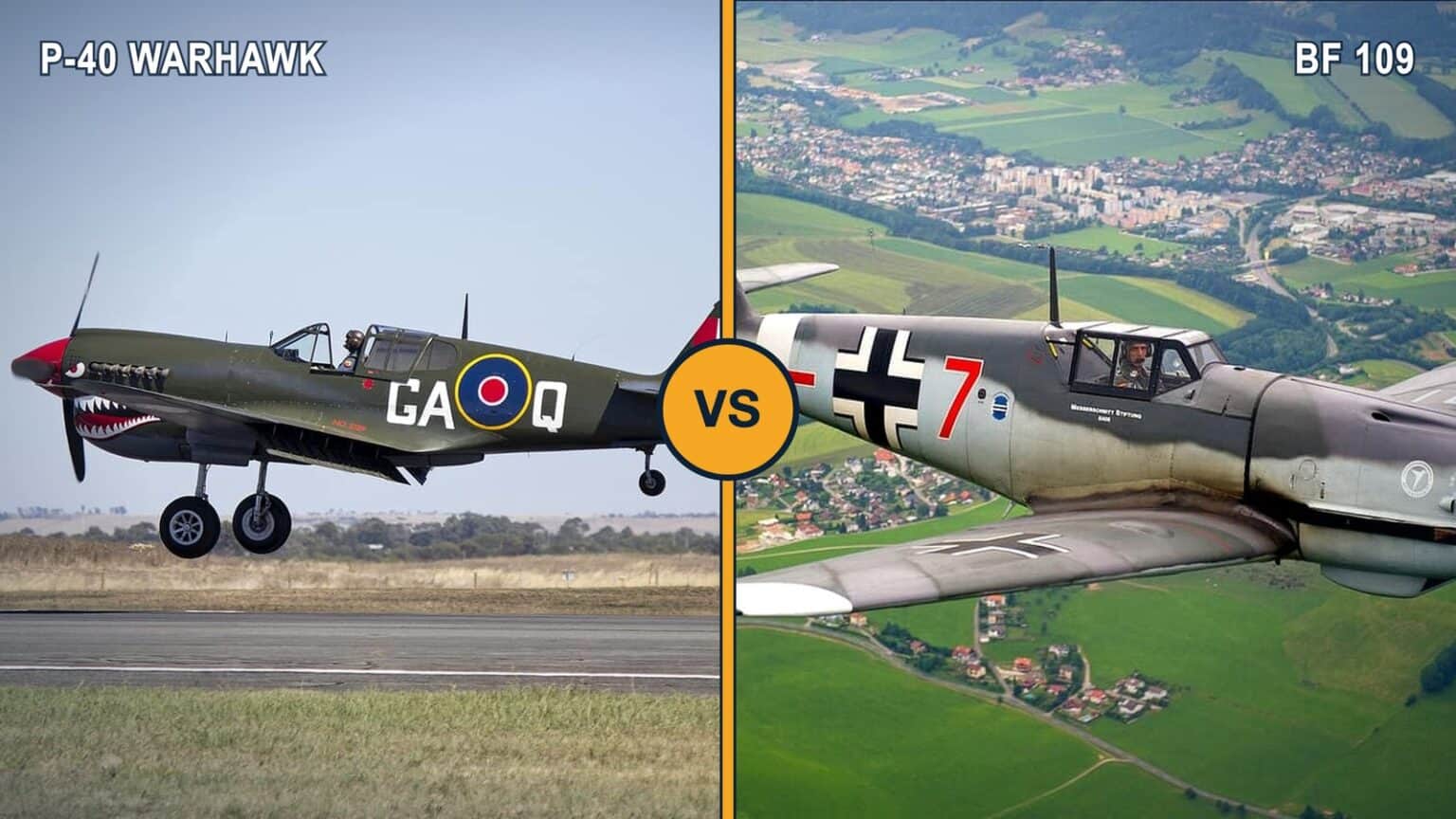
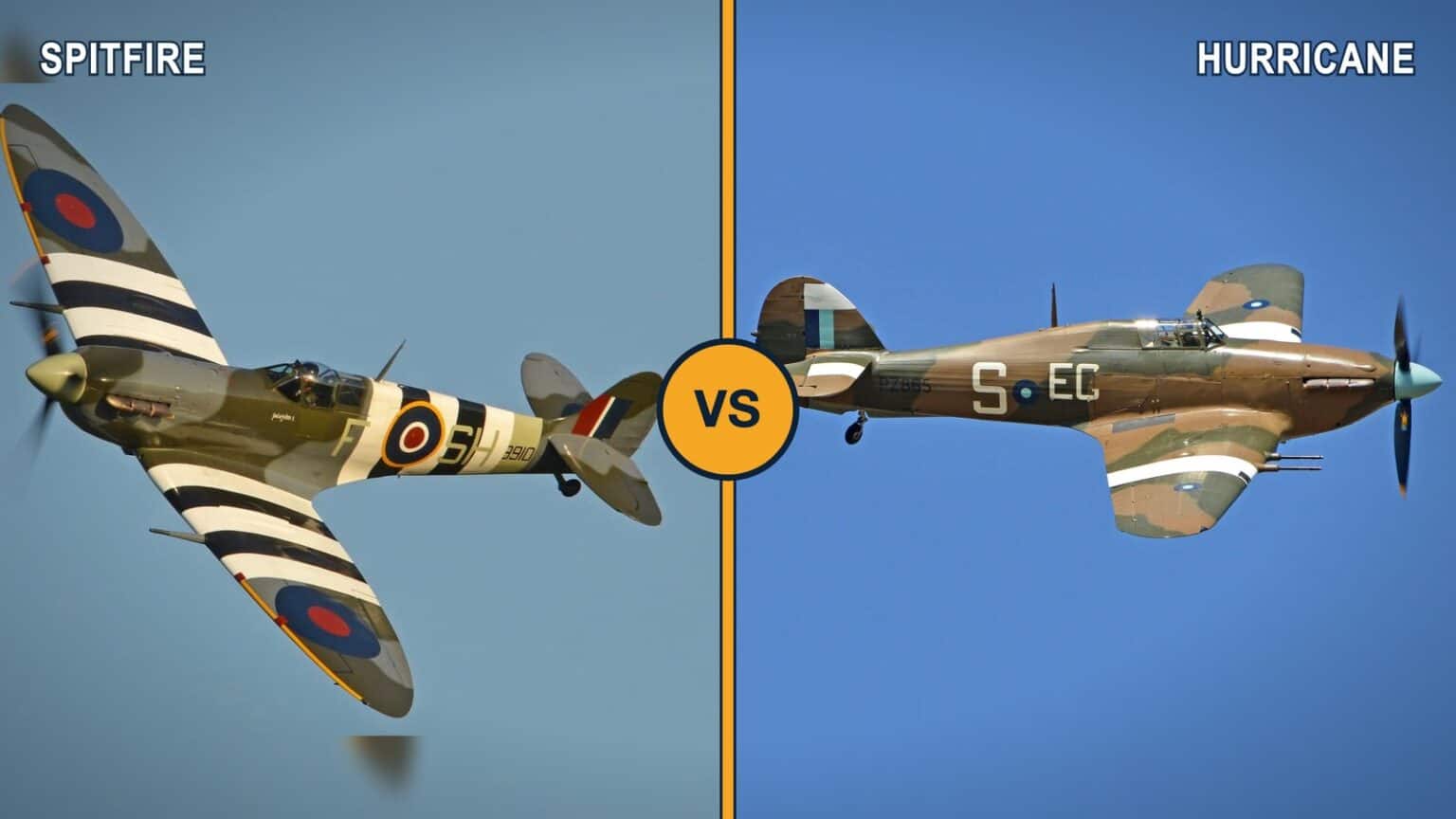
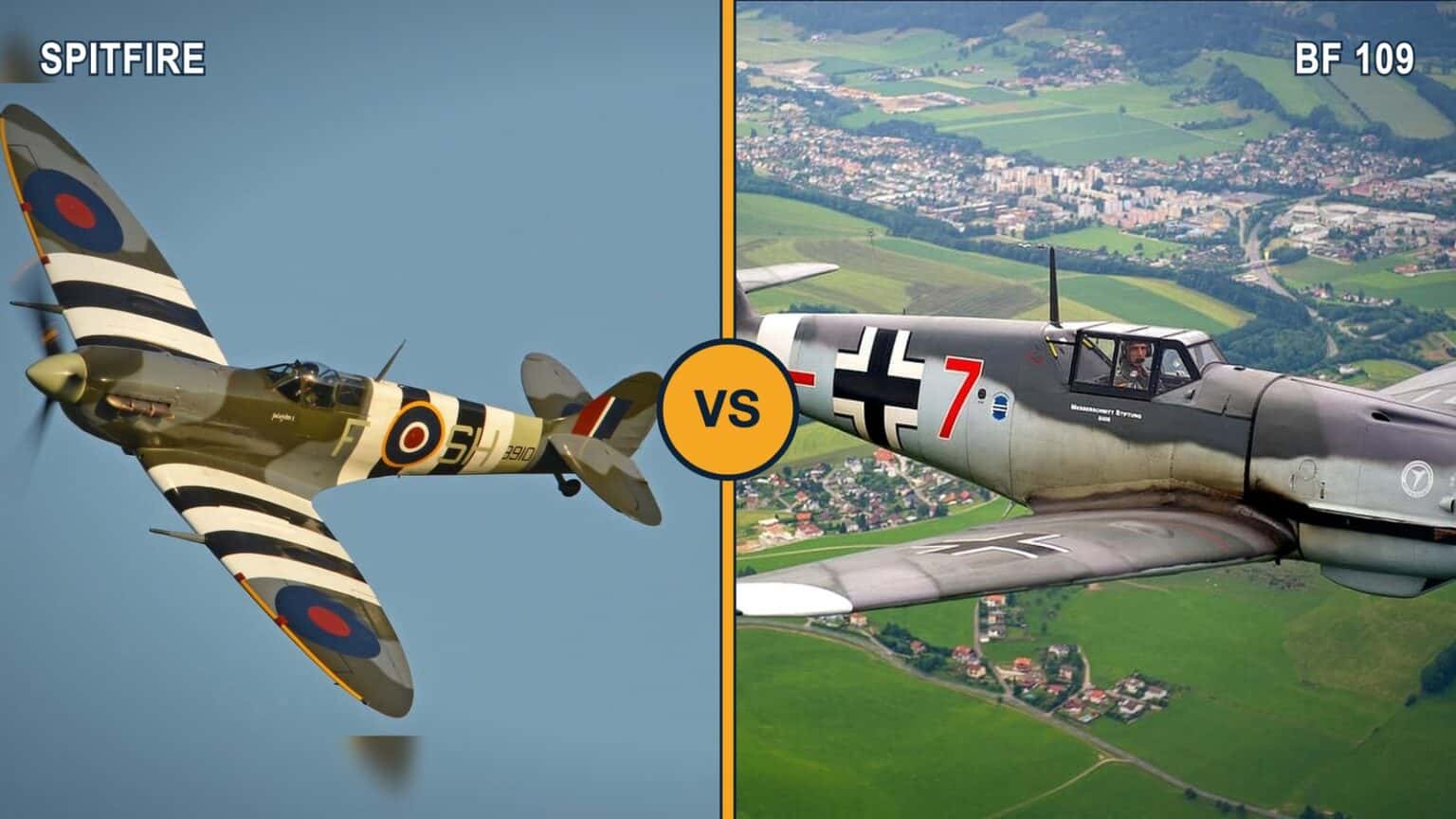
In the Battle of Britain, Spitfire units had a lower attrition rate and a higher victory-to-loss ratio than the more numerous Hurricane. Spitfires mainly engaged the Messerschmitt Bf 109E escort fighters, while Hurricanes went after bombers.
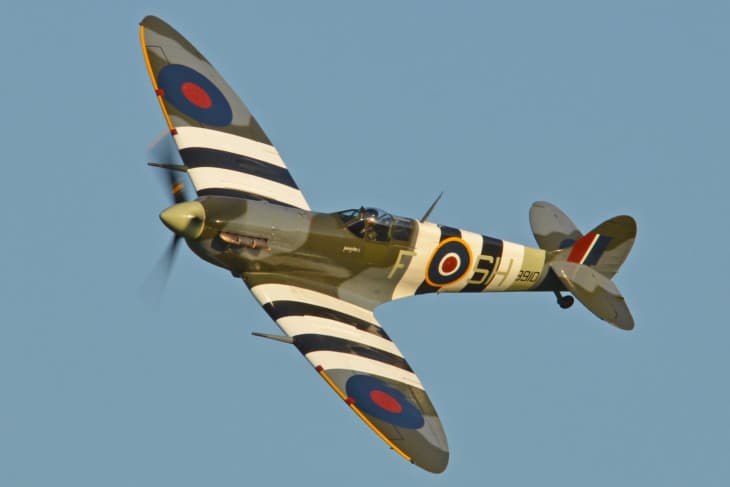
The design kept improving. The Mk V, the most numerous mark at 6,487 built, was a Mk I with the Merlin 45 series engine. When the Fw 190 outclassed the Mk Vb in 1942, the Mk IX arrived in June of that year.
Rolls-Royce Griffon engines later produced up to 2,340 hp. A post-war Spitfire F.24 reached 454 mph (731 km/h), though the F.24 came too late for the war.
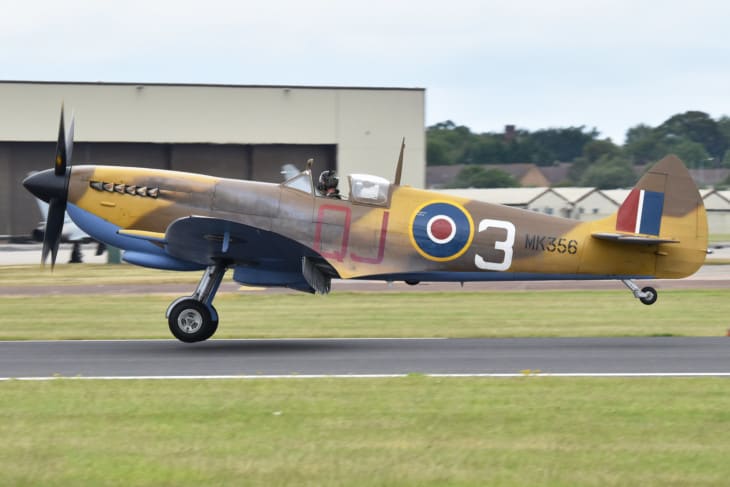
For more on the type, see the Supermarine Spitfire page.
Which versions are being compared?
Neither name is one aircraft. The P-40 went from the B and C Tomahawk to the D Kittyhawk I, the six-gun E, and the N, built until November 1944. Early Allisons made 1,040 hp at sea level and at 14,000 feet.
Some stripped-down P-40N “hot rods” reached up to 380 mph, the highest top speed of any production P-40. That still sits below the Mk IX Spitfire, which topped 400 mph.
The Spitfire spans even more: the Mk I of 1938, the Mk V that began equipping units in early 1941, the Mk IX of June 1942, and Griffon marks beyond. A fair matchup is the P-40E against the Spitfire Vb, or the late P-40s against the Mk IX.
One more data point: the Royal Air Force received 330 P-40F and P-40L Kittyhawk Mk IIs under Lend-Lease. Soviet commanders judged the Kittyhawk clearly better than the Hurricane but “not in the same league as the Yak-1.”
How they were used
Both fought for the Allies, but in different places. The P-40 first fought with Desert Air Force squadrons in June 1941, then with the Flying Tigers in China and with American squadrons in the Dutch East Indies and the Mediterranean.
The Spitfire fought the Battle of Britain, and it stayed in production until February 1948. The P-40 line ended in November 1944.
P-40 vs Spitfire: who wins?
The Spitfire wins as a fighter. It climbed higher, kept power at altitude, and kept being upgraded until the war ended.
The P-40 wins on one narrow count: it was a hard-hitting low-level fighter with strong dive speed. Used in the right place, it did the job it was given.
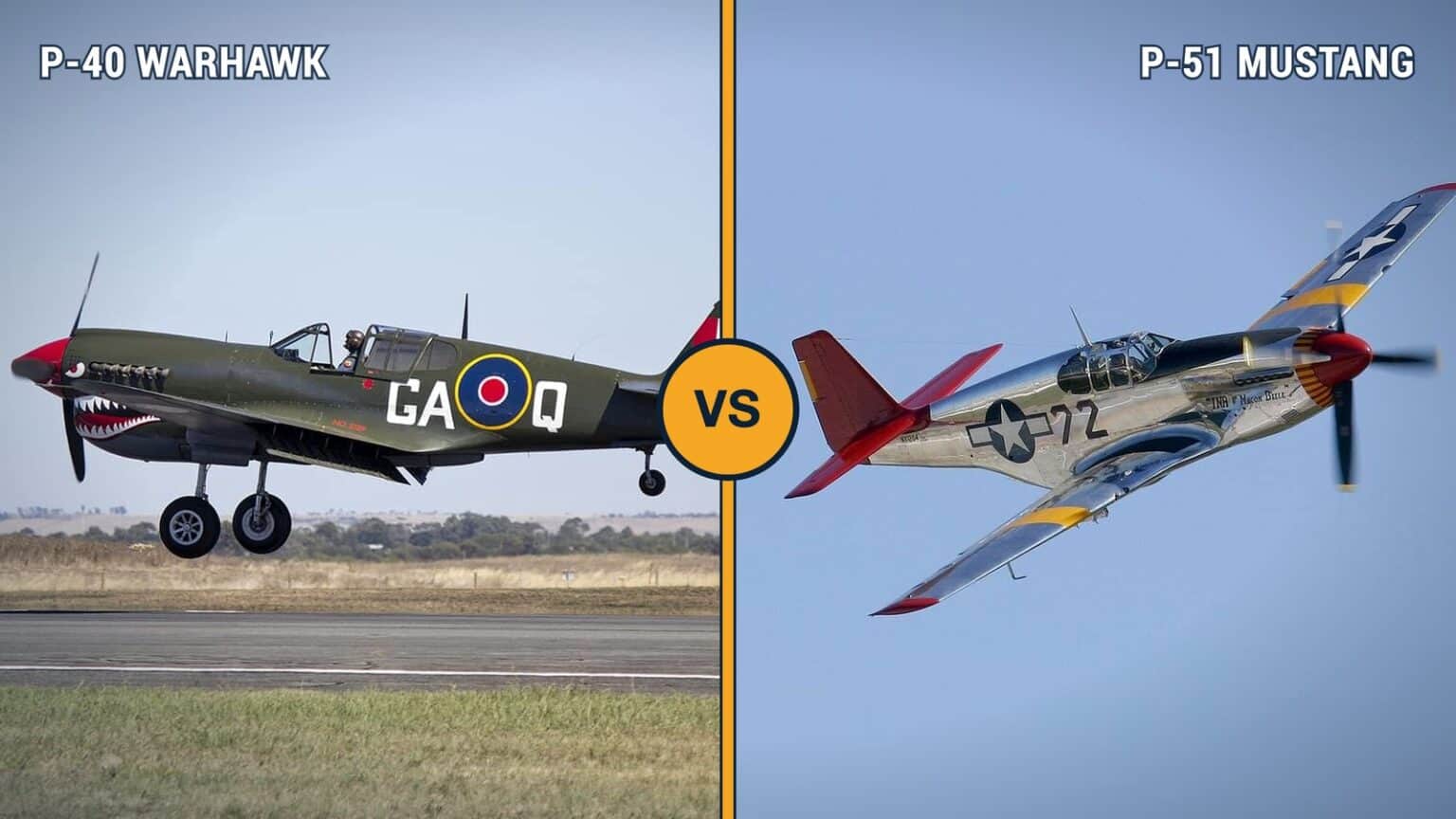
If you want the P-40 against a different rival, try the P-40 Warhawk vs P-51 Mustang comparison. Or see where it lands in the American fighter planes of WWII.
FAQ
Sources and references used for research and fact-checking.
About the Author

Tim is the owner and lead editor of AeroCorner since 2019, overseeing aviation content covering aircraft, airlines, airports, and the broader aviation industry. Through years of researching, writing, editing, and publishing aviation-focused content, he has developed extensive practical knowledge of commercial aviation and air travel. Based in Asia and a frequent traveler himself, Tim also brings firsthand passenger experience to AeroCorner’s coverage. Outside of publishing, he has also explored aviation firsthand through hands-on flight training in New Zealand.