


Table of Contents
| Measure | 737-700 | 737-800 |
|---|---|---|
| Launch | November 1993, with Southwest’s order for 63 | September 5, 1994 |
| First flight | February 9, 1997 | July 31, 1997 |
| Entry into service | December 1997, with Southwest | April 1998, with Hapag-Lloyd Flug |
| Typical two-class layout | 126 passengers | 162 passengers |
| Built | 1,130 delivered | About 5,000 ordered, the best seller of the 737 Next Generation |
| Freight and military versions | 737-700C (US Navy C-40 Clipper), E-7 Wedgetail | 737-800BCF and 737-800SF freighter conversions |
737-700 vs 737-800: same airplane, two lengths
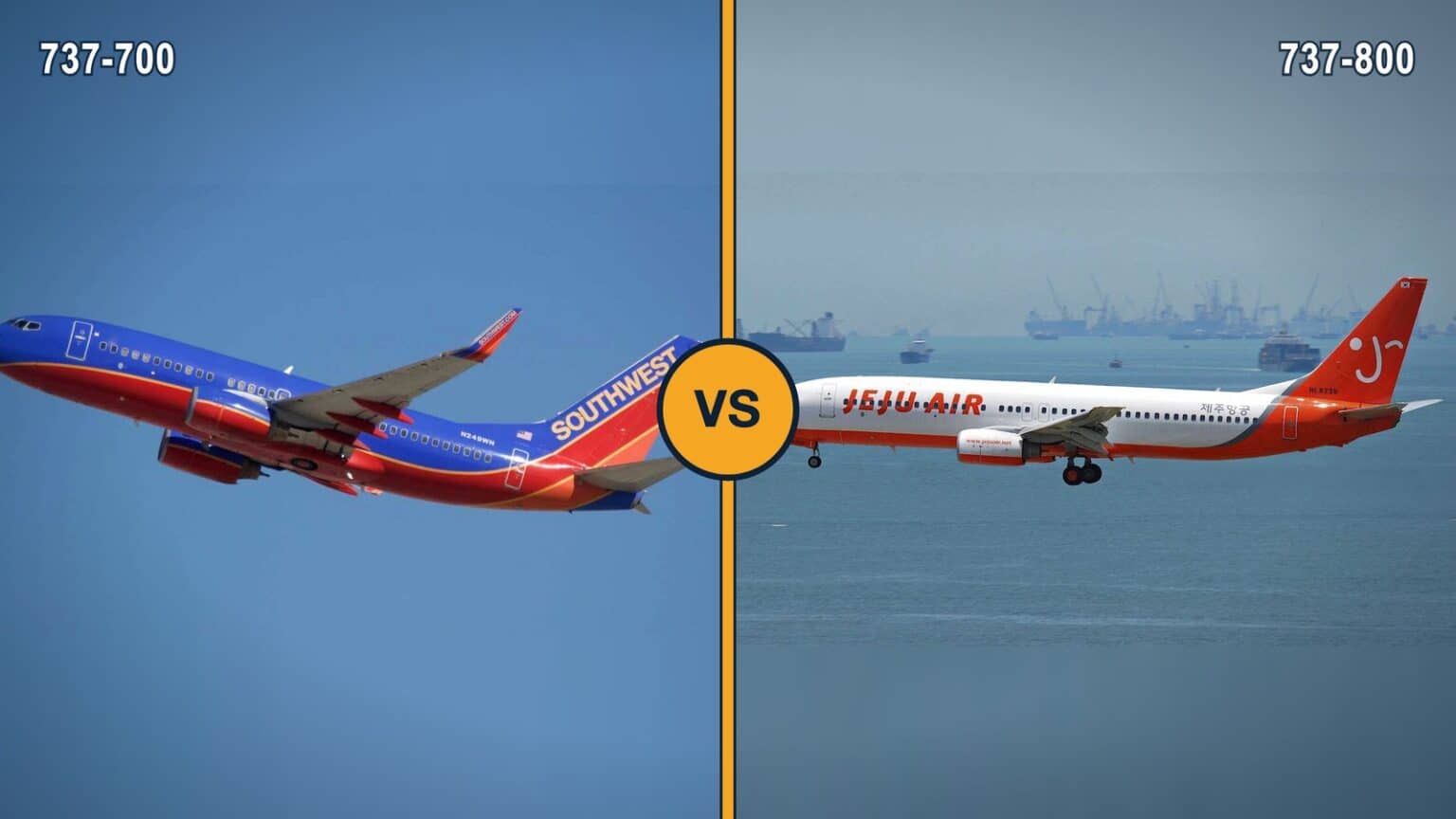
The Boeing 737-700 and the Boeing 737-800 are two members of the same family, the Boeing 737 Next Generation. They share the same wing, with a span of 117 ft 5 in (35.79 m), and the same 12 ft 4 in (3.76 m) fuselage diameter.
What differs is the length of the tube. The -800 is a stretched -700, so the real question is how much airplane you need, not which generation is newer.
The -700 first flew in February 1997 and the -800 five months later, in July 1997. Both entered service within about four months of each other, and both stayed in production until 2019.
The short version
Pick the 737-700 for thinner routes, longer legs and shorter runways. Pick the 737-800 for more seats at a lower cost per seat. The -800 is the one airlines bought by the thousand.
Where the 737-700 wins
Range and runway
The -700 is the longer-legged of the two. The database lists 3,460 miles (5,570 km) for the -700 against 3,380 miles (5,440 km) for the -800.
Shorter fuselages need less runway, too. The panel shows a takeoff distance of 6,700 ft (2,040 m) for the -700 and 7,600 ft (2,320 m) for the -800.
Landing distance follows the same pattern, at 4,500 ft (1,370 m) against 5,250 ft (1,600 m).

Lower weight
Both carry the same 6,900 gal (26,000 L) of fuel, but the -700 hauls less airplane. Its empty weight is 83,000 lb (37,648 kg) against 91,300 lb (41,413 kg) for the -800.
Its maximum takeoff weight is 154,500 lb (70,000 kg), against 174,000 lb (79,000 kg). Fuel is carried by a lighter frame, which is why the -700 has the longer range.
Boeing leaned on that idea for the 737-700ER. It pairs the -700 fuselage with the -800 wings and landing gear, plus extra tanks, for a quoted range of 5,775 nautical miles (6,646 miles, or 10,695 km). All Nippon Airways was the launch customer.

Where the 737-800 wins
Seats and cost per seat
The -800 is 129 ft 6 in (39.47 m) long. The -700 is 110 ft 4 in (33.63 m), so the -800 is about 19 feet longer.
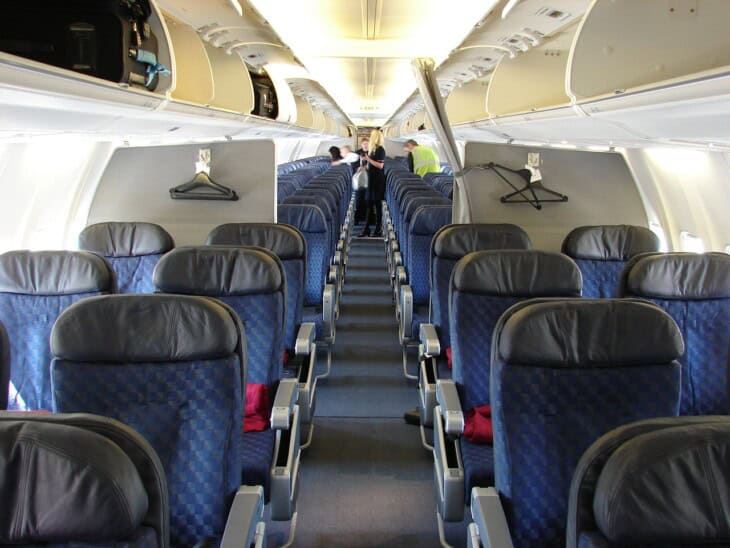
That length goes into the cabin. The -800 cabin is 98 ft 4 in (29.97 m) long against 79 ft 2 in (24.13 m), and the cabin width and height are the same.
Boeing lists a typical two-class layout of 126 seats for the -700 and 162 for the -800. An airline can also fit 189 seats on the -800 in one class.
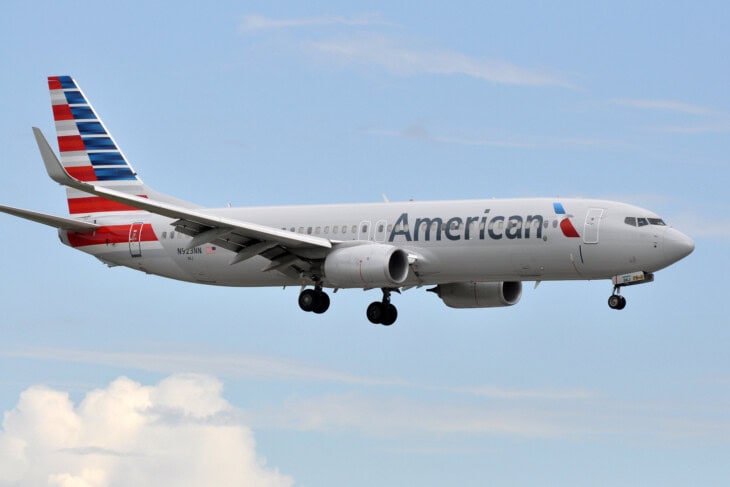
More seats spread the crew, fuel and fees over more paying passengers. The maximum payload shows the same gap, at 47,000 lb (21,300 kg) against 38,700 lb (17,600 kg).
Cargo space
The -800 also has more room under the floor. Its baggage volume is 1,593 ft³ (45.1 m³) against 1,003 ft³ (28.4 m³) for the -700.
That matters on routes where passengers bring bags. A full -800 needs the hold.
Engines and performance
The two jets use the same engine family, the CFM56-7B. The -700 lists thrust of 2 × 26,300 lbf (117 kN) and the -800 lists 2 × 27,300 lbf (121 kN).
Speed is almost identical. Maximum speed is 473 kt (544 mph, or 876 km/h) for both, and cruise speed is 450 kt for the -700 against 452 kt for the -800.
The ceiling, 41,000 ft (12,500 m), and the climb rate, 3,000 ft/min (15 m/s), are the same. Approach speed is lower for the -700, at 137 kt against 146 kt.
Myth check: the -700 is not the older design
People assume the -700 is the older 737, because it is shorter. The -700 was launched first, in November 1993, but the two flew within five months of each other in 1997 and went into production side by side. The -800 is a stretch of the -700, not its successor.
Legroom, seat maps and winglets
Passengers often search for the seat map. The two jets share a cabin width of about 11 ft 7 in (3.5 m), so a seat in one is the same size as a seat in the other.
Legroom is set by the airline, not by the model. An airline chooses how many rows to fit, so two carriers can offer quite different pitch on the same jet.
Winglets are another thing to look for. Split Scimitar winglets became available for the -800 in 2014 and for the -700 in 2015, so a jet with the tall split tip is a retrofit or a later build, while older jets have the shorter blended tips.
Both listings in our database show blended tips as standard.
Which airlines fly them
Southwest launched the Next Generation program with its November 1993 order for 63 737-700s, and it was the first airline to receive one. By June 2018, about half of the roughly 1,000 -700s in service flew for Southwest.
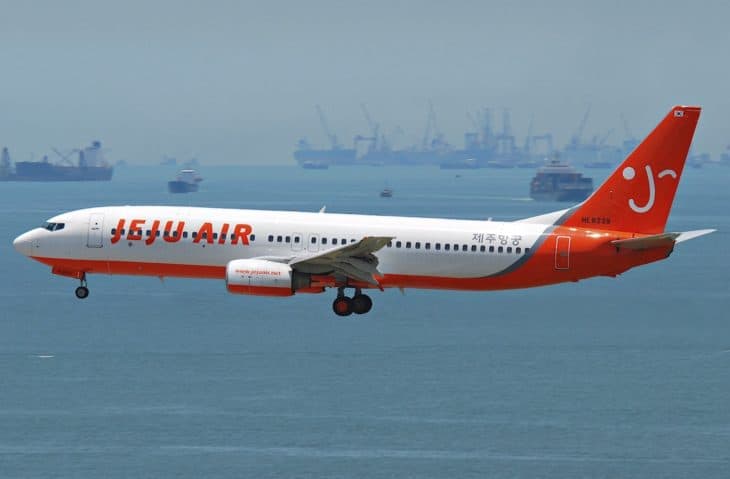
The -800 is the far bigger seller. It is the best-selling 737 Next Generation model, with about 5,000 ordered, and it is the most widely used narrow-body airliner. Southwest flew its first -800 with Split Scimitar winglets on April 14, 2014.
The -800 has found a second life in freight. Boeing launched a passenger-to-freighter conversion program, the 737-800BCF, in 2016.
Which is better, the 737-700 or the 737-800?
For most airlines the 737-800 is the better airplane. It carries 162 passengers in two classes against 126 and its wing, engines and speed are close to the -700.
The 737-700 is the better choice for a thin route, a short runway or a long, lightly loaded sector. It is lighter and flies about 80 miles (130 km) farther in the database.
A passenger boarding either one sits in the same width of cabin, so the biggest difference is the number of rows, not the comfort of each seat.
FAQ
Sources and references used for research and fact-checking.
About the Author

Tim is the owner and lead editor of AeroCorner since 2019, overseeing aviation content covering aircraft, airlines, airports, and the broader aviation industry. Through years of researching, writing, editing, and publishing aviation-focused content, he has developed extensive practical knowledge of commercial aviation and air travel. Based in Asia and a frequent traveler himself, Tim also brings firsthand passenger experience to AeroCorner’s coverage. Outside of publishing, he has also explored aviation firsthand through hands-on flight training in New Zealand.