

Table of Contents
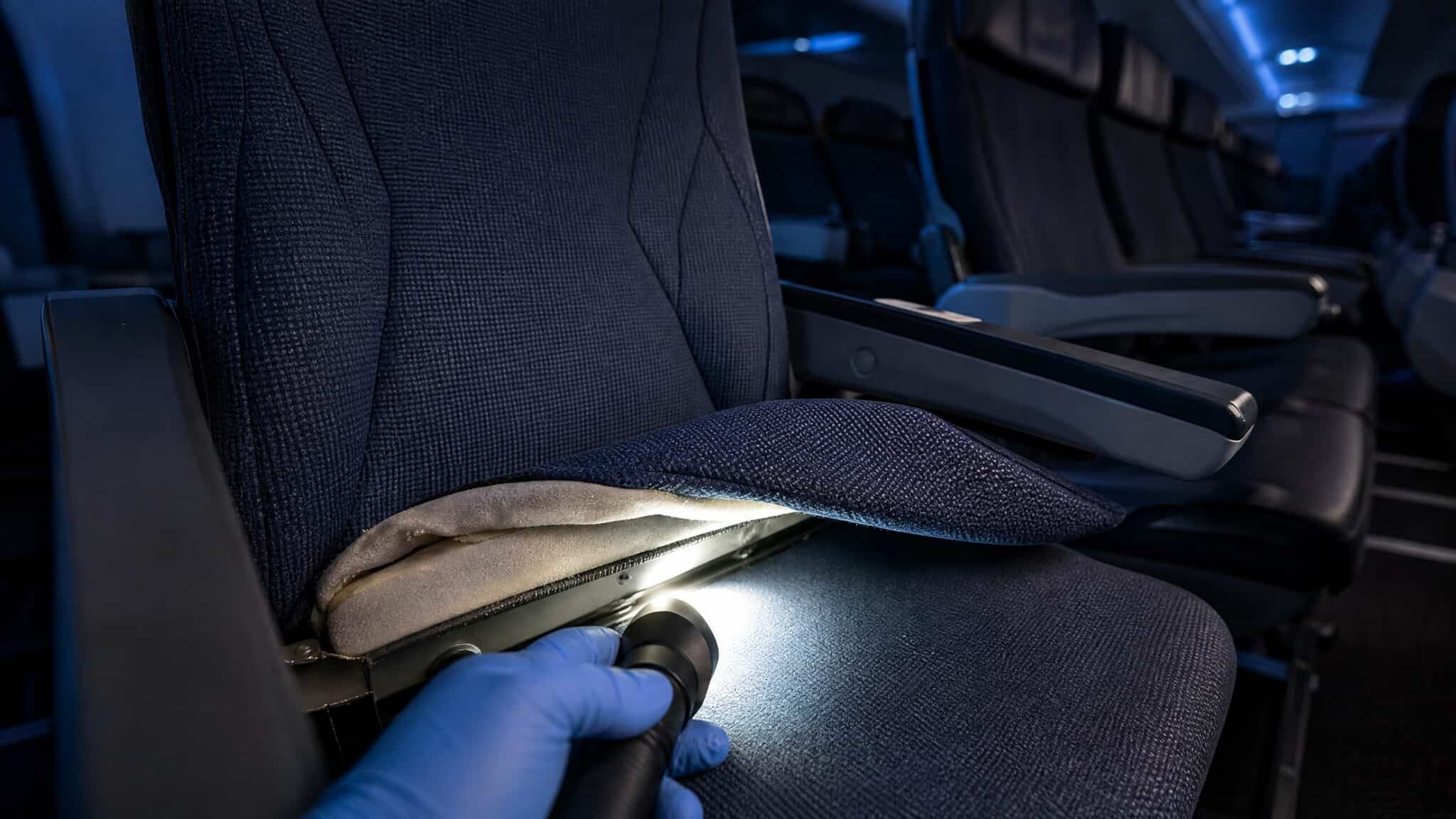
Getting bed bugs out of an airliner is far harder than most coverage of the Qantas flight suggests, and the main obstacle is not the wiring.
Passengers in the front of the economy cabin on Qantas flight QF5 from Perth to Rome on October 9, 2026, told the crew they were being bitten. They were given antihistamines, and the supply ran out, the BBC reported, citing the Sydney Morning Herald.
Qantas cancelled the return flight, QF6, on October 10 so engineers could deep clean the Boeing 787. Several reports, including 1News, said planes cannot simply be fumigated because the gas would damage their wiring.
That is not what the research says. Airlines did gas planes for bed bugs, with methyl bromide, which a study built on more than 100 inspections of infested aircraft found was the only treatment that cleared a cabin in one go. The EU banned it in 2010.
What Happened on QF5
Perth to Rome is about 8,300 miles (13,360 km), one of the longest scheduled flights in the world. Flightradar24 shows the jet, a Boeing 787-9 registered VH-ZNI, spent 16 hours and 31 minutes in the air that night.
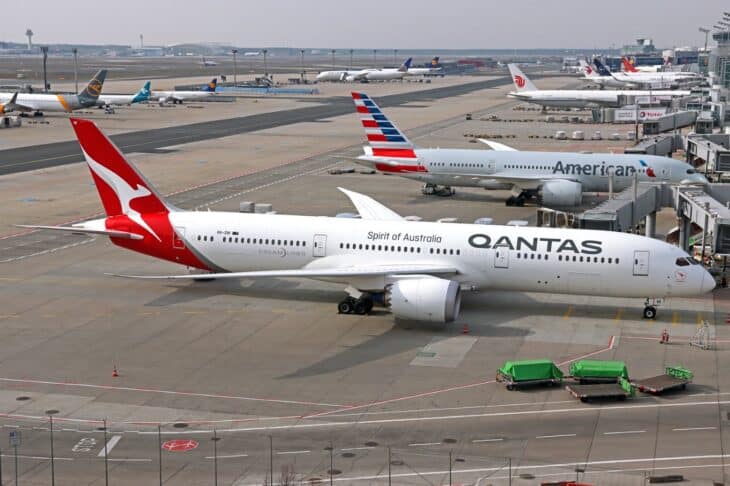
Bed bugs were found in the front of the economy section, a source with knowledge of the incident told the Guardian. Qantas itself has only described “an issue identified on a small number of economy seats”.
“We sincerely apologise to customers for the cancellation of Saturday’s Rome to Perth service,” a Qantas spokesperson told the BBC. Everyone booked on QF6 got a hotel and a seat on another flight within 48 hours of their original departure, the airline said.
The aircraft itself did not wait that long. It landed in Rome at 7:33 a.m. local time on Saturday and left at 2:02 p.m. as QF7006, about six and a half hours later, according to Flightradar24 and One Mile at a Time.
The jet left Rome before its passengers did
VH-ZNI flew Rome to Perth as QF7006 the same afternoon QF6 was cancelled, then Perth to Sydney. By October 13 it was back on a scheduled Sydney to Singapore service. Qantas has not said whether anyone was aboard the Rome departure, or where the deep clean was done.
Why Airlines Stopped Gassing Planes
The wiring explanation has a traceable source. In January 2025, Fortune quoted Reuven Noyman, owner of NYC Steam Cleaning, a company that cleans private jets, saying fumigation can damage the electrical wiring throughout a cabin.
That line was repeated almost word for word in coverage of the Qantas flight. The aviation pest-control literature tells a different story.
A 2014 paper by Adam Juson of UK pest controller Merlin Environmental Solutions, presented at the International Conference on Urban Pests, followed more than 100 inspections of infested airliners over three years. It found methyl bromide fumigation had been the main way to clear an aircraft until it was withdrawn, leaving European carriers without an effective way to wipe out an infestation.
An airliner is a sealed tube, which suits a gas. Juson described methyl bromide as non-corrosive and non-flammable, the benchmark every other method was measured against.
The problem was the ozone layer, not the aircraft. Under the EU’s rules on ozone-depleting substances, methyl bromide’s remaining quarantine and pre-shipment uses ended on March 18, 2010, apart from case-by-case emergency approvals.
What Works Now, by the Numbers
Juson measured each method by counting infested seats before treatment and again 28 days later. The single methyl bromide fumigation in the study took an aircraft from 114 infested seats to zero.
Sprays did far worse. Only two insecticides, Ficam W and K-Othrine, held the aerospace materials approval (AMS 1450A) needed for use in a cabin, and chemical treatment cut infested seats by an average of just 15%.
The K-Othrine aircraft averaged more infested seats after treatment than before. Deltamethrin, the insecticide in that spray, makes bed bugs move around more, and in a closed cabin that meant more passenger complaints.
Heat came closest to the gas. Hot air is ducted into a sealed treatment enclosure until the core of everything inside reaches 140°F (60°C), and the best version, forced hot air, cut infested seats by 95%.
Heat has its own risks. In one recirculating treatment the cabin overheated and plastic parts of the seats and sidewalls warped, and heaters placed inside the cabin raised concerns about fire and flooding.
Finding the bugs is a problem too. Scent dogs found 95.5% of known infested seats, while an electronic air-sampling detector found 59% and logged 26 false alarms per search, probably set off by warm seatback electronics.
Why Waiting for Complaints Costs More
The worst aircraft in the study had 126 infested seats. A single seat held 140 bugs, and technicians collected more than 25 grams (0.9 oz) of live insects from the cabin.
Infestations grow fast because the cabin is stable, full of hiding places and never short of people to feed on. Airlines that searched their aircraft before anyone complained had 80% fewer infested seats than airlines that waited for passengers or port health officials to raise the alarm.
Waiting is still common. Passengers on several Turkish Airlines flights between March and October 2024 found bed bugs, the New York Times reported, and several said airline staff dismissed their concerns.
In 2017, British Airways apologized to a family bitten on an overnight flight from Vancouver to London. The mother said she was told she could not change seats after spotting the bugs.
Nobody puts the bugs aboard on purpose. Prof. Michelle Power, a parasitologist at Macquarie University, told the Guardian they had “more than likely” arrived in someone’s luggage or clothes, adding that they are “a flightless insect, without planes”.
Where the Qantas 787 Is Now
VH-ZNI was flying passengers again within three days. Flightradar24 shows it on QF81 from Sydney to Singapore on October 13 and back as QF82 the same day.
Qantas said its cabins are cleaned regularly, part of the overnight work every airliner gets, and treated with disinfectant every 50 days as a precaution. It has not said whether the deep clean used heat, insecticide or something else.
The cancellation was not cheap. Because QF6 was due to leave from the EU, One Mile at a Time estimated cash compensation alone could reach €141,600 if every passenger on a full 236-seat Dreamliner claimed €600, on top of the hotels.
Juson’s numbers argue for paying early. The longer bed bugs go unnoticed in a cabin, the more seats they reach, and the weaker every treatment short of the banned gas becomes.
As of Juson’s study, nothing had fully replaced methyl bromide. Every alternative he tested was a compromise between what kills the bugs and what the cabin, the passengers and the ozone layer can take.
Sources and references used for research and fact-checking.
- BBC News, Qantas flight grounded after bedbug outbreak
- The Guardian, Bedbug infestation forces Qantas to ground plane in Rome
- One Mile at a Time, Qantas Boeing 787 Grounded By Bed Bugs, And It Cost The Airline Dearly
- Flightradar24, VH-ZNI flight history
- International Conference on Urban Pests, Management of Bed Bugs on Commercial Aircraft (Adam L. R. Juson, Proceedings of the Eighth International Conference on Urban Pests, 2014)
- legislation.gov.uk, Commission Regulation (EU) No 1087/2013 amending Regulation (EC) No 1005/2009 with regard to reporting on methyl bromide
- Fortune, Bedbugs are 'more common on planes than people like to admit,' cleaning expert says
- Fortune, Airline passengers who found bedbugs infesting their seats were allegedly rebuffed by flight crew
- 1News, Qantas passengers complain of bed bug outbreak on plane
- BBC News, British Airways apologises for bed bugs on Canada flight
Get the Newsletter
The latest aviation news and stories sent to your inbox.
About the Author

Tim is the owner and lead editor of AeroCorner since 2019, overseeing aviation content covering aircraft, airlines, airports, and the broader aviation industry. Through years of researching, writing, editing, and publishing aviation-focused content, he has developed extensive practical knowledge of commercial aviation and air travel. Based in Asia and a frequent traveler himself, Tim also brings firsthand passenger experience to AeroCorner’s coverage. Outside of publishing, he has also explored aviation firsthand through hands-on flight training in New Zealand.