

Table of Contents
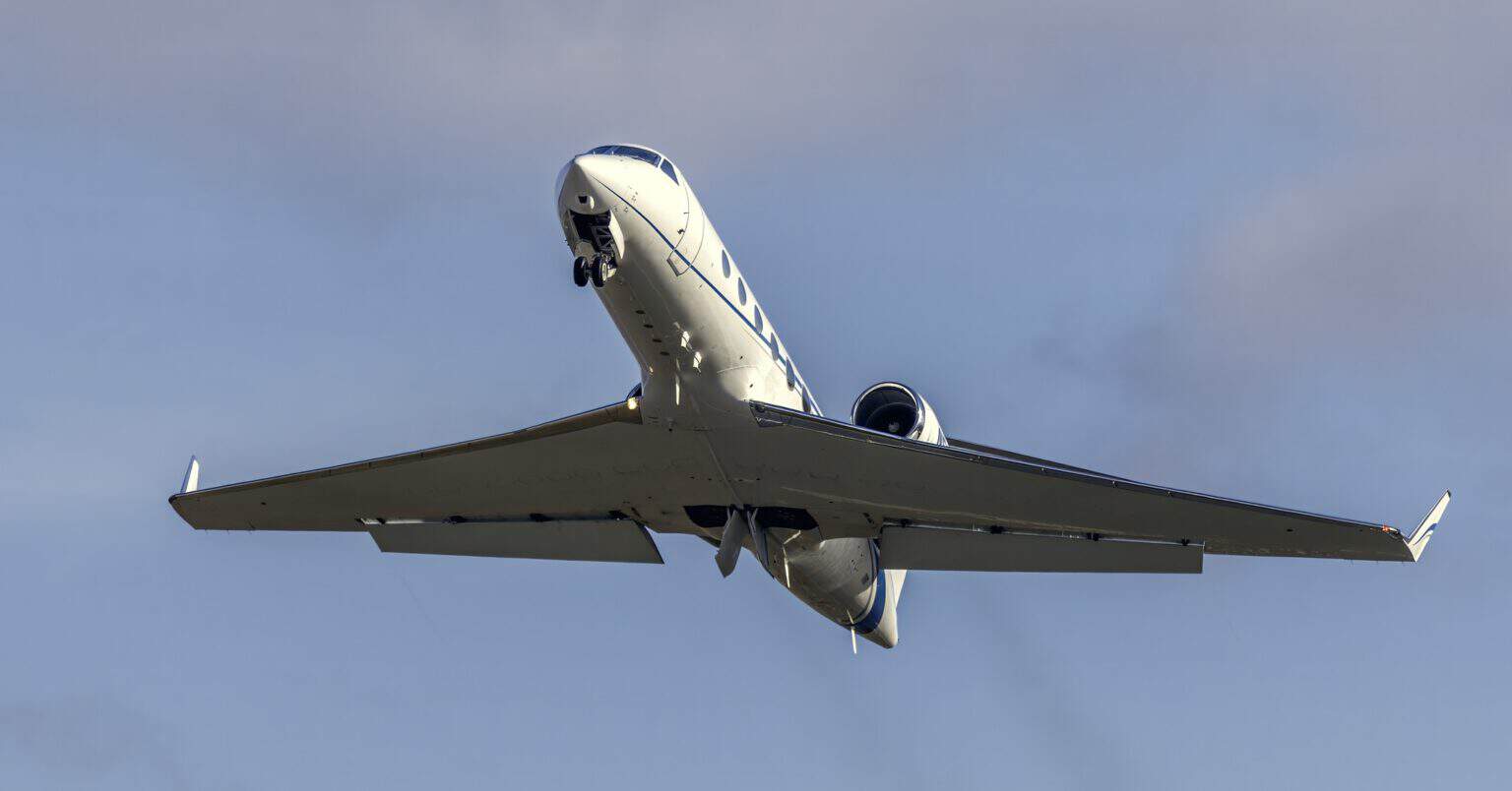
On August 21, 2018, a chartered Gulfstream IV carrying Post Malone and 15 other people blew two tires taking off from Teterboro, New Jersey, for London. It held over New Jersey and Connecticut for about five hours, then landed safely at Stewart International Airport in New York at 3:50 p.m. Nobody was hurt.
It is remembered as a near crash on Post Malone’s private jet. It was neither. The jet belonged to a Florida company, the damaged tires never left their wheels, and the five hours in the air were the crew’s plan, not a struggle to stay up.
This account is built from the FAA’s statements on the day, the air traffic control audio, the FAA aircraft registry record for the jet, N101CV, and the federal rule that explains why the NTSB never opened a case.
Aug. 20, 2018
Closing the VMAs. Post Malone performs at the MTV Video Music Awards at Radio City Music Hall with 21 Savage and Aerosmith, and “Rockstar” wins song of the year.
10:50 a.m.
Two tires fail on takeoff. Gulfstream IV N101CV leaves Teterboro for London Luton with 16 aboard. The FAA says it blew two tires as it took off from Runway 24.
Minutes later
The call to ATC. “Sir, we just felt a tire blow, we may need to come back there,” the pilot tells the controller. Fire trucks and ambulances line a runway at Teterboro.
Late morning
A first diversion. After about 30 minutes circling, the jet heads east. The Port Authority says it is bound for Westfield-Barnes Regional Airport in Massachusetts.
About 1 p.m.
Holding over Connecticut. Flightradar24 shows the jet circling over Stamford and Bridgeport, burning fuel. The FAA then says it has been diverted to Stewart International in New York.
3:50 p.m.
Landing at Stewart. The jet lands on Runway 9 with its tires still on the wheels. The runway reopens about 45 minutes later, after a debris sweep.
June 11, 2025
Off the US register. The airframe, by then registered N919MB, has its US registration cancelled, according to the FAA’s deregistered aircraft file.
What happened
The night before, Post Malone had performed at the 2018 MTV Video Music Awards at Radio City Music Hall. He was due at the Reading and Leeds Festival in England that weekend, and the Gulfstream was fueled for the Atlantic crossing to London Luton.
The jet left Teterboro at about 10:50 a.m. Eastern time. The FAA said it blew two tires as it took off from Runway 24, and the crew felt it straight away.
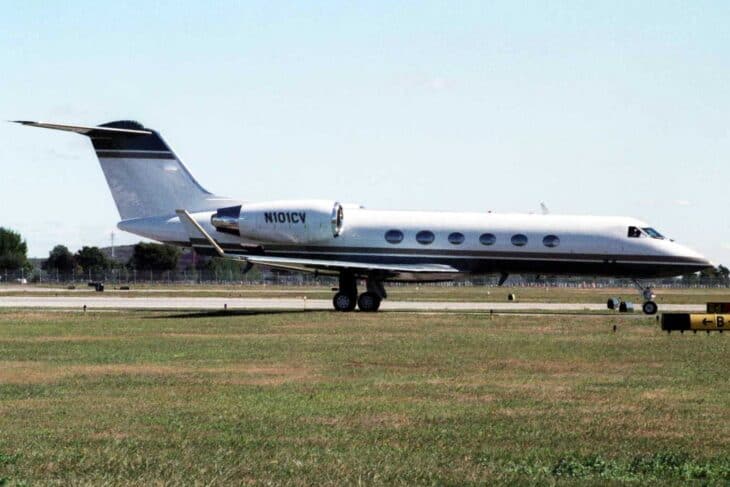
“Sir, we just felt a tire blow, we may need to come back there,” the pilot told air traffic control, in audio archived by LiveATC.net. A second call was plainer: “We blew a tire, we need to come back, sir.”
Teterboro prepared for the return, lining a runway with a fire truck and ambulances. The jet circled for about 30 minutes instead, then turned east, with the Port Authority saying it was now headed for Westfield-Barnes Regional Airport in Massachusetts.
Westfield-Barnes has a 9,000-foot runway and, according to AIN, a Gulfstream service center. The crew held over the Bridgeport area of Connecticut instead, and the FAA later said the flight had been diverted to Stewart International, about 70 miles (113 km) north of New York City.
Stewart’s main runway is 11,817 feet long, enough for the C-5 Galaxy military transports that also use the field. The Gulfstream touched down on Runway 9 at about 3:50 p.m., with the damaged tires still on their wheels, while fans watched from behind the airport fence.

“There’s one hell of a team on that aircraft,” Post Malone told TMZ after he got off, as quoted by AIN. “Now I need a beer.” To Billboard he said: “I’m alive. I’m ready to rock on.”
What the record shows
The FAA’s statement on the landing was two sentences long: “A Gulfstream Aerospace G-IV aircraft landed safely at Stewart International Airport in New Windsor, NY, about 3:50 p.m. today. The aircraft was towed to the ramp.” The agency said it would investigate. We found no published cause.
The FAA registry ties the jet to serial number 1230, a Gulfstream G-IV built in 1993 with Rolls-Royce Tay engines. Its registered owner was SMB Aircraft LLC of Longwood, Florida, under a certificate issued on February 23, 2017. Post Malone did not own it.
The same airframe later carried the tail number N919MB. The FAA’s deregistered aircraft file shows its US registration was cancelled on June 11, 2025, and N101CV now sits in the FAA’s reserved-number file.
There is no NTSB record at all. The Board’s full aviation database, checked in October 2026, has no entry for N101CV, for serial 1230, or for any event in New Jersey or New York that day.
That is not an oversight, it is the law. Federal rule 49 CFR 830.2 defines an accident by death, serious injury or “substantial damage”, and it says outright that damage to “landing gear, wheels, tires, flaps, engine accessories, brakes, or wingtips” is not substantial damage.
So two failed tires and a safe landing were an incident, and tire failure is not on the list of serious incidents an operator must report to the NTSB.
The coverage disagreed on details, and the disagreements are worth knowing. ABC7 New York reported that the two front tires had blown, while AIN and Billboard both said the two tires on the left side. AIN gave the departure runway as 19, the FAA said 24.
AIN also reported that the jet left the runway under its own power, while the FAA said it was towed to the ramp. Both can be true: an aircraft can roll clear of a runway and still be towed the rest of the way on two deflated tires.
What most accounts get wrong
It was not Post Malone’s jet, it did not lose its wheels, and it was not a crash. The Gulfstream was a charter owned by a Florida company, the two failed tires stayed on their wheels, and the runway at Stewart reopened about 45 minutes after it landed. NPR and others put the flight at about four hours, but the FAA’s own times, 10:50 a.m. to 3:50 p.m., make it five. And nobody ordered the crew to keep flying: under federal rules the pilot in command is the final authority on the flight, and holding to burn fuel was the crew’s call.
Why a tire failure on takeoff is a different emergency
A tire that fails on takeoff fails at the worst moment: the airplane is at its heaviest and fastest on the ground. The crew of Travis Barker’s Learjet in 2008 faced that moment, rejected the takeoff after V1, and four of the six people aboard died, as the NTSB report on that Travis Barker plane crash sets out.
Once a jet is safely airborne, the danger moves to the landing. Nothing about two deflated tires forces a crew down quickly, so time is on their side, and the job becomes making the touchdown as gentle as possible.
Weight is the main lever. Our Gulfstream IV page lists a maximum takeoff weight of 73,000 lb (33,200 kg) against a maximum landing weight of 58,500 lb (26,500 kg). A jet carrying enough fuel to cross the Atlantic, as this one was, takes off well above the landing figure.
Approach speed rises with weight, and the energy the brakes and tires must absorb rises with weight times speed squared. As a rough rule that energy scales with the square of weight, so landing at 58,500 lb rather than 73,000 lb means about a third less of it to soak up on two good main tires and two flat ones.
Some airliners can dump fuel. The certification rule, 14 CFR 25.1001, only requires a jettison system on a transport-category airplane that cannot meet set climb requirements at maximum takeoff weight minus 15 minutes of fuel. The N101CV crew did it the slow way, by flying.
AIN reported that the crew kept the landing gear down for the whole flight. That kept the damaged wheels out of the wheel well, and the extra drag burned fuel faster.
Runway length was the last lever. Teterboro’s runways are 6,997 and 6,014 feet long; Stewart’s is 11,817 feet, which leaves room to roll out with light braking when one side of the main gear has no working tires.
Several reports said the jet was “ordered” to keep flying. Air traffic control does not make that decision. Under 14 CFR 91.3 the pilot in command “is directly responsible for, and is the final authority as to, the operation of that aircraft.”
Controllers handle the traffic around a holding jet, but where to go and when to land is the crew’s decision.
What changed
Nothing, and that is the honest answer. With no NTSB case there was no probable cause, no report and no safety recommendation, and the FAA never published what made the tires fail.
The cause is not public. The NTSB tied the tire failures on Travis Barker’s Learjet to underinflation, but no record says what caused these two, so this article does not guess.
What the day does show is the system working as designed. A crew with a damaged airplane and a full fuel load took five hours, two diversions and a runway 4,800 feet longer than Teterboro’s longest to turn a tire failure into a non-event.
FAQ
Sources and references used for research and fact-checking.
- Federal Aviation Administration, Aircraft registration and deregistered aircraft files (ReleasableAircraft database, October 2026 release): Gulfstream G-IV serial 1230, N101CV / N919MB
- Electronic Code of Federal Regulations, 49 CFR 830.2, Definitions (aircraft accident, incident, substantial damage)
- Electronic Code of Federal Regulations, 49 CFR 830.5, Immediate notification
- Electronic Code of Federal Regulations, 14 CFR 91.3, Responsibility and authority of the pilot in command
- Electronic Code of Federal Regulations, 14 CFR 25.1001, Fuel jettisoning system
- National Transportation Safety Board, Aviation accident database (avall), October 2026 release
- FlightAware, N101CV aircraft registration
- AIN, GIV Lands Safely after Main Gear Tires Burst on Takeoff
- Fox News, Plane carrying rapper Post Malone lands safely in New York after blowing 2 tires
- CBS News, Post Malone: Plane carrying hip-hop artist makes safe emergency landing in New York
- NPR (via WAMC), Post Malone Safe After Dramatic Plane Landing
- ABC7 New York, Plane carrying Post Malone, 15 others makes emergency landing after blowing tires during takeoff at Teterboro Airport
- Billboard, Post Malone After Emergency Plane Landing: 'I'm Alive. I'm Ready to Rock On.'
- The FADER, Watch Post Malone, 21 Savage, and Aerosmith perform at the 2018 VMAs
- AirNav, Airport information: KTEB, KSWF and KBAF runway dimensions
Get the Newsletter
The latest aviation news and stories sent to your inbox.
About the Author

Tim is the owner and lead editor of AeroCorner since 2019, overseeing aviation content covering aircraft, airlines, airports, and the broader aviation industry. Through years of researching, writing, editing, and publishing aviation-focused content, he has developed extensive practical knowledge of commercial aviation and air travel. Based in Asia and a frequent traveler himself, Tim also brings firsthand passenger experience to AeroCorner’s coverage. Outside of publishing, he has also explored aviation firsthand through hands-on flight training in New Zealand.