

Table of Contents
A survey of more than 7,000 pilots counted the sleep nobody planned. The sleep regulators do plan is a separate story, and it splits the Atlantic in two.
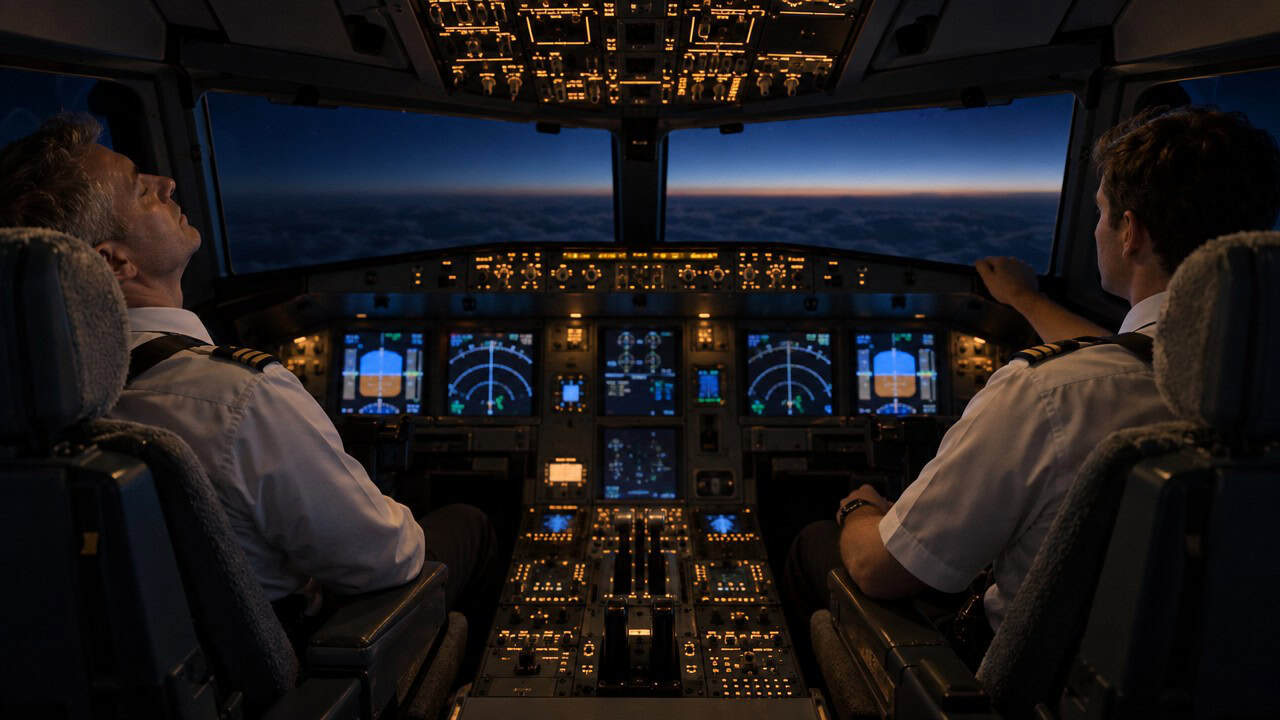
More than three in four European airline pilots, 76.8%, say they had at least one microsleep, nodded off, or fought to keep their eyes open on the flight deck in the previous four weeks. The figure comes from A fatigue survey of European Pilots, 2026, written by the consultancy Baines Simmons for the European Cockpit Association (ECA), the pilots’ union body.
That number is about uncontrolled sleep. It does not count the planned cockpit naps European rules allow, called controlled rest. In the United States, the FAA has not approved it for airline pilots.
What the 76.8% actually measures
The survey ran from Aug. 4 to Sept. 7, 2026, at the peak of the summer season. Some 7,198 pilots across 32 countries answered its core questions, and 7,110 answered the sleep question.
The exact question
“In the last 4 weeks, when operating on the flight deck, how often have you experienced brief uncontrolled periods of sleep (microsleeps), head nodding, or fought to keep your eyes open?” A pilot who only fought to stay awake counts toward the 76.8%.
So the headline figure is broader than falling asleep. As View from the Wing pointed out, it blends true microsleeps with pilots who were only battling drowsiness. The word “uncontrolled” in the question also means a planned, approved nap sits outside it.
There are other limits. The answers are self-reported memories, not sleep measurements. Participation was voluntary, and the union body that promoted the survey is campaigning for stronger fatigue rules.
Still, the number is stable. The 2023 edition, which asked only about microsleeps, found about 76%. A research team working with NASA’s Ames Research Center cited that earlier figure in a 2024 Frontiers in Environmental Health paper as evidence that unplanned sleep happens even where planned naps are legal.
The numbers behind Europe’s sleepy flight decks
About one in four pilots, 24.7%, reported five or more episodes in the four weeks. Another 7.3% reported ten or more.
Where a pilot works matters. Five or more episodes were reported by 34.1% of pilots at low-cost carriers and 30.7% at charter airlines, against 19.6% at network airlines.
By the country that certifies the airline, Malta was highest at 39.3%, then Ireland at 36.2% and Spain at 33.1%. Finland was lowest at 6.1%.
The causes show up elsewhere in the report. 38.8% of pilots said they usually or always lacked enough rest between duties to prevent cumulative fatigue, a problem covered in our guide to fatigue in aviation.
The reporting numbers are the most worrying. Only 37.2% said they usually report when they are too fatigued to fly. Nearly one in four, 24.2%, said they usually say nothing and fly anyway.
The nap Europe allows, and why
Controlled rest is not a bunk break. Long-haul flights with extra pilots send them to hidden crew bunks above the cabin. Controlled rest is a nap in the pilot’s own seat, with only two pilots aboard.
Under EASA’s rule CAT.OP.MPA.210, the captain can organize one when unexpected fatigue hits and workload permits. Only one pilot rests at a time, harness on, seat positioned clear of the controls.
EASA’s guidance caps the rest at 45 minutes, to keep actual sleep near 30 minutes and avoid deep sleep. A 20-minute recovery follows before the pilot takes the controls back, and every rest must end at least 30 minutes before the top of descent.
The logic is that a pilot who naps on schedule is sharper for the landing. The 2024 study from that NASA Ames team followed 31 pilots of a European airline on 120 two-pilot flights of more than six hours. Pilots took controlled rest on 70% of them, and those who did had faster reaction times at top of descent.
Canada adopted the practice in 1996, and by the Transportation Safety Board of Canada’s count, airlines including British Airways, Qantas and Emirates used it too.
Why the FAA said no, and what happened over Hawaii
When the FAA wrote its pilot rest rule, Part 117, some commenters, Boeing among them, backed cockpit naps. The FAA’s final rule of Jan. 4, 2012 said there was “insufficient data” that a controlled nap could be taken safely on a two-pilot flight, and declined to add it to the rules.
That left U.S. airline pilots under 14 CFR 121.543, which requires each pilot on flight deck duty to stay at their station. No approved in-seat nap exists. Our explainer on airline crew rest rules covers what Part 117 does require on the ground.
Banning the nap does not ban sleep. On Feb. 13, 2008, both pilots of go! flight 1002, a Bombardier CRJ200 from Honolulu to Hilo, fell asleep in cruise.

For about 18 minutes, air traffic control could not reach them. The jet flew 26 miles (42 km) past Hilo on autopilot before the crew woke and turned back, the NTSB found. The captain had undiagnosed sleep apnea, and both had started duty at 5:40 a.m. three days running.
When the planned nap goes wrong
The FAA’s caution has its own evidence. On Jan. 14, 2011, the first officer of Air Canada flight 878, a Boeing 767-300 bound for Zurich, began a controlled rest over the North Atlantic.
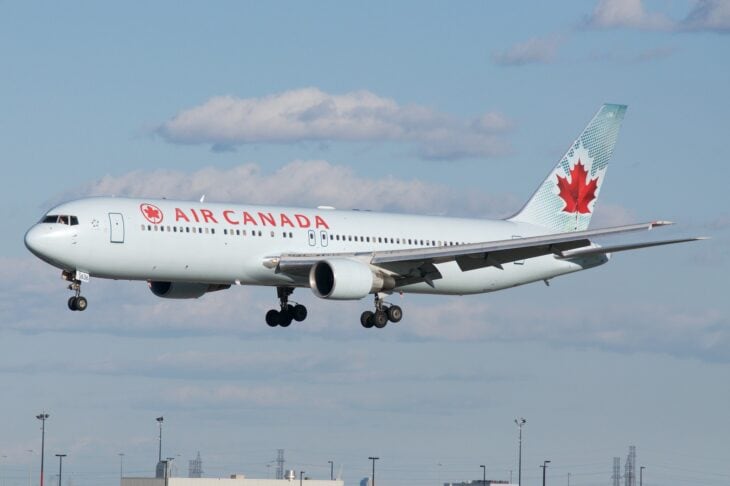

Air Canada’s limit was 40 minutes. The first officer rested for 75, the Transportation Safety Board of Canada reported, and woke feeling unwell. The pilot first mistook the planet Venus for an aircraft, then misread a passing U.S. Air Force C-17 as descending toward them and pushed the nose down.
The 767 swung 400 feet (120 m) either side of 35,000 feet (10,700 m) before the captain recovered it. Fourteen passengers and two flight attendants were hurt.
On Jan. 25, 2024, the risk the system is built around came true. On a Batik Air Airbus A320 from Kendari to Jakarta, the captain took a nap on the flight deck at 36,000 feet (11,000 m). The first officer, short of sleep while caring for one-month-old twins, then fell asleep too.
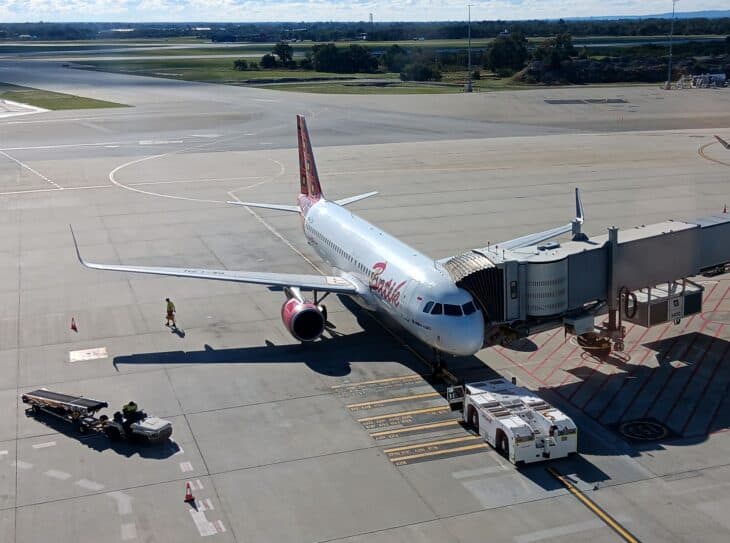

Indonesia’s investigators, the KNKT, recorded 28 minutes between the first officer’s last radio call and the moment the captain woke, off course, in their preliminary report. The flight landed safely.
Europe is looking at the problem again. The ECA says EASA is considering changes to its flight time limitation rules, and the survey is the pilots’ evidence for tougher ones.
The two systems start from opposite bets. Europe assumes tired pilots will sleep anyway and tries to schedule it. The U.S. assumes a nap invites the very lapse it is meant to prevent. Three in four pilots in the survey say the sleep is already happening.
Sources and references used for research and fact-checking.
- European Cockpit Association, Pilot fatigue: the numbers speak
- Baines Simmons for the European Cockpit Association, A fatigue survey of European Pilots, 2026
- View from the Wing, Study Says 77% Of Airline Pilots Fall Asleep In The Cockpit, But Planned Naps Were Allowed
- Frontiers in Environmental Health (2024), Investigating the causes and consequences of controlled rest on the flight deck
- EASA, Easy Access Rules for Air Operations: CAT.OP.MPA.210 and GM1 (controlled rest)
- Federal Register / FAA, Flightcrew Member Duty and Rest Requirements, Final Rule
- eCFR, 14 CFR 121.543, Flight crewmembers at controls
- NTSB, Safety Recommendation A-09-61 through -66 (go! flight 1002)
- Transportation Safety Board of Canada, Aviation Investigation Report A11F0012 (Air Canada 878)
- KNKT (Indonesia), Preliminary Report KNKT.24.01.02.04 (Batik Air BTK6723)
Get the Newsletter
The latest aviation news and stories sent to your inbox.
About the Author

Tim is the owner and lead editor of AeroCorner since 2019, overseeing aviation content covering aircraft, airlines, airports, and the broader aviation industry. Through years of researching, writing, editing, and publishing aviation-focused content, he has developed extensive practical knowledge of commercial aviation and air travel. Based in Asia and a frequent traveler himself, Tim also brings firsthand passenger experience to AeroCorner’s coverage. Outside of publishing, he has also explored aviation firsthand through hands-on flight training in New Zealand.