

Table of Contents
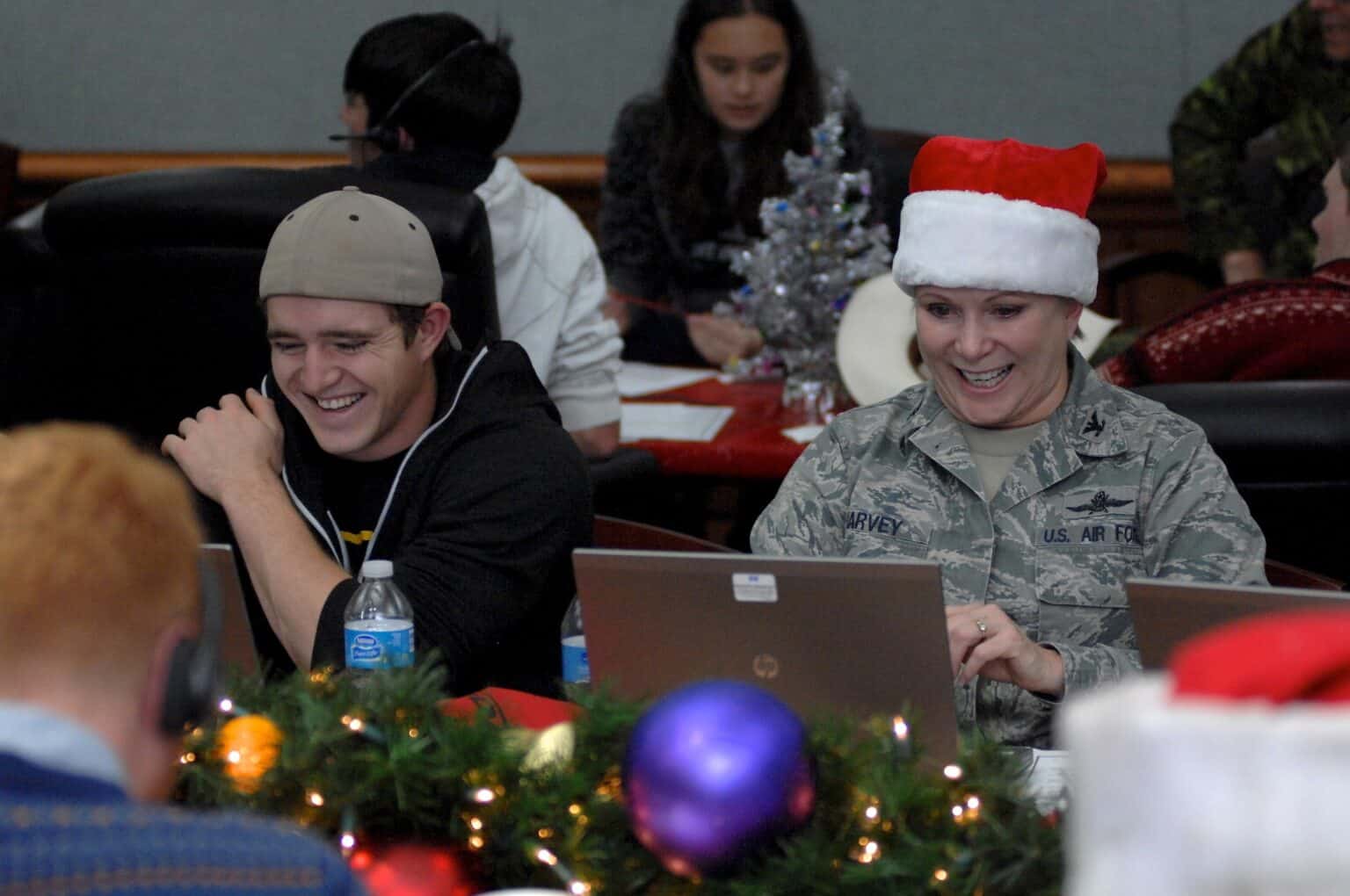
On Christmas Eve, a call center at Peterson Space Force Base in Colorado Springs fills with volunteers, many of them in uniform. The phones ring from early morning until midnight Mountain Time.
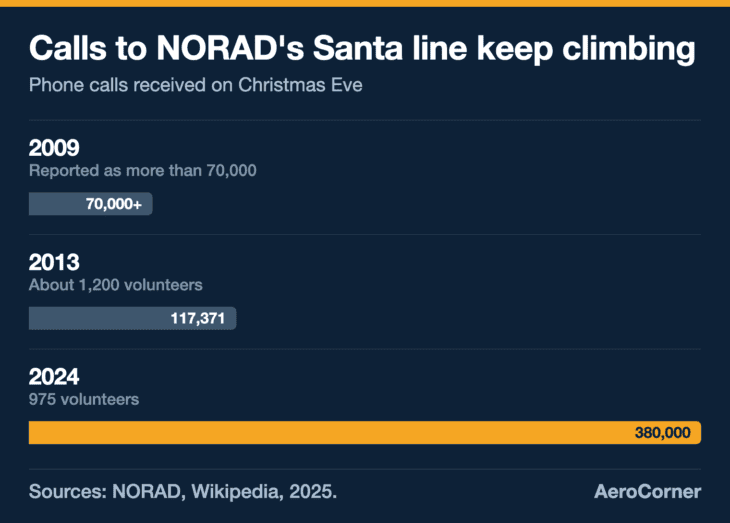
In 2024, NORAD says, 975 volunteers took about 380,000 calls that day, and the tracker website drew 32 million views. Every caller asks a version of the same question: where is Santa right now?
The story of how a continental air defense command ended up answering it is usually told as a Christmas Eve typo in a department store ad. The newspaper record from 1955 tells a slightly different, and more interesting, story. Here is what actually happened, and what the radar, satellites and fighter jets NORAD names really do.
How Does NORAD Track Santa?
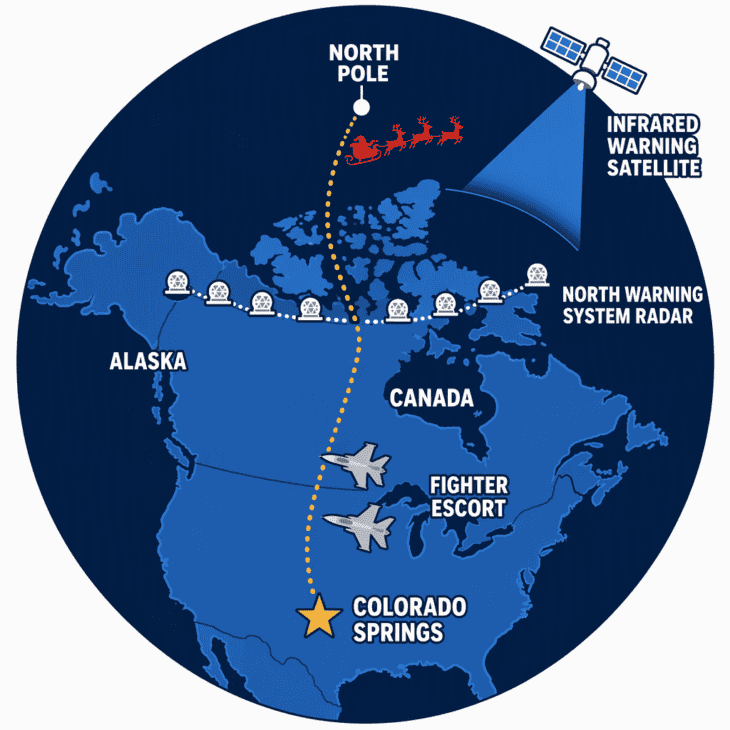
NORAD says it follows Santa with the same three systems it uses for its real job: the North Warning System radar line across Alaska and northern Canada, infrared missile-warning satellites, and fighter jets from the United States and Canada.
The sleigh is a story. The systems are not. Every one of them exists, and every one of them is on watch on December 24, because NORAD, in its own words, tracks everything that flies in and around Canada and the United States 24 hours a day, 365 days a year.
The answer at a glance
Radar: the North Warning System, a chain of radar sites from Alaska to Labrador, is said to spot Santa leaving the North Pole. Satellites: infrared sensors built to catch the heat of a missile launch are said to lock onto Rudolph’s nose. Jets: US and Canadian fighters are said to escort the sleigh. The tradition itself dates to 1955 and is run by volunteers and corporate partners.
The Wrong Number That Started It
In 1955, NORAD did not exist yet. Its predecessor, the Continental Air Defense Command (CONAD), ran its operations center in Colorado Springs, watching for a Soviet air attack.
That holiday season, Sears Roebuck ran an ad in the local paper with a picture of Santa and a phone number. “Call me on my private phone and I will talk to you personally any time day or night,” it said. It also added a warning that reads like foreshadowing: “Kiddies, be sure and dial the correct number.”
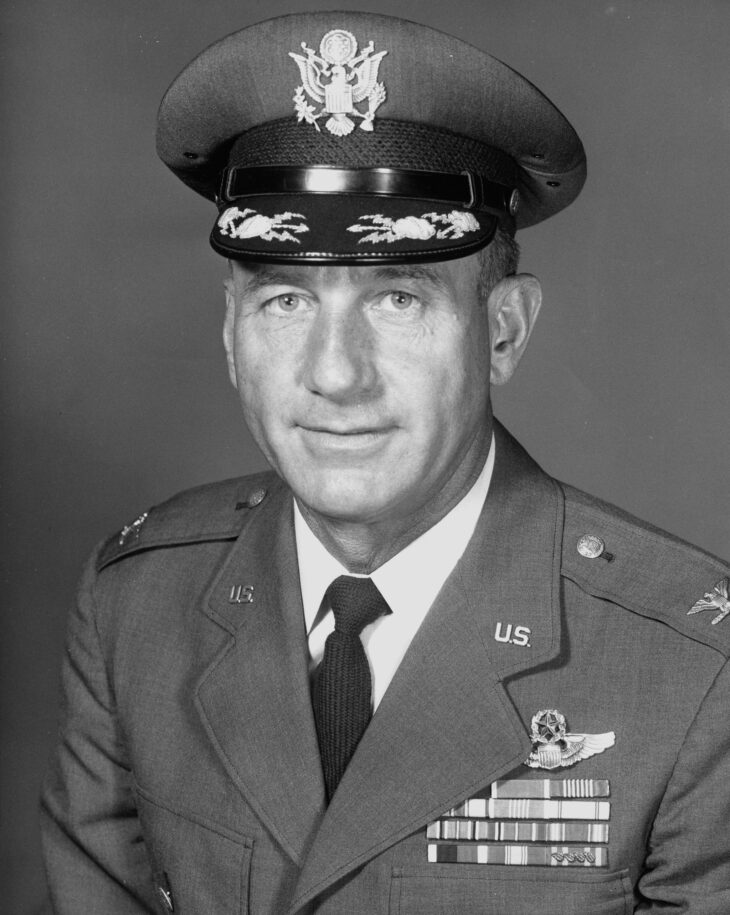
One child did not. The call went to the desk of Col. Harry Shoup, CONAD’s director of operations. According to the Smithsonian’s National Air and Space Museum, it came on November 30, 1955, not on Christmas Eve.
Shoup’s first answer was not the jolly one of later legend. As reported at the time, he told the child: “There may be a guy called Santa Claus, at the North Pole, but he’s not the one I worry about coming from that direction.”
Then he saw the opening. On Christmas Eve, airmen drew a sleigh and reindeer on the board CONAD used to plot unidentified aircraft. Shoup called local radio stations to say the command had an unidentified flying object that looked like a sleigh.

CONAD’s Christmas Eve press release promised that it and the Army, Navy and Marine air forces would “continue to track and guard Santa and his sleigh on his trip to and from the U.S. against possible attack from those who do not believe in Christmas.”
The announcement stuck. In 1956 the Associated Press and United Press International asked whether CONAD would track Santa again. It did, and when NORAD replaced CONAD in 1958, the new binational command kept it going.
1948
The first radar sleigh. A US Air Force Christmas Eve communique reports “one unidentified sleigh, powered by eight reindeer, at 14,000 feet.” It is a one-off joke, not repeated.
Nov. 30, 1955
The misdialed call. A child trying to reach the Sears Santa line reaches Col. Harry Shoup at CONAD in Colorado Springs.
Dec. 24, 1955
The press release. CONAD announces it will track and guard Santa’s sleigh. Shoup calls radio stations about a sleigh-shaped UFO.
1956
The wire services ask again. The AP and UPI ask whether CONAD will track Santa a second year. It will.
1958
NORAD takes over. Canada and the US form the binational North American Air Defense Command, which inherits the tradition.
1997
The tracker goes online. NORAD launches its Santa tracking website.
2025
The 70th year. NORAD tracks Santa for the 70th consecutive Christmas Eve.
The Radar: What the North Warning System Really Is
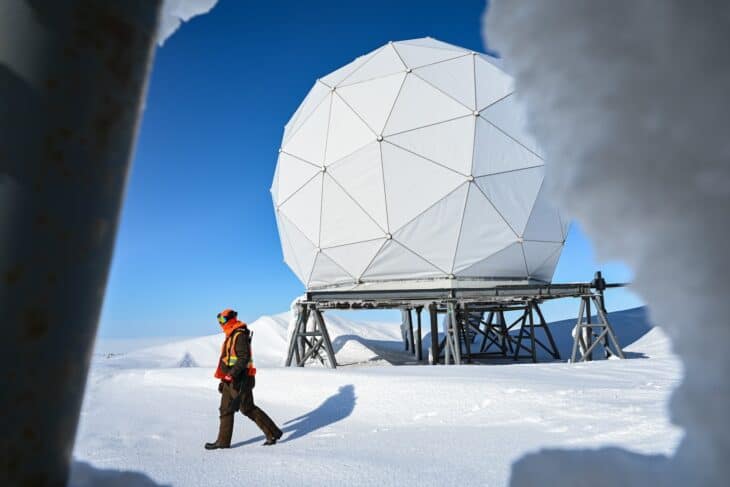
The radar NORAD credits with spotting Santa’s takeoff is the North Warning System. It is a chain of remote radar stations about 2,983 miles (4,800 km) long, running from Alaska to southern Labrador, built to be a tripwire across the polar approach to North America.
It replaced the Distant Early Warning (DEW) Line, the string of Cold War radar stations built in the late 1950s. The new system began limited operations in 1988 and was officially activated on July 15, 1993.
It mixes 15 long-range radars with 39 short-range radars. Most of the line sits in Canada: Ottawa counts 47 Canadian radar sites, most of them unattended short-range stations, and 45 of those stand inside Inuit Settlement Areas.
.jpg)
Here is the part the Santa story leaves out. The line was built for a Cold War air threat. Canada’s defense department says bluntly that it is “not designed to detect modern weapons and delivery systems, such as long-range cruise and hypersonic missiles.”
That is why Canada announced a C$38.6 billion, 20-year NORAD modernization plan in June 2022. It includes over-the-horizon radar, which bounces its beams off the ionosphere to see around the curve of the Earth. The first stage of the Arctic system is due to work by the end of 2029, and the old line stays on until then.
It is the same Cold War mindset that produced the DEFCON alert levels, the US military’s readiness scale, which is still in use.
The Satellites and the Fighter Escort
Once the radar sees Santa leave, NORAD’s story hands him to satellites. These are missile-warning satellites in geosynchronous orbit, more than 22,000 miles (35,000 km) up, and their job is to catch the infrared heat of a rocket or missile launch.
In the Santa version, the heat they catch is Rudolph’s glowing nose. It is a neat piece of misdirection, because it teaches children, accurately, what those satellites are really for.
The final layer is aircraft. NORAD’s 2025 media kit lists US F-15s, F-16s, F-22s and F-35s, backed by KC-135 tankers and AWACS radar planes, plus Canadian CF-18s, the Royal Canadian Air Force’s version of the F/A-18 Hornet. It is the same fleet NORAD sends to unknown aircraft the rest of the year.
When the tracking was real
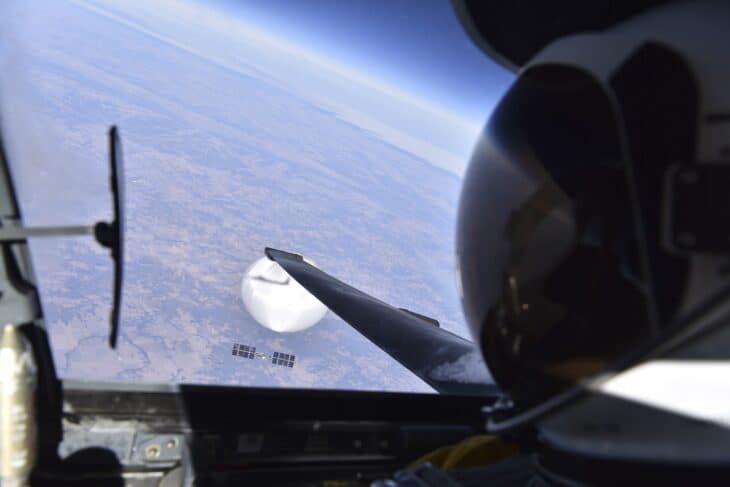
In early 2023 NORAD tracked a Chinese surveillance balloon across North America. On February 4, an F-22 Raptor fired one AIM-9X Sidewinder from 58,000 feet and brought it down off South Carolina, the F-22’s first known air-to-air takedown. Canada says NORAD then adjusted its procedures to get better fidelity on smaller and slower objects.
That balloon shoot-down by a Lockheed Martin F-22 Raptor is the clearest recent picture of the machinery behind the Santa story. Over the following week, fighters downed more high-altitude objects, including one over central Yukon on February 11 and one over Lake Huron on February 12.
.jpg)
Is the NORAD Santa Tracker Real?
The program is real, and it is big. The people answering the phones are volunteers, many of them US and Canadian military personnel, and NORAD says more than 50 corporate contributors support the phone lines, the website, the Santa Cam video and the live tracker updates.
What is not real is the sleigh on the radar. The map children watch is a story, told in nine languages, and its audience keeps growing: Christmas Eve calls went from more than 70,000 in 2009 to about 380,000 in 2024.
The origin story is where the myth lives. The popular version goes like this: a newspaper misprinted the Sears number, and on Christmas Eve CONAD’s secret red phone was flooded with children asking for Santa.
Myth: a misprinted ad flooded CONAD's red phone on Christmas Eve
The earliest account says otherwise. An International News Service story printed in the Pasadena Independent on December 1, 1955, weeks before Christmas, reported that the child had reversed two digits in the Sears number. The ad even told children to dial carefully. The flood of calls rests on later retellings.
Those retellings came from Shoup and his family. In later interviews he described answering with a hearty “Ho, ho, ho! Yes, I am Santa Claus,” and recalled about 50 calls a day. His children told StoryCorps in 2014 that it was a misprinted ad that rang his red hotline.
Reporters who went back to the record were less sure. Gizmodo cited the 1955 wire story in 2014, and in 2015 The Atlantic doubted the flood of calls while noting that Shoup had a flair for public relations. NORAD’s own media kit now says a child “misdialed a printed phone number.”
Shoup never hid why he kept it going. It made the military look good, he said in 1986, “like we’re not all a bunch of snobs who don’t care about Santa Claus.” He died in 2009, and he reportedly kept the thank-you letters children sent him in a locked briefcase, like top secret files.
So the next time a child asks where Santa is on December 24, the honest answer has two layers. The sleigh on the map is make-believe. The radar line, the satellites and the jets it borrows are standing the same watch they stand every other night of the year, which is the part a 1955 air defense colonel wanted people to notice.
Sources and references used for research and fact-checking.
- North American Aerospace Defense Command, NORAD Tracks Santa 2025 Media Guide
- Smithsonian National Air and Space Museum, Yes, NORAD Says There Is a Santa Claus
- Smithsonian National Air and Space Museum, Why NORAD Tracks Santa
- Wikipedia, NORAD Tracks Santa
- Air Force Times, Is this Santa Claus? A misprinted ad and a good-hearted colonel sparked NORAD's Christmas tradition
- Colorado Public Radio (Associated Press), NORAD's Santa tracker was a Cold War morale boost. Now it attracts millions of kids
- Navy Times (Associated Press), NORAD Santa tracker started in the Cold War. Now it's a holiday staple
- Aerospace Global News, How NORAD has tracked Santa for 70 years
- Wikipedia, North Warning System
- National Defence Canada, NORAD Authorities and Operations
- National Defence Canada, North American Aerospace Defense Command (NORAD)
- National Defence Canada, Minister of National Defence announces Canada's NORAD modernization plan
- National Defence Canada, Arctic Over-the-Horizon Radar
- Air & Space Forces Magazine, Chinese Surveillance Balloon Shot Down By F-22 After Crossing the US
Get the Newsletter
The latest aviation news and stories sent to your inbox.
About the Author
Tim is the owner and lead editor of AeroCorner since 2019, overseeing aviation content covering aircraft, airlines, airports, and the broader aviation industry. Through years of researching, writing, editing, and publishing aviation-focused content, he has developed extensive practical knowledge of commercial aviation and air travel. Based in Asia and a frequent traveler himself, Tim also brings firsthand passenger experience to AeroCorner’s coverage. Outside of publishing, he has also explored aviation firsthand through hands-on flight training in New Zealand.