

Table of Contents
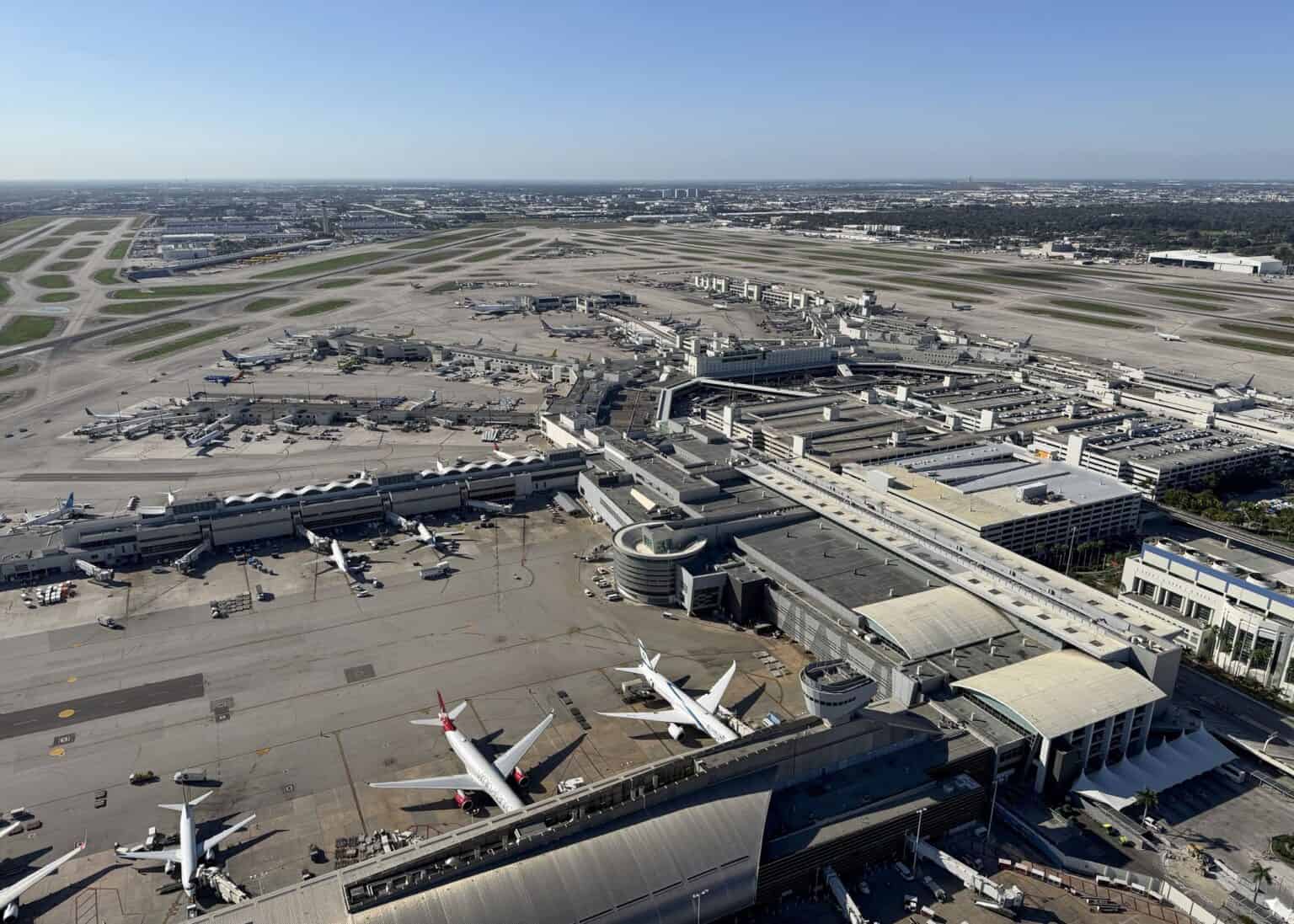
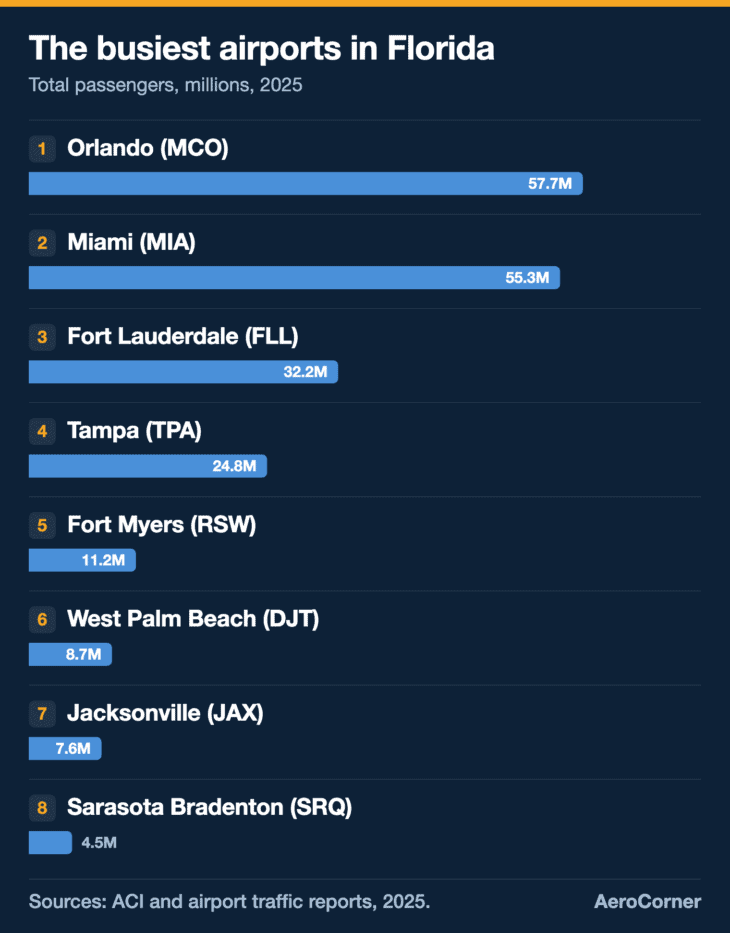
Orlando International is the busiest airport in Florida, with 57,675,573 passengers in 2025. Miami International is second with 55,314,661, according to Airports Council International data and the airports’ own traffic reports.
Miami still wins on takeoffs and landings, international travelers and cargo. Orlando wins on the number most people mean by “busiest”: people through the terminal.
Below are Florida’s 15 busiest airports by total passengers in 2025, the latest full year as of November 2026. We also note where 2026 is changing the picture, starting with the collapse of Spirit Airlines in May.
| Rank | Airport | 2025 passengers | Change from 2024 |
|---|---|---|---|
| 1 | Orlando (MCO) | 57,675,573 | +0.8% |
| 2 | Miami (MIA) | 55,314,661 | -1.1% |
| 3 | Fort Lauderdale (FLL) | 32,208,419 | -8.5% |
| 4 | Tampa (TPA) | 24,811,007 | +0.2% |
| 5 | Fort Myers (RSW) | 11,154,458 | +1.1% |
| 6 | West Palm Beach (DJT, formerly PBI) | 8,657,372 | +3.0% |
| 7 | Jacksonville (JAX) | 7,573,048 | -1.1% |
| 8 | Sarasota Bradenton (SRQ) | 4,514,781 | +6.3% |
| 9 | Orlando Sanford (SFB) | 3,166,417 | +10.0% |
| 10 | Pensacola (PNS) | 3,116,318 | +2.8% |
| 11 | St. Pete-Clearwater (PIE) | 2,794,235 | +13.6% |
| 12 | Destin-Fort Walton Beach (VPS) | 2,491,886 | +4.8% |
| 13 | Punta Gorda (PGD) | 2,282,002 | +18.5% |
| 14 | Panama City Beach (ECP) | 1,937,224 | +3.1% |
| 15 | Key West (EYW) | 1,477,226 | +1.9% |
How this ranking works
Airports are ranked by total passengers in calendar 2025, counting arrivals and departures. A connecting passenger counts on landing and again on departure. FAA rankings count boardings only, so their numbers are roughly half of these. Jacksonville reports by fiscal year, so we added up its monthly figures for January to December 2025.
The gap after fourth place is enormous. Orlando, Miami, Fort Lauderdale and Tampa handled about 78 percent of all passengers on this list, and the Florida Department of Transportation says no other state has four large hub airports.
1. Orlando International Airport (MCO)
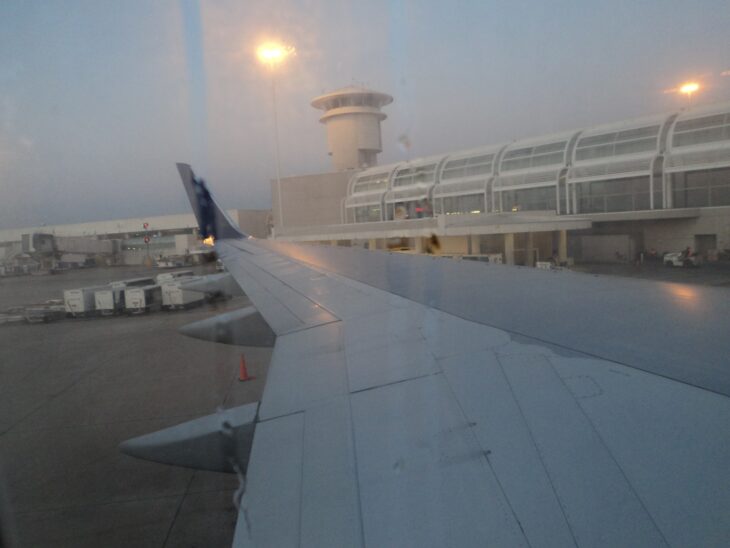

Orlando handled 57,675,573 passengers in 2025, up 0.8 percent. That made it seventh in the United States and 25th in the world, and left it just 60,147 short of its 2023 record.
It is also pulling away from Miami. The gap between the two was about 1.3 million passengers in 2024 and grew to nearly 2.4 million in 2025, helped by a rise of about 8 percent in Orlando’s international traffic.
What makes Orlando unusual is who uses it. In the year to September 2025, 92.2 percent of its passengers were starting or ending a trip there, and only 7.8 percent were changing planes. This is an airport people fly to, not through.
That leaves it exposed when cheap seats disappear. Spirit carried 9.6 percent of Orlando’s passengers in February 2026, three months before it shut down. The airport then forecast Labor Day weekend traffic about 5.5 percent below 2025.
The odd code is a military leftover. MCO stands for McCoy Air Force Base, the bomber base that became Orlando’s airport.
2. Miami International Airport (MIA)
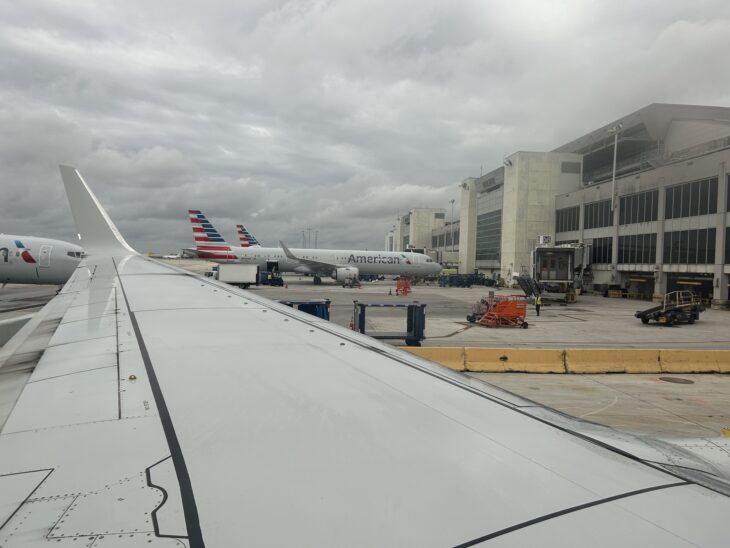

Miami handled 55,314,661 passengers in 2025, down 1.1 percent from 55,926,566 in 2024. It ranked eighth in the country, one place behind Orlando.
On several other measures it is the bigger operation. Miami logged 502,771 takeoffs and landings against Orlando’s 407,980. It also handled 24.9 million international passengers, nearly three times Orlando’s 8.5 million and second only to New York JFK in the US.
Then there is freight. Miami moved 3.41 million US tons (3.09 million metric tons) in 2025, more than any other American airport, which puts it near the top of the busiest cargo airports in the US.
Miami’s own traffic has slipped again in 2026. It handled 41,041,584 passengers from January through September, down 1.2 percent. If that pace holds, Orlando would have to lose more than 5 percent over the full year for Miami to take first place.
3. Fort Lauderdale-Hollywood International Airport (FLL)
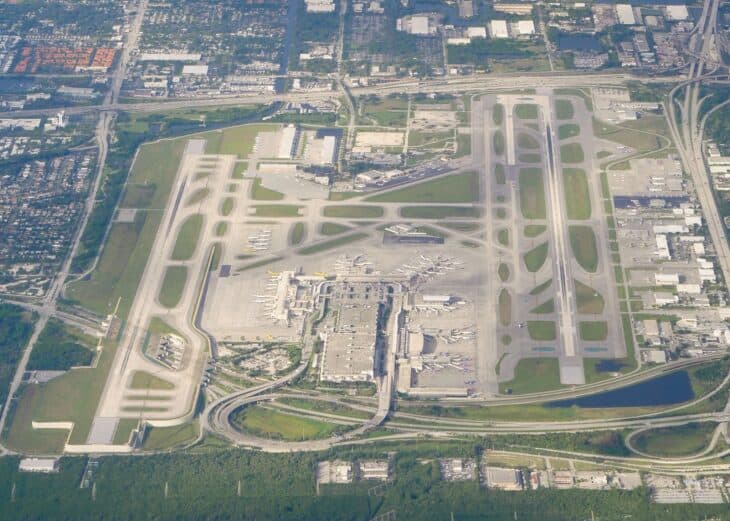

Fort Lauderdale handled 32,208,419 passengers in 2025, down 8.5 percent. It lost 3 million travelers in a year, by far the steepest fall on this list.
The worst was still to come. Spirit, based about a mile (1.6 km) from the runways, flew 11 million passengers through FLL in 2024, or 31.4 percent of the airport’s traffic. It stopped flying on May 2, 2026.
JetBlue has been adding routes and flights to fill the hole. Its planned five-gate Terminal 5 will not help soon: completion has slipped to 2030, and the estimated cost has climbed to about $829 million.
Third place looks safe for now. Fort Lauderdale finished 7.4 million passengers ahead of Tampa in 2025, but it is the number on this table most likely to look different next year.
4. Tampa International Airport (TPA)
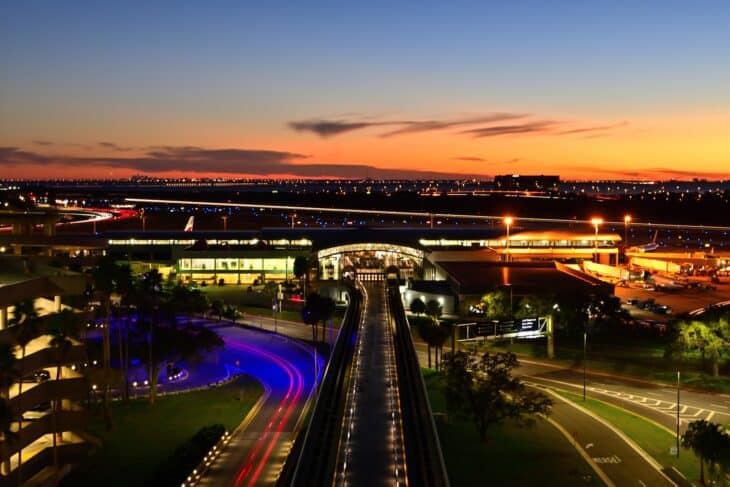

Tampa handled 24,811,007 passengers in 2025, up 0.2 percent. The airport says that ranked it 27th in the country, with an average of 67,975 passengers and 635 flights a day.
Its year swings with the snowbirds. March brought 2,462,255 passengers and September just 1,712,634, so the busiest month was about 44 percent bigger than the quietest.
International traffic is the growth story here, up 15.1 percent to 1.7 million in 2025. A 16-gate Airside D is scheduled to open in 2029.
5. Southwest Florida International Airport (RSW)
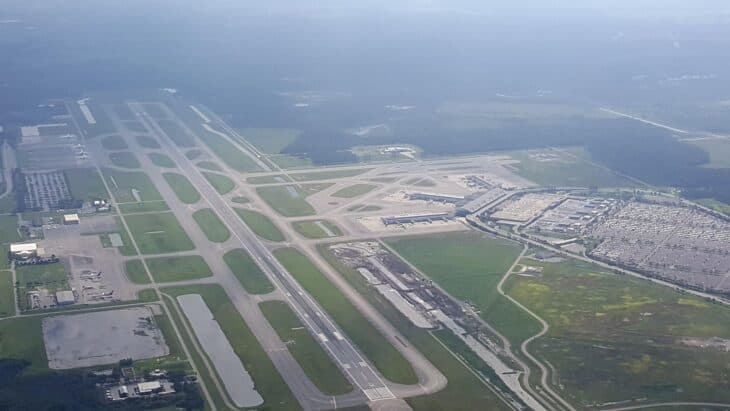

Fort Myers handled a record 11,154,458 passengers in 2025, up 1.1 percent. It is the gateway for Cape Coral, Naples and the Gulf beaches, and it does the whole job with one runway.
That runway is 12,000 feet (3,658 m) long. When a United 737 blew two tires on it in October 2022, the airport’s only runway was shut for nearly nine hours.
RSW is also a reminder that busy and big are different things. Its 13,555 acres (55 square km) top Orlando’s 11,605 acres (47 square km) and are more than four times Miami’s 3,230 acres (13 square km). The same mismatch shows up nationally with the biggest airport in the US.
6. President Donald J. Trump International Airport (DJT)
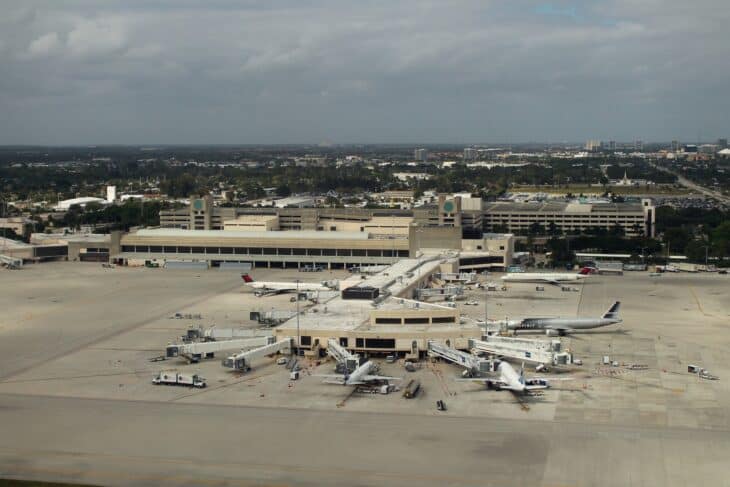

The former Palm Beach International handled 8,657,372 passengers in 2025, up 3.0 percent. JetBlue was its largest airline with 25.7 percent of boardings, narrowly ahead of Delta on 25.4 percent.
The name changed on July 9, 2026, under a state law signed in March. The airline booking code followed on August 18, so travelers should now search for DJT where they used to type PBI.
Traffic was still rising at midyear. The airport counted 8,719,484 passengers in the 12 months to June 2026, up 1.7 percent on the year before.
7. Jacksonville International Airport (JAX)
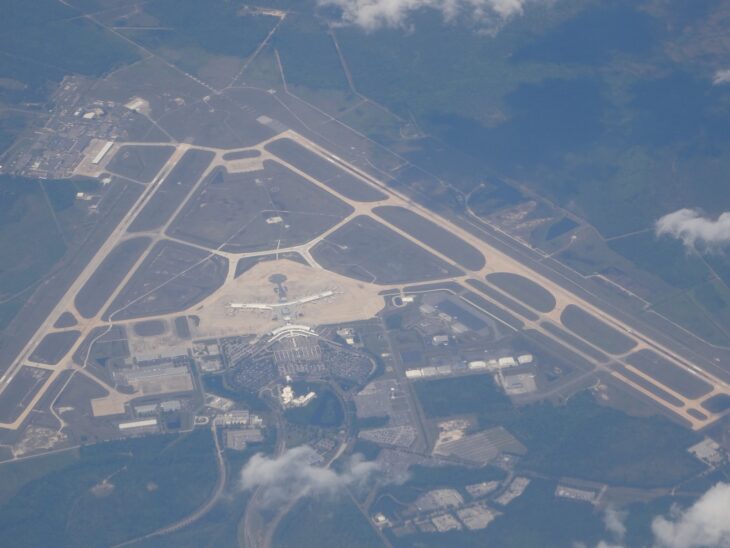

Jacksonville handled 7,573,048 passengers in calendar 2025, down 1.1 percent from its 2024 record. Along with Miami and Fort Lauderdale, it is one of only three airports on this list that shrank.
The first five months of 2026 were flat, at about 3.04 million passengers. More room is coming anyway: the $340 million Concourse B adds six gates, with a ribbon-cutting planned for January 27, 2027.
8. Sarasota Bradenton International Airport (SRQ)
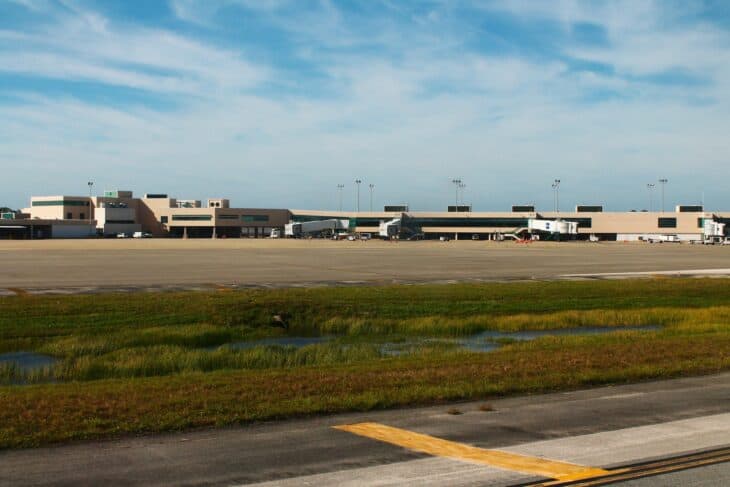

Sarasota Bradenton handled a record 4,514,781 passengers in 2025, up 6.3 percent. In 2019 it saw about 1.9 million, so traffic has more than doubled in six years.
The building has had to catch up. By April 2026, SRQ had added a six-gate concourse and modernized its baggage system as part of an expansion costing about $200 million.
9. Orlando Sanford International Airport (SFB)
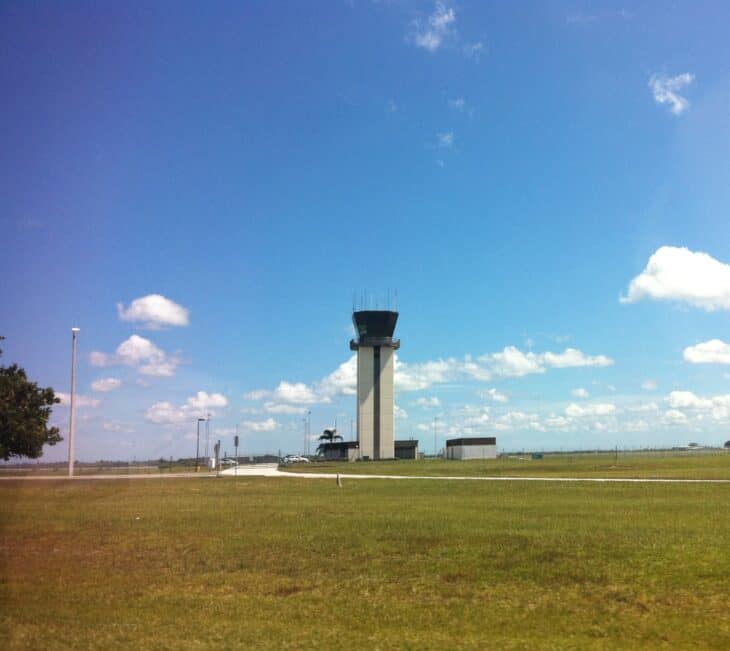

Orlando’s second airport handled 3,166,417 passengers in 2025, up 10.0 percent. It is an operating base for Allegiant, which has supplied most of its passengers for years. Our Allegiant vs Frontier comparison explains how that budget model works.
Judge it by aircraft instead of people and Sanford leaps up the table. It logged 394,203 takeoffs and landings in 2025, up 27.1 percent, only about 14,000 fewer than Orlando International.
The small airport that nearly matched Orlando
Orlando Sanford had about one-eighteenth of Orlando International’s passengers in 2025, yet 97 percent as many takeoffs and landings. It is home to Acron Aviation Academy, which trains airline pilots, and a training flight counts as a movement just as a full Boeing 737 does.
10. Pensacola International Airport (PNS)
Pensacola handled 3,116,318 passengers in 2025 by its own count, up 2.8 percent. It served just over 2.2 million in 2019.
It is the busiest airport in the Florida Panhandle, comfortably ahead of Destin and Panama City Beach. It finished only about 50,000 passengers behind Sanford, the closest race in the top 10.
11. St. Pete-Clearwater International Airport (PIE)
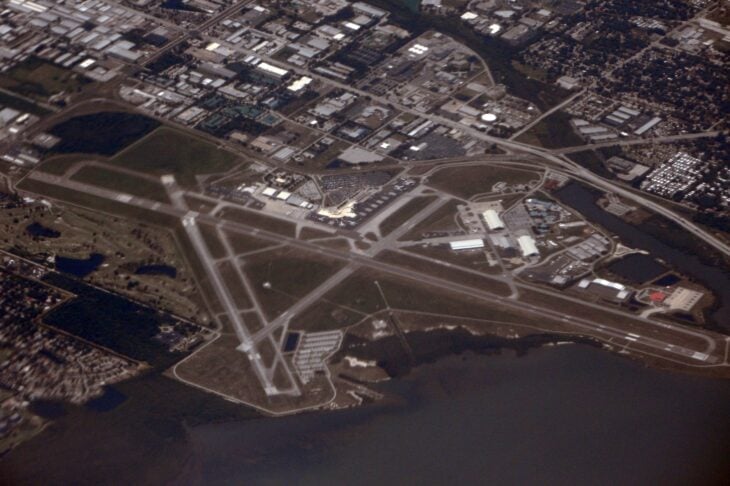

St. Pete-Clearwater handled 2,794,235 passengers in 2025, up 13.6 percent and the most in the airport’s published history, which runs back to 2004. July alone brought a record 320,746.
That growth has stalled. PIE counted 2,355,819 passengers from January through October 2026, about half a percent below the same months of 2025, despite its biggest October on record.
12. Destin-Fort Walton Beach Airport (VPS)
Destin-Fort Walton Beach handled 2,491,886 passengers in 2025, up 4.8 percent. You will not find a separate civilian airfield: the terminal sits on Eglin Air Force Base and airliners share its runways with the military.
It is closing in on St. Pete-Clearwater. VPS reached 2,302,951 passengers in the first ten months of 2026, up 3.2 percent and only about 53,000 behind PIE.
13. Punta Gorda Airport (PGD)
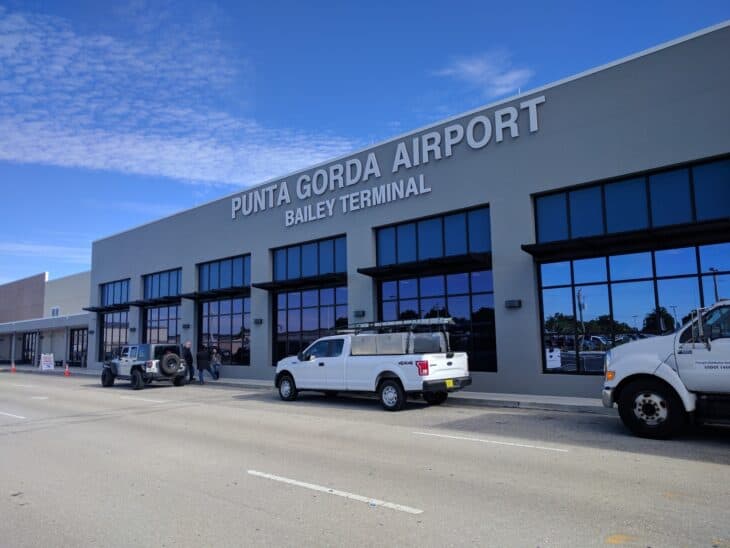

Punta Gorda handled a record 2,282,002 passengers in 2025. Its 18.5 percent increase was the fastest growth of any airport in this ranking.
It is close to a one-airline airport. Allegiant flies from here to more than 50 destinations, with Sun Country adding seasonal Minneapolis flights, and a 50,000-square-foot (4,600 square meters) terminal expansion is scheduled to open in 2027.
14. Northwest Florida Beaches International Airport (ECP)
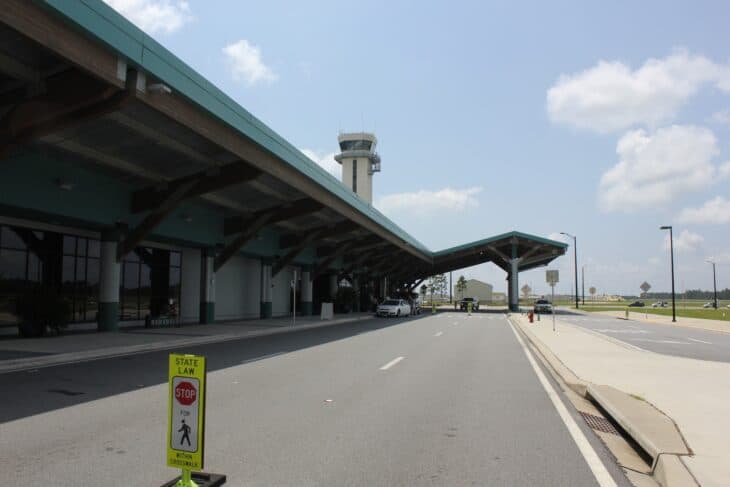

The airport for Panama City Beach handled a record 1,937,224 passengers in 2025, up 3.1 percent. It opened in May 2010, replacing the old Panama City airport on a new site.
American, Delta, Southwest and United provide the service. The airport broke ground in January 2026 on a terminal expansion with three more gates.
15. Key West International Airport (EYW)
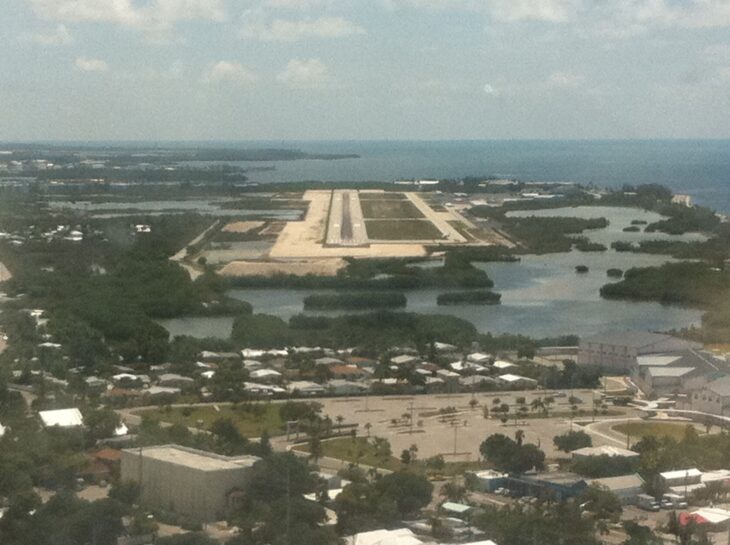

Key West handled 1,477,226 passengers in 2025, up 1.9 percent. That is a remarkable load for an airport covering 334 acres (1.35 square km) with a single runway 5,076 feet (1,547 m) long.
The short runway limits the size of jets that can use it and often their takeoff weight. It has not stopped growth: the airport passed a million passengers by July 2026, earlier than ever, with traffic up 8.8 percent.
What If You Count Takeoffs and Landings?
Change the measure and the ranking changes with it. These are the four Florida airports that made the national top 25 for aircraft movements in 2025, in Airports Council International data.
| Airport | US rank by movements | 2025 takeoffs and landings | Florida rank by passengers |
|---|---|---|---|
| Miami | 8 | 502,771 | 2 |
| Orlando International | 15 | 407,980 | 1 |
| Orlando Sanford | 17 | 394,203 | 9 |
| Daytona Beach | 22 | 337,577 | Outside the top 15 |
Fort Lauderdale and Tampa, third and fourth for passengers, do not appear in that national top 25. Daytona Beach does, with just 772,170 passengers all year, because Embry-Riddle Aeronautical University and other schools train pilots there.
So is Miami really the busiest airport in Florida?
Only if you mean flights, international passengers or cargo, and Miami leads Orlando clearly on all three. For total passengers, the standard measure for airport rankings, Orlando won in both 2024 and 2025. A list that puts Miami first should say which measure it is using.
Airports outside the top 15 include Tallahassee, Daytona Beach, Melbourne and Gainesville. Our count of how many airports Florida has covers the rest, and our ranking of the busiest airports in the US shows where the state’s giants sit nationally.
FAQ
Sources and references used for research and fact-checking.
- Miami-Dade Aviation Department, U.S. and Worldwide Airport Rankings 2025 (ACI data)
- Miami International Airport, Year-End 2025 Traffic Report
- Miami International Airport, September 2026 Traffic Report
- Miami International Airport, About MIA
- ClickOrlando, Orlando International Airport climbs in 2025 rankings
- CubaHeadlines, Florida's busiest airports in 2025
- Greater Orlando Aviation Authority, Statsboard, January 2026
- Greater Orlando Aviation Authority, Passenger Market Share, February 2026
- ClickOrlando, Labor Day passenger traffic at Orlando airport expected to drop
- Wikipedia, Orlando International Airport
- WLRN, Life without Spirit at Fort Lauderdale-Hollywood International Airport
- Wikipedia, Fort Lauderdale-Hollywood International Airport
- Simple Flying, Fort Lauderdale Terminal 5 slips to 2030
- Tampa International Airport, TPA Fact Sheet, Calendar Year 2025
- Aviation Pros, Southwest Florida International Airport sets record with 11.15 million passengers in 2025
- Wikipedia, Southwest Florida International Airport
- Palm Beach County Department of Airports, Traffic Report, December 2025
- Palm Beach County Department of Airports, Traffic Report, June 2026
- WPBF, Palm Beach airport code officially changes to DJT
- Jacksonville Aviation Authority, Enplanement and deplanement report, May 2026
- Jacksonville Today, New concourse nears completion at Jacksonville International Airport
- Your Observer, Sarasota airport passenger count record
- WWSB, SRQ expands concourse
- Wikipedia, Orlando Sanford International Airport
- Pensacola International Airport, Airport Statistics
- St. Pete-Clearwater International Airport, Passenger History
- St. Pete-Clearwater International Airport, October 2026 Passenger Report
- Destin-Fort Walton Beach Airport, October 2026 Traffic Report
- Wikipedia, Destin-Fort Walton Beach Airport
- Aviation Pros, Punta Gorda Airport reports record 2.28 million passengers in 2025
- Northwest Florida Beaches International Airport, Record-breaking growth trajectory, February 2, 2026
- Wikipedia, Northwest Florida Beaches International Airport
- Wikipedia, Key West International Airport
- Keys Weekly, Key West International Airport reaches 1 million passengers the earliest ever
- Aviation Pros, Daytona Beach International Airport reports record passenger traffic
- Daytona Regional Chamber of Commerce, Daytona Beach International Airport
- Florida Department of Transportation, Florida Aviation Fast Facts
Get the Newsletter
The latest aviation news and stories sent to your inbox.
About the Author

Tim is the owner and lead editor of AeroCorner since 2019, overseeing aviation content covering aircraft, airlines, airports, and the broader aviation industry. Through years of researching, writing, editing, and publishing aviation-focused content, he has developed extensive practical knowledge of commercial aviation and air travel. Based in Asia and a frequent traveler himself, Tim also brings firsthand passenger experience to AeroCorner’s coverage. Outside of publishing, he has also explored aviation firsthand through hands-on flight training in New Zealand.