

Table of Contents
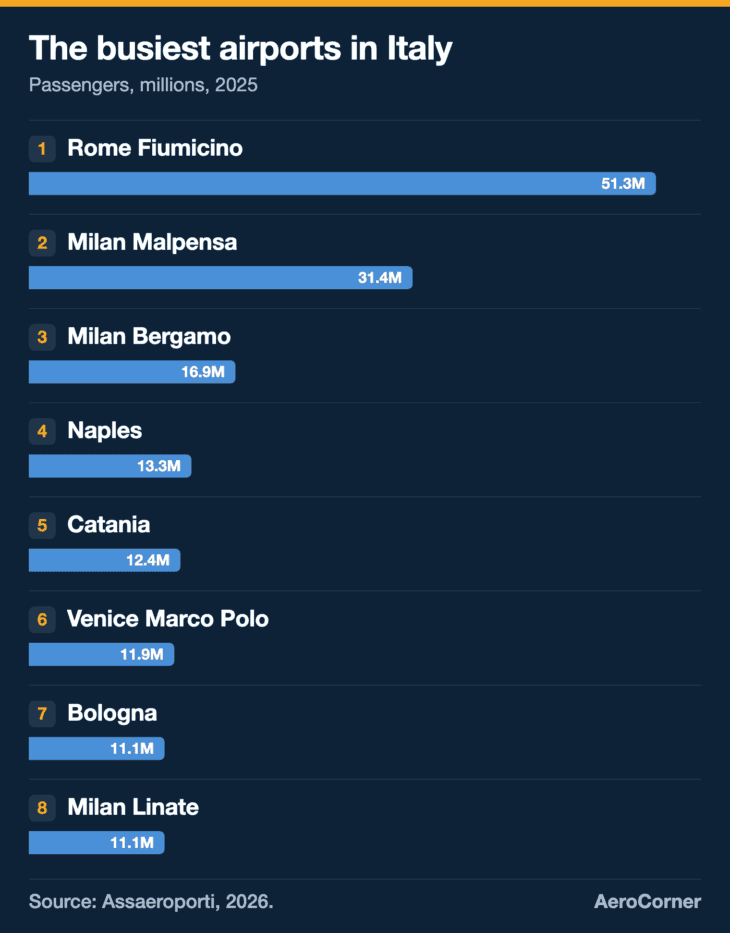
Rome Fiumicino is the busiest airport in Italy. It handled 51,306,744 passengers in 2025, according to Assaeroporti, the Italian airport operators’ association, which publishes the country’s official traffic tables.
That is more than one in five of the 230 million passengers who used an Italian airport last year. Milan Malpensa is a distant second with 31.4 million, and Milan Bergamo, Ryanair’s Italian stronghold, is third with 16.9 million.
This list ranks all 20 of Italy’s busiest airports by total 2025 passengers, arrivals and departures combined. Each entry also carries the January to September 2026 figures, the newest Assaeroporti has published as of November 2026, so you can see which airports are climbing.
| Rank | Airport | Region | 2025 passengers | Change vs 2024 |
|---|---|---|---|---|
| 1 | Rome Fiumicino (FCO) | Lazio | 51,306,744 | +4.3% |
| 2 | Milan Malpensa (MXP) | Lombardy | 31,385,585 | +8.6% |
| 3 | Milan Bergamo (BGY) | Lombardy | 16,937,976 | -2.4% |
| 4 | Naples (NAP) | Campania | 13,271,522 | +4.9% |
| 5 | Catania (CTA) | Sicily | 12,369,485 | +0.2% |
| 6 | Venice Marco Polo (VCE) | Veneto | 11,850,336 | +2.2% |
| 7 | Bologna (BLQ) | Emilia-Romagna | 11,138,013 | +3.4% |
| 8 | Milan Linate (LIN) | Lombardy | 11,131,764 | +4.5% |
| 9 | Palermo (PMO) | Sicily | 9,220,905 | +3.4% |
| 10 | Bari (BRI) | Apulia | 7,977,881 | +9.7% |
| 11 | Pisa (PSA) | Tuscany | 5,977,227 | +7.8% |
| 12 | Cagliari (CAG) | Sardinia | 5,254,433 | +1.8% |
| 13 | Turin (TRN) | Piedmont | 5,006,169 | +6.7% |
| 14 | Olbia (OLB) | Sardinia | 4,161,572 | +7.2% |
| 15 | Verona (VRN) | Veneto | 4,027,863 | +8.7% |
| 16 | Rome Ciampino (CIA) | Lazio | 3,987,517 | +3.3% |
| 17 | Florence (FLR) | Tuscany | 3,847,658 | +9.4% |
| 18 | Brindisi (BDS) | Apulia | 3,444,438 | +1.7% |
| 19 | Treviso (TSF) | Veneto | 3,200,130 | +5.0% |
| 20 | Lamezia Terme (SUF) | Calabria | 3,049,594 | +12.4% |
How this ranking works
Airports are ranked by total passengers in calendar year 2025, arrivals and departures each counted, as published in the Assaeroporti traffic tables. Assaeroporti lists 41 airports; its figures for Rome, Venice, Treviso, Verona, Bari and Brindisi are supplied by Aeroporti 2030. An airport’s own press release can differ slightly (Bologna reports 11,126,959), so every figure here comes from the one table. The 2026 figures are January to September totals.
1. Rome Fiumicino: 51.3 million passengers
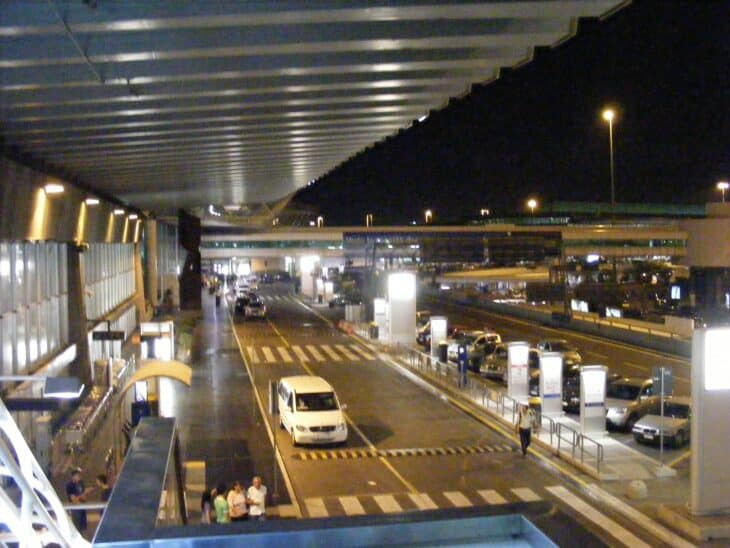

Leonardo da Vinci Airport at Fiumicino, 19 miles (30 km) from central Rome, handled 51,306,744 passengers in 2025, up 4.3% on 2024. It also logged 322,744 aircraft movements, the most in Italy.
It is the main hub of ITA Airways, the national flag carrier, and is run by Aeroporti di Roma. That hub role is why it leads by so much: ITA feeds domestic and European flights into its long-haul network here.
Growth has slowed in 2026. Fiumicino handled 39.7 million passengers from January to September, just 1.1% more than a year earlier, while Italy as a whole grew 5.5%.
2. Milan Malpensa: 31.4 million passengers
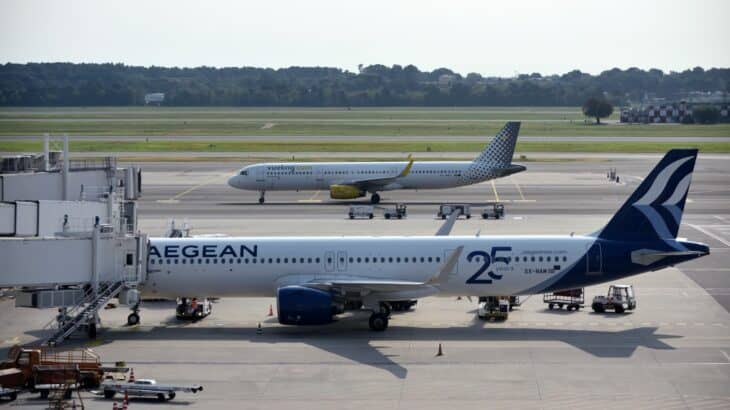

Malpensa, 30 miles (49 km) northwest of Milan, handled 31,385,585 passengers in 2025. Its 8.6% growth was the fastest among Italy’s top five airports.
It is the largest airport in northern Italy, serving Lombardy, Piedmont, Liguria and the Swiss canton of Ticino. Its operator, SEA, also runs Milan Linate.
Malpensa is Italy's freight gateway
Malpensa handled 763,118 tons of cargo in 2025, about 60% of all air cargo moved through Italian airports and nearly three times Fiumicino’s 273,880 tons.
3. Milan Bergamo: 16.9 million passengers
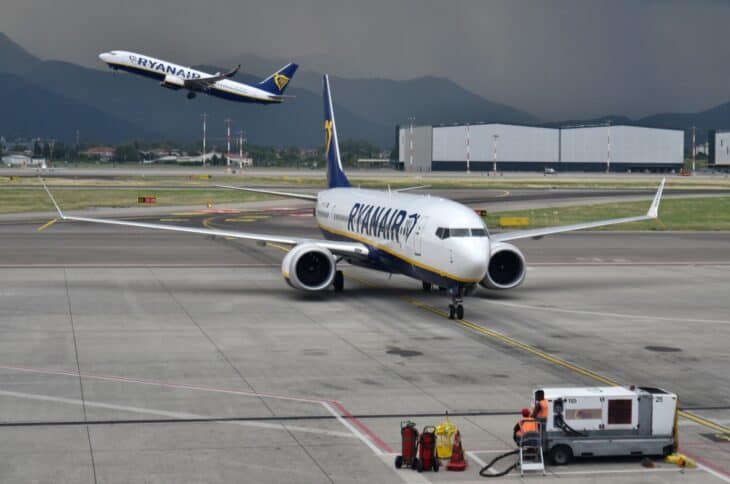

Bergamo’s Orio al Serio airport sits 2.3 miles (3.7 km) from Bergamo and 28 miles (45 km) from Milan. It handled 16,937,976 passengers in 2025, which makes it the only one of Italy’s 20 busiest airports to shrink, down 2.4%.
The reason is its dependence on one airline. Ryanair operates about 80% of Bergamo’s flights, and in 2025 it moved part of that capacity elsewhere during a dispute over renewing its commercial deal with operator SACBO, according to an analysis by Corriere della Sera aviation reporter Leonard Berberi, reported by Il Post.
The traffic has come back. Bergamo handled 13.9 million passengers from January to September 2026, up 7.4%. If you are choosing between the two airlines that dominate here, our Ryanair vs easyJet comparison covers fares, bags and punctuality.
4. Naples: 13.3 million passengers
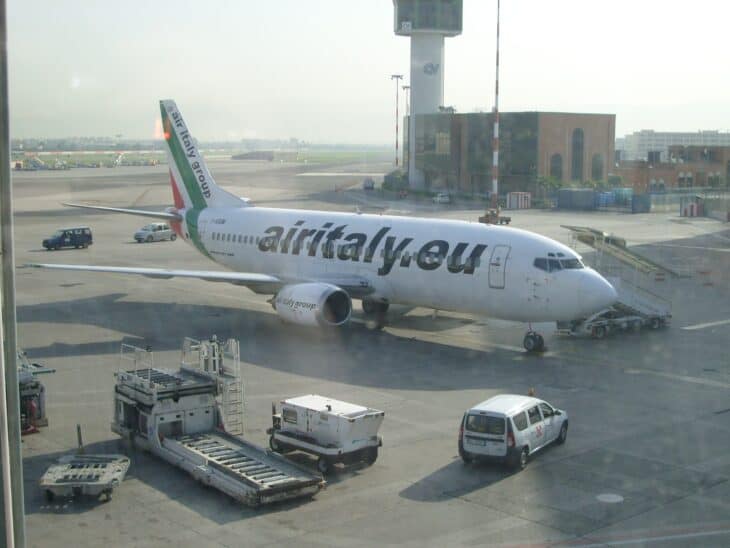

Naples Capodichino, 3.7 miles (5.9 km) from the city, handled 13,271,522 passengers in 2025, a record and up 4.9%. It is the busiest airport in southern Italy.
International traffic drives it: 9.8 million of those passengers flew abroad, against 3.5 million domestic. At the summer peak, 41 airlines served 120 destinations, and Atlanta, Chicago and Montreal joined New York and Philadelphia on the North American map in 2025, operator GESAC says.
Naples is also the only Italian airport certified at Level 5 of the Airport Carbon Accreditation program, the scheme’s top tier.
5. Catania: 12.4 million passengers
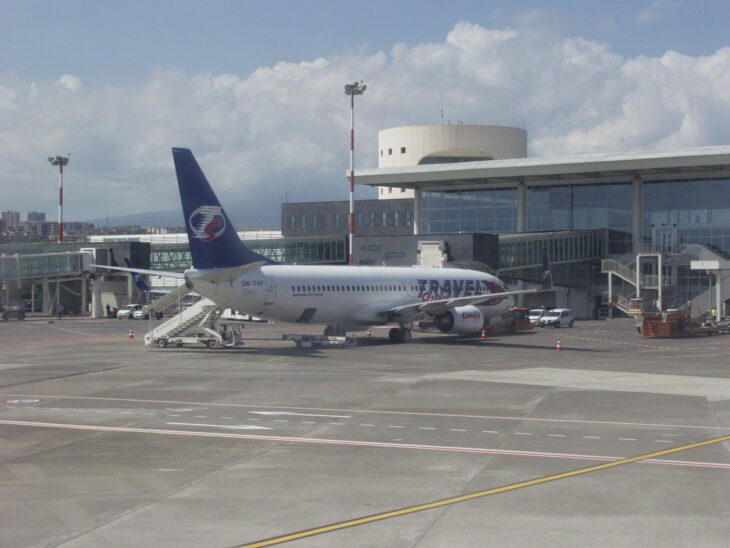

Catania Fontanarossa, 2.6 miles (4.3 km) from Catania, is the busiest airport in Sicily. It handled 12,369,485 passengers in 2025, almost flat at +0.2%, with Rome Fiumicino its biggest route at 1.87 million passengers.
Catania sits about 20 miles (30 km) south of Mount Etna, and 2026 showed what that means. Ash closed the airport for days in August, and more than a third of 1,974 scheduled flights were canceled in one week, the worst disruption there in more than two decades.
Catania’s January to September 2026 total is 9.2 million, down 3.3%, and Venice has overtaken it for fifth place so far this year. Our news desk followed the Etna closures at Catania airport as they happened.
6. Venice Marco Polo: 11.9 million passengers
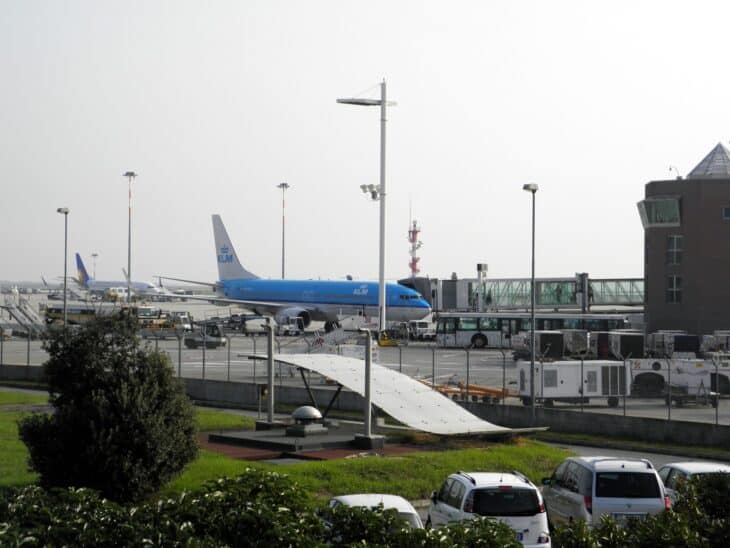

Venice Marco Polo is on the mainland at Tessera, 4.7 miles (7.5 km) from the city center. It handled 11,850,336 passengers in 2025, up 2.2%.
Venice’s pull as a leisure destination gives it long-haul routes a city its size would not normally get, including flights to the United States, Canada, South Korea and the Middle East. It is also growing fastest of the top six in 2026: 10.0 million passengers through September, up 9.9%.
7. Bologna: 11.1 million passengers
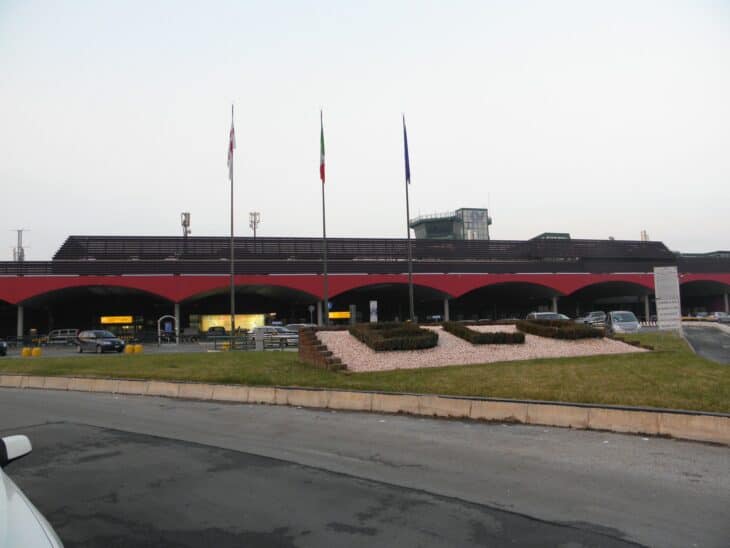

Bologna Guglielmo Marconi, 3.7 miles (6 km) northwest of the city, passed 11 million passengers for the first time in 2025. Assaeroporti counts 11,138,013, up 3.4%.
The airport topped one million passengers a month for seven straight months, April to October. Its most popular destinations were Catania, Tirana and Barcelona, and its busiest single day was June 22, with 40,091 passengers.
8. Milan Linate: 11.1 million passengers
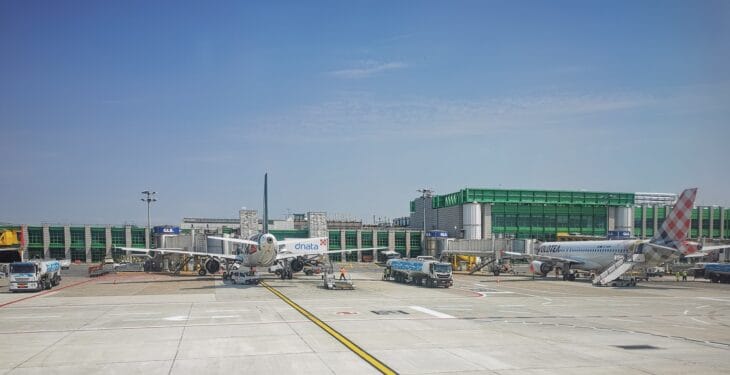

Linate handled 11,131,764 passengers in 2025, up 4.5%, and missed seventh place by just 6,249 passengers. It is Milan’s city airport and a focus city for ITA Airways.
Linate overtook Bologna in the first nine months of 2026, with 9.0 million passengers against Bologna’s 8.8 million. The full-year order between the two may flip in 2026.
Milan out-flies Rome
Rome has the busiest airport, but Milan is the busier city. Malpensa, Bergamo and Linate together handled 59,455,325 passengers in 2025, against 55,294,261 for Fiumicino and Ciampino combined.
9. Palermo: 9.2 million passengers
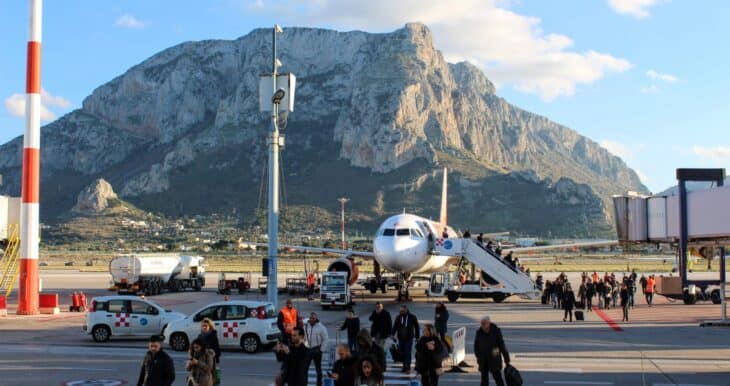

Palermo’s Falcone Borsellino airport, at Cinisi 22 miles (35 km) west of the city, handled 9,220,905 passengers in 2025, up 3.4% and its best year. Most of its traffic is domestic: international flyers were 34% of the total, about 3.1 million.
Its New York route carried 40,000 passengers, up 121%. Palermo is the fastest grower of the top ten in 2026, with 8.2 million passengers through September, up 15.1%.
10. Bari: 8.0 million passengers
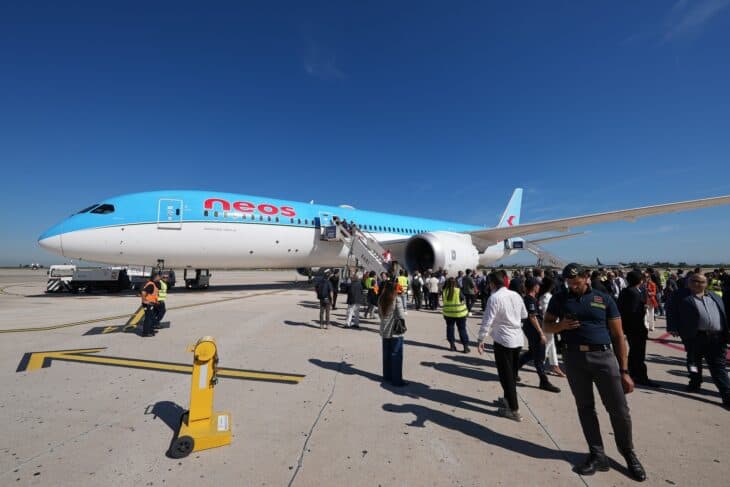

Bari Karol Wojtyła airport, 5 miles (8 km) northwest of the city and named after Pope John Paul II, handled 7,977,881 passengers in 2025. Its 9.7% growth was the fastest in the top ten.
Add Brindisi, number 18 on this list, and the two big airports of Apulia handled 11.4 million passengers. Bari is run by Aeroporti di Puglia. Bari has kept climbing in 2026, up 11.8% through September.
11 to 20: Pisa to Lamezia Terme
11. Pisa (5,977,227). Tuscany’s main gateway grew 7.8% to its best year, and 74.7% of its passengers flew internationally. London is its top route, and it is a Ryanair focus city.
12. Cagliari (5,254,433). The busiest airport in Sardinia, at Elmas just outside Cagliari, grew 1.8%.
13. Turin (5,006,169). Turin Caselle passed 5 million for the first time in 2025, and it is the fastest-growing airport in the top 20 in 2026, up 18% through September.
14. Olbia (4,161,572). The Costa Smeralda airport in northern Sardinia mostly handles seasonal holiday flights. It had already handled 4.05 million passengers by the end of September 2026, nearly its whole 2025 total.
15. Verona (4,027,863). Verona Villafranca, 6.2 miles (10 km) southwest of the city, grew 8.7% and serves a catchment of more than 4 million people, from Brescia and Mantua to Trentino and South Tyrol.
16. Rome Ciampino (3,987,517). Rome’s second airport, 7.5 miles (12 km) from the center, is a low-cost base that shares its field with the Italian Air Force.
17. Florence (3,847,658). Florence Peretola grew 9.4% to its best year ever, with international flyers at 87.2% of its traffic. Paris is its biggest route.
18. Brindisi (3,444,438). The Salento airport, 3.7 miles (6 km) from Brindisi, is the gateway to the heel of Italy and grew 1.7%.
19. Treviso (3,200,130). Sold by some airlines as “Venice-Treviso,” it sits 19 miles (31 km) from Venice and is used mainly by low-cost carriers.
20. Lamezia Terme (3,049,594). Calabria’s main airport grew 12.4%, the fastest in the top 20 in 2025. For the bigger picture, see how Italy’s hubs compare in our ranking of the busiest airports in Europe.
Who is climbing in 2026
Italy’s airports handled 187.1 million passengers from January to September 2026, up 5.5% on the same months of 2025. The top four places have not moved, but several airports are changing places below them.
| 2026 rank | Airport | Jan to Sep 2026 passengers | Change vs 2025 |
|---|---|---|---|
| 1 | Rome Fiumicino | 39,688,456 | +1.1% |
| 2 | Milan Malpensa | 24,087,446 | +0.9% |
| 3 | Milan Bergamo | 13,871,761 | +7.4% |
| 4 | Naples | 11,137,665 | +7.9% |
| 5 | Venice Marco Polo | 10,016,416 | +9.9% |
| 6 | Catania | 9,239,159 | -3.3% |
| 7 | Milan Linate | 9,022,175 | +8.7% |
| 8 | Bologna | 8,813,662 | +3.2% |
| 9 | Palermo | 8,243,229 | +15.1% |
| 10 | Bari | 6,856,254 | +11.8% |
Venice has passed Catania for fifth, Linate has passed Bologna for seventh, and further down Florence and Brindisi have both moved ahead of Rome Ciampino. The two biggest airports are growing at about 1% while the rest of the country grows faster, so Italy’s traffic is slowly spreading away from Rome and Malpensa.
Is Milan Malpensa the busiest airport in Italy?
No. Malpensa is the busiest in northern Italy and Milan is the busiest airport city, but Rome Fiumicino handled almost 20 million more passengers than Malpensa in 2025. Lists that put Milan first are counting the city’s three airports together, which is a different question.
Italy’s top ten airports handled 77% of the country’s 2025 passengers, and Fiumicino alone handled 22%. For how Fiumicino compares with the giants, see the busiest airports in the world by passengers.
FAQ
Sources and references used for research and fact-checking.
- Assaeroporti, Dati di traffico, totali progressivi dicembre 2025
- Assaeroporti, Dati di traffico aeroportuale consuntivo 2025, note di commento
- Assaeroporti, Dati di traffico, settembre 2026 (Excel)
- Il Post, L'unico grande aeroporto italiano che quest'anno ha avuto meno passeggeri
- Al Jazeera, Mount Etna eruption and volcanic ash shut Sicily's busiest airport
- Wikipedia, Rome Fiumicino Airport
- Wikipedia, Milan Malpensa Airport
- Wikipedia, Milan Bergamo Airport
- Wikipedia, Venice Marco Polo Airport
- Wikipedia, Milan Linate Airport
- Wikipedia, Naples International Airport
- Wikipedia, Catania-Fontanarossa Airport
- Wikipedia, Bologna Guglielmo Marconi Airport
- Wikipedia, Palermo Airport
- Wikipedia, Bari Karol Wojtyla Airport
- Wikipedia, Pisa International Airport
- Wikipedia, Cagliari Elmas Airport
- Wikipedia, Turin Airport
- Wikipedia, Olbia Costa Smeralda Airport
- Wikipedia, Verona Villafranca Airport
- Wikipedia, Rome Ciampino Airport
- Wikipedia, Florence Airport
- Wikipedia, Brindisi Airport
- Wikipedia, Treviso Airport
- Wikipedia, Lamezia Terme International Airport
Get the Newsletter
The latest aviation news and stories sent to your inbox.
About the Author

Tim is the owner and lead editor of AeroCorner since 2019, overseeing aviation content covering aircraft, airlines, airports, and the broader aviation industry. Through years of researching, writing, editing, and publishing aviation-focused content, he has developed extensive practical knowledge of commercial aviation and air travel. Based in Asia and a frequent traveler himself, Tim also brings firsthand passenger experience to AeroCorner’s coverage. Outside of publishing, he has also explored aviation firsthand through hands-on flight training in New Zealand.