

Table of Contents
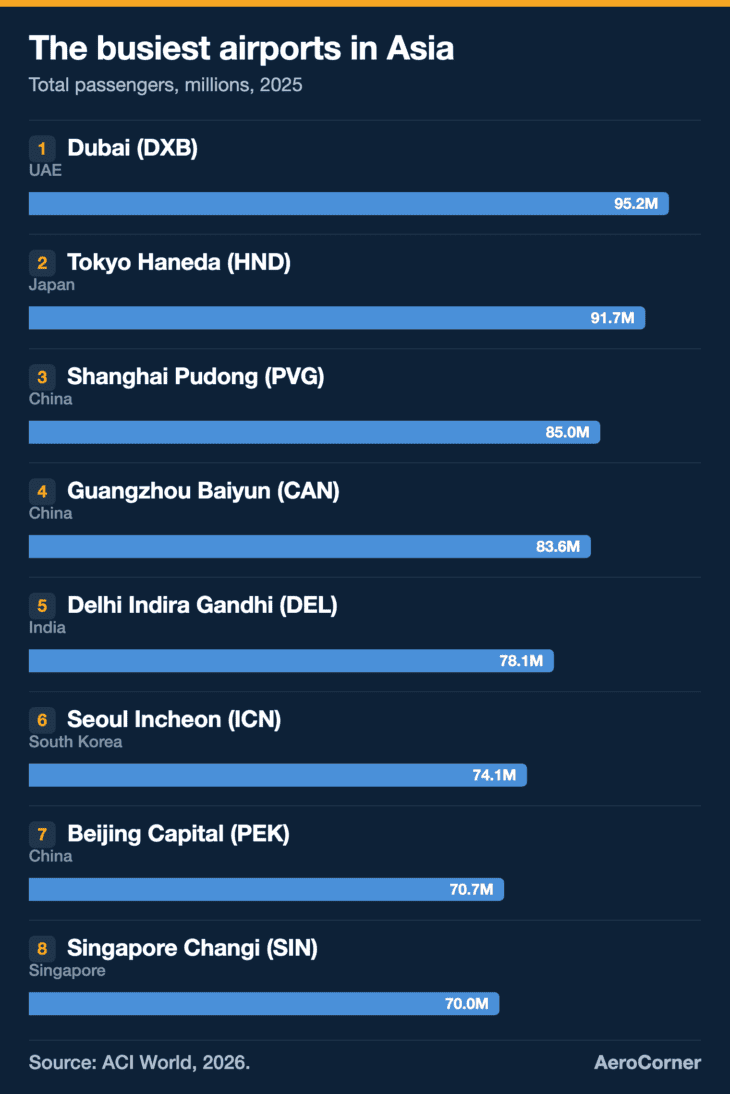
Dubai International is the busiest airport in Asia by passengers. It handled 95.2 million in 2025, about 3.5 million more than Tokyo Haneda, and Shanghai Pudong was third with 85.0 million.
Count flights instead and the leader changes: Guangzhou Baiyun sends out about 800 departures a day, the most in Asia, by AeroCorner analysis of airline schedule data, average of 6 weekly samples, June to November 2026. Dubai drops to 11th on that measure.
Below are the 18 busiest airports in Asia by 2025 passengers, why each one sits where it does, and a second table ranked by daily departures.
| Rank | Airport | Country | Passengers (2025) | Change vs 2024 |
|---|---|---|---|---|
| 1 | Dubai (DXB) | UAE | 95.2 million | +3.1% |
| 2 | Tokyo Haneda (HND) | Japan | 91.7 million | +6.7% |
| 3 | Shanghai Pudong (PVG) | China | 85.0 million | +10.7% |
| 4 | Guangzhou Baiyun (CAN) | China | 83.6 million | +9.5% |
| 5 | Delhi Indira Gandhi (DEL) | India | 78.1 million | +0.4% |
| 6 | Seoul Incheon (ICN) | South Korea | 74.1 million | +4.1% |
| 7 | Beijing Capital (PEK) | China | 70.7 million | +5.0% |
| 8 | Singapore Changi (SIN) | Singapore | 70.0 million | +3.5% |
| 9 | Shenzhen Bao’an (SZX) | China | 66.5 million | +8.2% |
| 10 | Kuala Lumpur (KUL) | Malaysia | 63.4 million | +11.0% |
| 11 | Bangkok Suvarnabhumi (BKK) | Thailand | 62.9 million | +1.1% |
| 12 | Hong Kong (HKG) | Hong Kong | 61.0 million | +15.0% |
| 13 | Chengdu Tianfu (TFU) | China | 56.7 million | +3.2% |
| 14 | Mumbai (BOM) | India | about 55.5 million | about +1.3% |
| 15 | Jakarta Soekarno-Hatta (CGK) | Indonesia | about 55.0 million | +0.3% |
| 16 | Doha Hamad (DOH) | Qatar | 54.3 million | +3% |
| 17 | Beijing Daxing (PKX) | China | 53.6 million | +8.5% |
| 18 | Jeddah King Abdulaziz (JED) | Saudi Arabia | 53.5 million | +9% |
How this ranking works
The main ranking is total passengers in calendar 2025: everyone who boarded or got off a plane, so a connecting traveler counts twice. Ranks 1 to 10 come from ACI World’s final 2025 list, released July 15, 2026; the rest come from each airport’s operator or national aviation statistics. Asia here includes the Gulf and the rest of West Asia, because most readers expect Dubai on the list. Turkey is left out: Istanbul Airport sits on the European shore and Turkish airports report to ACI Europe. The second table counts something different: average departures a day on routes flown by passenger airlines, from 6 weekly samples taken monthly from June to November 2026. Arrivals, cargo and business jets are not counted, so the figures are roughly half of the takeoffs-and-landings totals airports publish.
Six of the 18 airports are in mainland China, and Beijing places two of them on its own. Hong Kong adds a seventh Chinese airport, India places two and the Middle East three.
1. Dubai International (DXB): 95.2 million passengers
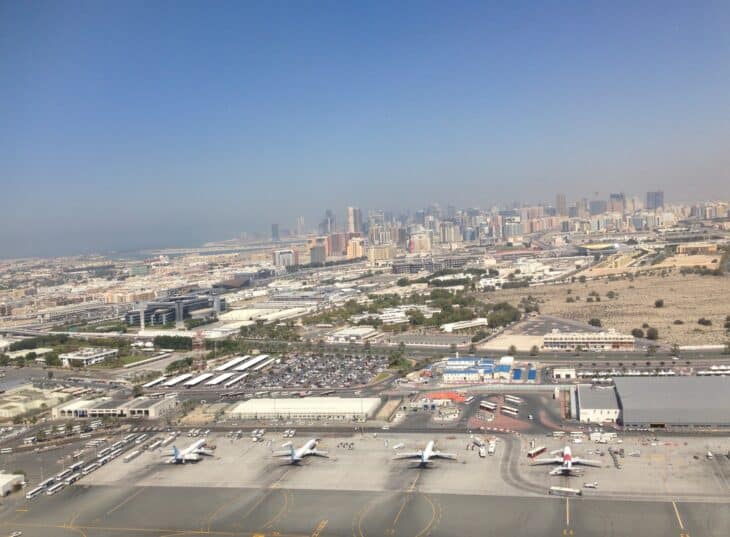

Dubai handled 95,192,160 passengers in 2025, up 3.1%, which made it second in the world behind Atlanta, according to ACI World.
It wins on reach, not flight count. In our schedule sample Dubai sent out about 525 departures a day, only 11th in Asia, but to 204 destinations in 93 countries, more of both than any other airport on this list.
The difference is aircraft size: Dubai’s long-haul wide-bodies carry far more people per departure than the narrow-body shuttles that fill the Chinese hubs. Its busiest routes are to Riyadh, Mumbai, Delhi and Jeddah, each with about 14 to 15 departures a day.
Fewer flights, more passengers
Guangzhou had about 800 departures a day in our sample and Dubai about 525, yet Dubai carried 11.6 million more passengers in 2025. Dubai’s flights are long-haul wide-bodies; Guangzhou’s busiest routes are domestic hops to Hangzhou, Beijing and Shanghai.
2. Tokyo Haneda (HND): 91.7 million passengers
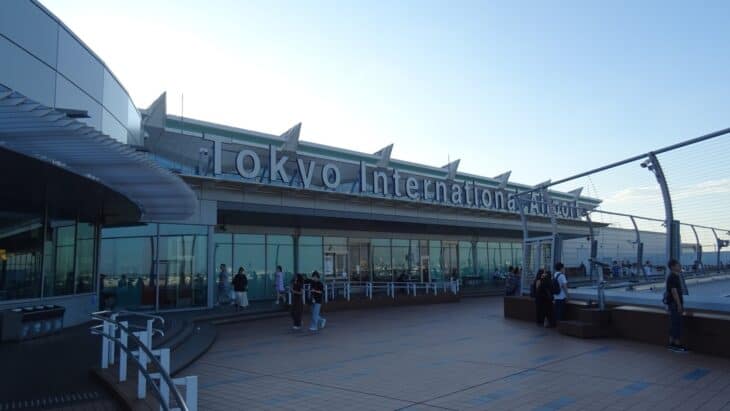

Haneda handled 91,679,814 passengers in 2025, up 6.7%, and climbed from fourth to third in the world. If you count only East Asia and leave the Gulf out, it is the busiest airport in Asia.
Haneda is the opposite of Dubai: a domestic machine with a growing international side. In our sample it averaged about 705 departures a day but only 94 destinations, and its two busiest routes, to Sapporo’s New Chitose and to Fukuoka, each ran about 64 to 66 departures a day.
Tokyo also runs a second large airport, Narita, farther out of the city. How the two split the work is told in why Tokyo has two airports.
3. Shanghai Pudong (PVG): 85.0 million passengers
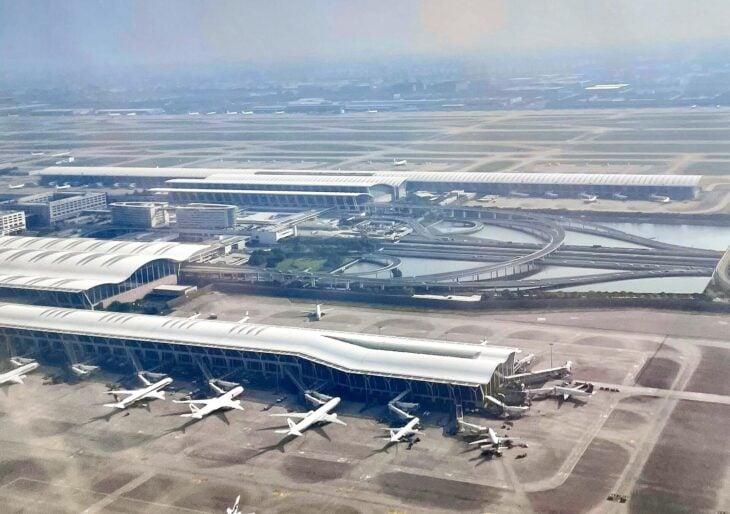

Pudong handled 84,994,548 passengers in 2025, up 10.7%, and was the busiest airport in mainland China. It jumped from 10th to fifth in the world, the second-largest climb in ACI’s top 20.
ACI credits the jump to returning international travel, easier visa rules and new routes. Pudong is also the world’s second-busiest cargo airport, with 4,091,941 metric tons in 2025, behind only Hong Kong.
In our sample it averaged about 743 departures a day to 198 destinations, second only to Guangzhou on flights. Shanghai’s older Hongqiao airport is mostly domestic, with about 57 destinations in our sample.
4. Guangzhou Baiyun (CAN): 83.6 million passengers
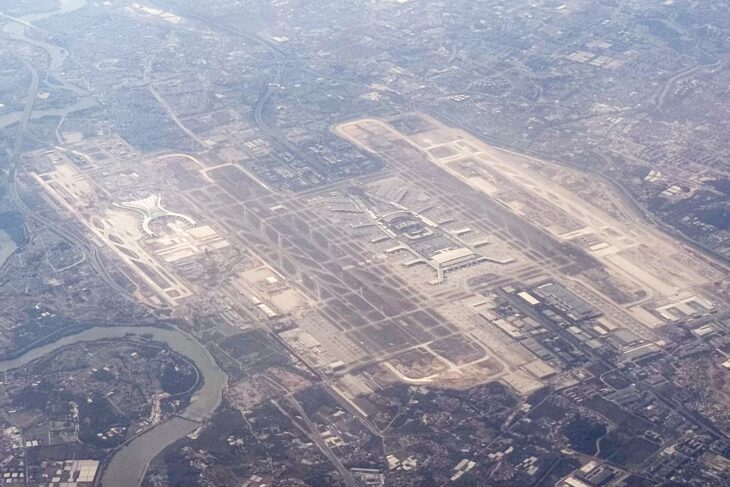

Guangzhou handled 83,582,952 passengers in 2025, up 9.5%, and finished ninth in the world. ACI points out that it had fallen to 57th in 2022, during China’s pandemic travel restrictions.
By flights it is Asia’s busiest airport. Our sample put it at about 800 departures a day, and ACI counted 550,512 takeoffs and landings in 2025, ninth in the world.
Most of that traffic is domestic. Its busiest route is to Hangzhou, at about 36 departures a day, followed by Beijing Daxing and Shanghai Hongqiao.
5. Delhi Indira Gandhi (DEL): 78.1 million passengers
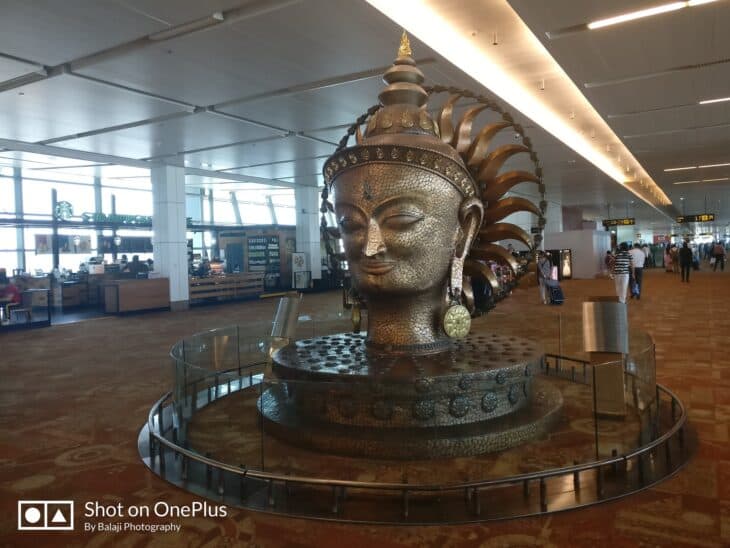
Delhi handled 78,148,081 passengers in 2025, up just 0.4%, and slipped from ninth to 11th in the world. It is still India’s busiest airport by a wide margin.
Delhi to Mumbai is its biggest route by far, at about 57 departures a day in our sample, with Bengaluru second at about 41. Overall Delhi averaged about 634 departures a day, fifth in Asia.
Its weekly count swings more than most. The July sample week dropped to about 532 departures a day, against 638 to 670 in every other month.
6. Seoul Incheon (ICN): 74.1 million passengers
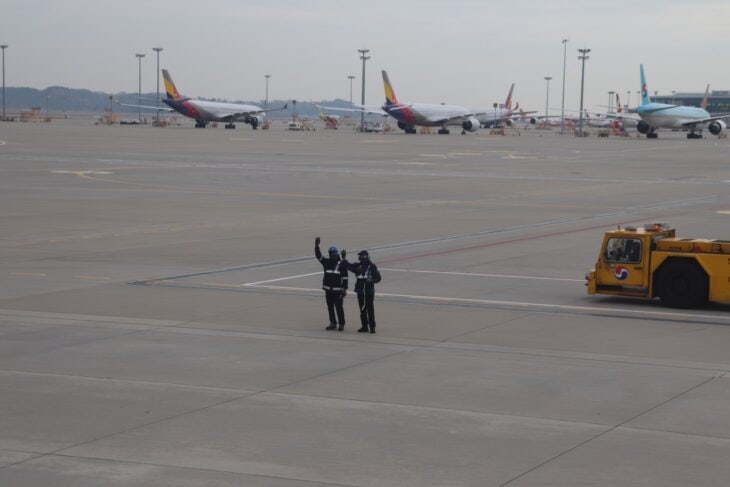

Incheon handled 74,126,912 passengers in 2025, up 4.1%, and moved from 13th to 12th in the world. It is Korean Air’s main hub and Seoul’s main international gateway.
Japan dominates its network. The busiest routes in our sample were Tokyo Narita at about 45 departures a day and Osaka Kansai at about 43, followed by Fukuoka.
Korea’s busiest route of all, Seoul to Jeju, does not even touch Incheon: it runs from Gimpo. That story is in why Seoul to Jeju is the busiest flight route in the world.
7. Beijing Capital (PEK): 70.7 million passengers
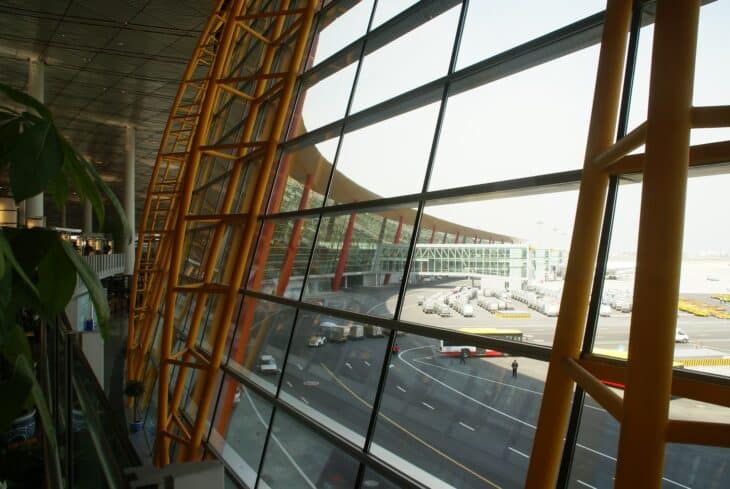
Beijing Capital handled 70,742,712 passengers in 2025, up 5.0%, and rose from 16th to 15th in the world. It is Air China’s home base.
Add Beijing Daxing’s 53.6 million and the city’s two airports handled about 124.4 million passengers in 2025, more than any single airport on Earth. In our sample Capital averaged about 640 departures a day to 196 destinations.
8. Singapore Changi (SIN): 70.0 million passengers
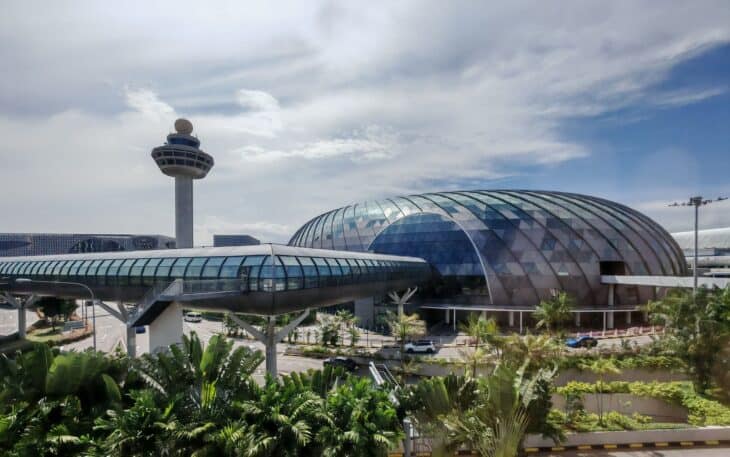
Changi handled 69,982,000 passengers in 2025, up 3.5%, though it slipped from 15th to 16th in the world. Like Dubai, it has no domestic flights at all: every departure leaves Singapore.
In our sample it averaged about 538 departures a day to 153 destinations in 48 countries. That makes it the busiest airport in Southeast Asia by passengers, though Kuala Lumpur and Bangkok both send out slightly more flights.
9. Shenzhen Bao’an (SZX): 66.5 million passengers
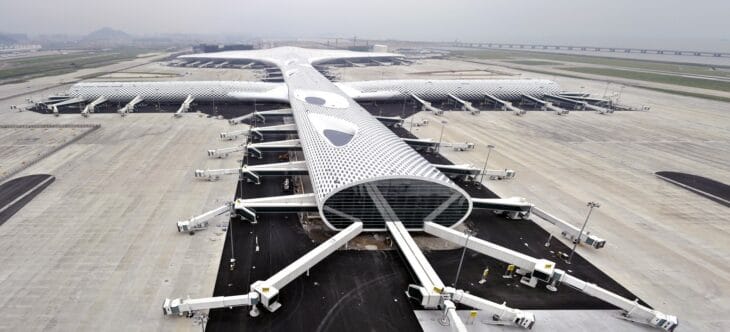
Shenzhen handled 66,485,213 passengers in 2025, up 8.2%, and climbed from 22nd to 19th in the world. It shares the Pearl River Delta with Hong Kong and Guangzhou, which puts three of Asia’s top 12 airports in one metropolitan region.
It is busier than its passenger rank suggests. Our sample put it at about 610 departures a day, seventh in Asia and ahead of Singapore and Dubai.
10. Kuala Lumpur (KUL): 63.4 million passengers
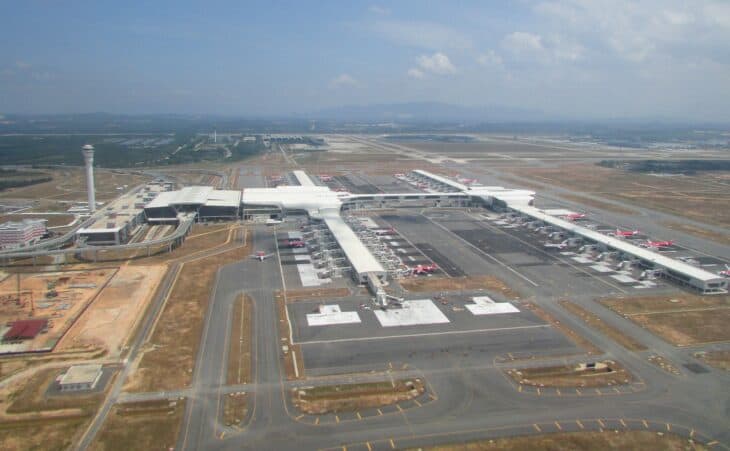

Kuala Lumpur handled 63,409,501 passengers in 2025, up 11.0%, the fastest growth in the top 10 here. ACI calls it the biggest mover in the world top 20: it climbed six places, from 26th to 20th.
It is the base of both Malaysia Airlines and low-cost giant AirAsia. In our sample it averaged about 568 departures a day, more than Singapore, Bangkok or Dubai.
11. Bangkok Suvarnabhumi (BKK): 62.9 million passengers
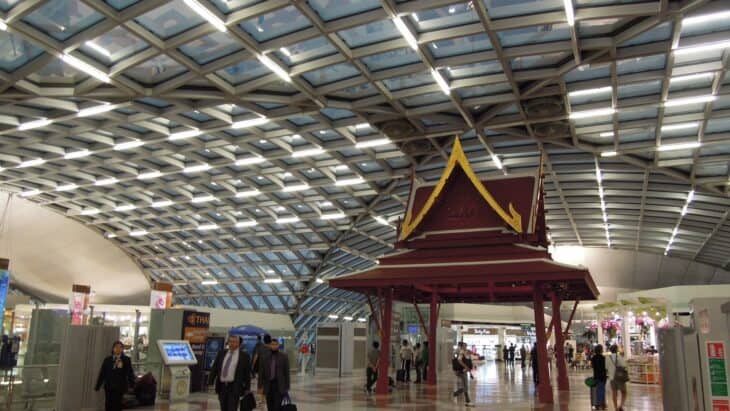
Suvarnabhumi handled 62,902,183 passengers in calendar 2025, up 1.07%, according to Airports of Thailand.
Its network reaches more countries than any other airport in Southeast Asia: about 137 destinations in 55 countries in our sample. Bangkok’s low-cost airlines mostly fly from the older Don Mueang airport instead, explained in why Bangkok has two airports.
12. Hong Kong (HKG): 61.0 million passengers
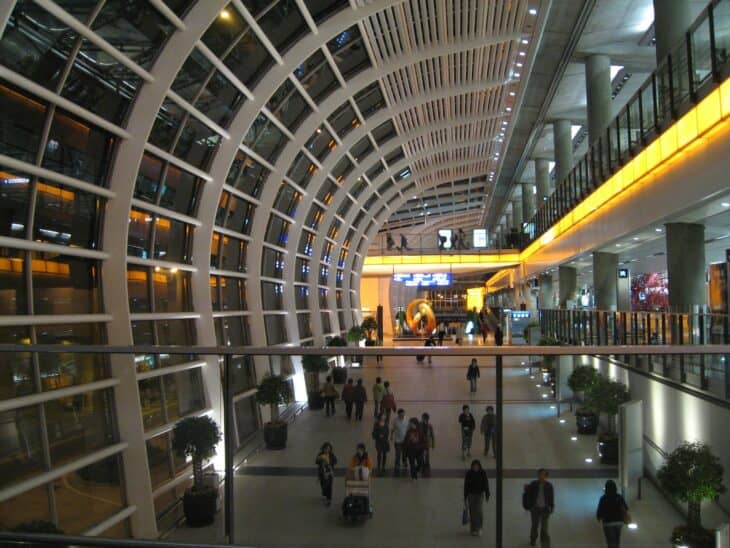
Hong Kong handled 60,956,000 passengers in 2025 by the Airport Authority’s finalized count, up 15%. That was the fastest growth of any airport on this list.
It is also the busiest cargo airport in the world, with 5,066,345 metric tons in 2025, according to ACI.
13. Chengdu Tianfu (TFU): 56.7 million passengers
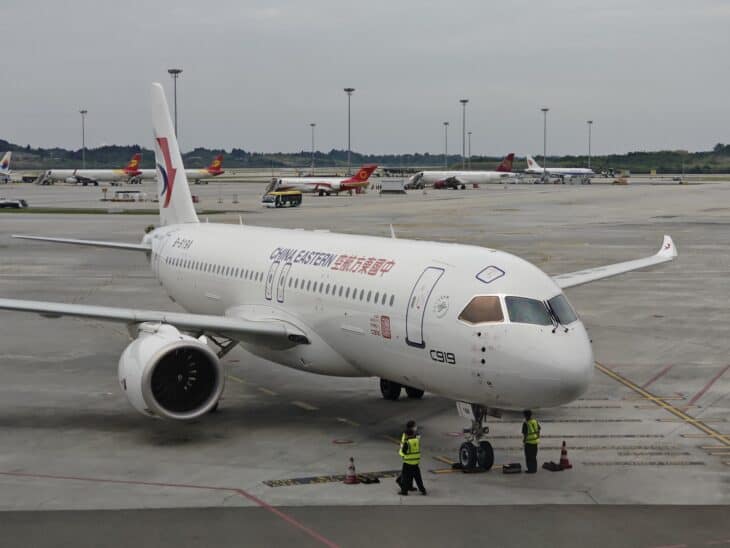

Tianfu handled 56,686,738 passengers in 2025, up 3.2%, according to China’s Civil Aviation Administration (CAAC). It opened in 2021, which makes it the newest airport in the top 18.
Like Beijing and Shanghai, Chengdu has two major airports: the older Shuangliu still runs its own large schedule. In our sample Tianfu averaged about 514 departures a day to 171 destinations.
14. Mumbai Chhatrapati Shivaji Maharaj (BOM): 55.5 million passengers
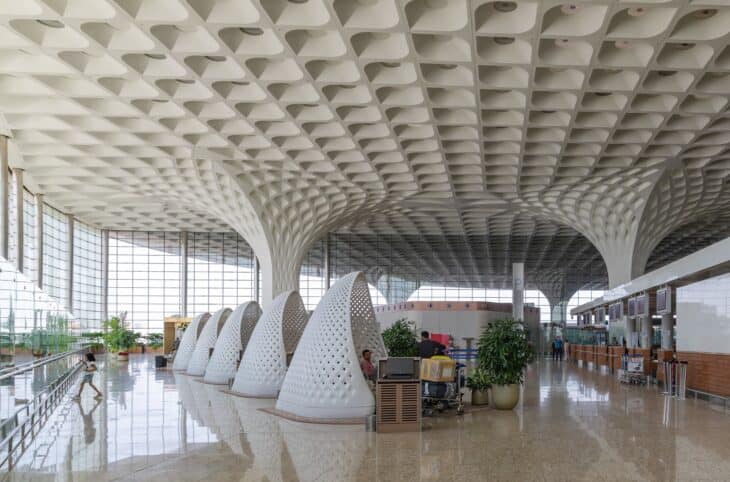
Mumbai handled around 55.5 million passengers in calendar 2025, about 1.3% more than in 2024, according to the airport. That split into 39.2 million domestic and 16.3 million international passengers.
In our sample it averaged about 472 departures a day, and its busiest route is the Delhi shuttle.
15. Jakarta Soekarno-Hatta (CGK): 55.0 million passengers
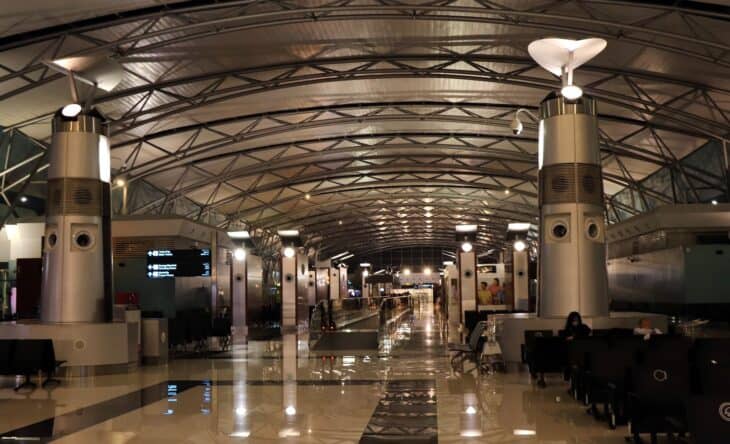
Soekarno-Hatta handled about 54.95 million passengers in 2025, up 0.3%, by local press reports; its operator had not published a full-year figure we could find. That puts it a whisker ahead of Doha.
By flights it ranks much higher. Our sample put it at about 516 departures a day, 12th in Asia, but to only 88 destinations in 24 countries, a sign of how much of its traffic stays within Indonesia.
16 to 18. Doha, Beijing Daxing and Jeddah
Doha Hamad (DOH), 54.3 million: Qatar Airways’ hub grew 3% in 2025, according to the airport. In our sample it reached 150 destinations in 77 countries on about 332 departures a day, a network built almost entirely on connections.
Beijing Daxing (PKX), 53.6 million: the starfish-shaped airport that opened in 2019 handled 53,618,949 passengers, up 8.5%, passing 50 million for the first time, according to the CAAC.
Jeddah King Abdulaziz (JED), 53.5 million: Saudi Arabia’s busiest airport, swelled by Hajj and Umrah pilgrims, handled 53.5 million passengers by the national statistics office’s count, up 9%. The airport’s own figure is 53.4 million.
The busiest airports in Asia by flights per day
Ranking by departures gives a different order, because it rewards short domestic routes flown by narrow-body jets. Dubai falls from first to 11th, and Jakarta and Xi’an jump into the top 16.
| Rank | Airport | Departures a day | Destinations | Passenger rank |
|---|---|---|---|---|
| 1 | Guangzhou Baiyun (CAN) | 800 | 190 | 4 |
| 2 | Shanghai Pudong (PVG) | 743 | 198 | 3 |
| 3 | Tokyo Haneda (HND) | 705 | 94 | 2 |
| 4 | Beijing Capital (PEK) | 640 | 196 | 7 |
| 5 | Delhi Indira Gandhi (DEL) | 634 | 129 | 5 |
| 6 | Seoul Incheon (ICN) | 623 | 156 | 6 |
| 7 | Shenzhen Bao’an (SZX) | 610 | 142 | 9 |
| 8 | Kuala Lumpur (KUL) | 568 | 130 | 10 |
| 9 | Bangkok Suvarnabhumi (BKK) | 545 | 137 | 11 |
| 10 | Singapore Changi (SIN) | 538 | 153 | 8 |
| 11 | Dubai (DXB) | 525 | 204 | 1 |
| 12 | Jakarta Soekarno-Hatta (CGK) | 516 | 88 | 15 |
| 13 | Chengdu Tianfu (TFU) | 514 | 171 | 13 |
| 14 | Beijing Daxing (PKX) | 494 | 152 | 17 |
| 15 | Hong Kong (HKG) | 476 | 132 | 12 |
| 16 | Xi’an Xianyang (XIY) | 473 | 140 | Not in top 18 |
The two measures roughly agree with ACI’s own count of takeoffs and landings. ACI put Shanghai Pudong (557,043) and Guangzhou (550,512) eighth and ninth in the world for 2025, with Haneda 14th and Delhi 16th. Those four are the only airports on this list in ACI’s global top 20 by movements.
Pudong edged Guangzhou on ACI’s 2025 movements, while our 2026 sample has Guangzhou ahead, so the two are close enough that the season decides the order. Our world ranking of the busiest airports by flights per day shows where these airports sit against Atlanta and Chicago.
What about Istanbul?
Istanbul Airport handled 84.4 million passengers in 2025, enough to rank fourth in Asia if it counted. It sits on the European side of the Bosphorus and reports to ACI Europe, so it is ranked with Europe’s airports instead. Istanbul’s second airport, Sabiha Gokcen, is on the Asian shore, but it is smaller than every airport in this top 18.
Leaving out the Gulf changes the top of the list too. ACI groups Dubai, Doha and Jeddah in a Middle East region, so a ranking of Asia-Pacific alone starts with Tokyo Haneda, then Shanghai Pudong and Guangzhou.
For the global picture, see the 20 busiest airports in the world by passengers, where 10 of the 20 are in Asia as defined here.
FAQ
Sources and references used for research and fact-checking.
- ACI World, World's Busiest Airports: Atlanta Holds, Asia Climbs
- ACI World, Busiest airports in the world
- ACI World, What Are the Busiest Airports in the World in 2025?
- Civil Aviation Administration of China, 2025 national civil airport production statistics, airport ranking
- Airports of Thailand, Airport Traffic Report 2025
- Airport Authority Hong Kong, HKIA facts and figures, 2025
- Airport Authority Hong Kong, HKIA full-year 2025 traffic press release
- Aviation & Defence Universe, CSMIA witnesses highest-ever passenger traffic of 55.5 million in CY25
- Hamad International Airport, Hamad International Airport 2025 operational performance
- General Authority for Statistics (Saudi Arabia), GASTAT air transport statistics release
- Arab News, Jeddah airport passenger growth, citing GASTAT
- Aviation Week, King Abdulaziz International Airport hits record passenger high
- Tangerang Online, Bandara Soetta layani 3,52 juta penumpang selama libur Nataru
- Wikipedia, List of the busiest airports in Asia
Get the Newsletter
The latest aviation news and stories sent to your inbox.
About the Author

Tim is the owner and lead editor of AeroCorner since 2019, overseeing aviation content covering aircraft, airlines, airports, and the broader aviation industry. Through years of researching, writing, editing, and publishing aviation-focused content, he has developed extensive practical knowledge of commercial aviation and air travel. Based in Asia and a frequent traveler himself, Tim also brings firsthand passenger experience to AeroCorner’s coverage. Outside of publishing, he has also explored aviation firsthand through hands-on flight training in New Zealand.