

Table of Contents
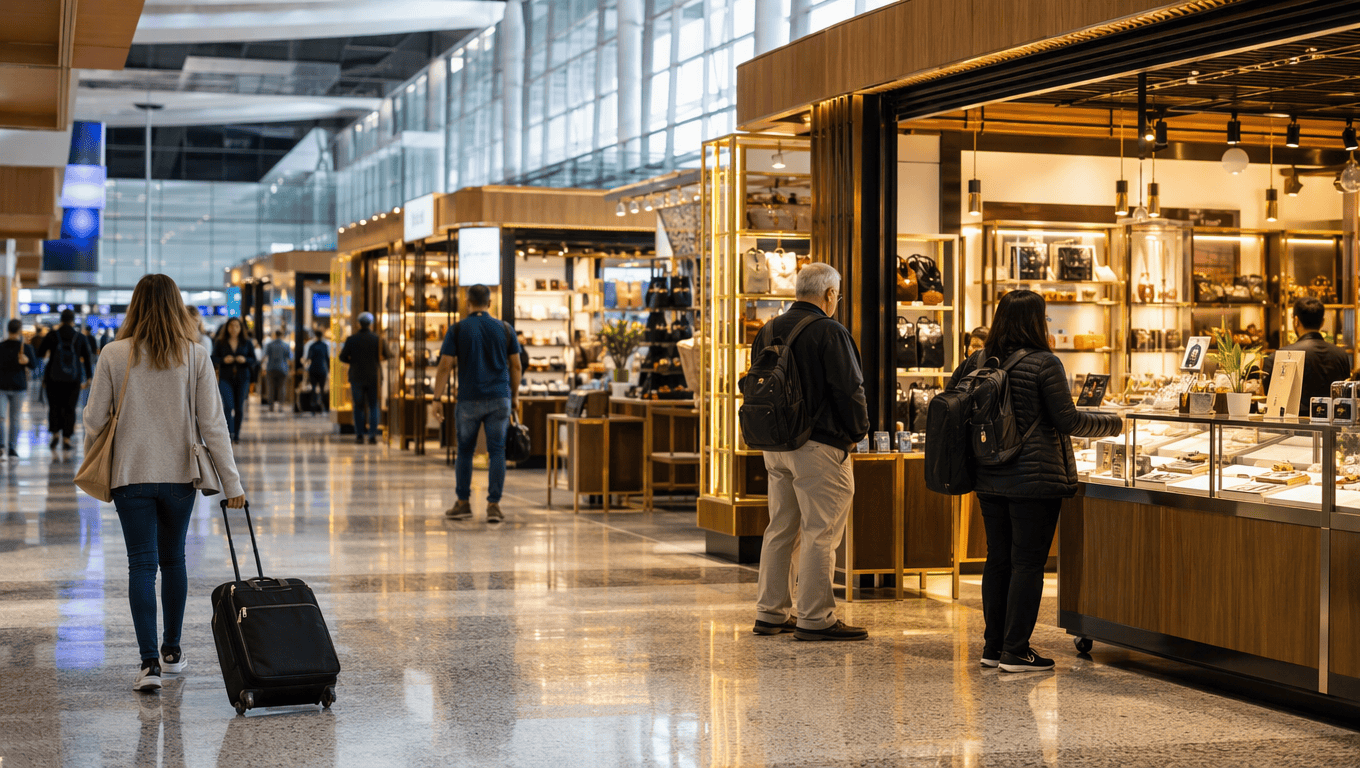
Every major airport moves millions of travelers a year, and each one is a captive customer looking for something to eat, buy, or do before a flight. That volume has turned terminals into some of the busiest small-business districts anywhere, and it is not only the airlines cashing in on it.
From lounge day-passes to phone-charging kiosks, the businesses that thrive here solve a traveler’s immediate problem: dead time, a dying phone, a wrinkled shirt, or a forgotten gift. An airport also hands a new business built-in foot traffic that no strip mall can match.
The 25 ideas below run from low-cost kiosk concepts to franchise-level investments, so use them as a starting point for your own research. Badging, lease terms, and concession rules vary by airport, so treat each idea as a direction to validate locally, not a plug-and-play plan.
01. Independent Airport Lounge Day-Pass Service
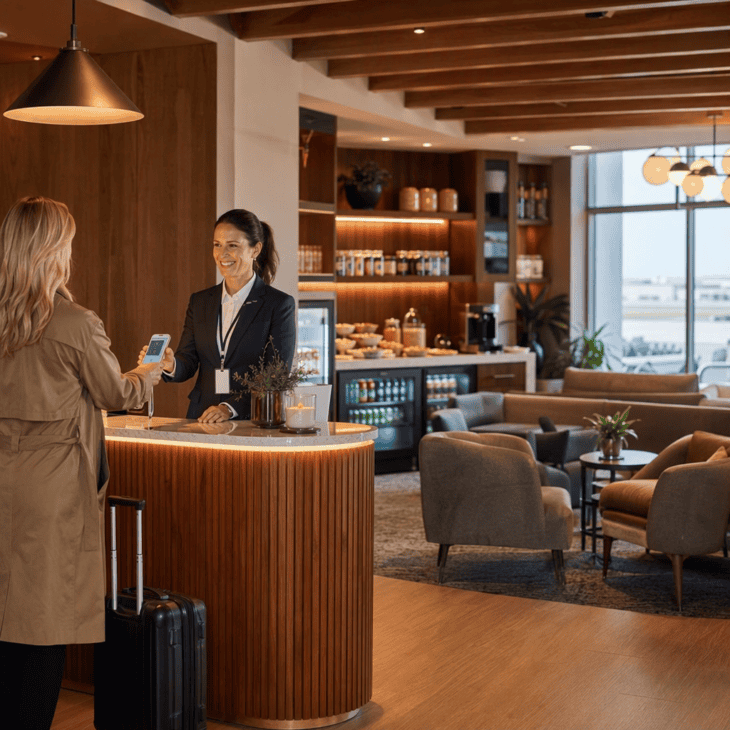
What it is A standalone post-security lounge selling single-visit or hourly access instead of an annual membership: quiet seating, wifi, snacks, and showers where space allows. Networks like Priority Pass work the other way, selling memberships that pay existing lounges for admission rather than running rooms themselves.
Why it works Not every traveler wants a subscription for two trips a year, and a la carte pricing removes the capacity-denial problem that dogs membership networks at busy hours. A single small room can serve dozens of short visits a day.
How to get it Approach the airport’s concession or business-development office directly, since lounge space is leased through a competitive proposal process, not walk-in retail leasing. Everyone working the space needs an airport-issued ID badge, which requires an FBI fingerprint check, a TSA security threat assessment, and a warrants check sponsored by your business. Start at a mid-size regional airport with a badging office than can turn applications around faster than a major hub. Budget for a buildout that can scale from a single room to a second one if bookings justify it.
02. Long-Term Parking Valet and Detail Service
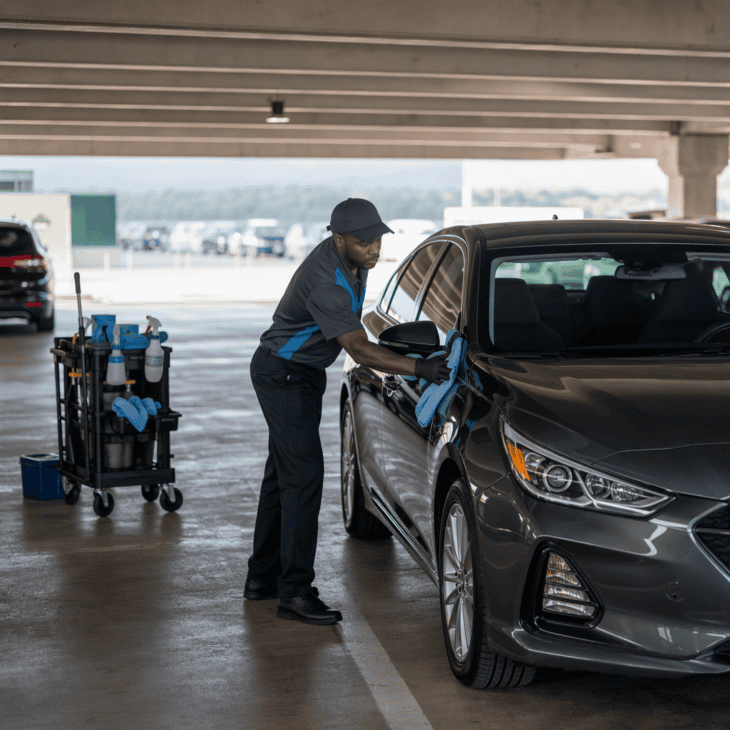
What it is A valet-and-detail add-on for long-term parking customers: the car is collected at drop-off, washed and vacuumed while the owner travels, and returned clean at pickup. Tiers usually run from a basic wash to a full interior detail.
Why it works Long-term parking already sits the car for days, so the labor has somewhere to happen without adding a special trip. Business travelers in particular will pay extra to skip a dirty windshield on the drive home.
How to get it Pitch this as a revenue-share concession to an existing parking operator rather than trying to run the parking lot yourself, since most lots are already leased or airport-run. Insurance and a vehicle-handling agreement matter more here than almost any other idea on this list. Start with one lot and one shift before adding staff, and track turnaround time closely, since a late car undoes the entire pitch.
03. Device Charging and Power Bank Rental Kiosk
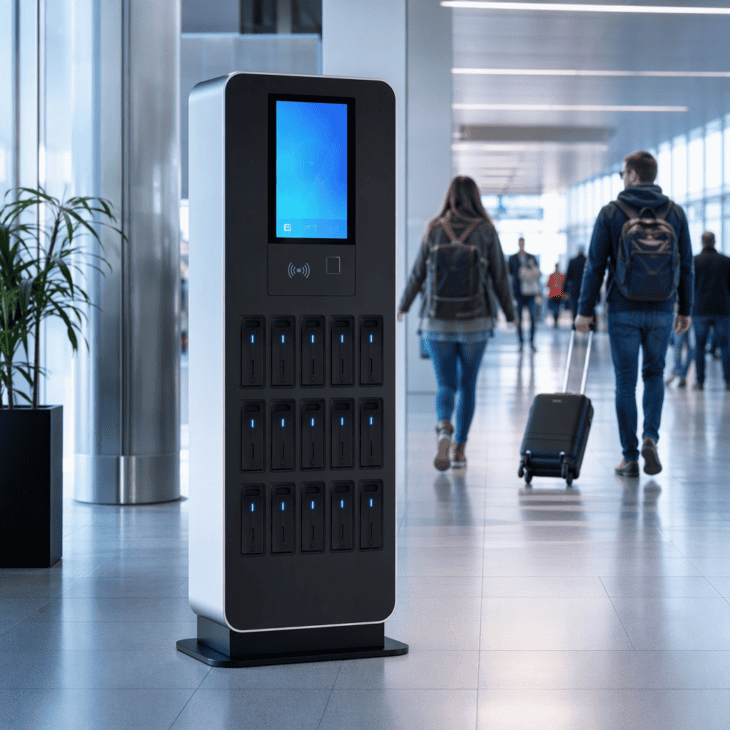
What it is A self-service kiosk that rents portable power banks by the hour or day, returnable at any sister kiosk in the network. Some versions add a locker bank for cable rentals and a small accessory shelf.
Why it works Outlets at gate seating are chronically outnumbered by passengers, and a dead phone before a flight is a genuine source of stress. The hardware footprint is small enough to fit almost anywhere with foot traffic.
How to get it This is one of the lower-cost entries on this list, since a single kiosk unit is far cheaper than a staffed storefront and needs no employee on-site once installed. License the kiosk hardware from an established vendor rather than building your own, and negotiate a small footprint lease with the airport’s advertising or vending concession manager. Place units near gates with long average dwell times rather than near the checkpoint, where travelers are moving, not waiting.
04. Pet Relief Escort and Boarding Concierge
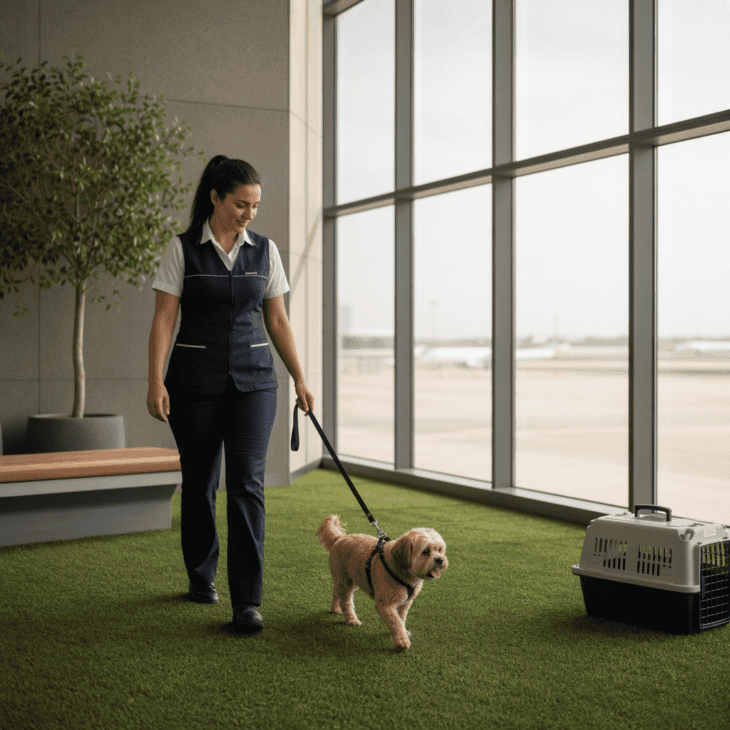
What it is A booked concierge service that walks a traveler’s dog or cat to the terminal’s pet relief area, holds the animal during a tight connection, or watches carriers curbside during a longer layover. It does not build or own the relief area itself.
Why it works A federal rule already requires a post-security pet relief area in every terminal of a commercial airport serving at least 10,000 passengers a year, so the infrastructure exists almost everywhere. What is missing is someone to help a stressed traveler use it on a tight connection.
How to get it Map every relief area at your target airport first, since the rule sets no standard design or location and each terminal solves it differently. Build the service around pre-booked pickup windows tied to flight numbers, not walk-up demand. Pet-handling insurance and a clear liability waiver are non-negotiable before the first booking.
05. Regional Grab-and-Go Food Stand
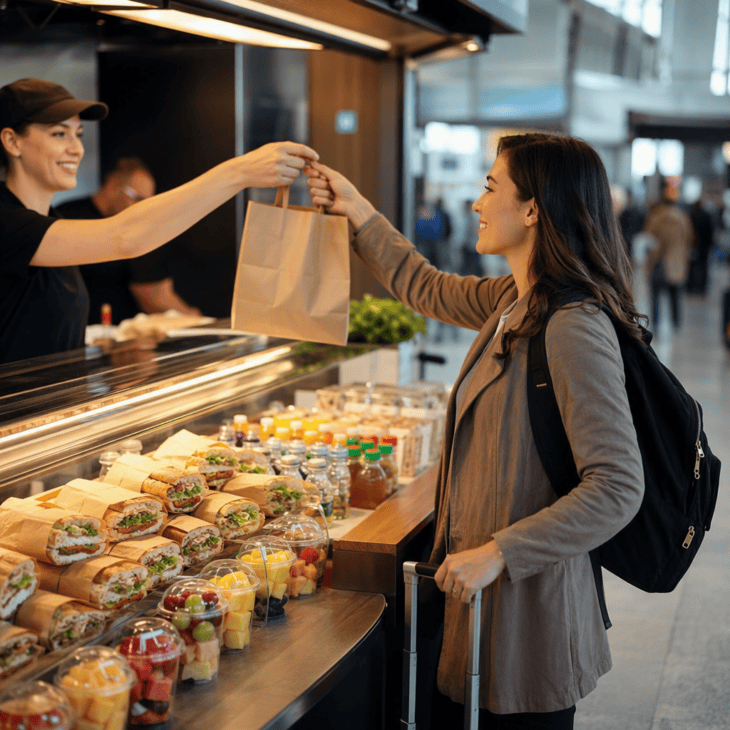
What it is A small counter selling grab-and-go food built around a local or regional specialty: a city’s own sandwich, a state’s barbecue, a coastal seafood roll. Everything is pre-wrapped for speed at the gate.
Why it works Airports increasingly favor local operators over an all-national-chain lineup; Austin’s airport reports that 85% of its food and beverage and retail outlets are local brands rather than national ones. A distinct regional identity also gives travelers a reason to choose your stand over a familiar chain.
How to get it Concession space is won through a formal request-for-proposal process, not a lease you can simply sign, and airports typically want three to five years of food-service experience before they will consider a first-time bidder. Contracts commonly run around ten years with rent set as a percentage of gross revenue on a tiered scale. Build a track record at a farmers market or food hall first, then bid when the next RFP opens. If you need something to eat on the way to your own gate, our airport breakfast ideas cover the earlier end of the day.
The badge comes before the business plan
Anyone working inside a US airport, landside or airside, generally needs an airport-issued ID badge sponsored by an employer or tenant. Expect an FBI fingerprint check, a TSA security threat assessment, and a warrants check before training and badge issuance.
06. Travel Money and Currency Exchange Kiosk
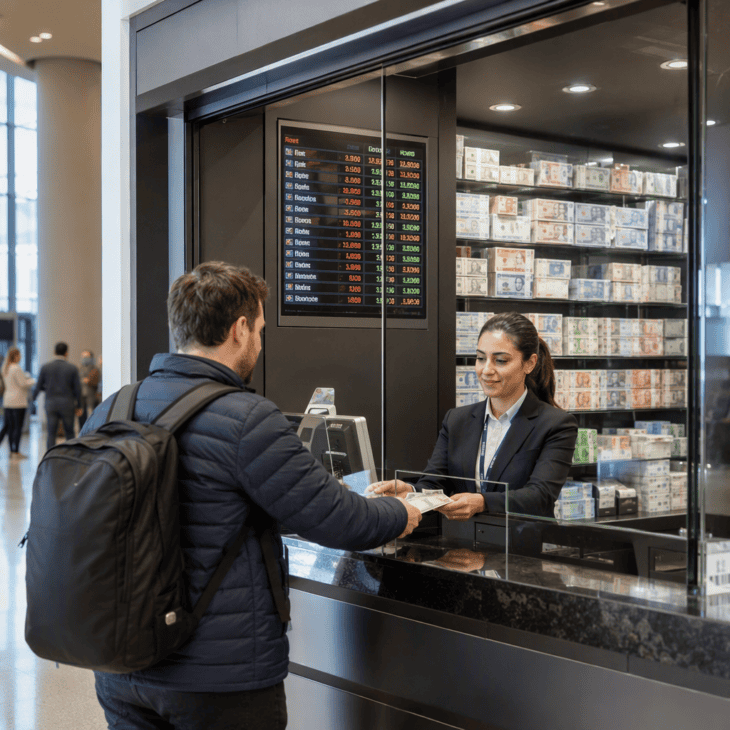
What it is A small, secure counter or kiosk exchanging foreign cash for US dollars and back, usually near international arrivals. Some add prepaid travel cards and wire transfers as a second revenue line.
Why it works International travelers still land needing local cash for a taxi or a tip before they reach a bank, and demand concentrates hard around arrivals gates at international airports. The margin sits in the exchange spread rather than a transaction fee, so volume matters more than markup.
How to get it This concession usually requires a money-services business license at the state level in addition to the airport’s own competitive proposal process. Reinforced glass, a safe, and an armored cash-pickup contract are standard costs to budget for before the register even opens. Target an airport with meaningful international arrivals traffic rather than a domestic-only regional field, where the demand simply is not there.
07. Luggage Wrapping and Protection Service
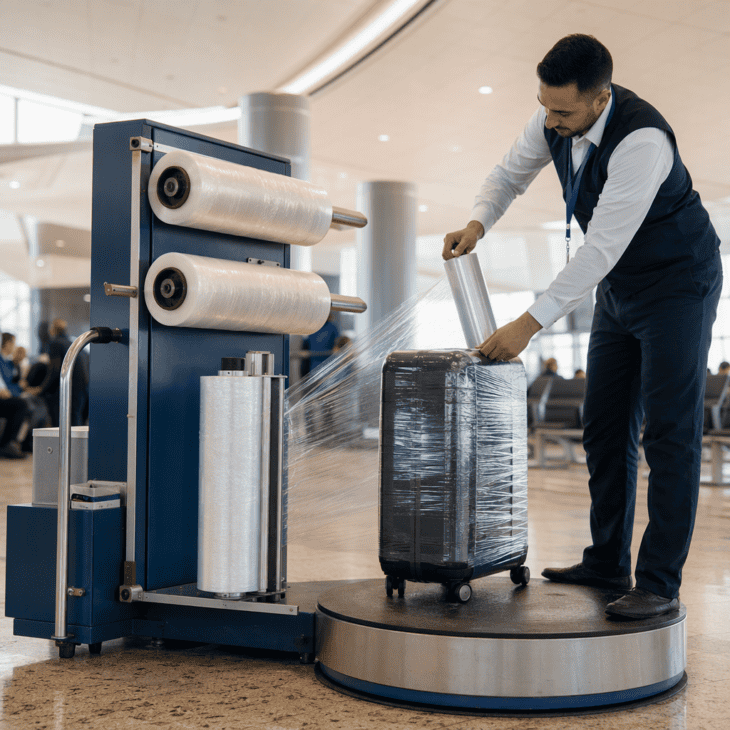
What it is A check-in-area counter that wraps a checked bag in clear plastic film on a spinning platform, then adds a tracking tag and sometimes an insurance add-on. The whole service usually takes under two minutes per bag.
Why it works Wrapped bags are visibly harder to tamper with and easier to spot on a crowded carousel, and the film also catches the scrapes and zipper snags that ruin soft-sided luggage. It is a low-cost, high-margin impulse purchase made in the sixty seconds before check-in.
How to get it Placement is everything: the counter has to sit in the direct path to check-in kiosks, not off to the side where travelers already committed to skipping it. Machines are compact and the film cost per bag is low, which keeps the startup budget modest compared with most ideas on this list. Pair it with a small insured-loss guarantee to justify a premium price over a free-standing wrap machine.
08. Private Nap Suite Rental Business
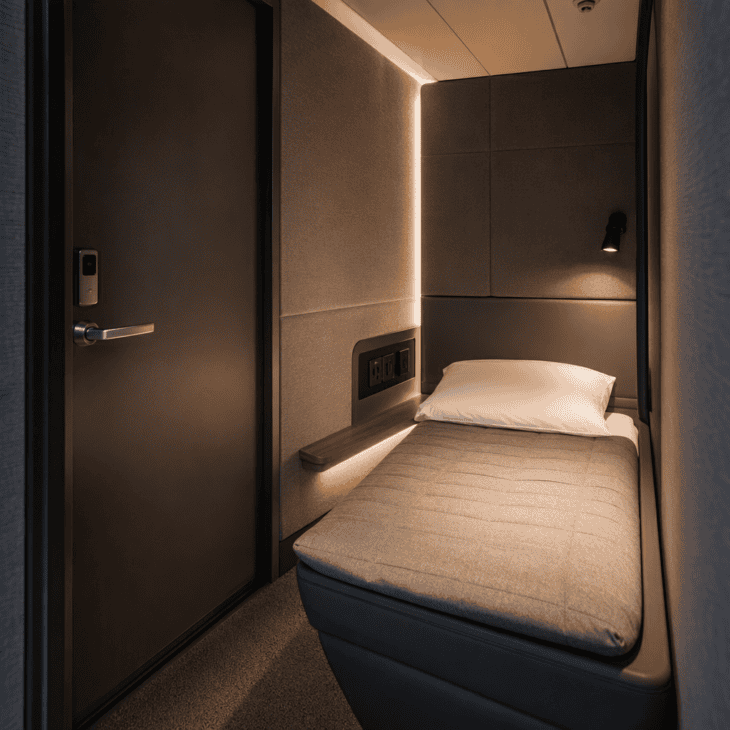
What it is A bank of small, soundproofed private suites with a daybed, workspace, and lockable door, booked by the hour with overnight rates at some locations. Minute Suites runs this exact model at ten major US airports, including Atlanta, Dallas/Fort Worth, and JFK.
Why it works Long layovers and overnight irregular-operations delays create real demand for a private, quiet room that is not a hotel across town. A proven multi-airport operator already validates the concept, which makes the pitch to a new airport’s concession office easier than an unproven idea.
How to get it Target airports where no comparable suite operator already holds the concession, since the existing network covers only a fraction of US commercial airports. Soundproofing, fire code, and ADA-accessible room design drive most of the buildout cost. Pitch it as a companion to, not a competitor of, the airport’s existing hotel or lounge concessions when you approach the business-development office.
09. Personal Travel Concierge Service
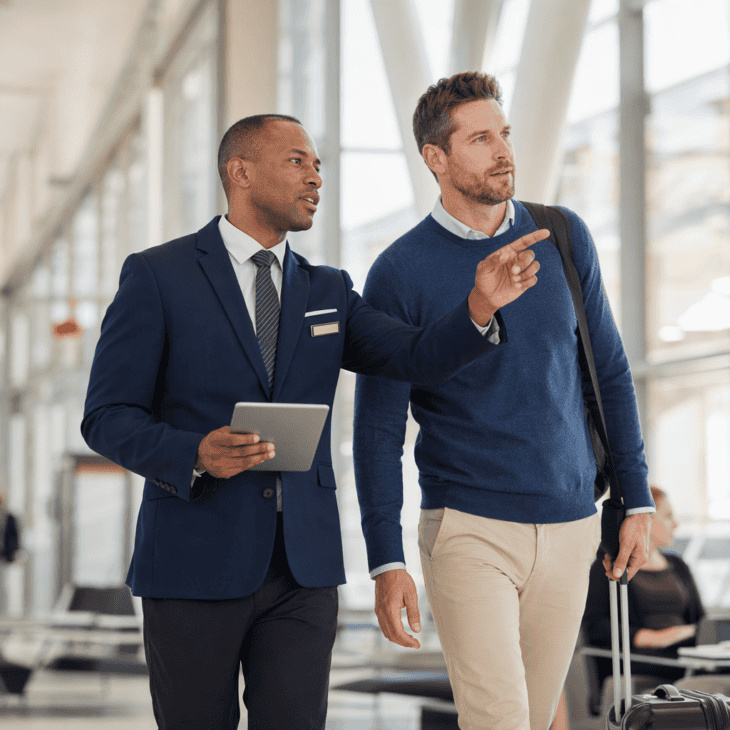
What it is A pre-booked personal escort who meets a traveler at the curb or the gate, handles a tight connection, navigates an unfamiliar terminal, or assists an elderly or first-time flyer. Some services extend to wheelchair-adjacent mobility support and porter work.
Why it works Airports are confusing for infrequent flyers, and a genuinely tight connection is stressful enough that some travelers will pay for a guide who already knows the terminal’s shortcuts. This idea also suits someone weighing a career change into aviation, since it builds airport-operations knowledge without a pilot’s license or an airline job; our aviation career ideas cover other paths in.
How to get it This role needs an airport-issued badge for airside access, the same background-check process every other airside idea on this list requires. Start by partnering with a single airline’s premium desk or a corporate travel agency for referrals rather than marketing to the general public cold. Liability insurance covering physical assistance is essential before the first booking.
10. Local Artisan Gift and Souvenir Shop

What it is A curated retail shop stocking work from local makers: ceramics, jewelry, food gifts, and printed goods, priced above generic mass-market souvenirs. Inventory rotates by season and by which makers are producing.
Why it works Departing travelers buy last-minute gifts under time pressure and reward a shop that feels distinct from every other airport gift stand selling the same imported magnets. A local-makers angle also aligns with the same push toward local brands that is reshaping airport food courts.
How to get it Line up consignment or wholesale agreements with several makers before bidding on retail space, so the shelves are never bare on opening day. Retail concessions go through the same competitive proposal process as food concessions, with contracts commonly running around ten years. For travelers shopping for someone else entirely, our gifts for aviation lovers covers a different but complementary angle.
11. Shared-Ride Shuttle Coordination Service
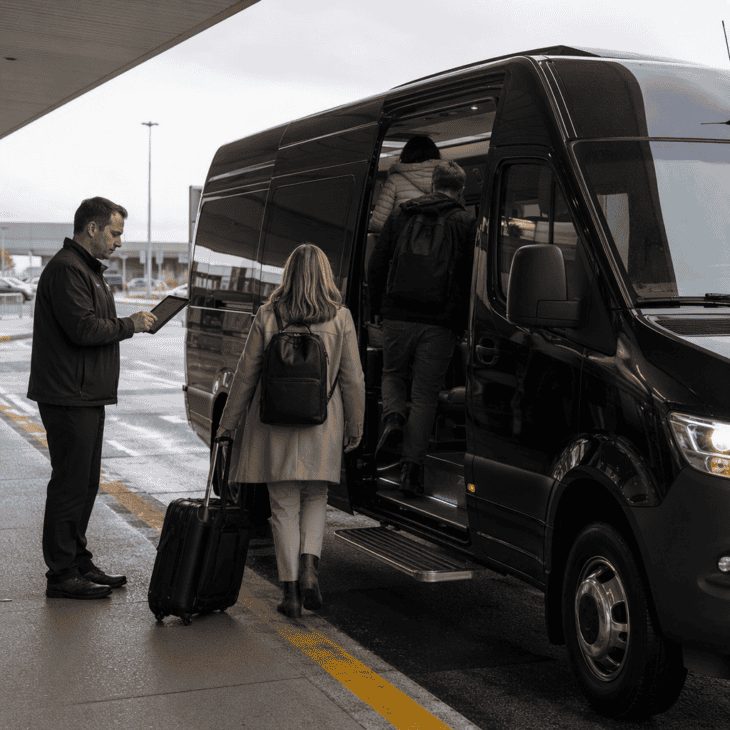
What it is A scheduled shared-van service that groups travelers heading to the same part of town onto one shuttle instead of separate rideshare trips. Booking happens ahead of landing, with a set pickup point and window.
Why it works Solo rideshare trips from the airport are expensive at peak hours, and a shared van fills every seat instead of running four half-empty cars in the same direction. Regional airports with weak public transit into the nearest city are the strongest fit.
How to get it Commercial ground transportation operators need a curbside permit from the airport authority, a separate approval from any existing taxi or rideshare arrangement. Start with one or two fixed routes to the busiest suburbs or downtown core rather than an on-demand model you cannot staff reliably. A simple booking app or even a shared spreadsheet can run the first few months before investing in custom software.
12. Business Traveler Co-Working Lounge
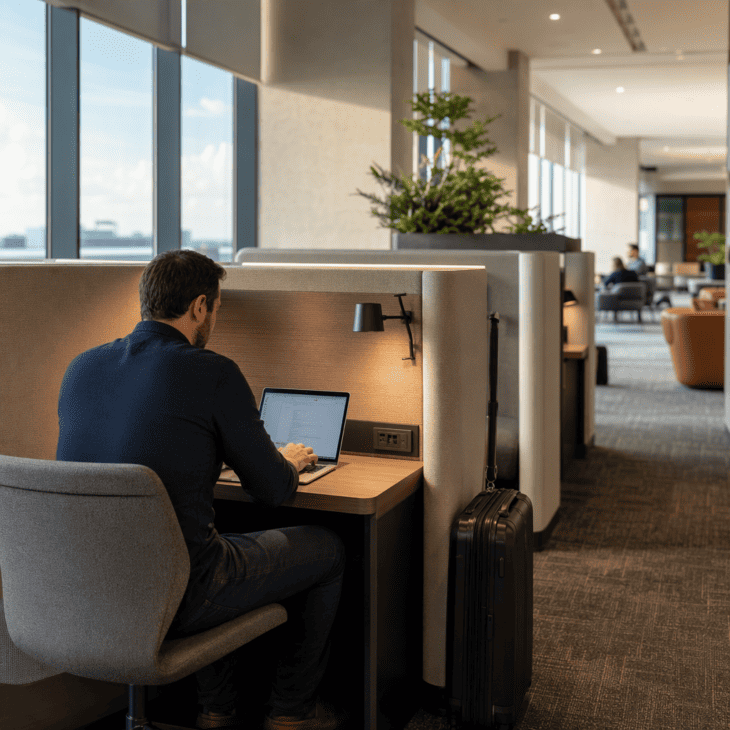
What it is A quiet, bookable work space with individual desk pods, reliable wifi, and phone-booth-style rooms for calls, priced by the hour or bundled into a monthly frequent-traveler pass. It skips the food and lounge-chair focus of a general lounge.
Why it works A remote-work generation of business travelers now treats a long layover as a work session rather than dead time, and gate seating offers no privacy for a call. Our things to do on a long layover covers the same window of time from the traveler’s side.
How to get it Position near business-heavy gate clusters rather than leisure-route concourses, since the pricing only works with steady weekday demand. Corporate travel-account partnerships, where a company pre-pays credits for its traveling staff, are a more reliable revenue base than walk-up bookings alone. Staff and badging follow the same airport-employee background-check process as every other airside idea here.
13. Garment Pressing and Alterations Kiosk
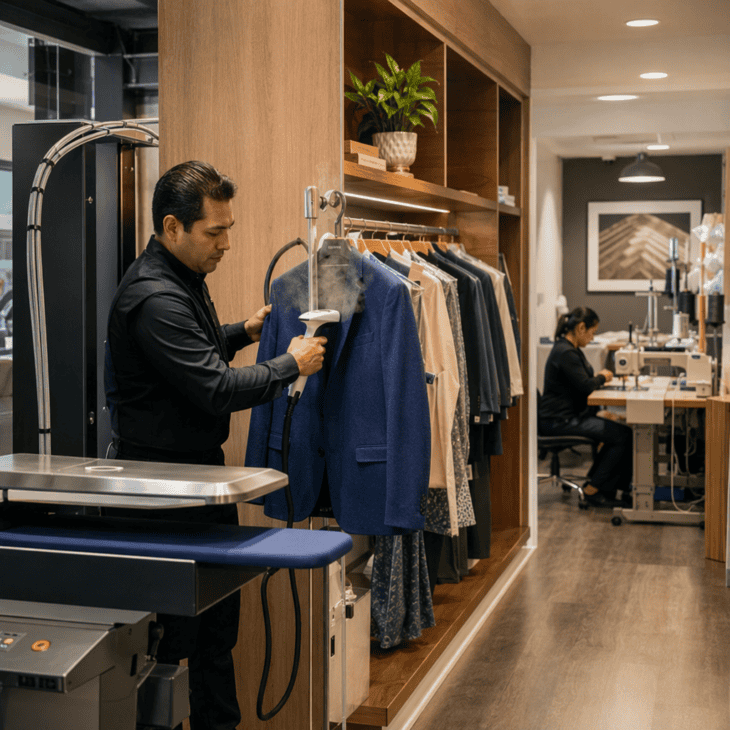
What it is A quick-turnaround kiosk that presses a wrinkled jacket or shirt while a traveler waits, plus minor repairs like a missing button or a loose hem. Most jobs finish in under fifteen minutes.
Why it works A suit pulled from a carry-on for a same-day meeting rarely looks board-ready, and there is no dry cleaner within reach of most gate areas. It is a narrow, specific need that a general retail shop has no reason to solve.
How to get it A single commercial steam press and a small sewing station keep the equipment cost modest compared with most food or retail concessions. Position near business-traveler gate clusters and near hotel-adjacent arrivals corridors, where a traveler landing for a same-day meeting is most likely to need it. Bundle a loyalty punch card for frequent business flyers to build repeat visits rather than relying on one-off walk-ins.
Know the lease before you pitch it
Airport concession contracts commonly run around ten years, with rent set as a percentage of gross revenue on a tiered scale rather than a flat rate. Ask for the current request-for-proposal documents before writing a business plan around assumed numbers.
14. Airport Wellness and Massage Spa Concession
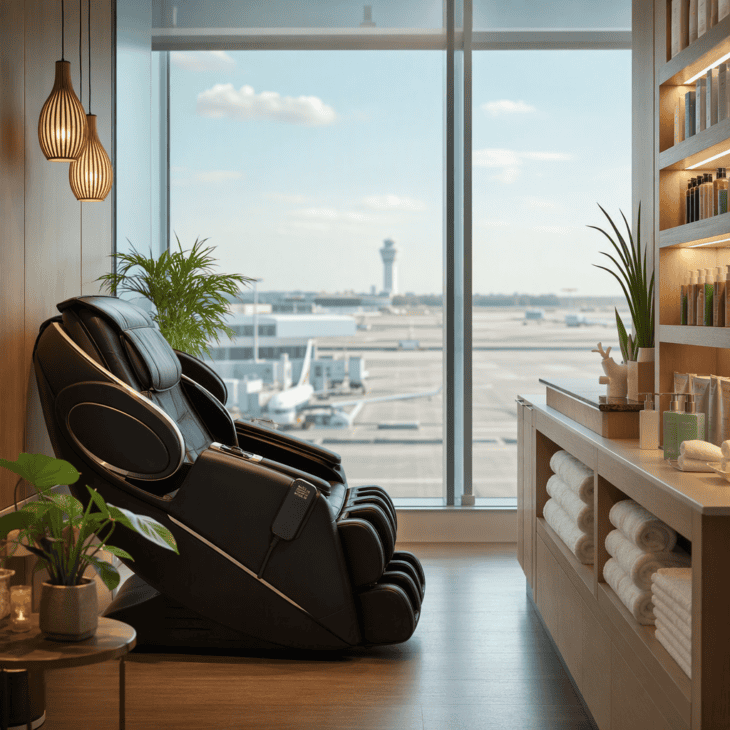
What it is A walk-up or booked wellness concession offering chair massage, nail care, and a small shelf of travel wellness products. XpresSpa runs this model at ten US airports today, with massage and nail care as its core services.
Why it works Long-haul travel is physically uncomfortable, and a chair massage before a red-eye is now a routine purchase rather than an indulgence. An established multi-airport operator proves recurring demand exists, which strengthens a proposal at any airport it has not yet reached.
How to get it Licensed massage therapists need their own state licensing on top of the airport’s own badge and background-check process, so staffing lead time is longer here than most ideas on this list. Target airports with heavy long-haul international traffic, where the wellness pitch lands hardest. A small retail shelf of travel-size products adds margin without adding much floor space.
15. Specialty Coffee Cart or Kiosk

What it is A small mobile or fixed espresso cart focused on specialty coffee rather than a full cafe menu, with a compact footprint that fits underused corners of a concourse. Some operators run several carts under one concession contract, repositioning them as gate schedules shift through the day.
Why it works A cart clears the same competitive-proposal bar as a full storefront but needs a fraction of the buildout cost and floor space. Mobility also lets an operator chase the morning rush from one concourse to another instead of committing to a single fixed spot.
How to get it Ask the airport whether its current RFP cycle includes a mobile-cart category, since not every facility offers one separately from fixed storefronts. A single quality espresso machine and a trained barista matter more here than menu breadth. Track hourly sales by location for the first few months, then propose repositioning carts to the airport once the data supports it.
16. Phone and Laptop Repair Kiosk
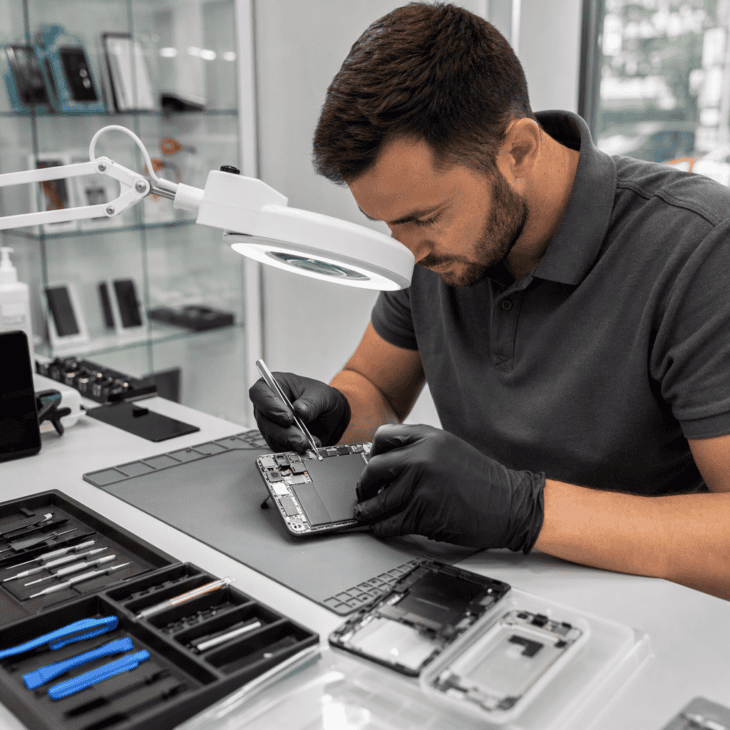
What it is A quick-service counter that repairs cracked phone screens, replaces batteries, and sells basic accessories like cases and cables. Most repairs are designed to finish within the time a traveler spends at the gate.
Why it works A phone breaking the night before or morning of a trip is common, and a traveler about to be unreachable for hours will pay a premium to fix it immediately rather than wait until they land. There is effectively no competing repair option once someone is past security.
How to get it Certify technicians on the two or three phone brands that make up most of your target market rather than trying to service every device on day one. Parts inventory has to be lean and fast-moving, since a kiosk cannot carry the same stock depth as a mall repair shop. Accessory sales, not repairs, often carry the better margin, so stock cases and chargers generously.
17. Airport Hotel Day-Room Booking Service
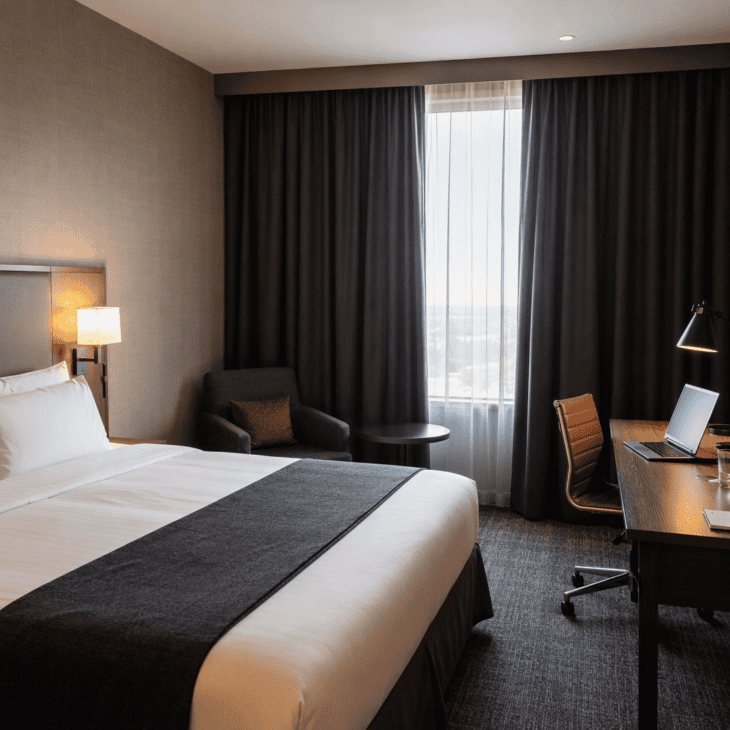
What it is A booking service, not a hotel itself, that partners with airport-adjacent hotels to sell their empty daytime rooms in short blocks to travelers on a long layover or an overnight delay. The hotel keeps its nightly business untouched.
Why it works A hotel room sits empty most of the day between checkout and the next night’s check-in, and a traveler with an eight-hour layover would rather sleep horizontally than in a gate chair. The hotel earns incremental revenue on inventory it was not otherwise selling.
How to get it This idea needs no airport lease at all, since the product lives at partner hotels, which makes it one of the lowest-overhead entries on this list. Sign revenue-share agreements with two or three airport-adjacent hotels before building the booking platform. A simple real-time booking widget, even a lightly customized off-the-shelf one, is enough to launch.
18. Healthy Meal Prep and Snack Delivery Service
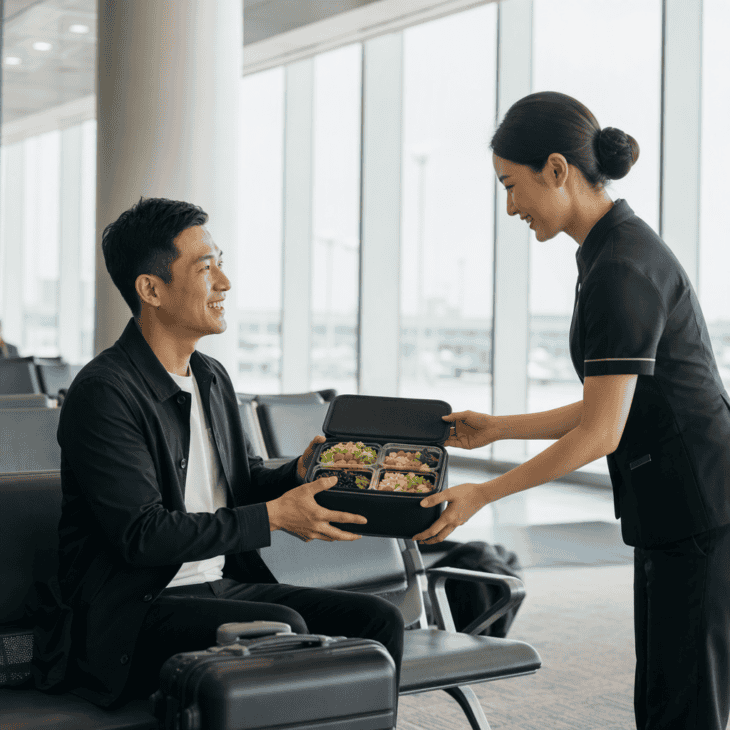
What it is A pre-order gate-delivery service for fresh salads, protein bowls, and snack boxes, ordered by app before landing or before boarding and handed off at a set gate. It skips the sit-down restaurant model entirely.
Why it works Concourse food lines eat into connection time that a traveler cannot spare, and healthier options are often scarce compared with fast food at most gates. A delivered order removes both problems without the traveler leaving the gate area.
How to get it This can launch as a delivery-only operation from a commissary kitchen with airside runner staff, avoiding a full concession buildout while still needing badged access for the runners. Partner with a single terminal’s gate agents to learn realistic delivery windows before promising delivery times to customers. A simple app or even a pre-order web form is enough to start taking orders.
19. VR and Gaming Entertainment Pods
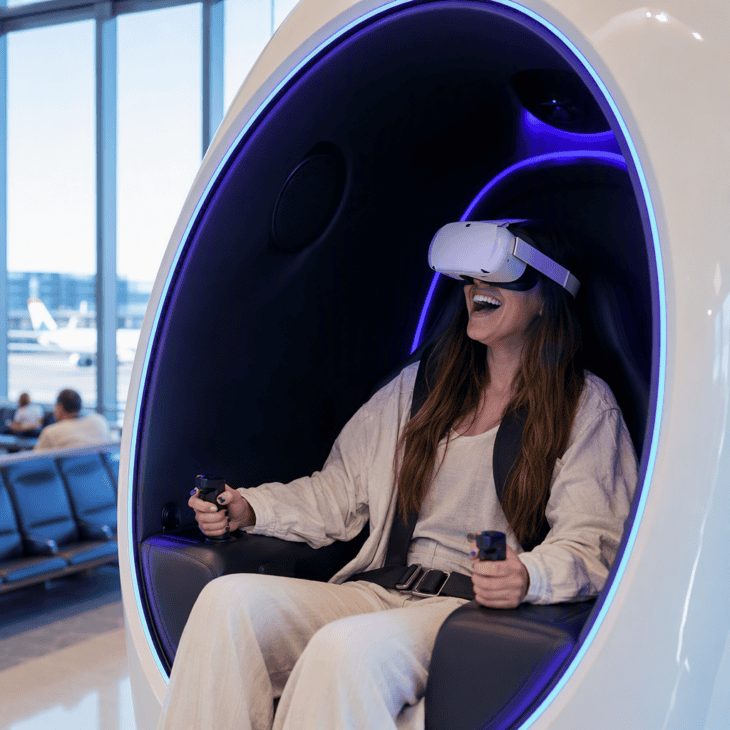
What it is A cluster of enclosed gaming or VR pods renting fifteen-to-thirty-minute sessions, aimed at travelers with time to kill rather than a plane to catch immediately. Content rotates between flight simulators, racing games, and general VR experiences.
Why it works A long layover is dead time for most travelers, and a novel, self-contained experience captures both leisure travelers and bored kids in a way a standard arcade cabinet does not. It also photographs well, which drives its own word-of-mouth on social media.
How to get it Hardware and per-pod footprint costs sit higher than most kiosk ideas here, so this fits better at a major hub with heavy connecting traffic than a small regional field. Rotate content seasonally to keep repeat visitors engaged rather than relying on novelty alone. Place pods where dwell time is longest, typically near international connections rather than short-haul domestic gates.
20. Airport Bookstore and Reading Kiosk
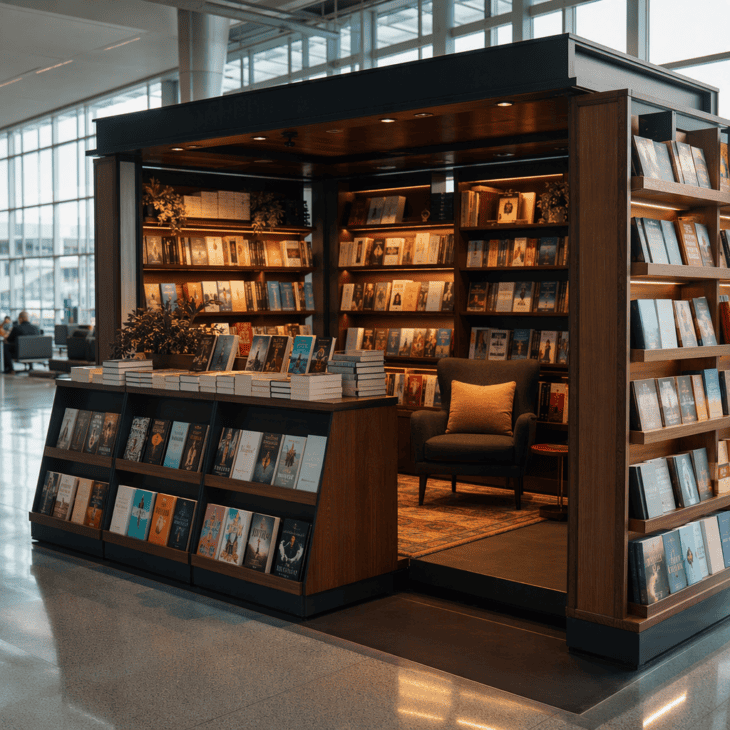
What it is A small, tightly curated bookstore kiosk, favoring a short staff-picked shelf over a wide bestseller wall, with a chair or two for browsing before a gate call. Audiobooks and travel magazines round out the shelf.
Why it works Independent bookstores have proven that curation beats selection when a customer only has ten minutes to decide, and a general newsstand rarely offers that. A distinct browsing experience also earns a shop repeat business from frequent flyers.
How to get it Retail concession space follows the same competitive-proposal route as every other storefront idea on this list, with the same multi-year lease and gross-revenue rent structure. Partner with a local independent bookstore for buying and inventory expertise rather than building that knowledge from scratch. A rotating staff-picks shelf keeps the small footprint feeling fresh without expanding the space.
21. Rental Car Return Detailing Service
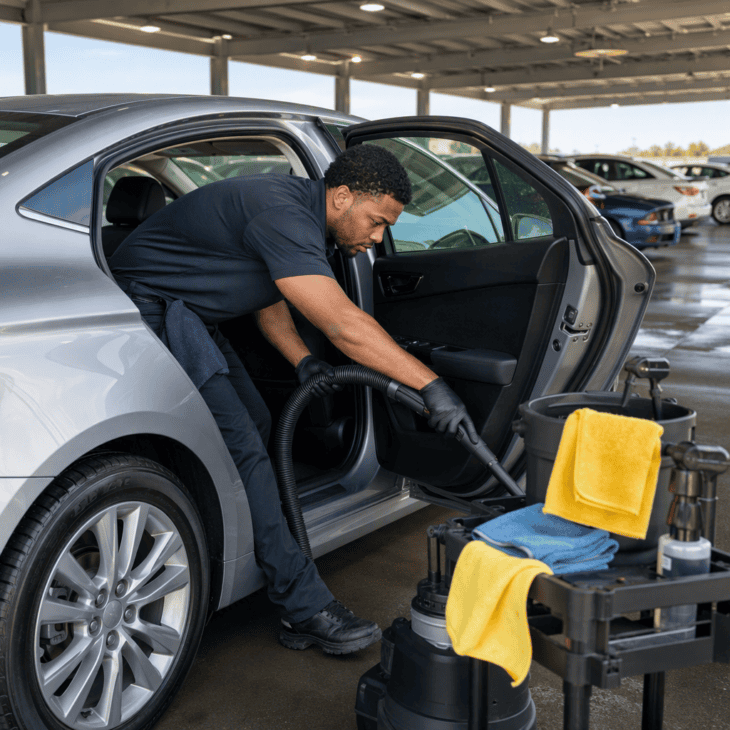
What it is A contracted cleaning and detailing crew working the rental car return lot itself, turning a returned car around for its next renter faster and to a higher standard than an in-house crew alone can manage. This is a B2B contract with rental companies, not a retail storefront.
Why it works Rental car companies are penalized by every hour a car sits uncleaned between rentals, so a faster, reliable turnaround crew has a direct dollar value to the client rather than a vague convenience pitch. This is one of the few ideas here sold to a business, not a traveler.
How to get it Approach rental car company operations managers directly rather than the airport’s concession office, since this is a vendor contract, not a leased retail space. Start with one rental brand’s return lot and prove turnaround-time improvements with real numbers before pitching a second contract. Staff still need airport-issued badges for access to the ramp and return areas.
22. Flight Delay Care Package Vending
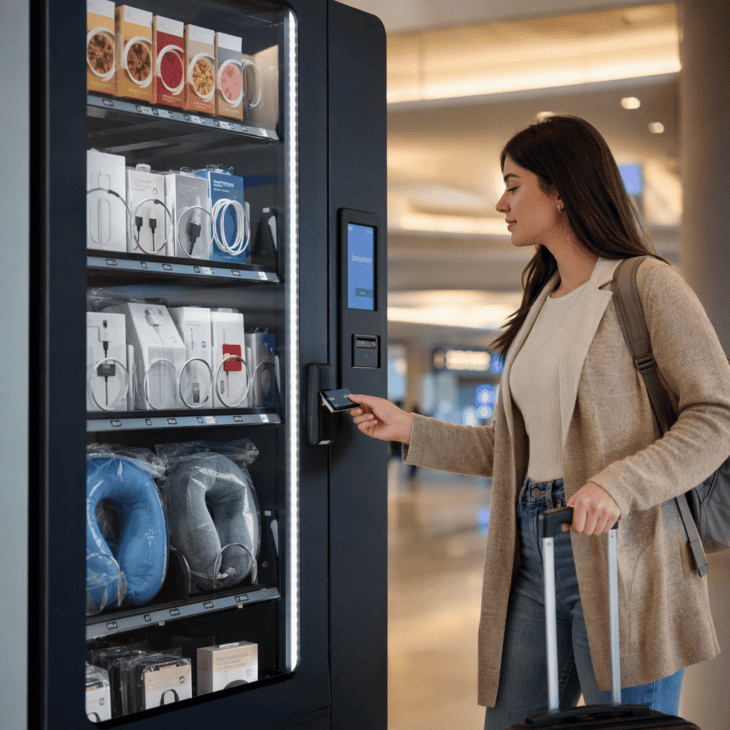
What it is A vending wall stocked specifically for stranded travelers: toothbrush kits, phone chargers, neck pillows, eye masks, and snack boxes, priced as a bundle rather than single items. It differs from a standard vending machine by design intent, not just contents.
Why it works A cancelled last flight of the night leaves travelers stranded with no toiletries and no open stores, and a general vending machine’s chip-and-candy selection does not solve that problem. Demand spikes hardest exactly when weather or a mechanical issue disrupts an evening bank of flights.
How to get it Vending concessions typically need a smaller footprint approval than a staffed kiosk, which shortens the path through the airport’s proposal process. Stock bundles seasonally, since a winter delay calls for different contents than a summer thunderstorm delay. Partner with the airport’s operations desk to learn which gate areas see the heaviest irregular-operations traffic, then place machines there first.
23. Kids’ Play and Entertainment Zone
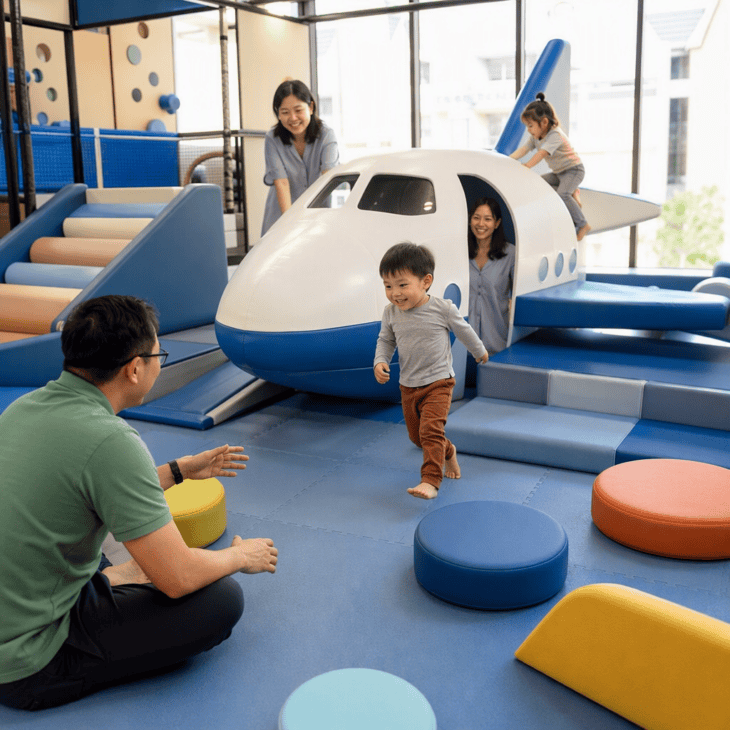
What it is A supervised or self-monitored soft-play area with climbing shapes and cushioned flooring, either free as an airport amenity funded by nearby retailers or ticketed as a standalone concession with a small admission fee. Both models exist at different airports today.
Why it works Families traveling with young children need somewhere for energy to go before a long-haul flight, and a tired, calmer child at boarding is worth paying for. A play zone also anchors families near nearby food and retail concessions, which is why some retailers help fund the free version.
How to get it Decide early whether this is a paid concession or a sponsored free amenity, since the business model and the airport pitch differ completely. Padding, sightlines for supervision, and ADA-accessible entry drive the buildout cost more than the play equipment itself. Target concourses that serve family-heavy leisure routes rather than a business-travel-dominated terminal.
24. Arrivals Reunion Photography Service
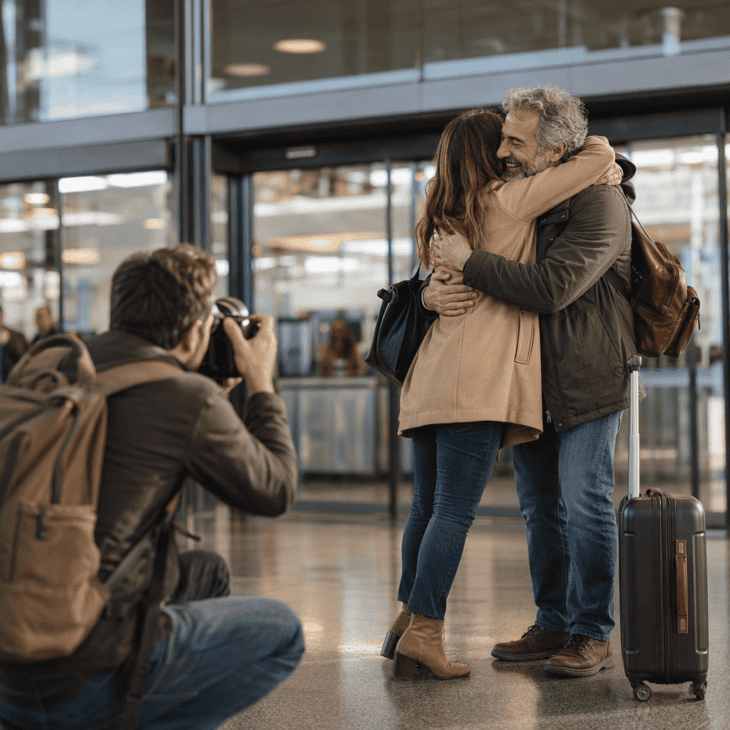
What it is A pre-booked photographer stationed at the arrivals exit to capture a homecoming, military reunion, or proposal moment, delivering edited photos within hours. Packages typically include a welcome sign or a small prop.
Why it works The person waiting at arrivals is always the one holding the phone, which means nobody actually captures the moment properly. Military homecomings and long-distance reunions in particular are exactly the emotional, planned occasions people already pay photographers for elsewhere.
How to get it This idea needs no leased space at all, only a permit to photograph in the public arrivals hall, which makes it one of the lowest-overhead businesses on this list. Track the arriving flight in real time so the photographer is in position before the traveler clears the doors. If you want ideas for the greeting itself, our airport welcome sign ideas and airport arrival gift ideas pair naturally with a booked shoot.
25. EV Charging Concession for Long-Term Parking
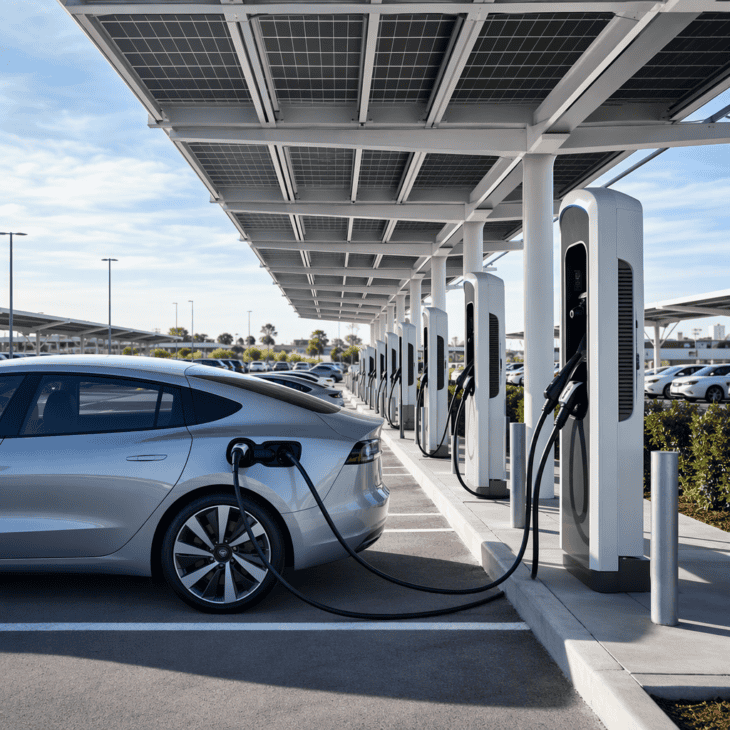
What it is A concession that installs and operates EV charging stalls inside long-term parking, billing drivers per kilowatt-hour or per session rather than folding it into the parking fee. Reserved charging spots can command a premium over standard spots.
Why it works A traveler leaving an EV parked for a week wants it charged on return, and most long-term lots still under-serve that demand relative to the growing EV share of the parking fleet. Airports are also actively pursuing electrification funding for their own equipment, which signals a broader institutional appetite to add charging infrastructure across the property.
How to get it Pitch this to the parking operator or airport authority as a revenue-share concession rather than a service you can install unilaterally, since the electrical infrastructure work requires their sign-off regardless. Start with a small bank of stalls in the section closest to the terminal shuttle stop, where demand will concentrate first. Partner with an established charging-network hardware provider rather than building custom equipment from scratch.
FAQ
Sources and references used for research and fact-checking.
- Salt Lake City International Airport, Access ID & Badging Office: All Airport Employees
- Airport Improvement, Airports Find Various Ways to Provide Relief Areas for Service Animals, Pets
- San Jose Mineta International Airport, Airport Concessions Disadvantaged Business Enterprise (ACDBE)
- Sacramento International Airport, Concession FAQs
- Austin-Bergstrom International Airport, Behind the Takeoff: Airport Concessions Explained
- Minute Suites, Minute Suites
- XpresSpa, XpresSpa Locations
- Priority Pass / Collinson Group, Priority Pass
Get the Newsletter
The latest aviation news and stories sent to your inbox.
About the Author

Hanna writes AeroCorner's aviation-lifestyle and decor guides, turning a love of flight into ideas for your home, celebrations, and gift lists.