

Table of Contents
A helicopter outfit has a shorter list of jobs than an airport outfit, but the rules are stricter. Operators care about three things: that your shoes stay on your feet, that nothing you are wearing can blow loose, and that you do not light up the window in every photo you take.
Almost every tour company lands on the same short list. Closed-toe shoes, fitted clothing, dark colors if you plan to shoot through the glass, and layers you can add or shed as the cabin temperature swings between the pad and altitude.
The 20 looks below are sorted by the kind of flight you booked: doors-on scenic tours, doors-off photo flights, tropical and desert climates, winter and glacier trips, and a few occasion outfits for proposals, weddings and family flights. Find the one that matches your booking and copy it.
01. The All-Black Photographer Fit for Doors-Off Flights
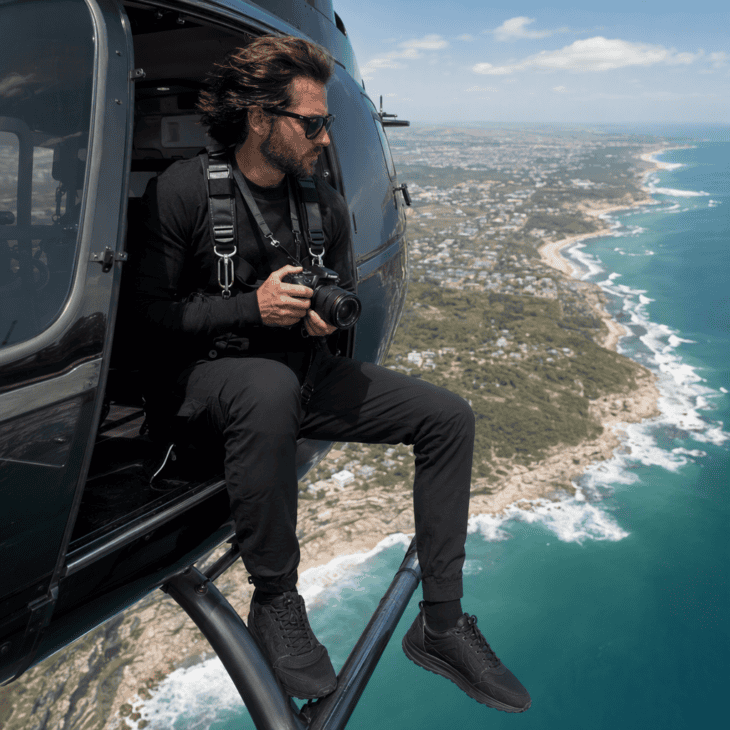
What it is A head-to-toe black outfit in matte fabrics: a fitted long-sleeve top in cotton or a technical knit, slim trousers with zip pockets, and laced black trainers. Nothing shiny, nothing with a satin or nylon sheen, and no white logo panels across the chest.
Why it works Light clothing bounces off the window and shows up in your shots as a ghost of your own arms and torso. Blue Hawaiian tells passengers outright to wear dark colors to cut glare and reflections, and some operators keep spare black t-shirts on hand for guests who turn up in white.
How to get it Build it from pieces you already own before buying anything new. Check the sheen by holding each item up to a bright window at home: if it reflects, it will reflect at 1,000 feet. Add zip or button pockets so nothing works its way out in the wind, and pick a short camera strap rather than a long one. Long sleeves matter more than you expect, because bare forearms mirror in the glass just as brightly as a white shirt.
02. Fitted Layers for a Standard Doors-On Scenic Tour
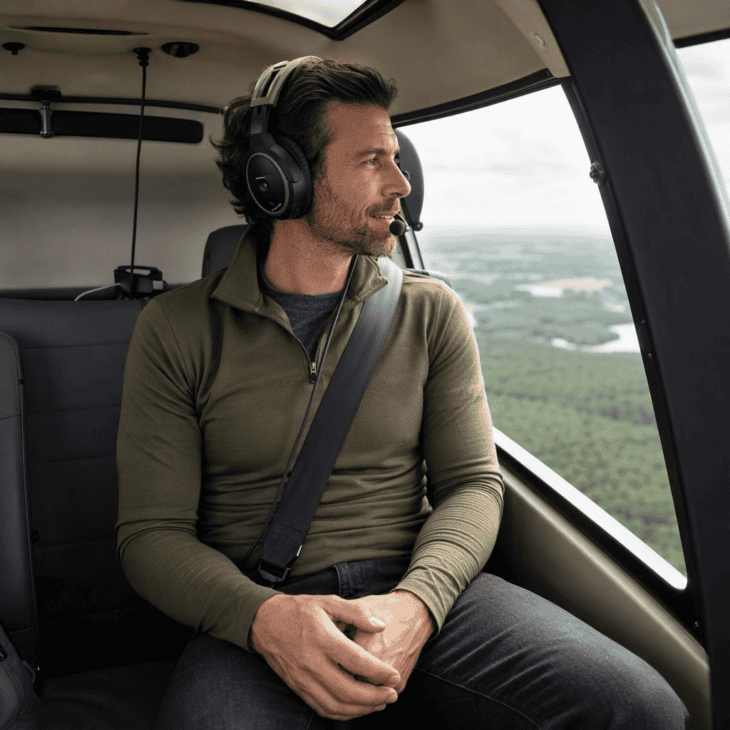
What it is The default tour outfit: a thin base layer under a fitted long-sleeve top or light overshirt, with dark jeans or travel trousers that have some stretch. One layer comes off in the cabin and folds small enough to sit in your lap.
Why it works Doors-on cabins are glass boxes, so they run warm on the pad in the sun and cool once you are moving. Blue Hawaiian advises lightweight, non-restrictive clothing and notes that sweaters and heavy jackets are usually unnecessary, which is exactly why two thin layers beat one thick one.
How to get it Choose a top that stays put when you lean toward the window, since a loose hem rides up the moment you twist in the harness. Keep the outer layer light enough to stuff behind your back rather than hold. Trousers with at least a little stretch make the awkward step up into the cabin far easier. If you are flying a civilian tour helicopter with bench seating, avoid anything that bunches at the waist when you sit.
03. Closed-Toe Sneakers That Pass Every Operator’s Shoe Rule
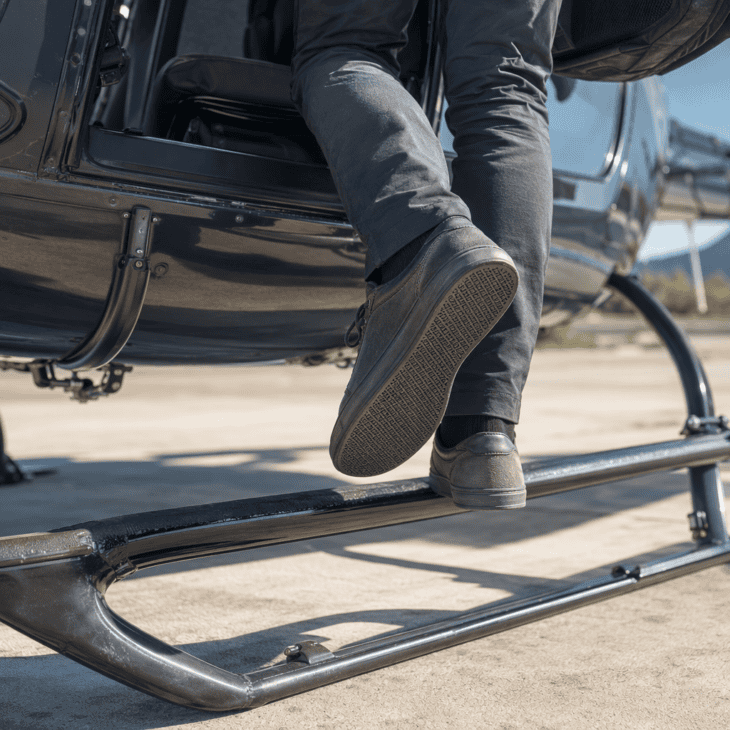
What it is A low-profile sneaker or trainer that laces or straps tight, with a grippy rubber sole and a fully closed toe and heel. Not a slip-on, not a mule, not a sandal, and not a clog.
Why it works This is the single most enforced rule in the industry. Air Maui requires closed-toe shoes and refuses flip-flops and sandals outright, and FlyNYON goes further for doors-off flights by permitting only tightly laced or strapped shoes, with no slip-ons at all.
How to get it Wear the pair you already walk in rather than something new, because a stiff sole makes the step onto the skid harder. Tie the laces tighter than usual and double-knot them before you board. If your only closed-toe option is a slip-on sneaker, bring a second pair for a doors-off booking, since that style is specifically excluded. Check your operator’s own page the week before, as the shoe rule is the one they turn people away for.
04. Lightweight Tropical Look for Hawaii and the Caribbean
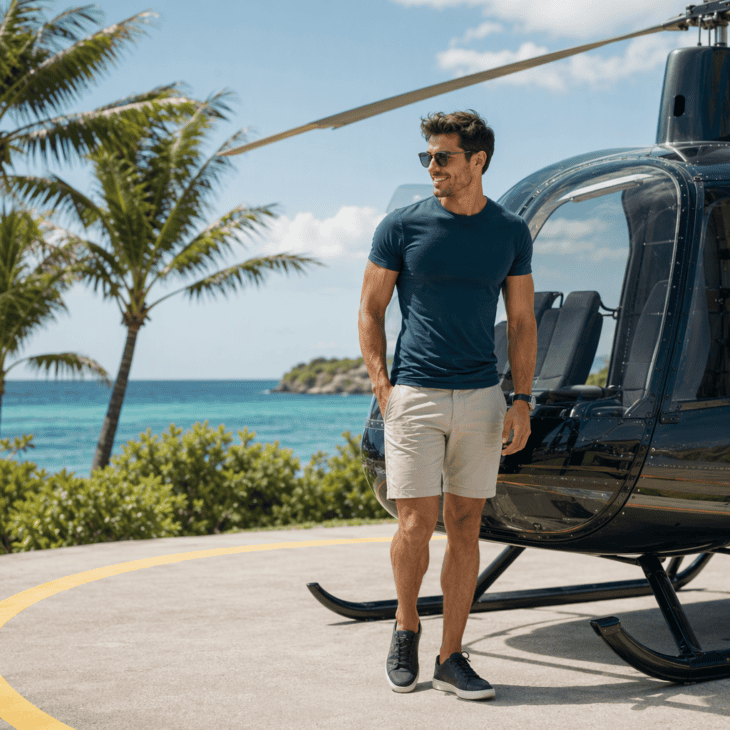
What it is A breathable short-sleeve top in a dark or mid tone, stretch chino shorts or cropped trousers, and closed-toe sneakers with no-show socks. A packable overshirt goes in the car for the ride back.
Why it works Island tours board in real heat, and the cabin only cools once you climb. Dark tones keep your reflection out of the window over water, where the glare is strongest, and the closed shoe requirement does not relax just because you are at the beach.
How to get it Leave the sarong, the cover-up and the sundress at the hotel, since Air Maui bans all three by name on doors-off flights. Pick shorts that sit at or just above the knee so they stay put in a harness. Swap flip-flops for sneakers in the car park rather than arguing at check-in. A thin long-sleeve layer is still worth carrying for a sunset departure, when the temperature drops faster than you expect.
The one rule to check first
Almost every operator publishes its clothing rules on the tour page you booked from, and the doors-off rules are stricter than the doors-on ones. Read that page the week before you fly, not the morning of.
05. Desert Layers for a Grand Canyon Flight
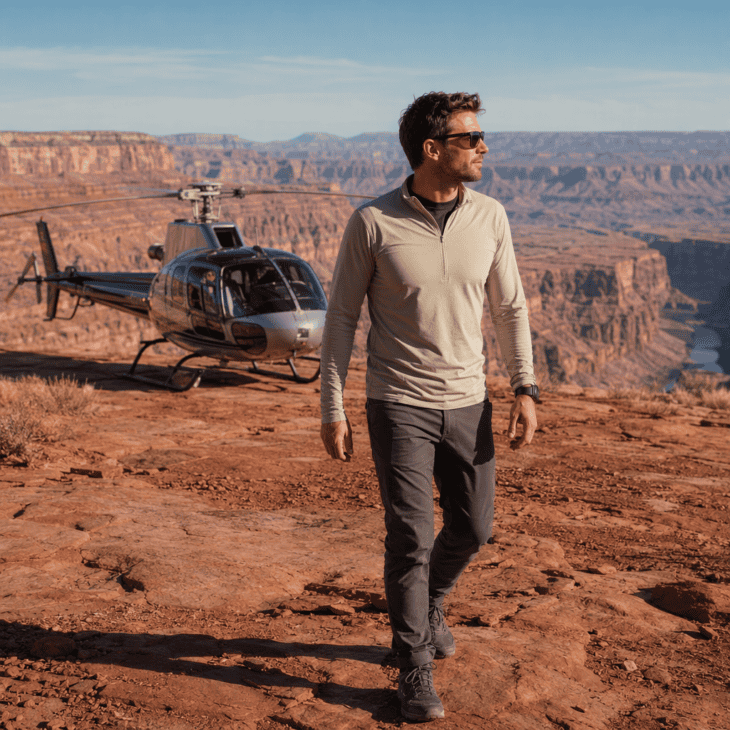
What it is A long-sleeve sun shirt over a thin base layer, slim hiking trousers, and sturdy low hiking shoes or trail runners with a closed toe. A packable windproof layer rolls into a jacket pocket.
Why it works Canyon tours often depart at dawn in genuinely cold air and land in full desert sun, and many include a walk on uneven ground at the landing site. Long sleeves also solve the sun exposure problem through a glass cabin, where you burn faster than you would on the ground.
How to get it Pack the shell layer rather than wear it, since you will want it for ten minutes and carry it for the rest. Choose trousers over shorts if the tour includes a landing, because canyon terrain is rough on bare legs. Keep your total load small: Papillon asks passengers to bring as few items as possible for the aircraft’s weight and balance, and large bags are not allowed aboard the helicopters. A national park helicopter flight is not the day for a tote bag.
06. Ski-Grade Layers for a Winter Doors-Off Flight
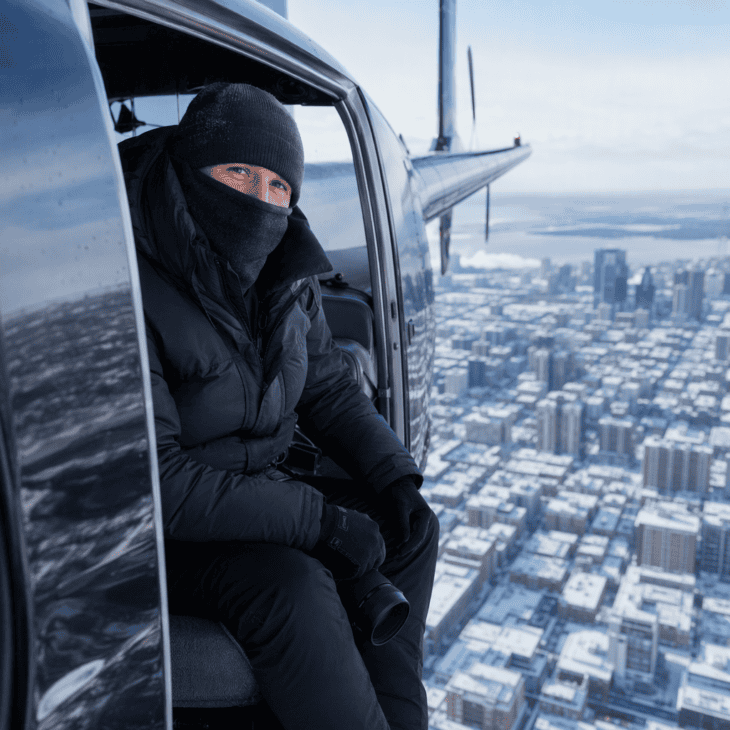
What it is A genuine cold-weather kit: thermal base layer, mid fleece, insulated jacket, warm socks, thin gloves and a close-fitting beanie. Everything zipped, tucked and snug rather than draped.
Why it works FlyNYON’s winter guidance to doors-off passengers is literally to dress like you are skiing, and it recommends gloves, warm socks and beanies alongside those layers. With the door off, the air moving past the cabin does the rest.
How to get it Borrow from your ski kit rather than buying a flight-specific outfit. Choose thin glove liners you can actually operate a phone or shutter button through, because thick mitts make the whole flight a fumble. Pull the beanie down over your ears and check it grips, since anything that can lift will. Keep the outer shell dark if photos matter, so the layering does not cost you the anti-glare advantage.
07. Glacier Landing Outfit for Alaska and New Zealand
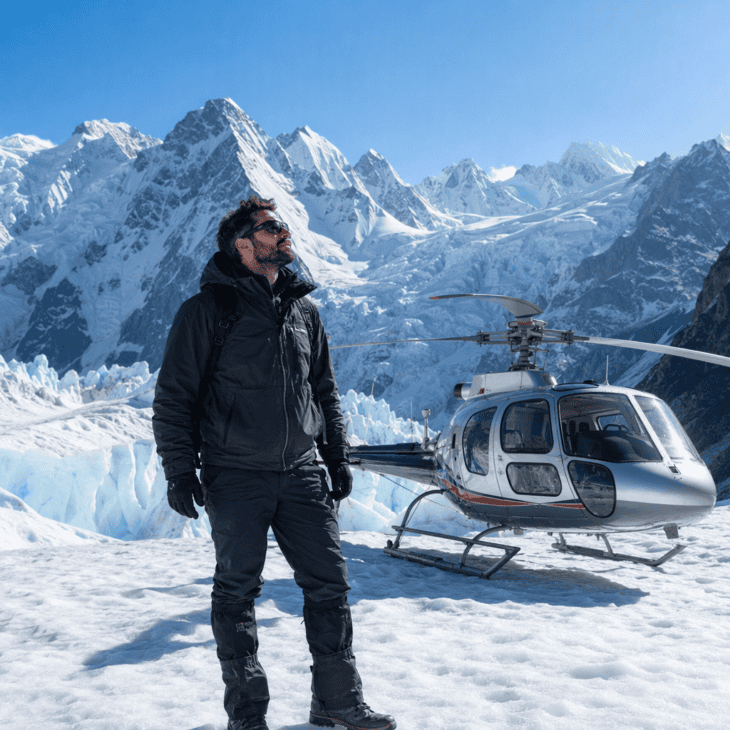
What it is An insulated waterproof jacket, waterproof trousers or lined hiking pants, and waterproof boots with real tread. Dark wraparound sunglasses and a warm hat complete it.
Why it works These tours are the ones where you actually get out, and the surface is wet ice in bright sun. Trainers soak through within minutes, and the glare off a glacier is punishing without proper eye cover.
How to get it Rent boots locally if you are flying in, rather than packing heavy footwear for one landing. Wear wool socks instead of cotton, which stays cold once damp. Bring sunglasses with genuine UV protection, not a fashion pair, because the reflected light off snow is the strongest you will meet on any tour. Many operators lend overtrousers and boots on request, so ask when you book instead of buying.
08. City Skyline Tour Outfit for an Evening Flight
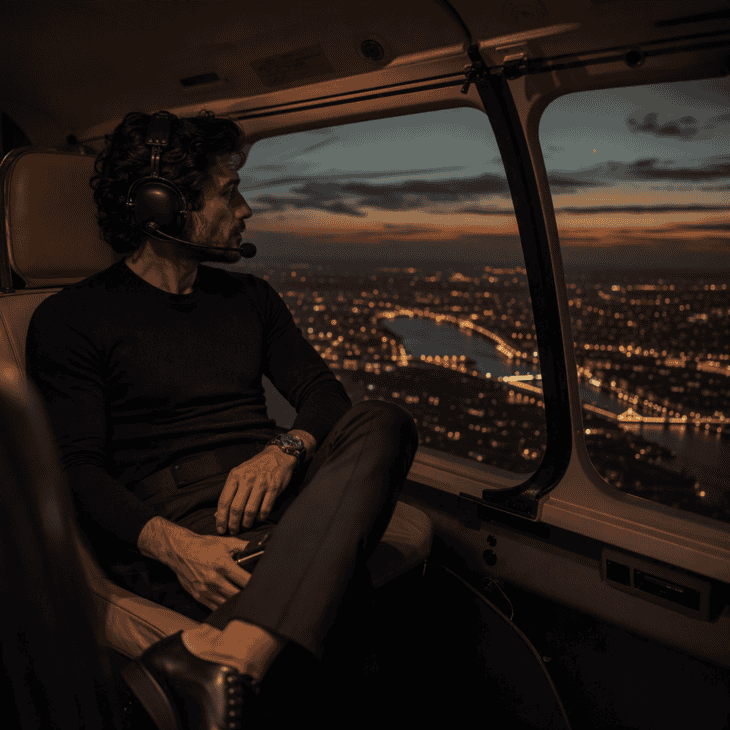
What it is A fitted dark knit top, tailored trousers with stretch, and clean leather sneakers or low ankle boots that lace. A slim jacket rather than a long coat.
Why it works City flights are short and often booked as an evening occasion, so the outfit has to work at dinner afterwards. Dark colors also keep the cabin from reflecting in the glass while you shoot down at the lights, which is the entire reason you booked a night slot.
How to get it Skip the long coat, which is awkward to sit on and impossible to store in a small cabin. Keep jewelry minimal and close to the body, and leave dangling earrings at home. Choose boots that zip or lace rather than pull on, so they pass the closed and secured test. If you are flying a skyline tour over a major city, expect a strict bag policy as well as a strict shoe policy.
09. Proposal Outfit That Survives Rotor Wash
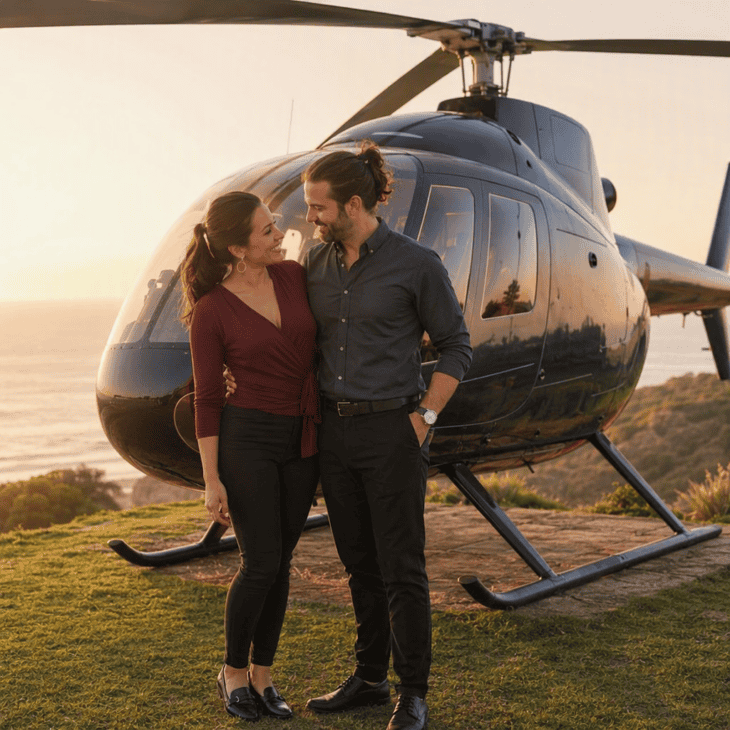
What it is A fitted wrap or knit top in a photogenic color, slim trousers or a midi skirt with a secure waistband, and low closed shoes with a strap or lace. Hair tied back, not styled loose.
Why it works The photos everyone actually keeps are taken on the pad with the rotors still turning, and rotor wash undoes loose hair and floaty fabric in about two seconds. Fitted pieces hold their shape in that downwash, which is what makes the picture usable.
How to get it Choose a color that reads against your landscape rather than blending into it, since burgundy, forest and navy all hold up better than pale neutrals. Secure hair in a low bun or braid instead of leaving it down. Keep the ring box in a zipped pocket, never a loose one. If you are planning the whole evening around it, our aviation date night ideas cover what to do before and after the flight.
10. Wedding-Day Helicopter Arrival Outfit
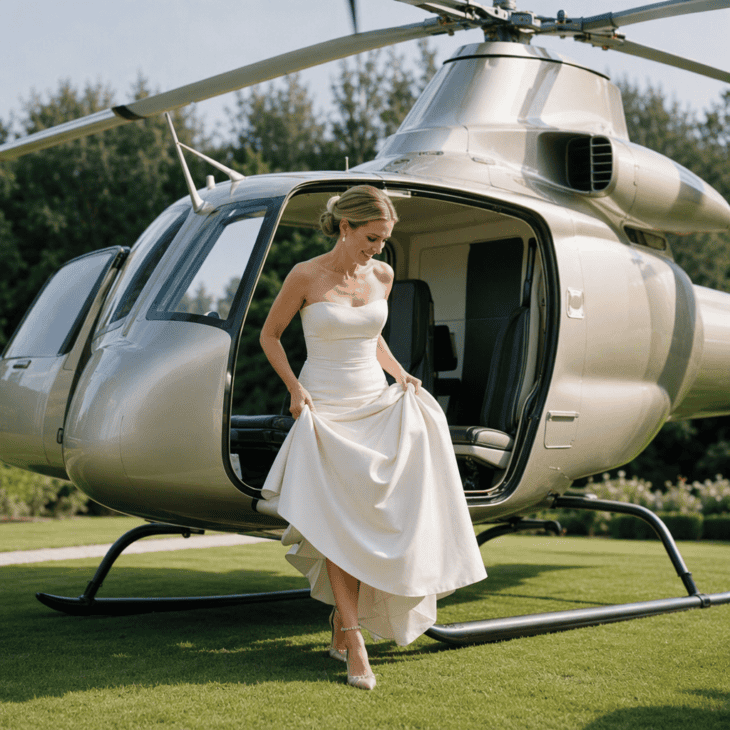
What it is A gown with a skirt you can gather and hold, hair pinned rather than loose, and a veil that either clips in hard or waits on the ground. Flat or low closed shoes for the boarding and landing, with heels carried separately.
Why it works A helicopter arrival is the most photographed thirty seconds of the day, and it happens in the strongest wind of the day. Everything that can lift will lift, so the styling has to be built to be held down.
How to get it Brief your photographer to shoot as the skirt is gathered, not while you fight it. Ask the pilot where to walk and wait for the signal rather than moving on your own. Have someone carry the veil and heels and hand them over once you are clear of the pad. If the flight is part of a bigger theme, our aviation themed wedding ideas cover the rest of the day.
11. Family Flight Kit: What to Put Kids In
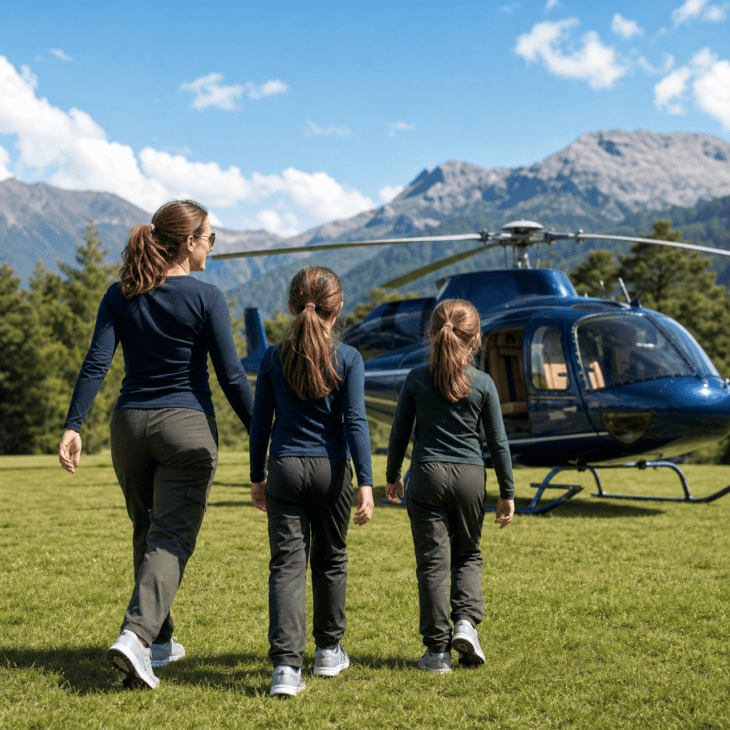
What it is Fitted long-sleeve tops, elastic-waist trousers and secure velcro or laced trainers for each child, with a thin fleece per person. No dresses, no loose hoods, no character capes.
Why it works Children get cold faster than adults and fidget more in a harness, so anything that rides up or dangles becomes a problem in flight. Velcro also means nobody is retying laces on the pad while the clock runs.
How to get it Dress everyone in the same two layers so you can strip the group down at once. Tie back long hair before you leave the hotel, since Air Maui requires it tied at all times on doors-off flights and most operators prefer it. Leave soft toys in the car, because loose items are not permitted aboard. Expect the operator to ask each passenger’s weight, including the children’s, when you book.
12. Comfortable Fit and the Extra-Seat Rule
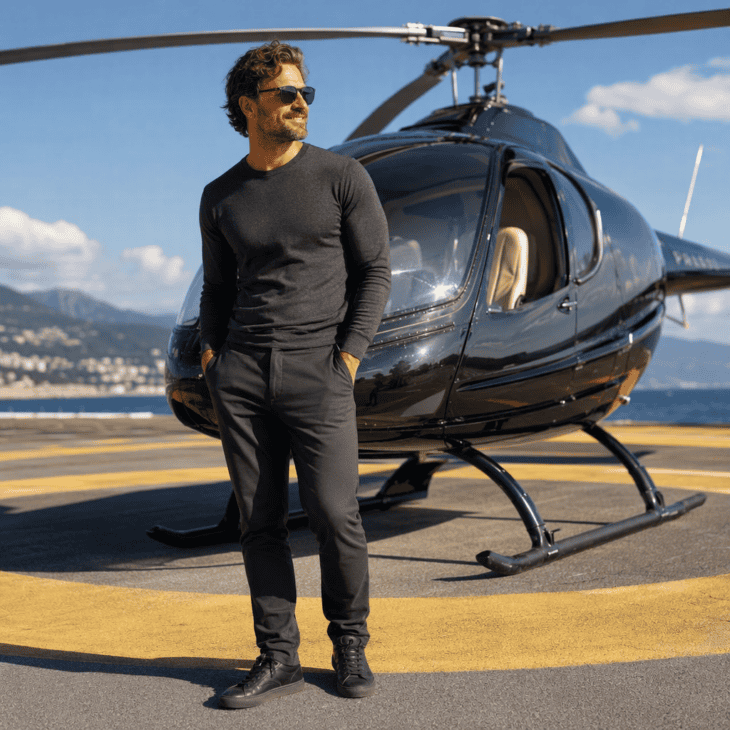
What it is A well-fitted top in a stretch knit and trousers with a proper elastic or drawcord waist, sized to sit comfortably rather than tightly once you are belted in. Closed laced shoes as always.
Why it works Helicopter seats are narrower than airline seats and the belt geometry is fixed, so fabric that gives is worth more than fabric that looks structured. Clothing that pulls when you sit will be uncomfortable for the whole flight, and these flights do not have an aisle to stretch in.
How to get it Know the policy before you arrive, because it is a pricing question rather than a clothing one. Papillon requires passengers over 299 pounds (136 kg) to buy an additional seat, charged at check-in and priced from $50 to $300 depending on the tour. Air Maui sets its comfort-seat thresholds lower, at 250 pounds (113 kg) for one passenger or 400 pounds (181 kg) combined. Book that seat online in advance and it usually costs less than settling it at the desk.
Why they ask your weight
Seat assignment on a helicopter is a weight and balance calculation, not a courtesy. Papillon states that your body weight is kept private and used to arrange the seating distribution aboard the aircraft, which is also why the window seat you wanted is sometimes not the one you get.
13. The Infinity Scarf and Beanie Combo for Open-Door Cold
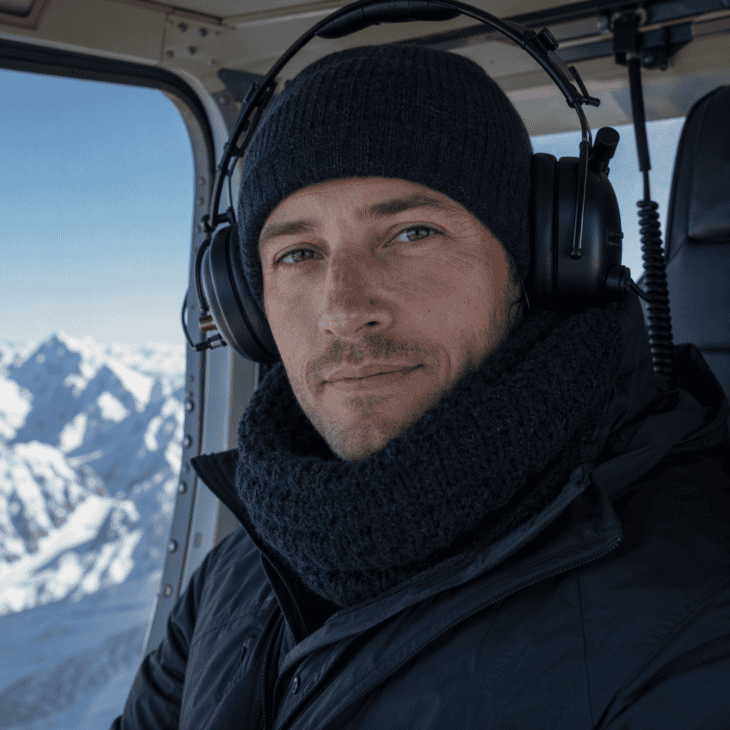
What it is A knitted infinity scarf, meaning a closed loop with no dangling ends, worn with a fitted beanie that covers the ears. Both in dark colors if you plan to shoot.
Why it works This is the one accessory exception worth knowing. FlyNYON highly recommends infinity scarves for winter doors-off flights alongside gloves, warm socks and beanies, precisely because the closed-loop shape cannot unravel and stream out of the aircraft the way a traditional scarf can.
How to get it Buy the loop style specifically rather than a long scarf you tie into one. Tuck the bottom of the loop inside your jacket collar so it cannot ride up over your face. Choose a soft knit over a bulky one, because volume around the neck gets in the way of a headset. Never bring a traditional fringed scarf to an open-door flight, since it is exactly the loose item operators are trying to eliminate.
14. A Hair Plan, and Why the Hat Stays Behind
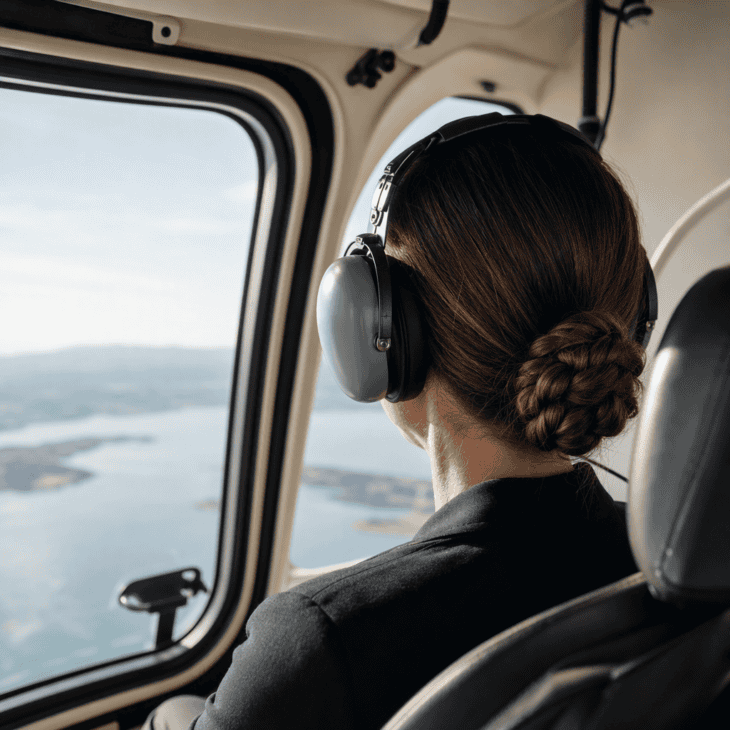
What it is A braid, a low bun or a secured plait, fixed with elastics rather than clips, and no hat at all. A thin headband can replace the hat for keeping stray hair off your face.
Why it works Air Maui requires long hair to be tied up at all times on doors-off flights and permits no hats, bags or loose items aboard. A high ponytail also fights the headset, which is why a low style is the practical choice even on a doors-on tour.
How to get it Braid or tie it before you leave, because doing it on the pad in the wind rarely works. Use two elastics rather than one for anything longer than shoulder length. Skip barrettes and claw clips, which pop open under a headset band. If you want the hat for the ground photos, wear it to the pad and hand it to whoever is staying behind.
15. Polarized Sunglasses and Glasses That Stay Put
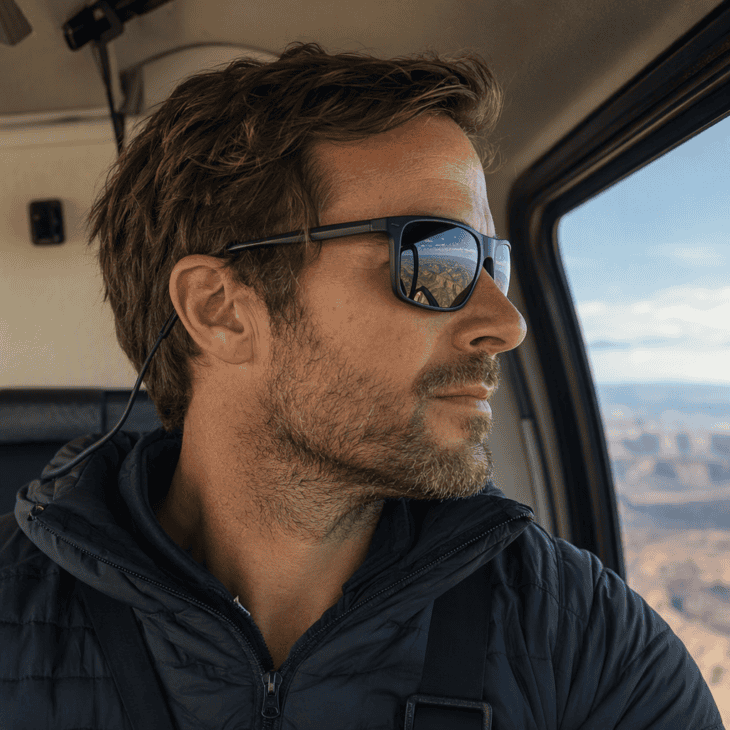
What it is A pair of polarized sunglasses with a snug fit, worn with a thin retainer cord on open-door flights. Prescription glasses work too, as long as they grip properly at the temples.
Why it works Blue Hawaiian recommends polarized sunglasses to get the most out of the view, and FlyNYON tells contact lens wearers to bring sunglasses for eye protection while allowing regular glasses as long as they stay in place for the whole flight. Polarization also cuts the surface glare off water and snow.
How to get it Test the fit by leaning forward and shaking your head before you fly. Add a cord for any doors-off booking, since there is no recovering anything that leaves the cabin. Note that polarized lenses can darken some cockpit displays, which is why pilots think carefully about polarized lenses, though as a passenger looking outward you get the benefit without the drawback.
16. Neutral Tones for a Safari or Bush Flight
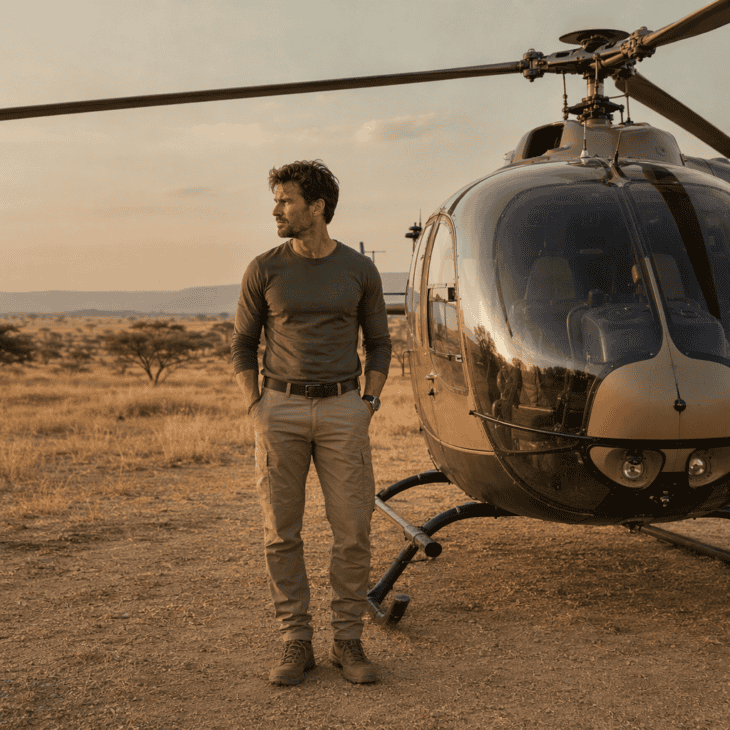
What it is A long-sleeve shirt in olive, khaki or stone, matching lightweight trousers, and low boots that handle dust and uneven ground. A buff or neck gaiter rather than a scarf.
Why it works Bush flights land on rough ground and kick up a great deal of dust on departure, so mid neutrals stay presentable where black and white both show everything. Long sleeves handle both sun and insects once you are on the ground.
How to get it Choose a shirt you can roll to the elbow and button back down, since the temperature swing is large. Accept the trade-off on photos, because neutrals reflect more in the glass than black does. Keep the neck gaiter pulled down until the rotors start, then up over your mouth for the dust. Pack everything into one small soft bag, which is far easier to stow than a rigid case.
17. Rain-Ready Outfit for a Shoulder-Season Flight
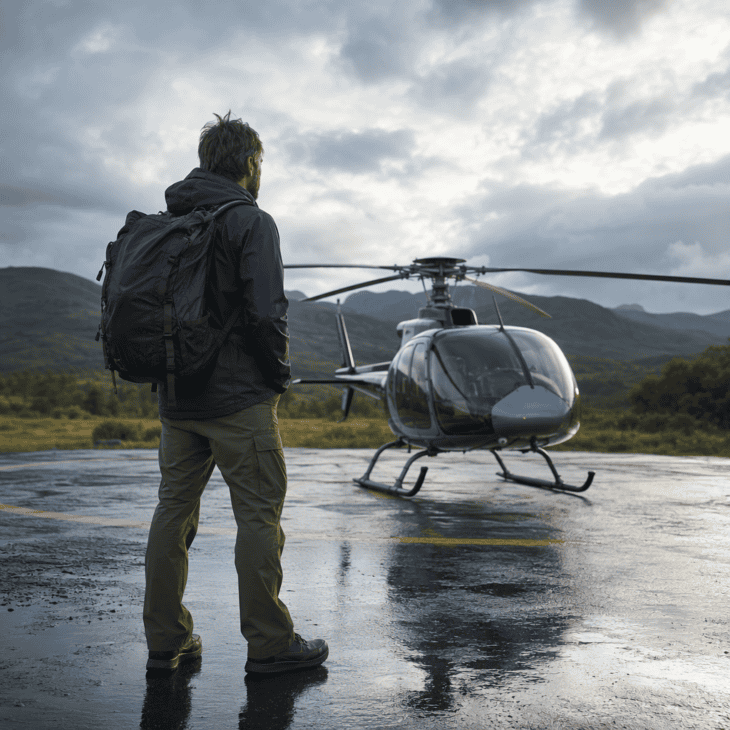
What it is A packable waterproof shell with the hood down, quick-dry trousers rather than jeans, and water-resistant closed shoes. A microfiber cloth lives in the pocket.
Why it works Shoulder-season tours frequently go ahead in damp conditions, and the wet part is usually the walk across the pad rather than the flight. Jeans hold that water for the whole hour, while quick-dry fabric sheds it before you land.
How to get it Keep the hood down and stowed, because a hood catching wind near a running aircraft is a genuine nuisance. Carry the cloth for fogged and spotted windows, which otherwise ruin every photo. Choose a shell that packs into its own pocket so it is not in your lap all flight. Check the forecast the night before, since weather cancels more tours than anything else and helicopters have real weather limits.
18. Heli-Skiing and Heli-Hiking Transfer Outfit
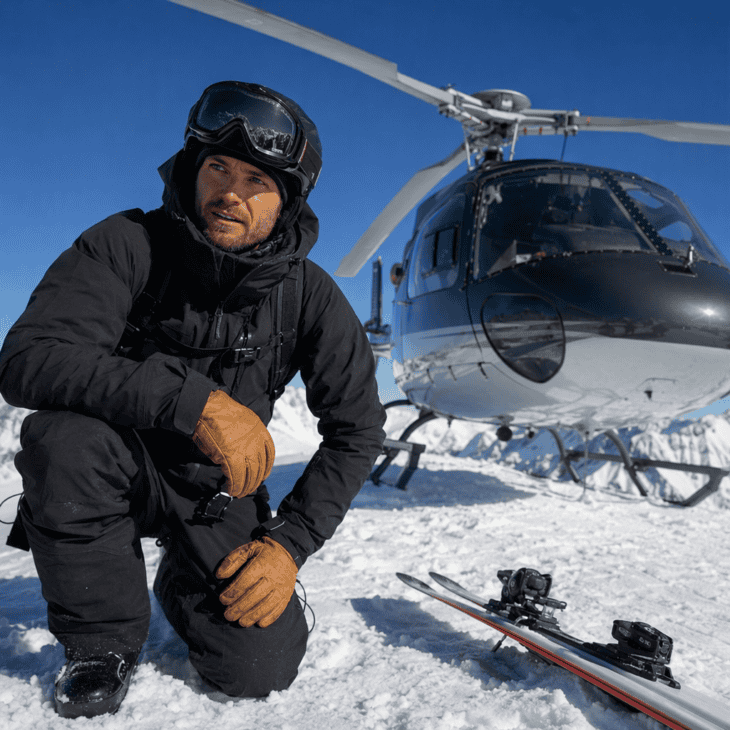
What it is Your full mountain kit worn for the flight: insulated jacket, ski or hiking trousers, proper boots, gloves and a helmet carried rather than worn in the cabin. Goggles around the neck, not on the forehead.
Why it works These are transfers rather than tours, so there is no changing room at the top and the helicopter is simply the lift. Everything has to be flight-safe and ski-ready at the same time, which means secured and nothing loose.
How to get it Follow the guide’s loading brief exactly, since gear stows in a basket and passengers board in a set order. Keep goggles on a strap around your neck so they cannot blow off during loading. Zip every pocket before you approach, because the downwash empties an open one instantly. Crouch and wait for the signal rather than walking in upright, which is the standard approach discipline on any mountain pad.
19. Business Outfit for a Helicopter Transfer
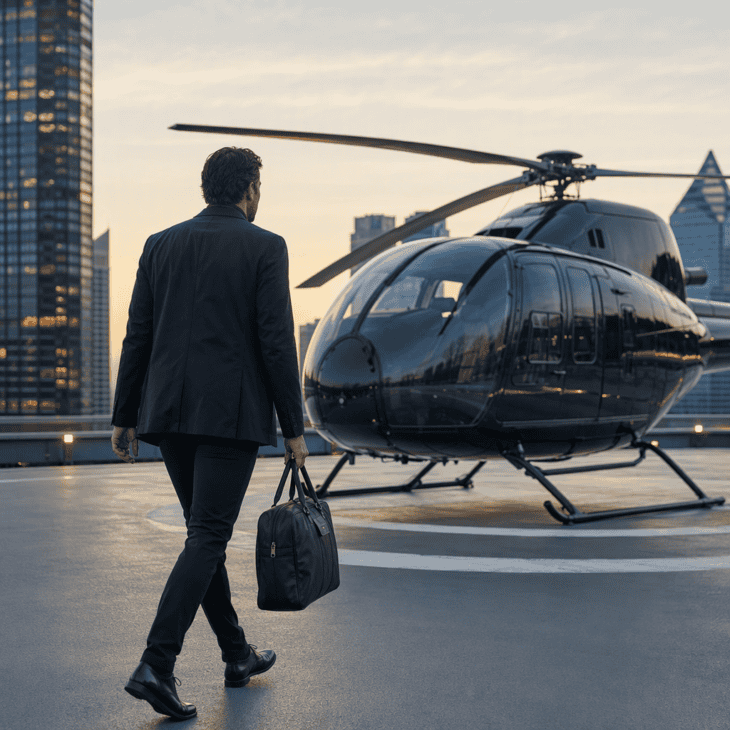
What it is An unstructured blazer over a fine knit, slim trousers, and polished leather lace-ups rather than slip-on loafers. One slim soft-sided bag instead of a hard case.
Why it works A helicopter transfer puts you in a meeting twenty minutes after landing, so the outfit has to arrive uncreased. Unstructured tailoring survives a narrow seat and a harness where a canvassed jacket picks up hard fold lines across the back.
How to get it Take the jacket off and fold it inside out across your lap for the flight. Choose lace-ups over loafers, since slip-ons are the style most often refused. Move your phone and pen into an inside zipped pocket before boarding. Expect a soft bag to be easier to stow than a rigid case, and expect the operator to weigh or restrict it regardless.
20. The Minimalist Capsule That Works on Any Tour
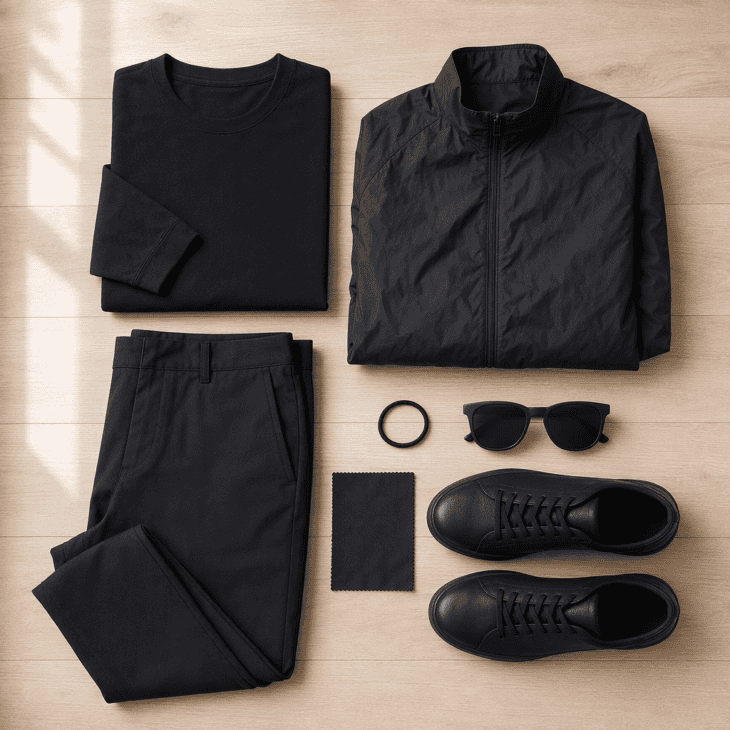
What it is Seven pieces: a black long-sleeve top, dark slim trousers, black laced sneakers, a thin packable jacket, a hair elastic, polarized sunglasses and a microfiber cloth. Everything dark, everything fitted, nothing loose.
Why it works This capsule satisfies every rule in this article at once: closed laced shoes, no loose items, dark anti-glare colors, tied hair and a layer for the temperature swing. It works doors-on or doors-off, in a desert or over a city.
How to get it Assemble it once and keep it together, so a last-minute booking needs no thought. Add the cold-weather layers from the winter looks above when the forecast calls for them. Carry the cloth and the sunglasses in a zipped pocket rather than a bag you may not be allowed to bring. If you are collecting flights rather than outfits, our aviation bucket list ideas are the natural next stop, and airport photo ideas cover the travel days around them.
FAQ
Sources and references used for research and fact-checking.
Get the Newsletter
The latest aviation news and stories sent to your inbox.
About the Author

Hanna writes AeroCorner's aviation-lifestyle and decor guides, turning a love of flight into ideas for your home, celebrations, and gift lists.