

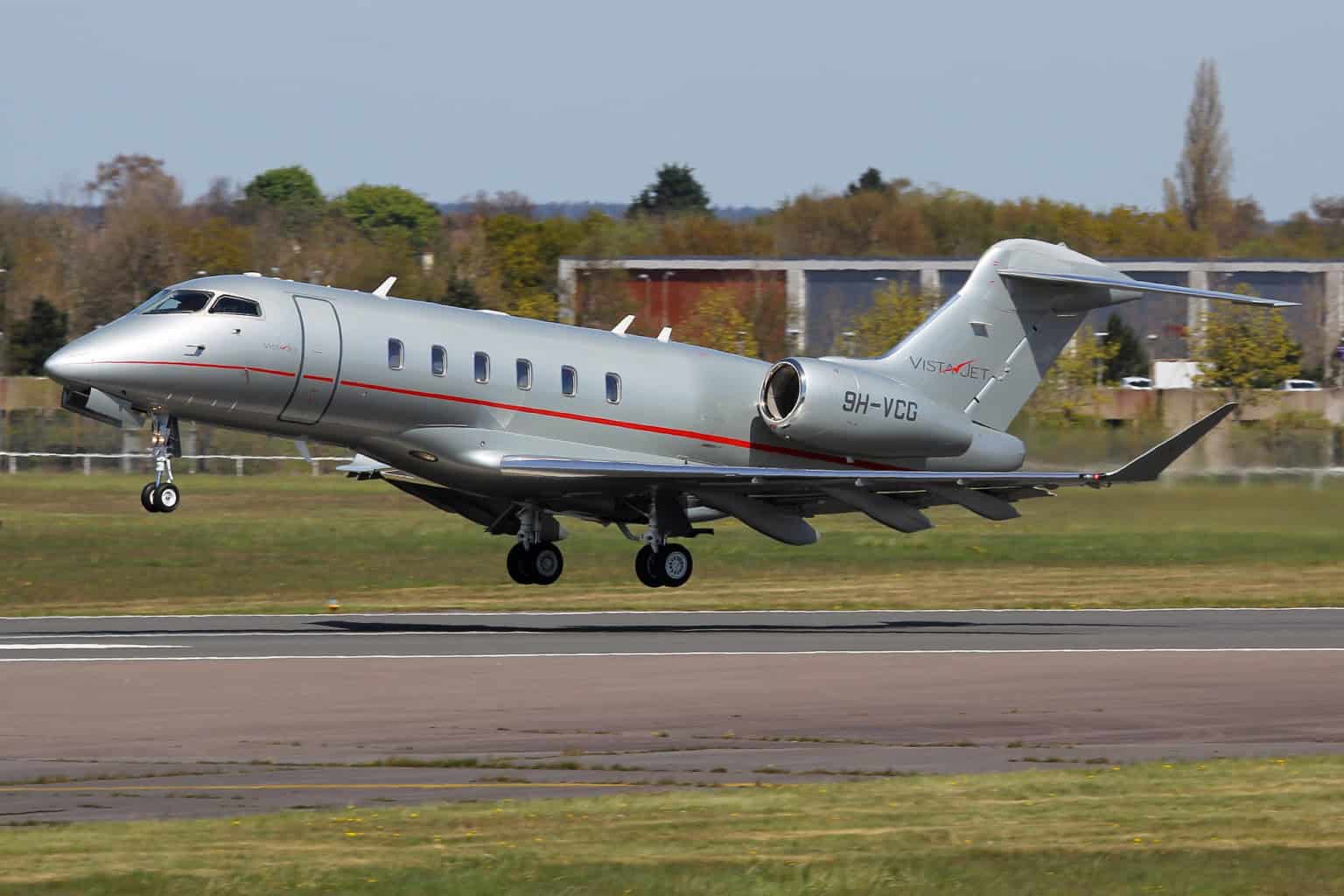
A VistaJet Cessna Citation XLS+ landed at RAF Fairford in Gloucestershire, England, on the morning of Saturday, September 12, 2026, when it was meant to land at Cotswold Airport, about 11 miles (18 km) to the west. Fairford is the US Air Force’s main base in Europe for heavy bombers.
The German-registered jet, D-CJMK, touched down just after 9:00 a.m. local time and was held on the ground for about three hours, according to The Aviationist. It left for Cotswold Airport at 12:10 p.m.
No injuries were reported. The number of people on board has not been published, and no statement from the US Air Force, the UK Ministry of Defence or VistaJet had appeared as of September 14.
What happened at Fairford
The flight had departed London City Airport, Simple Flying reported. The aircraft is a 2019-built Citation XLS+, a midsize business jet, flown by VistaJet’s German operation.
An unannounced civilian jet on a military runway set off an immediate response from the base’s security forces. The Aviationist reports that the pilot asked to depart straight away, but security required the aircraft to stay until interviews and paperwork were complete.
The base has been busy this year. B-1B Lancer and B-52 bombers were deployed to Fairford for the US and Israeli campaign against Iran after UK Prime Minister Keir Starmer authorized the deployment, for defensive purposes, on March 1, 2026.
Simple Flying reported that four B-1Bs arrived or departed on September 11, the day before the Citation turned up.
Why two airfields 11 miles apart get confused
From the air, the two runways point almost the same way. Fairford’s single runway is numbered 09/27 and Cotswold Airport’s main runway is 08/26, so their headings differ by only about 10 degrees.
Fairford’s runway is far longer, at 9,993 feet (3,046 m) against roughly 6,600 feet (2,000 m) at Cotswold. But a crew that expects to see a runway in a certain place, on a certain heading, can be convinced by the first one that fits.
Cotswold Airport, the former RAF Kemble, handles regular business jet traffic and is one of Europe’s biggest airliner recycling sites. The Aviationist notes that approaches there are flown at the pilots’ discretion, with no controller to warn a crew lining up on the wrong airfield.
It has happened at this exact pair before. On April 23, 2016, a Piper PA-30 Twin Comanche heading for Kemble landed at Fairford instead, according to the UK Air Accidents Investigation Branch.
That pilot told investigators Fairford’s runway sat on about the same bearing and at the same distance as expected, and called the error “a classic case of confirmation bias.” The pilot added that joining the circuit on the downwind leg took away an overhead pass that might have exposed the mistake.
A known trap, not a one-off
A 2014 Associated Press review of NASA safety reports and news accounts counted 35 wrong-airport landings over 20 years, plus 115 approaches to the wrong airport that were abandoned before touchdown, AVweb reported.
The AP found the errors cluster where two airports sit close together with runways at similar angles, often at night. One month before that review, a Southwest Airlines 737 bound for Branson, Missouri, landed at nearby Hollister, whose runway is half as long, NBC News reported.
Fairford and Cotswold match the first half of that pattern closely. The VistaJet landing happened in daylight, a reminder that a lookalike layout can mislead a crew without any help from darkness.
What is not yet known
No official account of the landing has been published. It is not known how many people were on board, what kind of approach the crew flew, or whether the AAIB or the UK Civil Aviation Authority will investigate. The explanation above rests on the airfields’ layout and past cases, not on any finding about this flight.
Sources and references used for research and fact-checking.
Get the Newsletter
The latest aviation news and stories sent to your inbox.
About the Author

Tim is the owner and lead editor of AeroCorner since 2019, overseeing aviation content covering aircraft, airlines, airports, and the broader aviation industry. Through years of researching, writing, editing, and publishing aviation-focused content, he has developed extensive practical knowledge of commercial aviation and air travel. Based in Asia and a frequent traveler himself, Tim also brings firsthand passenger experience to AeroCorner’s coverage. Outside of publishing, he has also explored aviation firsthand through hands-on flight training in New Zealand.