

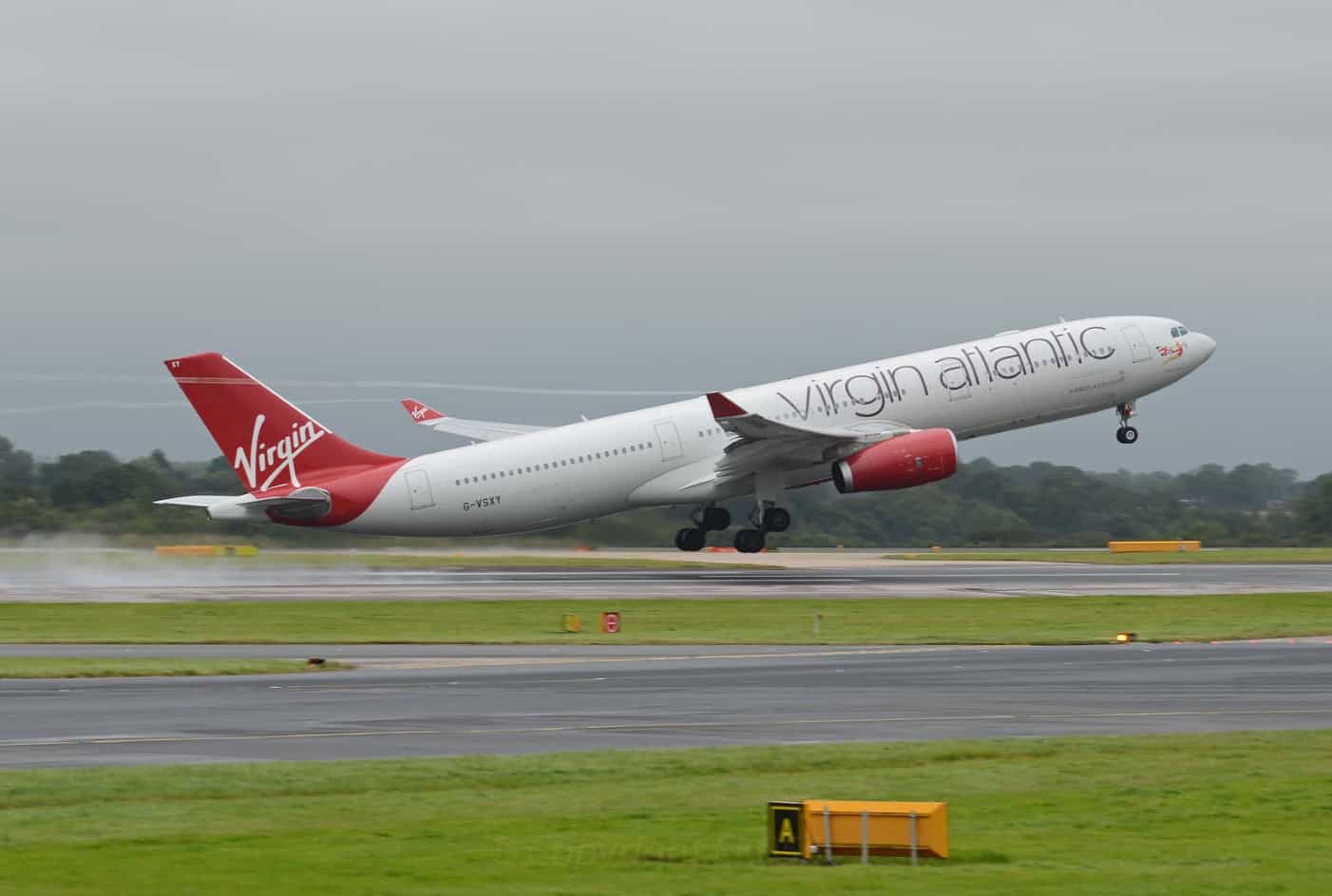
Virgin Atlantic flight VS127 declared an emergency shortly after leaving Manchester for New York on September 18, 2026, and returned to the airport roughly an hour later. The Airbus A330-300 never got above 10,000 feet, and the airline has described the cause only as a minor technical issue.
What happened
The aircraft was G-VSXY, an Airbus A330-300 named Beauty Queen. It left Manchester Airport at about 2:55 PM BST on runway 23R, bound for John F. Kennedy International on a scheduled flight of nearly eight hours.
The crew stopped the climb at 10,000 feet, reported a technical problem and set transponder code 7700, the international signal that puts a flight at the front of every queue air traffic control has.
The A330 then descended to about 7,000 feet and held northwest of the airport, over Merseyside, while the pilots ran their checks and burned fuel. It landed back on runway 23R at around 3:51 PM, met by emergency vehicles as a standard precaution.
Nobody was hurt. A Virgin Atlantic spokesperson said VS127 “returned to Manchester following a minor technical issue, which has now been resolved,” adding that “the safety and security of our customers and crew is always our top priority, and the aircraft will refuel before continuing its journey.”
2:55 PM BST
VS127 departs Manchester. The A330-300 G-VSXY lifts off runway 23R for New York JFK, a scheduled flight of close to eight hours.
At 10,000 feet
The climb stops. The crew reports a technical problem and squawks 7700, securing priority handling from air traffic control.
Next 45 minutes
Holding over Merseyside. The aircraft descends to about 7,000 feet and circles northwest of the airport while the pilots complete checks and burn fuel down toward landing weight.
About 3:51 PM BST
Back on 23R. VS127 lands at Manchester with emergency vehicles standing by. No injuries are reported.
Why it circled instead of landing straight away
The hour of circles is the part readers usually find strange, and it is the most normal thing in the sequence. A widebody leaving for New York is carrying transatlantic fuel, which makes it far heavier than it is certified to land.
Airbus lists the A330-300 at a maximum takeoff weight of 533,500 pounds (242 tonnes) and a maximum landing weight of 412,300 pounds (187 tonnes). That is a gap of roughly 121,000 pounds (55 tonnes), and on a long departure most of it is fuel in the wings.
Why the holding pattern
An A330-300 can take off at 533,500 pounds (242 tonnes) but is certified to land at 412,300 pounds (187 tonnes). A crew with a non-urgent problem burns the difference off in a hold rather than accept an overweight landing, which triggers a mandatory structural inspection even when nothing breaks.
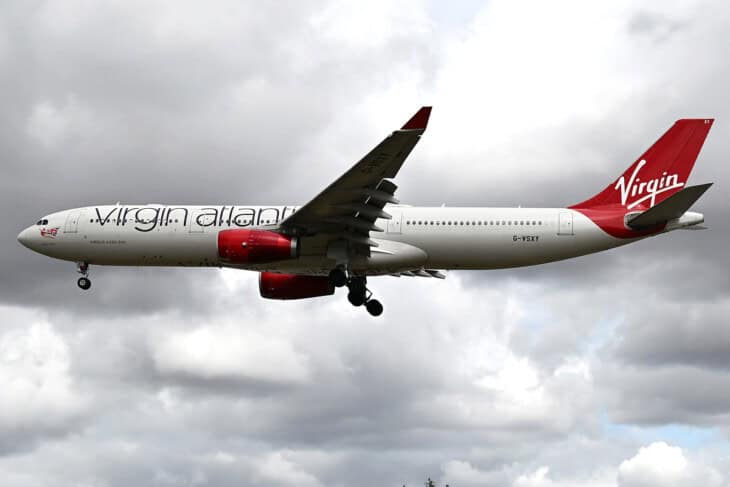
A crew has three choices. Land overweight, jettison fuel if the aircraft is fitted for it, or fly in circles until the tanks come down. Fuel jettison is an option on the A330 rather than standard equipment, so the hold is the routine answer.
An overweight landing is permitted and is trained for, but it is reserved for problems that will not wait. It commits the aircraft to a structural inspection afterwards and takes it out of service, which is a poor trade for a fault the crew has already stabilized.
So the 45 minutes over Merseyside were not a crew struggling with a crippled jet. They were a crew with a working aircraft and a decision already made, waiting for the fuel gauges to catch up.
What has not been established
The cause is still open. AIRLIVE reported an engine problem, while other outlets attached a cabin pressurization fault to the same flight. Virgin Atlantic has confirmed neither, and no investigating authority has opened a public file.
The airline’s own words were narrow: a minor technical issue, now resolved, followed by a refuel and a departure. A squawk of 7700 does not by itself grade the severity of a fault, because crews use it to buy priority and airspace, not to signal how bad things are.
Reality check
Two different causes were published for VS127 within hours of the landing. Neither is confirmed. Until Virgin Atlantic or the UK Air Accidents Investigation Branch says otherwise, the only established facts are the emergency code, the hold, the return and the airline’s description of a minor technical issue.
It was the second emergency return at Manchester in three days. On September 16 a Pakistan International Airlines 777 squawked 7700 into Manchester so an ambulance would be waiting at the gate for a passenger taken ill in the cabin.
The two have nothing in common beyond the transponder code and the airport, which is the point. Most 7700 squawks end the way both of these did, with a normal landing on a normal runway and a delay.
Sources and references used for research and fact-checking.
Get the Newsletter
The latest aviation news and stories sent to your inbox.
About the Author

Tim is the owner and lead editor of AeroCorner since 2019, overseeing aviation content covering aircraft, airlines, airports, and the broader aviation industry. Through years of researching, writing, editing, and publishing aviation-focused content, he has developed extensive practical knowledge of commercial aviation and air travel. Based in Asia and a frequent traveler himself, Tim also brings firsthand passenger experience to AeroCorner’s coverage. Outside of publishing, he has also explored aviation firsthand through hands-on flight training in New Zealand.