

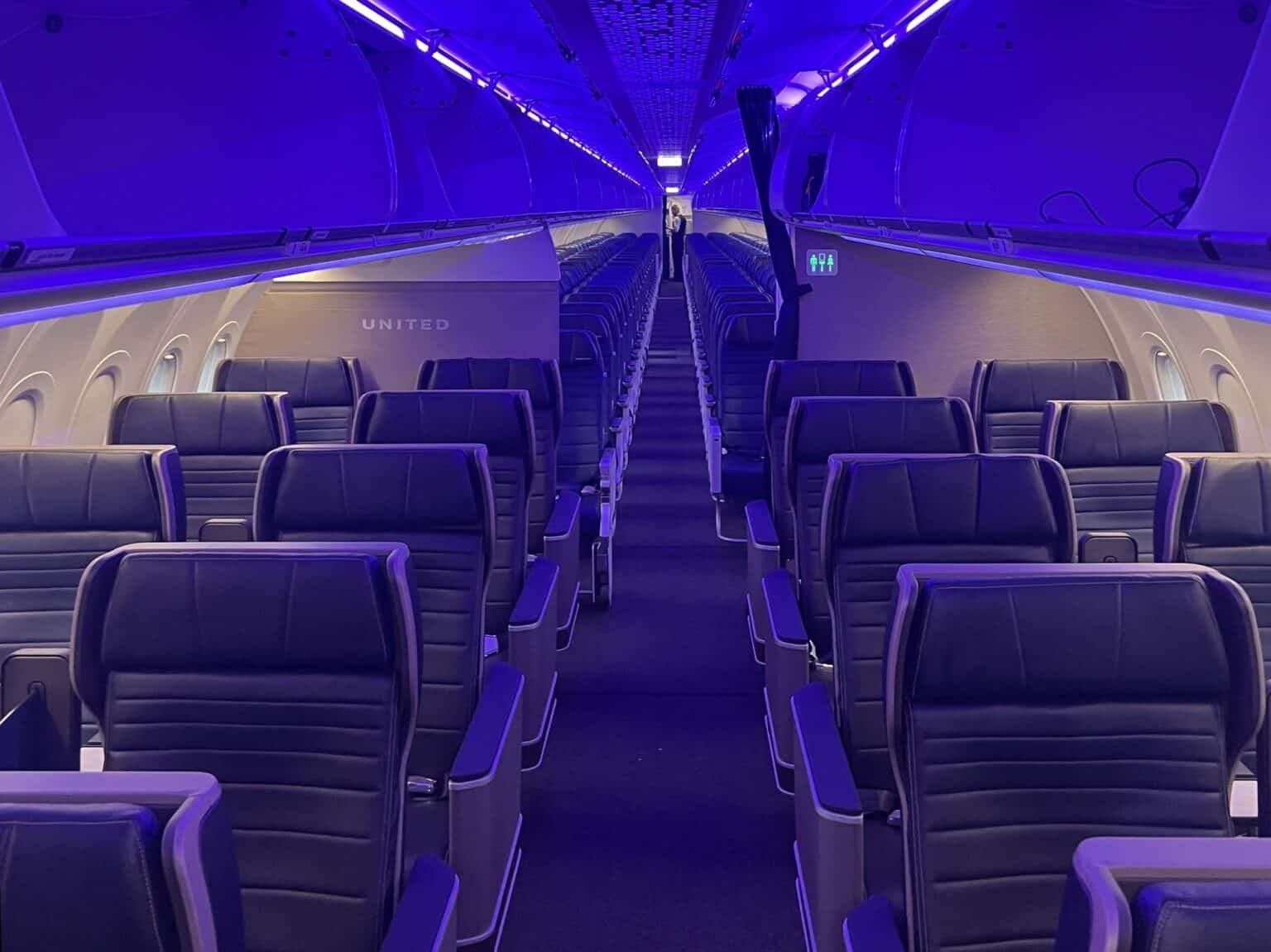
United Airlines is splitting United First and United Business into three fare tiers, and the cheapest, called base, gives up free seat selection, the second checked bag and the right to change the ticket. The tiers appear on United’s website, and USA Today reported the change on September 30, 2026.
United First is the airline’s domestic first class cabin. United Business, in this case, is the premium cabin on international flights between the US and Canada, the Caribbean and Latin America.
What each tier includes
The seat and the service on board are the same in all three tiers. “No matter which tier you select, your fare will include the same elevated onboard experience offered in that cabin,” United says on its website.
| Tier | Checked bags | Seat selection | Changes | Refunds |
|---|---|---|---|---|
| Base | 1 | For a fee | No | No |
| Standard | 2 | Included | Yes | No |
| Flexible | 2 | Included | Yes | Yes |
On the United Business routes, all three tiers keep United Club lounge access, according to USA Today. The breakdown of bags, seats, changes and refunds matches what AirlineGeeks reported from United’s site.
Status does not buy the restrictions away. United told Upgraded Points that the base rules apply to MileagePlus elite members too, except for the reduced bag allowance.
United describes the rollout only as coming this fall on eligible routes. The reports so far do not include a route list, or how much less a base ticket will cost than a standard one.
The front cabin gets the basic economy treatment
This is United’s second step. In April, it split Polaris business class and Premium Plus premium economy into the same base, standard and flexible tiers on long-haul international, transcontinental and select Hawaii flights, according to its April 3 announcement.
On some of those flights, base Polaris passengers get the United Club instead of the Polaris lounge. Chief commercial officer Andrew Nocella said then that the tiers would give customers more choice and make it easier to find a fare with the benefits they want.
Delta did the same to its domestic front cabin earlier. Delta First Basic started flying on July 8, 2026, in select domestic and Latin American markets, with seats assigned only after check-in and no complimentary or paid upgrades.
The two designs are not identical. A Delta First Basic ticket can still be changed or canceled for a fee, in exchange for an eCredit, while United’s base ticket cannot be changed at all.
United also lets base passengers pay to pick a seat, where Delta makes Basic passengers wait for an assignment at check-in. Two people booking base fares together can pay to sit side by side on United, while in Delta’s first class cabin the seats are left to the airline.
What it means when you book
The tiers separate the first class seat from the extras around it. Base is the lowest-priced tier, built for travelers who want the seat and can do without the bag, the seat choice and the flexibility.
For a traveler with fixed dates and one bag, base may be the cheapest way into a United First seat. Anyone who might change plans, checks two bags or wants a particular seat should compare against standard, not base, before deciding the upgrade is worth it.
With Delta already selling a stripped-down front cabin fare and United about to, the Big Three comparison now turns on fine print as much as on seats and meals.
Sources and references used for research and fact-checking.
Get the Newsletter
The latest aviation news and stories sent to your inbox.
About the Author
Tim is the owner and lead editor of AeroCorner since 2019, overseeing aviation content covering aircraft, airlines, airports, and the broader aviation industry. Through years of researching, writing, editing, and publishing aviation-focused content, he has developed extensive practical knowledge of commercial aviation and air travel. Based in Asia and a frequent traveler himself, Tim also brings firsthand passenger experience to AeroCorner’s coverage. Outside of publishing, he has also explored aviation firsthand through hands-on flight training in New Zealand.