

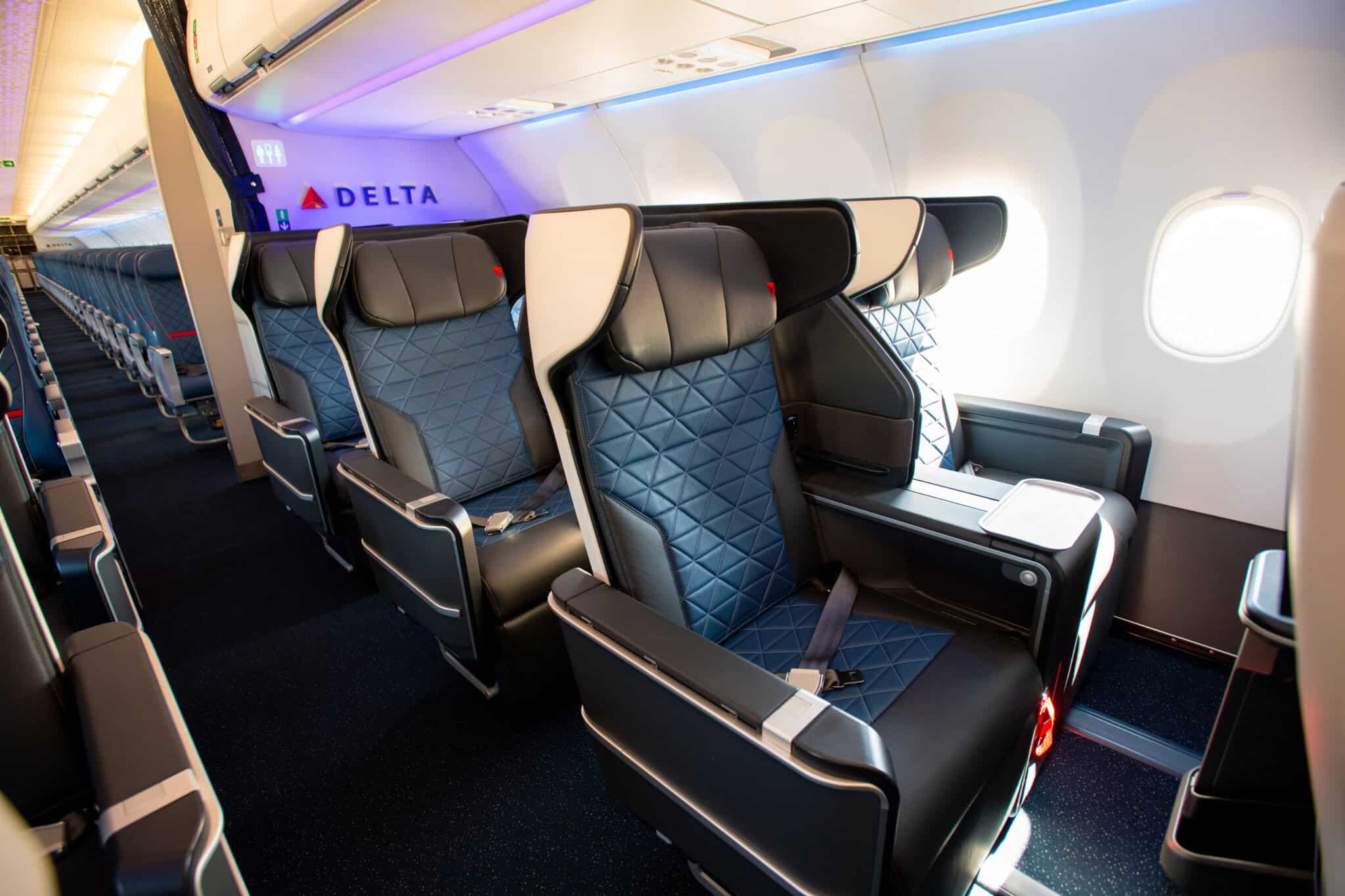
On August 15, 2026, Delta Air Lines’ chief commercial officer said a first class cabin the airline built only as a stopgap is selling well enough that Delta is now reconsidering how big domestic first class should be fleet-wide.
Delta’s chief commercial officer Joe Esposito, in comments reported by Live and Let’s Fly, said seven Airbus A321neos flying with an unusually large 44-seat first class cabin, more than double the usual count, are running a paid load factor of about 80 percent.
Why These Jets Ended Up With 44 First Class Seats
The oversized cabin was never the plan. These seven Airbus A321neos were ordered with a new lie-flat business suite for the same floor space, but Delta could not get the seat certified in time for summer 2026 delivery.
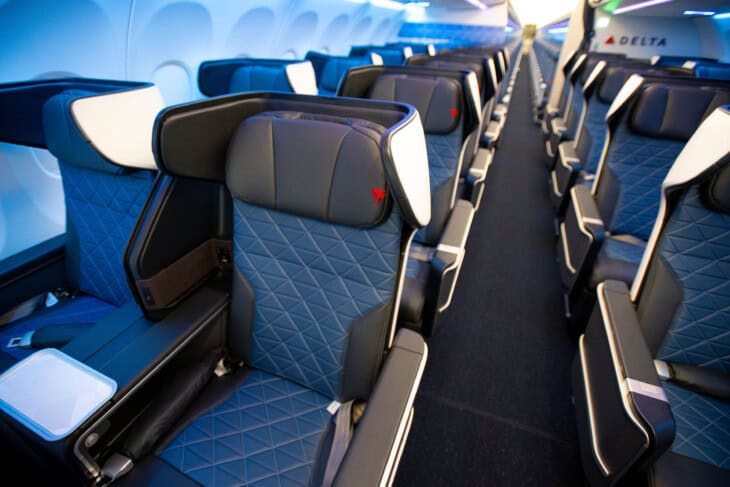
Rather than park the jets, Delta filled the space with standard recliner-style domestic first class seats instead. “Sometimes the supply chain throws us a curve. Rather than wait, we chose to implement a creative solution,” Delta VP of customer experience design Mauricio Parise said in the airline’s February 13, 2026 announcement.
The resulting layout, 44 Delta First seats and 54 Comfort+ seats with no standard main cabin, entered service June 7 on Atlanta routes to Los Angeles, San Francisco, Seattle and San Diego.
A Fix That Worked Better Than Expected
Esposito’s comments came on the sidelines of Delta’s announcement of a new Austin-to-Paris route, and he framed the load factor as a genuine surprise. “It’s a really nice surprise that we’ve got such high demand for our premium products,” he said.
A paid load factor counts only seats sold for revenue, not seats filled by complimentary elite upgrades, so the 80 percent figure suggests real demand rather than frequent flyers claiming free space.
Esposito said Delta is now studying where the right cabin size sits between the old 20-seat standard and the 44-seat experiment. “I think somewhere between 24 and 44 is the sweet spot,” he said. “We need to see how big our cabins need to be because the demand is very strong.”
Delta’s incoming Boeing 737 MAX 10 jets were already set to carry 24 first class seats, up from the 20 originally announced when Delta ordered the type in 2022. A wider fleet-wide move toward bigger domestic first class cabins would mean fewer complimentary upgrades for elite flyers and more seats sold outright at premium fares.
Not the only airline waiting on a cabin
KLM’s first Airbus A350 entered service this month with its entire business class sealed off for the same underlying reason: a premium seat that has not cleared installation-specific certification.
Delta is not the only carrier stuck waiting on a cabin. KLM’s first Airbus A350 flew this month with its 34 business class suites off limits for the same underlying reason: an installed seat still working through certification, not the seat model itself.
Reality check
Reporting on Delta’s flatbed suites points to an in-service target of roughly 2028, more than three years behind the original schedule. The 44-seat cabin may end up being Delta’s answer for years, not a short-term fix.
That timeline means the accidental cabin could stick around well past the original delay. If demand holds at 80 percent, Delta has less incentive to rush a smaller flatbed cabin back in once the suites finally clear certification.
Sources and references used for research and fact-checking.
Get the Newsletter
The latest aviation news and stories sent to your inbox.
About the Author

Tim is the owner and lead editor of AeroCorner since 2019, overseeing aviation content covering aircraft, airlines, airports, and the broader aviation industry. Through years of researching, writing, editing, and publishing aviation-focused content, he has developed extensive practical knowledge of commercial aviation and air travel. Based in Asia and a frequent traveler himself, Tim also brings firsthand passenger experience to AeroCorner’s coverage. Outside of publishing, he has also explored aviation firsthand through hands-on flight training in New Zealand.