

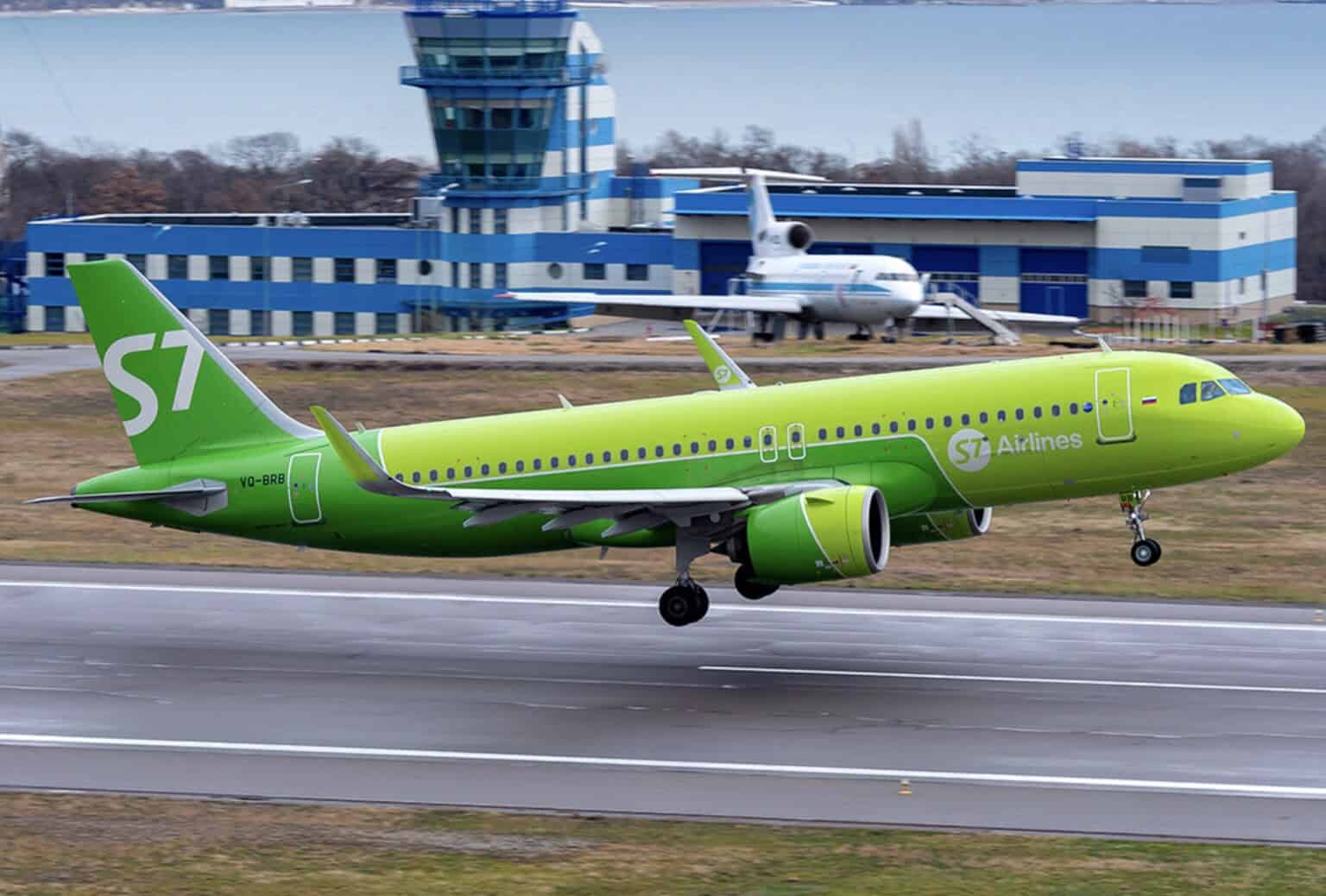
On July 5, 2026, an S7 Airlines Airbus A320 flying from Novosibirsk landed on a closed, under-construction runway at Makhachkala’s Uytash Airport instead of the active one. No one was hurt, but Russia’s civil aviation authority has since ordered airlines to restrict visual approaches at any airport where similar construction is underway.
The crew had briefed for an instrument approach to runway 14. A dispatcher then instructed them to switch to a visual approach on runway 32, and the aircraft landed there instead, unaware that 32 was closed for construction work, according to Russia’s Federal Air Transport Agency, Rosaviatsia.
Three Gaps That Let It Happen
Rosaviatsia’s investigation, reported in detail by the Russian outlet om1.ru, identified three separate failures. Published aeronautical information carried no data about the construction work on runway 32.
The closed runway had no prohibition markings or signage warning pilots away from it. And the crew received no warning that the more visually prominent runway, not the one they had briefed for, was the one under construction.
Key fact
Runway 32 at Makhachkala was under construction but carried no closure markings, and the crew’s own aeronautical charts had no record of the work. Every layer meant to stop this landing was missing at once.
The New Restriction
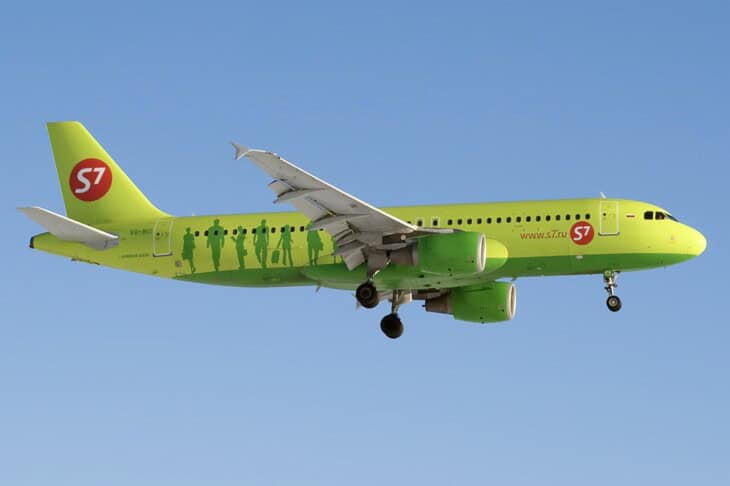
In a flight safety bulletin dated July 10, 2026, Rosaviatsia ordered airlines to update their operations manuals to restrict or prohibit visual approaches at any airport where nearby construction could be confused with an active runway, prioritizing instrument approaches instead.
Airlines must also brief crews on nearby construction work, verify that closed runways carry proper prohibition markings before use, and ensure NOTAMs are issued promptly whenever work begins. The order drew little attention outside Russia until FlightGlobal reported on it this week, giving the incident its first wide English-language audience.
Why a Visual Approach Was the Point of Failure
Airports offer visual approaches because they are faster than flying a full instrument procedure: the crew simply identifies the runway visually and lands, rather than following an electronic glideslope to a specific strip of pavement.
That speed depends entirely on the crew correctly identifying which runway is real. Standard runway markings and signage normally make a closed strip obvious even without a warning from the tower. At Makhachkala, that safeguard was the one that failed.
Reality check
This is not the same story as S7’s summer runway overruns at Mirny and Norilsk. Those involved braking performance during landing rollout. Makhachkala was a navigation and airport-marking failure that put the aircraft on the wrong runway entirely, a separate root cause investigators have not linked to the others.
Makhachkala adds to a difficult stretch for S7 Airlines in 2026, which also included a second Boeing 737 runway overrun in six weeks at Mirny and Norilsk. Rosaviatsia has not linked the incidents, but each has produced its own regulatory response this year.
For passengers, the fix is invisible. It shows up as a slightly longer approach on a rainy night at an airport with active construction, where a controller now has to route the flight onto an instrument procedure instead of clearing it to land by sight.
Get the Newsletter
The latest aviation news and stories sent to your inbox.
About the Author

Tim is the owner and lead editor of AeroCorner since 2019, overseeing aviation content covering aircraft, airlines, airports, and the broader aviation industry. Through years of researching, writing, editing, and publishing aviation-focused content, he has developed extensive practical knowledge of commercial aviation and air travel. Based in Asia and a frequent traveler himself, Tim also brings firsthand passenger experience to AeroCorner’s coverage. Outside of publishing, he has also explored aviation firsthand through hands-on flight training in New Zealand.