

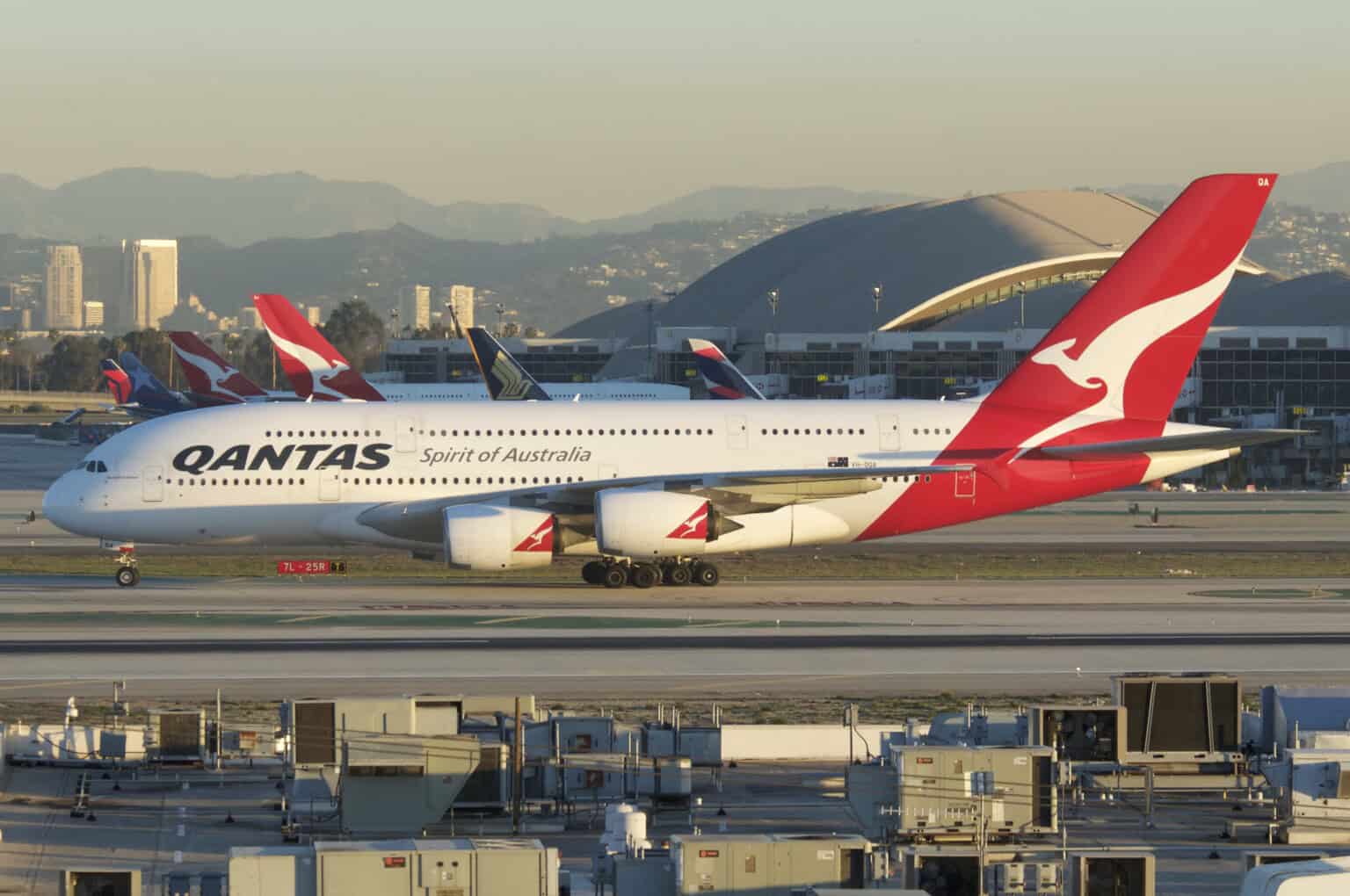
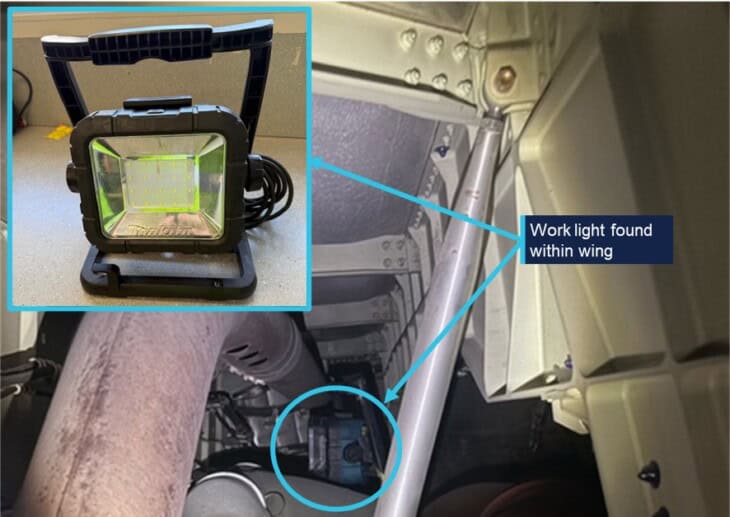
A 33-centimeter maintenance work light stayed inside the wing of a Qantas Airbus A380 through a full round trip between Sydney and Dallas-Fort Worth before anyone noticed it was missing. The Australian Transport Safety Bureau published its investigation into the incident on August 17, 2026, finding a breakdown in the tool-control checks meant to catch exactly this kind of mistake.
How a work light ended up sealed inside a wing
According to the ATSB, a mechanic working on the A380’s air conditioning system at Sydney Airport on January 7, 2026, left the light behind inside the confined wing cavity. The aircraft then departed for Dallas-Fort Worth and flew back to Sydney before ground staff realized a tool was unaccounted for and found it still in the wing.
ABC News reported that the light was not detected during the foreign object clearance check performed at the end of the maintenance job, nor when the mechanic returned tools at shift’s end. A licensed engineer certified the aircraft as fit to return to service without the missing light being flagged.
No damage found
The ATSB said the light caused no structural damage to the wing and the aircraft operated normally throughout both flights. The investigation’s concern was the process failure, not the outcome this time.
Why a missing tool is a bigger deal than it sounds
Anything left inside an aircraft that should not be there, from a dropped bolt to a full-size tool, is called foreign object debris, or FOD. Most FOD incidents involve loose hardware on a runway or ramp getting sucked into an engine. A tool sealed inside a wing structure is a different kind of risk: it can shift during flight, chafe against wiring or fuel lines, or jam a moving surface, and nobody notices until something fails.
That is why maintenance shops run layered tool-accountability checks: technicians count tools out and back in against a shadow board or checklist, a foreign object clearance inspection follows any work inside a structure, and an unreturned-tool report is supposed to stop an aircraft from being released if the count does not match. The ATSB found each of those layers failed in sequence here, and that the airline’s maintenance tracking system gave the certifying engineer no prompt that a tool was still unaccounted for.
The real finding
The ATSB was not describing a single mechanic’s mistake. It was describing a system that let a missed tool pass through three separate checks meant to catch it, without ever forcing a stop.
Qantas said it has since tightened its tool-control procedures following the ATSB’s findings. ATSB Chief Commissioner Angus Mitchell said the case was a reminder that “even well-established processes can be vulnerable when they rely solely on consistent human performance,” and that operators need controls that do not depend on nobody ever having a bad day.
Sources and references used for research and fact-checking.
Get the Newsletter
The latest aviation news and stories sent to your inbox.
About the Author

Tim is the owner and lead editor of AeroCorner since 2019, overseeing aviation content covering aircraft, airlines, airports, and the broader aviation industry. Through years of researching, writing, editing, and publishing aviation-focused content, he has developed extensive practical knowledge of commercial aviation and air travel. Based in Asia and a frequent traveler himself, Tim also brings firsthand passenger experience to AeroCorner’s coverage. Outside of publishing, he has also explored aviation firsthand through hands-on flight training in New Zealand.