

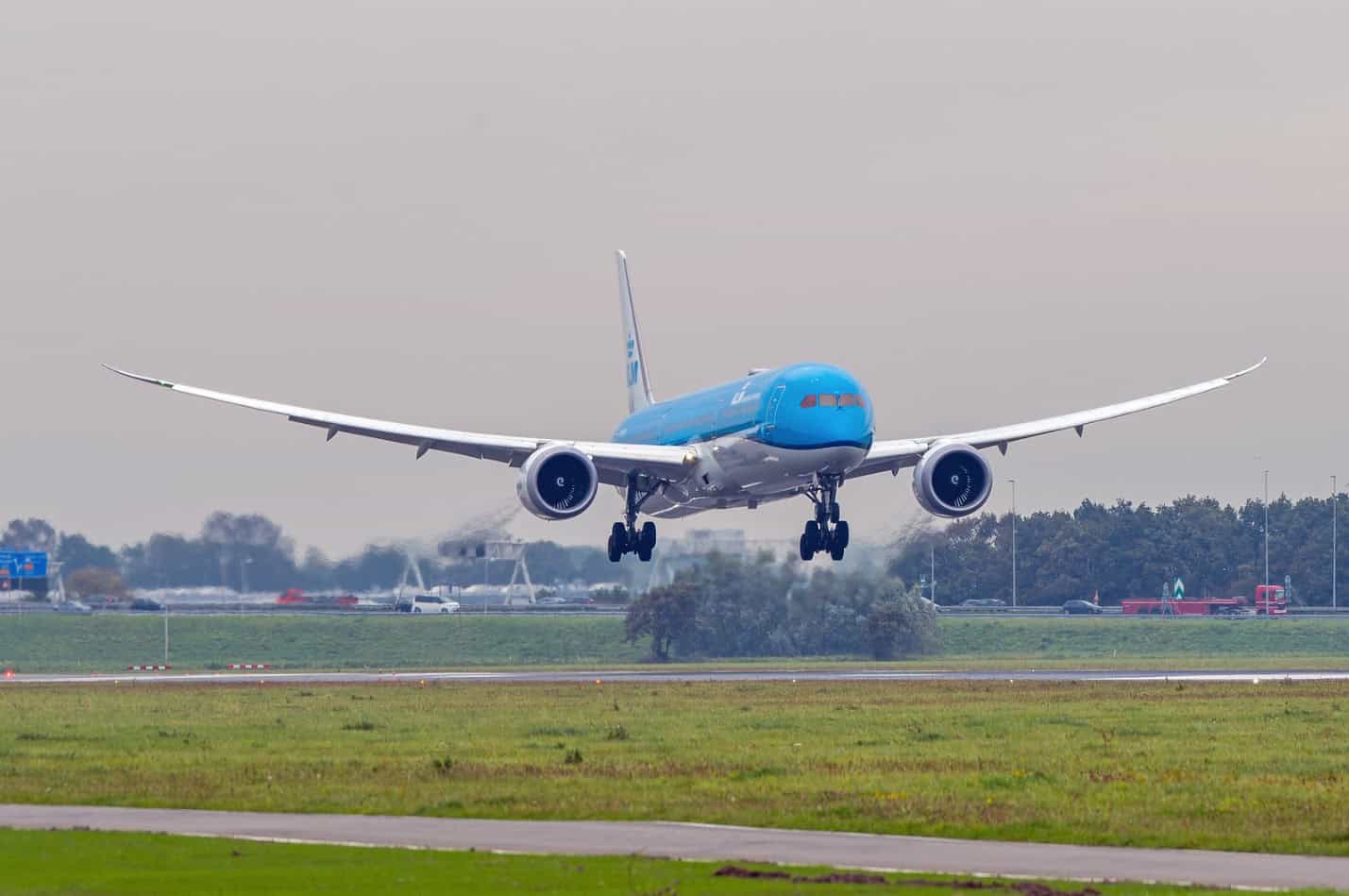
On July 27, 2026, a KLM Boeing 787-10 Dreamliner returned to a safe landing at Amsterdam Airport Schiphol after its crew reported problems with the flaps, slats, landing gear and nose-wheel steering while on approach. Flight KL706 had flown overnight from Rio de Janeiro, and everyone on board landed without injury.
The incident was first reported by The Aviation Herald, drawing on air traffic control audio and flight-tracking data. KLM has not yet issued a public statement on the cause.
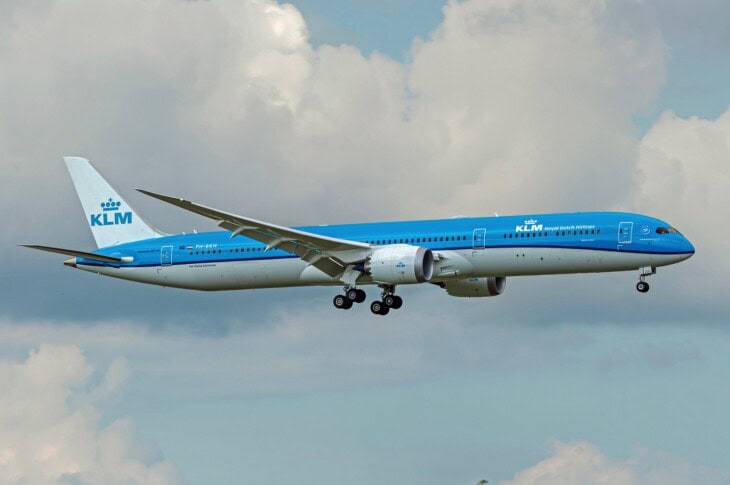
The 787-10 is the largest member of Boeing’s Dreamliner family and a workhorse on KLM’s long-haul network. KL706 is a routine overnight service from Brazil to the Netherlands, a sector of roughly 11 hours, so the aircraft reached Amsterdam near the end of a full night of flying.
What Happened on Approach
The aircraft, registered PH-BKS, was descending toward Schiphol’s runway 18R when the crew broke off the landing at about 800 feet and climbed away. They reported that the flaps, slats and landing gear were not behaving normally.
A rejected landing like this is called a go-around, and it is a standard, practiced maneuver rather than an emergency in itself. It gave the pilots room to hold clear of the ground while they worked through their checklists.
While holding, the pilots coordinated with Schiphol controllers and worked methodically through the relevant procedures. Taking that time, rather than rushing straight back for a second try, is exactly what the checklists are designed to encourage.
The crew then used the alternate gear extension procedure to get the landing gear down and locked. The 787 landed safely at Amsterdam Airport Schiphol roughly 20 minutes after the go-around.
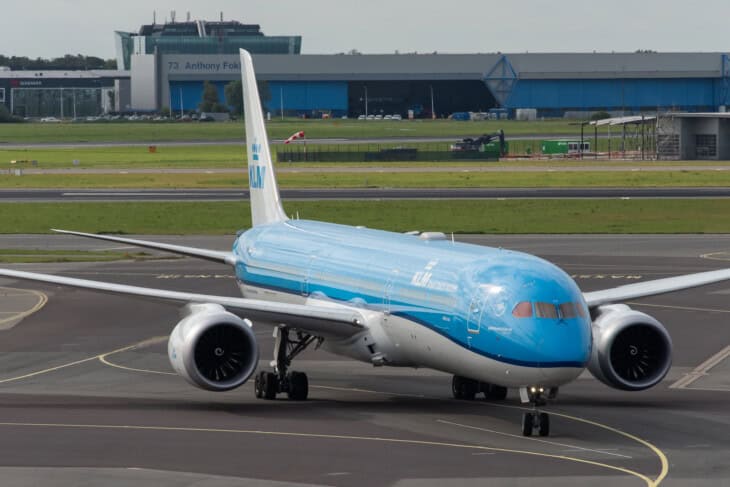
Because the nose-wheel steering was also affected, the aircraft could not maneuver on the ground under its own control and had to be towed to the gate. It remained parked at Schiphol for more than a day afterward.
Backup by design
If a 787’s landing gear will not extend normally, the crew can release it to fall and lock under its own weight using an alternate procedure. That is exactly what KLM’s pilots did before landing.
Why Several Warnings at Once Stands Out
To a passenger, flaps, slats, landing gear and steering feel like separate systems. In practice they draw on shared aircraft power and control sources, so a single underlying fault can flag several of them together.
That shared plumbing is also why airliners are built with layers of backup. The wing surfaces that let a jet slow down and land, the gear, and the steering are all supported by redundant hydraulic and electrical systems and by manual fallbacks like gravity gear extension.
Pilots also train to a principle called the stabilized approach. If an aircraft is not properly configured to land, with the right speed, flap setting and gear down and locked by a set height, the expected response is to go around and reset. That is precisely what this crew did.
The crew’s response followed that logic. Rather than force a landing with an unresolved configuration, they climbed away, gave themselves time, and used the designed-in backup to put the gear down before committing to the runway.
What made this event notable was not any one failure but the cluster of them appearing at the same moment, which points investigators toward a common source rather than four unrelated faults. The outcome, a stabilized landing with no injuries, is the system working as intended.
What we do not know yet
KLM has not published a cause, and this account rests on flight-tracking data and air traffic control audio. Treat the exact sequence of failures as preliminary until the airline or investigators confirm it.
Get the Newsletter
The latest aviation news and stories sent to your inbox.
About the Author

Tim is the owner and lead editor of AeroCorner since 2019, overseeing aviation content covering aircraft, airlines, airports, and the broader aviation industry. Through years of researching, writing, editing, and publishing aviation-focused content, he has developed extensive practical knowledge of commercial aviation and air travel. Based in Asia and a frequent traveler himself, Tim also brings firsthand passenger experience to AeroCorner’s coverage. Outside of publishing, he has also explored aviation firsthand through hands-on flight training in New Zealand.