

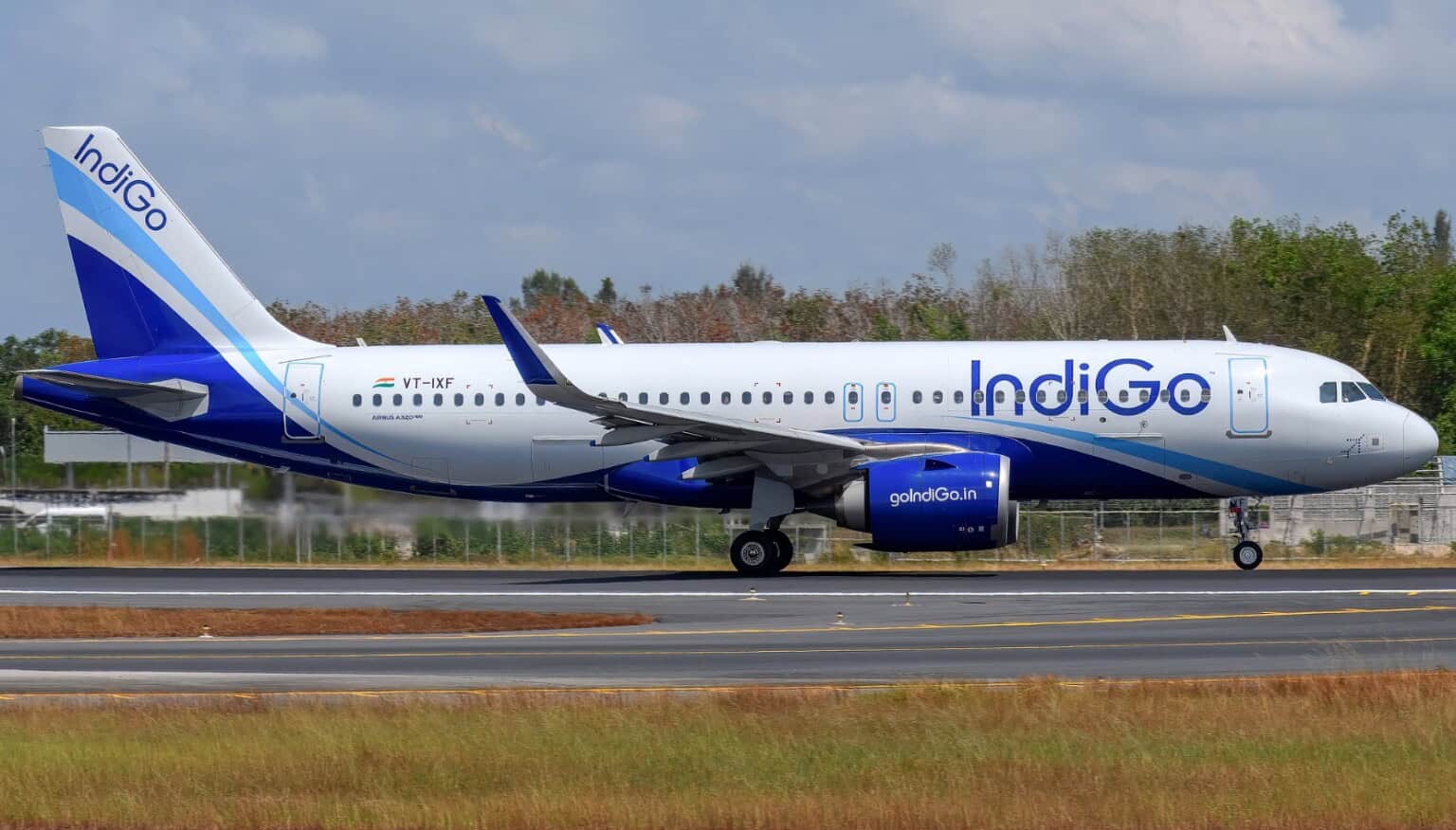
On the night of August 12, 2026, an IndiGo flight from Kolkata lost its left engine in the final minutes of its approach to Chennai, prompting the airport to declare a full emergency. All 224 passengers and crew aboard flight 6E-723 landed safely and walked away unhurt.
What happened on flight 6E-723
The Airbus A320-family jet was on a routine domestic run from Kolkata when the crew noticed the left engine had failed and was leaking oil as they lined up for Chennai’s runway 25, according to The Tribune. The crew flew a priority approach and landed at 11:37 p.m. local time, seven minutes behind schedule.
Chennai airport had declared a full emergency two minutes earlier, at 11:29 p.m., positioning fire tenders, ambulances, and rescue crews along the runway. The alert was called off by 11:47 p.m. once the aircraft was confirmed safely stopped, and airport operations returned to normal, The Week reported.
IndiGo said all relevant authorities were alerted in line with standard procedure and that the crew carried out a priority landing. The airline confirmed every passenger and crew member disembarked safely, and that the aircraft would return to service only after inspection and clearance.
India’s Directorate General of Civil Aviation has ordered a detailed investigation into the failure, Oneindia reported. The jet was towed to a remote bay after landing; neither IndiGo nor the DGCA has released the aircraft’s registration or specified the exact fault.
Why a “full emergency” doesn’t mean the plane was about to crash
A full emergency is the highest of three precautionary alert categories used at Indian airports, and it triggers automatically whenever a crew reports a technical problem on approach, regardless of how serious the underlying fault turns out to be.
It puts fire and rescue crews in position before the aircraft touches down, rather than after. Most full emergencies, including this one, end with a completely normal landing and a stand-down within minutes.
One engine is enough
Twin-engine airliners like the A320 family are certified to fly, maneuver, and land normally on a single engine. Losing one on approach adds workload for the crew, not an inability to reach the runway.
The bigger complication in a single-engine approach is usually the added workload on the flight crew, managing asymmetric thrust, running checklists, and briefing cabin crew, rather than any question of whether the jet can still fly. That is exactly what training and the type’s twin-engine certification are built around.
The incident adds to a run of high-profile technical events for IndiGo this year. The carrier, which operates one of the world’s largest Airbus narrowbody fleets and recently signed a record order for more than 1,000 replacement engines, has faced repeated scrutiny over aircraft reliability as it expands rapidly on domestic and international routes.
Get the Newsletter
The latest aviation news and stories sent to your inbox.
About the Author

Tim is the owner and lead editor of AeroCorner since 2019, overseeing aviation content covering aircraft, airlines, airports, and the broader aviation industry. Through years of researching, writing, editing, and publishing aviation-focused content, he has developed extensive practical knowledge of commercial aviation and air travel. Based in Asia and a frequent traveler himself, Tim also brings firsthand passenger experience to AeroCorner’s coverage. Outside of publishing, he has also explored aviation firsthand through hands-on flight training in New Zealand.