

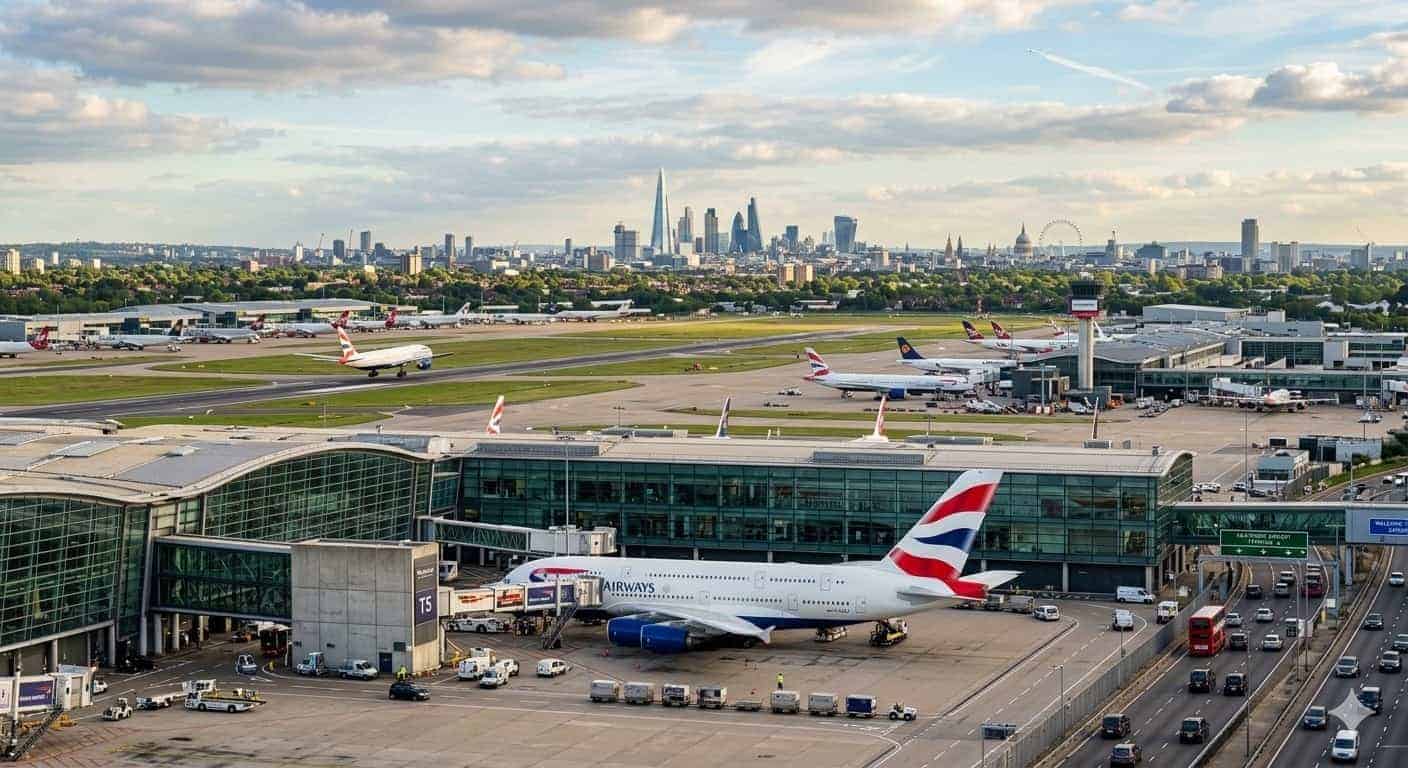
On July 29, 2026, the UK Civil Aviation Authority said it will let Heathrow Airport recover up to £320 million ($425 million) of early expansion costs through higher airport charges. The money covers planning and design work on the airport’s long-delayed third runway.
It is an unusual step. Heathrow will be allowed to bill airlines, and by extension passengers, for a runway that has not been approved, let alone built.
What the CAA decided
According to the CAA, the £320 million cap (set at 2024 prices) covers eligible planning, design, and preparatory work carried out in 2025 and 2026, including material to support a future Development Consent Order application. That is the formal permission Heathrow needs before construction can begin.
The regulator estimates the recovery will add about 15 pence per passenger to London Heathrow‘s charges from 2028, roughly doubling to an estimated 30 pence in later years. The exact figure will be set through Heathrow’s next price control, known as H8.
The CAA also cleared the Arora Group’s Heathrow West venture, which had proposed a shorter, cheaper third runway that the government rejected, to recover just over £4 million of its own costs.
Tim Johnson, the CAA’s Director of Consumers and Markets, said the decision “strikes a balance between supporting the delivery of benefits to consumers through timely progress on Heathrow expansion, whilst also protecting them from undue increases in costs.”
Why an airport can pre-charge for something unbuilt
Heathrow is one of a small number of airports whose prices are capped by a regulator. Because it holds so much market power over airlines that need to fly to London, the CAA sets the maximum it can charge per passenger, currently around £26 at the largest airlines’ hub.
Under normal rules, an airport recovers the cost of a project only once the new asset is built and carrying passengers. Letting Heathrow recover development spending years ahead of a single spade in the ground is the exception, meant to keep a stalled megaproject moving.
Those charges do not vanish. Airlines fold them into the fares they sell, so early-recovery decisions eventually show up in what travelers pay, the same way other airport fees feed into airline ticket pricing. The CAA said it attached safeguards, including independent scrutiny of the spending and the ability to reassess the framework if the project changes.
The wider expansion is enormous. Heathrow’s third-runway scheme has been estimated at roughly £49 billion, and it has drawn objections from airlines including IAG, the parent of British Airways, over who should pay and how much. A similar dynamic is playing out elsewhere, as at Melbourne, where an airline recently agreed to back a terminal and runway expansion.
Still being finalized
This decision sets the £320 million cap for 2025 and 2026 costs, but the per-passenger impact is confirmed only through Heathrow’s H8 price control. The CAA says it will consult again in October on how to treat expansion costs from 2027 until an expected planning decision in 2029, so the total bill to passengers is not yet fixed.
Sources and references used for research and fact-checking.
Get the Newsletter
The latest aviation news and stories sent to your inbox.
About the Author

Tim is the owner and lead editor of AeroCorner since 2019, overseeing aviation content covering aircraft, airlines, airports, and the broader aviation industry. Through years of researching, writing, editing, and publishing aviation-focused content, he has developed extensive practical knowledge of commercial aviation and air travel. Based in Asia and a frequent traveler himself, Tim also brings firsthand passenger experience to AeroCorner’s coverage. Outside of publishing, he has also explored aviation firsthand through hands-on flight training in New Zealand.