

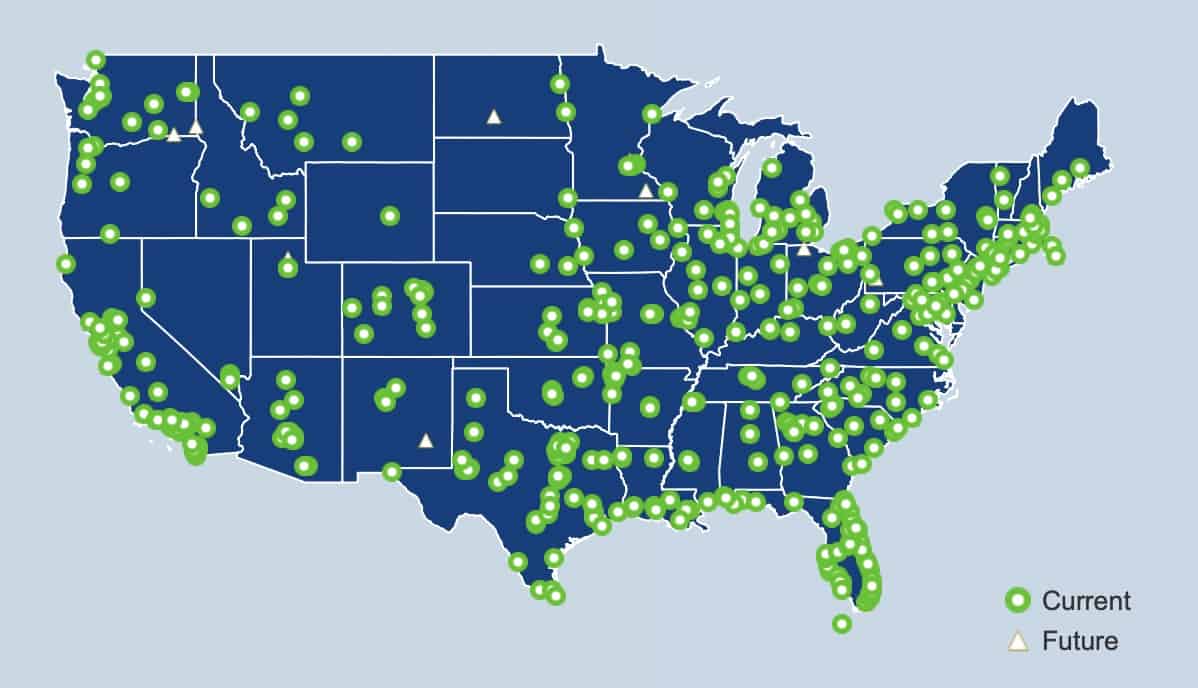
The Federal Aviation Administration said on September 2, 2026, that it had installed its 100th Surface Awareness Initiative system, a ground-surveillance tool that shows controllers where aircraft and vehicles are moving on an airport. Transportation Secretary Sean Duffy announced the milestone, which puts the program at nearly half of its 220-airport target.
The count was reported by AVweb, which said the agency has doubled its installation pace and plans to equip another 44 airports before the end of 2026. Recently added fields include Ann Arbor Municipal Airport, Billings-Logan International, Gulfport-Biloxi International, Greenville-Spartanburg International and Corpus Christi International.
How the system works
Surface Awareness Initiative, or SAI, draws on the Automatic Dependent Surveillance-Broadcast signals that aircraft and many ground vehicles already transmit. It combines them into a single real-time map of the airport surface for the tower.
The value shows up when a controller cannot simply look out the window. Heavy rain, fog, snow and darkness all degrade the visual scan that air traffic controllers rely on, and large airports have taxiway corners and ramp areas that no tower can see directly.
SAI is not a full ground radar. It does not track anything that is not broadcasting a position, so a vehicle without ADS-B or a light aircraft with its transponder off stays invisible. FAA Administrator Bryan Bedford has described it as a tool that complements a controller’s existing skills rather than replacing them.
Part of a wider runway safety effort
SAI is one of three fast-tracked programs the FAA launched after a February 2023 safety review prompted by a run of close calls on US runways. The other two are the Runway Incursion Device, a tower display that flags when a runway is occupied, now in more than 56 towers, and Approach Runway Verification, which warns controllers when an arriving aircraft lines up with the wrong runway or a taxiway, now at more than 260 facilities.
The push follows years of concern about runway incursions, the term for an aircraft, vehicle or person straying onto a runway without clearance. The FAA counted about 1,115 incursions in the year ending September 2024, its lowest total since 2011, with seven rated in the two most serious categories.
Even so, the incidents keep happening. In July 2026 a regional jet taxied onto an active runway at Reagan National with an American Airlines 737 on final approach, forcing the airliner to break off its landing.
Surface surveillance addresses one specific link in that chain. Most incursions trace back to a pilot or driver misjudging where they are on a complex taxiway layout, and clearer runway markings and signage are part of the fix. What SAI adds is a second set of eyes in the tower, so a controller can catch a wrong turn before it reaches the runway.
Reality check
The Surface Awareness Initiative is a screen in the tower, not an automatic braking system. It gives controllers earlier warning of a conflict on the ground, but the response still depends on a controller seeing the picture and a pilot acting on the instruction.
The surface programs are a small piece of the FAA’s larger effort to modernize air traffic control, which also includes new radars, a rebuilt telecommunications backbone and replacement facilities under a multiyear plan. Duffy has made the ground technology a frequent talking point because it is comparatively cheap and quick to install, and because it targets the kind of near-miss that draws public attention.
Sources and references used for research and fact-checking.
Get the Newsletter
The latest aviation news and stories sent to your inbox.
About the Author
Tim is the owner and lead editor of AeroCorner since 2019, overseeing aviation content covering aircraft, airlines, airports, and the broader aviation industry. Through years of researching, writing, editing, and publishing aviation-focused content, he has developed extensive practical knowledge of commercial aviation and air travel. Based in Asia and a frequent traveler himself, Tim also brings firsthand passenger experience to AeroCorner’s coverage. Outside of publishing, he has also explored aviation firsthand through hands-on flight training in New Zealand.