

On July 24, 2026, the Federal Aviation Administration issued a final rule requiring aircraft that fly in the United States to carry radio altimeters that can withstand interference from nearby 5G wireless signals. Scheduled airlines will have until the end of 2030 to complete the upgrade, with a second deadline about two years later for other affected aircraft.
The rule was timed to a Federal Communications Commission decision two days earlier. On July 22, the FCC adopted a Report and Order opening 160 MHz of upper C-band spectrum for a wireless auction expected by mid-2027, with new 5G service permitted starting in December 2030.
What the rule actually requires
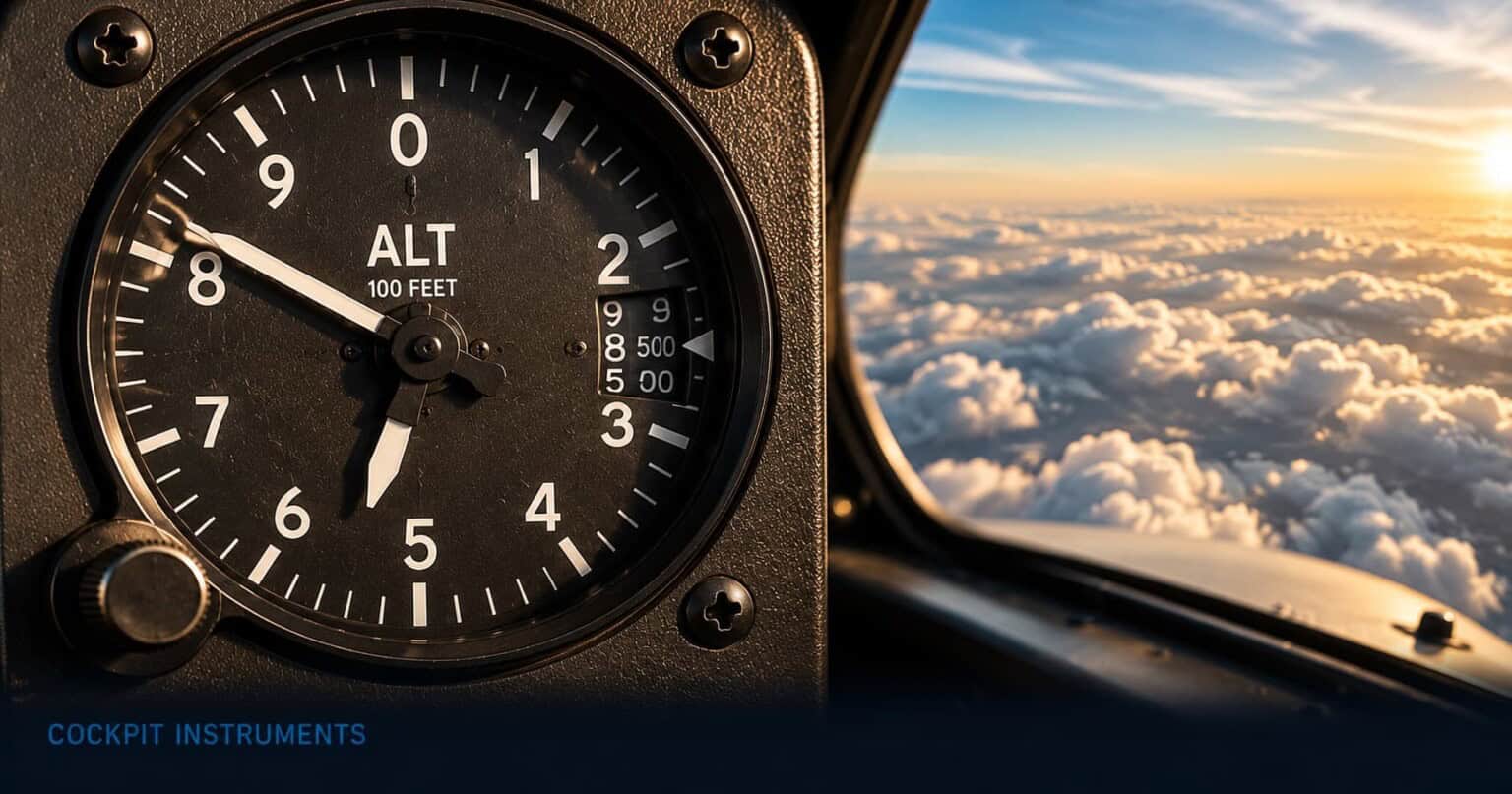
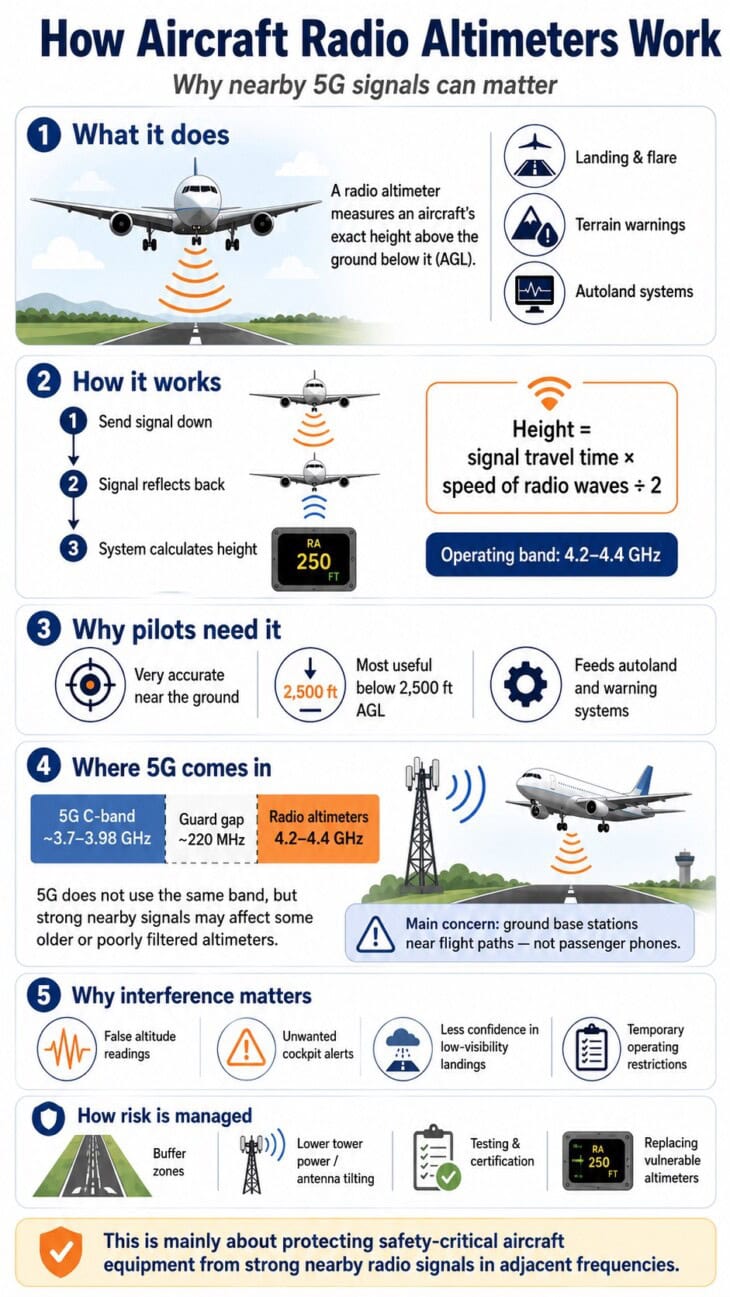
A radio altimeter measures an aircraft’s exact height above the ground by bouncing a signal off the terrain below. It is different from the pressure-based instrument most passengers picture, and it feeds critical systems used for low-visibility landings, terrain warnings, and autoland. Understanding how altimeters work explains why the FAA treats this as a safety issue rather than a spectrum dispute.
Radio altimeters operate in the 4.2 to 4.4 GHz band, close to the C-band frequencies being sold for 5G. The concern is that signals from powerful ground transmitters could bleed into the altimeter band and produce false or unreliable readings. The FAA’s answer is to require altimeters that meet stricter performance standards so they reject that interference by design.
The FAA estimates the retrofit will cost roughly $4.49 billion across the U.S. fleet. To speed compliance, the FCC is requiring a rebate program funded by auction proceeds, which the agencies say should compress a job analysts once expected to take a decade into about five years.
Why this has been coming since 2022
This rule closes a fight that began in January 2022, when wireless carriers first switched on C-band 5G near U.S. airports. Fearing altimeter interference, the FAA imposed operating restrictions and the industry scrambled, with some foreign carriers canceling flights or swapping aircraft in the days around the rollout.
The immediate crisis was managed with temporary fixes rather than a permanent solution. Wireless companies agreed to reduce transmitter power near about 50 major airports and delay activating some towers while the FAA studied which altimeters were vulnerable.
What this changes
For four years, the 5G problem was held at bay by voluntary limits on wireless carriers. The new rule flips that arrangement: the burden moves to aircraft operators to upgrade their equipment, and the temporary power limits near airports are meant to fall away once the fleet is compliant.
The FAA has spent that time laying the regulatory groundwork, and the final rule turns years of guidance into a hard deadline. It fits a broader pattern in which the agency mandates fleet-wide equipment changes through airworthiness rules, similar in mechanism to a recent directive targeting a specific fix. The difference here is scale: nearly the entire commercial fleet is affected.
The timing also lands as the FAA works to rebuild confidence in its oversight, weeks after it agreed to let Boeing resume certifying its own jets. For airlines, the practical message is simpler: budget for altimeter upgrades now, because the clock to 2030 has started.
The deadlines
Scheduled air carriers must complete radio altimeter upgrades by the end of 2030. A second compliance deadline for other affected aircraft follows roughly two years later, aligning with when 5G service expands beyond the largest U.S. markets.
Sources and references used for research and fact-checking.
Get the Newsletter
The latest aviation news and stories sent to your inbox.
About the Author

Tim is the owner and lead editor of AeroCorner since 2019, overseeing aviation content covering aircraft, airlines, airports, and the broader aviation industry. Through years of researching, writing, editing, and publishing aviation-focused content, he has developed extensive practical knowledge of commercial aviation and air travel. Based in Asia and a frequent traveler himself, Tim also brings firsthand passenger experience to AeroCorner’s coverage. Outside of publishing, he has also explored aviation firsthand through hands-on flight training in New Zealand.