

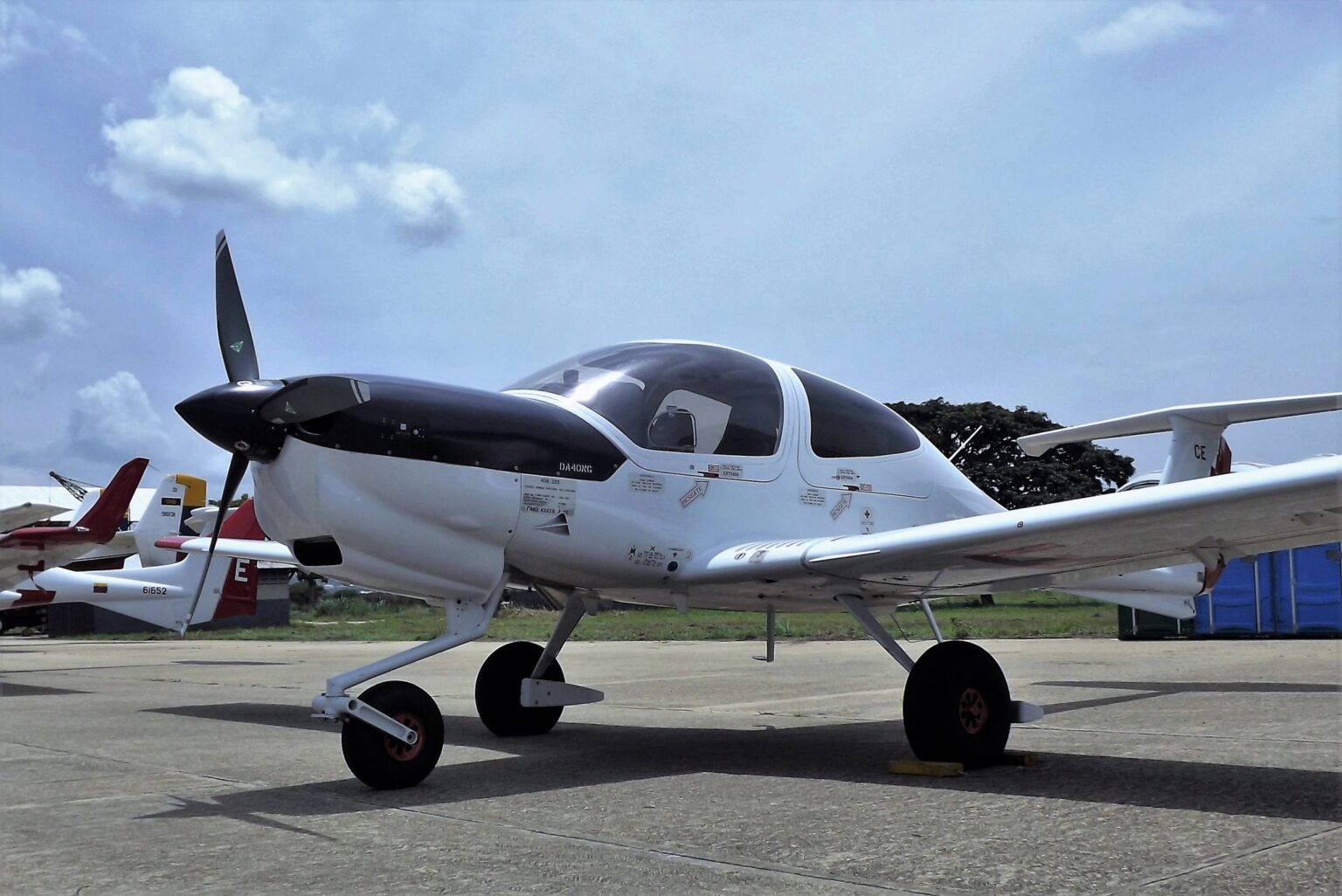
The Federal Aviation Administration has ordered door inspections and flight manual changes for Diamond DA40 airplanes on the US register, citing several reports of passenger doors separating during flight. Airworthiness Directive 2026-22-06 is scheduled for Federal Register publication on Nov. 2, 2026, and takes effect Dec. 7.
The rule covers all Model DA 40, DA 40 F and DA 40 NG airplanes, which the FAA estimates at 987 in the US. The agency says a lost door could damage the airplane’s structure, lead to loss of control and injure people on the ground.
What owners have to do
Within 100 hours time in service or 100 days after the effective date, whichever comes first, each airplane’s flight manual must take a temporary revision titled “Door Latching and Locking.” It changes the operating limitations, emergency procedures and normal procedures, and an owner or operator holding at least a private pilot certificate may insert it and log the work.
The first inspection and new placards fall under the same deadline. Transport Canada, whose directive this one follows, says the placards go in the cabin to prevent misuse of the door.
Airplanes with 100 or more total hours get the full check, which includes the safety hook and its mechanism, latching bolts, front and rear door guide blocks, carbon hinges, gas spring, door frame and the canopy and passenger door warning light. It also requires measuring the force needed to work the door handle.
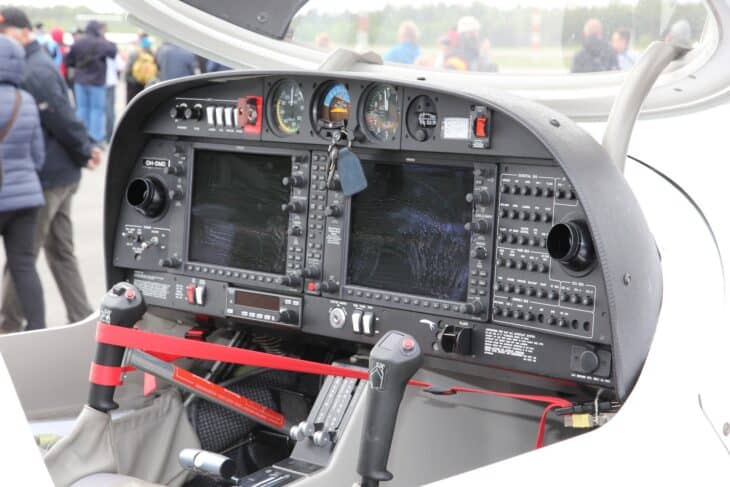

Airplanes under 100 total hours get a shorter inspection of the safety hook, latching bolts and door guide blocks. On any airplane, findings defined in the work instruction must be corrected before further flight.
The gas spring has its own decision path, built on two force readings in Diamond’s work instruction. If step 20(f) reads below about 4 pounds (1.8 kg) and step 20(c) reads between about 4.4 and 13 pounds (2 to 6 kg), the spring must be replaced within 12 months of the effective date, with step 20(c) repeated every 100 hours until then.
If step 20(f) is low and step 20(c) falls outside that range, the spring must be replaced before further flight.
The FAA prices the manual revision at $85 and the first inspection at $331 per airplane, about $410,600 across the US fleet. Replacements add more, from $100 for door sealant to $824 for a hook assembly, and the manufacturer says warranty may cover some of the costs.
The documents to look for
AD 2026-22-06, Docket No. FAA-2026-4633. Service material: Diamond Mandatory Service Bulletin MSB 40-103 / MSB F4-042 / MSB D4-114 / MSB 40NG-084, Revision 2. Flight manual: TR-MAM-40-1203 for the DA 40 and DA 40 F, TR-MAM-40-1203/a for the DA 40 NG. Work done before the effective date under Revision 0 or 1 of the bulletin earns credit.
Why newer airplanes are not exempt
The FAA proposed the rule in May and received comments from four people. Three asked it to exclude newer serial numbers, arguing that the problem belongs to early door locks and that a secondary safety latch on later airplanes eliminates it.
The agency refused. Citing Diamond, it says both door handle configurations have a red safety hook, but the hook was not designed to hold the door closed during takeoff, and the DA 40 NG, the latest model, has had several separations of its own.
For anyone flying a late-model airplane, a newer handle does not change the job. The FAA is treating the hook as something that cannot be counted on to keep an unlatched door shut on takeoff.
The cause is only partly known
The rule stems from a Transport Canada directive, CF-2025-30, effective in Canada since July 7, 2025. Diamond Aircraft attributed certain events to doors that were not properly latched, followed by attempts to latch them in flight, but could not find a definitive root cause for the rest.
For that reason the FAA calls the directive an interim action and says further rulemaking may follow, depending on the manufacturer’s investigation. The Canadian rule also covers the DA 40 D, which the US rule leaves out because that model has no FAA type certificate.
The new rule gives no count of events, but an FAA concern sheet dated October 2024 did. It listed at least 20 in-flight door separations and over 30 aborted flights from door malfunctions across the DA 40 and DA 42 fleets, all after earlier directives had required an improved door retaining bracket.
That sheet also reminded owners and operators not to try closing the passenger door in flight, because the safety latch may disengage and the door could open and separate. If the door is found unlatched, it said, land as soon as practicable.
The directive does not name individual flights, but some losses have been public. NBC News reported that a DA40 with two people aboard landed at Buffalo Niagara International Airport in February 2024 after the pilot reported losing the left rear passenger door, and FOX5 Las Vegas reported a DA40 losing its door after takeoff from North Las Vegas Airport that March.
The DA 42 twin got its own door rule first. AD 2025-24-07, published in January and estimated to affect 222 US airplanes, is also labeled interim and sets a tighter first-inspection deadline of 50 hours or 50 days.
That rule also imposes repeat door inspections on a fixed schedule, while the DA40 rule’s text requires a repeat check only on the gas spring path above. It is separate from the DA42 rudder directive published in July.
Sources and references used for research and fact-checking.
- FAA / Federal Register, Airworthiness Directives; Diamond Aircraft Industries Inc. Airplanes (AD 2026-22-06), FR Doc. 2026-22310
- FAA / Federal Register, NPRM, Airworthiness Directives; Diamond Aircraft Industries Inc. Airplanes, FR Doc. 2026-09574
- Transport Canada, Airworthiness Directive CF-2025-30, Doors, Passenger Door Separation (copy hosted by CAA Thailand)
- FAA, Airworthiness Concern Sheet, DA 40, DA 42 In-flight Passenger Door Separations, Oct. 18, 2024
- FAA / Federal Register, Airworthiness Directives; Diamond Aircraft Industries GmbH Airplanes (AD 2025-24-07), FR Doc. 2026-00163
Get the Newsletter
The latest aviation news and stories sent to your inbox.
About the Author

AeroCorner News is the aviation news desk of AeroCorner.com. It covers accidents and incidents, safety rulings, airline and airport disruption, and new aircraft. It works from primary sources such as the NTSB, FAA, EASA and the manufacturers' own announcements.