

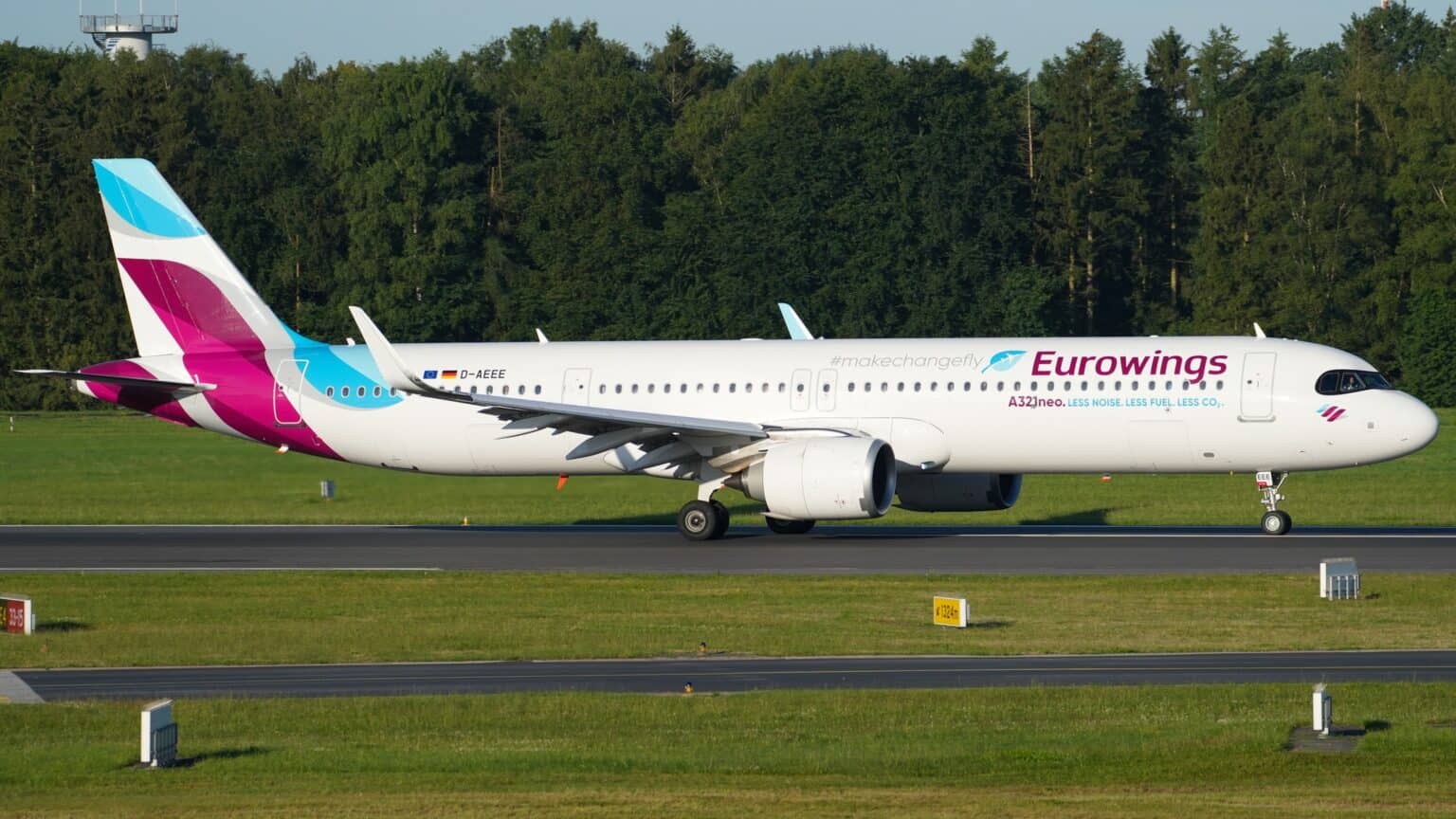
Eurowings flight EW9558 from Düsseldorf to Tenerife South returned to Düsseldorf on Sunday, November 29, 2026, after a bird strike shortly after takeoff. The crew noticed vibrations in one engine and turned back as a precaution, a Eurowings spokesperson told the German news agency dpa.
The Airbus A321neo, registered D-AEEE, carried 152 passengers. It landed safely back in Düsseldorf at about 8:20 a.m. local time and is undergoing a technical inspection, the airline said.
What happened on board
The flight took off westbound from runway 23L at about 7:30 a.m., according to the Westfälischer Anzeiger, which first reported the return and put the departure at around 7:25. Flightradar24 data logs the departure at 7:33 a.m., against a scheduled 7:20.
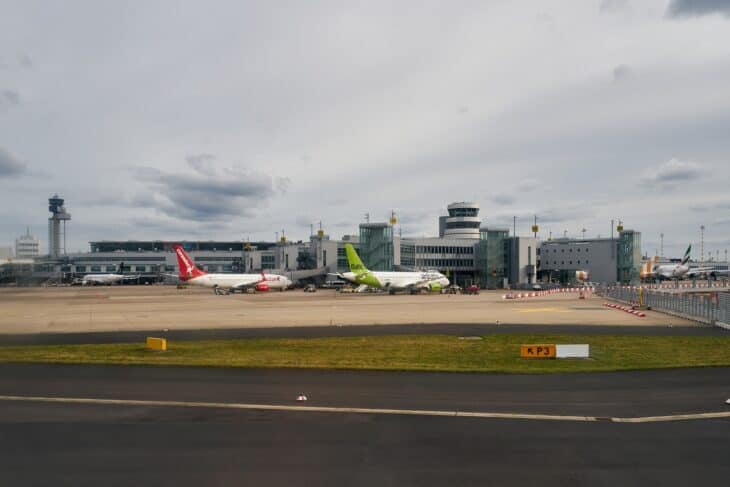

A reporter from the paper’s publisher, Ippen.Media, who was on board, said the jet climbed out over Maastricht and Liège into Belgium. About 25 minutes after takeoff it turned near Charleroi, toward Brussels, and set course back to Düsseldorf.
The captain then told passengers that the crew was seeing vibrations in one of the engines, that the aircraft had apparently hit a bird on takeoff, and that they had decided to return to Düsseldorf for safety reasons, according to the paper’s account of the announcement.
Flightradar24 shows the whole flight lasted about 45 minutes and lists it as diverted back to its origin. Neither Eurowings nor the airport has said whether the crew declared an emergency.
A replacement jet and a five-hour delay
Eurowings provided a replacement aircraft for the passengers. It was due to leave Düsseldorf at 12:20 p.m. and reach Tenerife South at 4:10 p.m. local time, the airline told dpa.
The original flight was scheduled to land at 11:10 a.m., so passengers were due in Tenerife about five hours late. D-AEEE itself had not flown again at the time of writing, according to Flightradar24.
The airline has not said which of the two engines was affected, whether the bird was found, or what the inspection has shown so far.
Why the climb-out is when birds get hit
Eurowings described the return as precautionary, and the reason the captain gave passengers was the engine vibration that followed the strike.
Strikes cluster close to the ground. In US data compiled by the FAA, about 70% of wildlife strikes happen below 500 feet (150 m), and 36% of bird strikes on fixed-wing civil aircraft occur during the takeoff run and climb.
The same FAA data puts about 54% of US bird strikes between July and October, when young birds leave the nest and fall migration is under way. A November strike, like this one or the easyJet return to Bristol earlier this month, falls outside that peak.
Engines are among the parts most often hurt. For US civil aircraft, wings and engines each accounted for 25% of damaged components from 1990 to 2023, the FAA says.
Sources and references used for research and fact-checking.
Get the Newsletter
The latest aviation news and stories sent to your inbox.
About the Author

AeroCorner News is the aviation news desk of AeroCorner.com. It covers accidents and incidents, safety rulings, airline and airport disruption, and new aircraft. It works from primary sources such as the NTSB, FAA, EASA and the manufacturers' own announcements.