

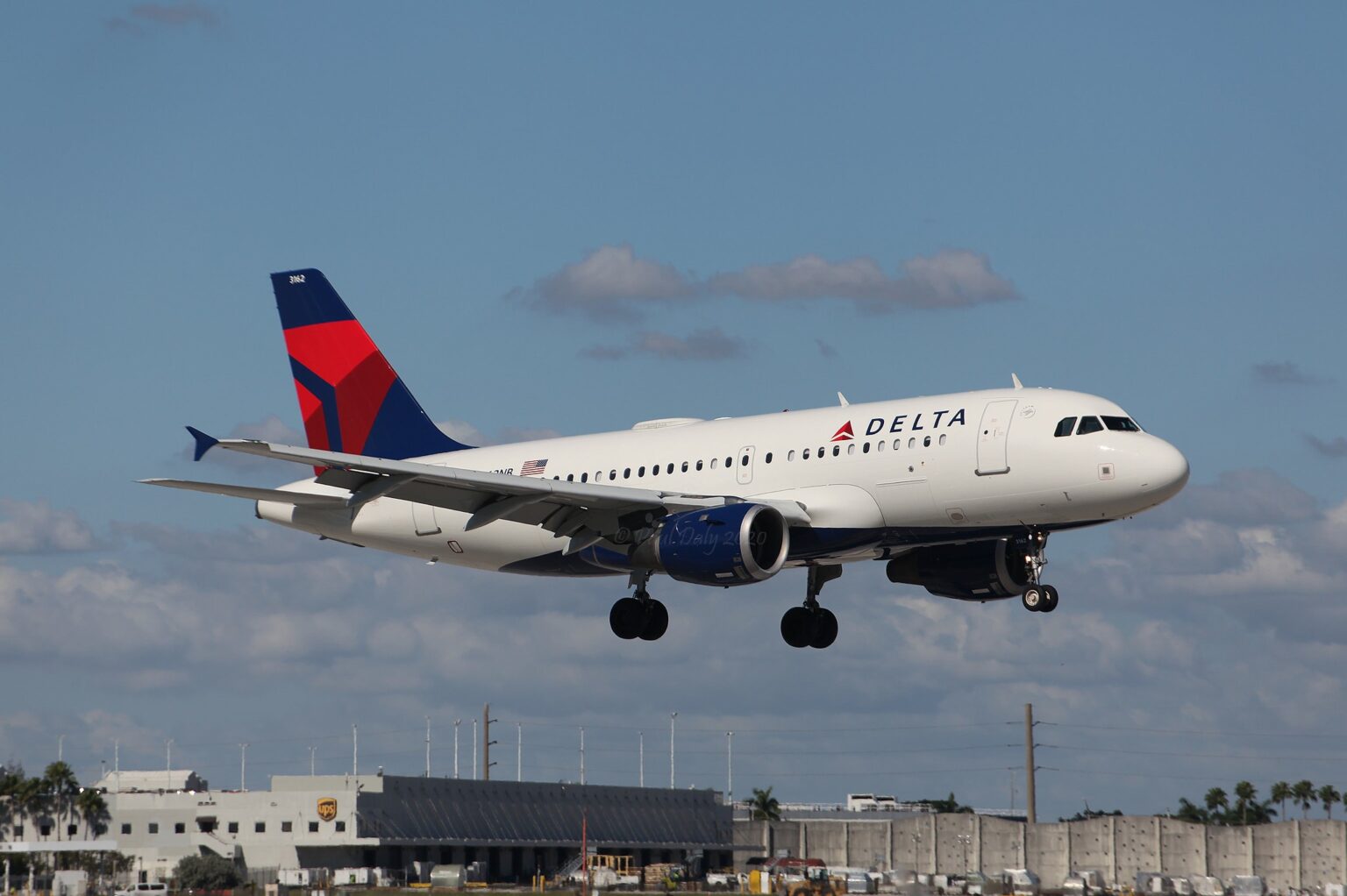
Delta flight DL1972 from Kansas City was ordered to go around on its final approach to Los Angeles International Airport on Saturday, November 28, 2026, as a magnitude 5.0 earthquake struck just off Manhattan Beach. The jet came back around and landed about 17 minutes after the quake, and LAX kept flights moving.
The earthquake hit at 9:30 a.m. local time, centered about 3 miles (5 km) southwest of Manhattan Beach, according to the US Geological Survey. By the USGS’s coordinates, that put the epicenter roughly 6.5 miles (10.5 km) from the airport.
“Go around, we’re having a big earthquake”
The shaking began moments before DL1972 touched down. A controller can be heard on a clip from the Airline Videos livestream saying “Delta 1972, go around, we’re having a big earthquake,” as Live and Let’s Fly and Fox News reported.
The aircraft was an Airbus A319, registration N362NB, according to Flightradar24 data. Airlive, which reviewed the livestream, put the approach on Runway 24R.
Flightradar24 data show the flight left Kansas City about 75 minutes behind schedule and landed at LAX at about 9:47 a.m. Simple Flying reported that it reached the gate at 10:01 a.m., 1 hour 13 minutes late.
It was not the only Delta jet sent around. Delta told MS NOW that two of its flights approaching LAX each made “precautionary go-arounds” and then landed without additional delays.
Beinsure identified the second as flight 1628. Flightradar24 data show DL1628, a Boeing 737-800 from Seattle, landing at LAX at about 9:49 a.m.
Broken glass and loose ceiling tiles, but flights kept moving
An LAX spokesperson told Live and Let’s Fly that “LAX airfield inspections have been completed with no issues observed and flight operations are normal.”
The terminals took minor hits. Los Angeles Mayor Karen Bass said “there are a few broken windows and loose ceiling tiles at LAX, but flight operations have not been impacted,” CBS Los Angeles reported.
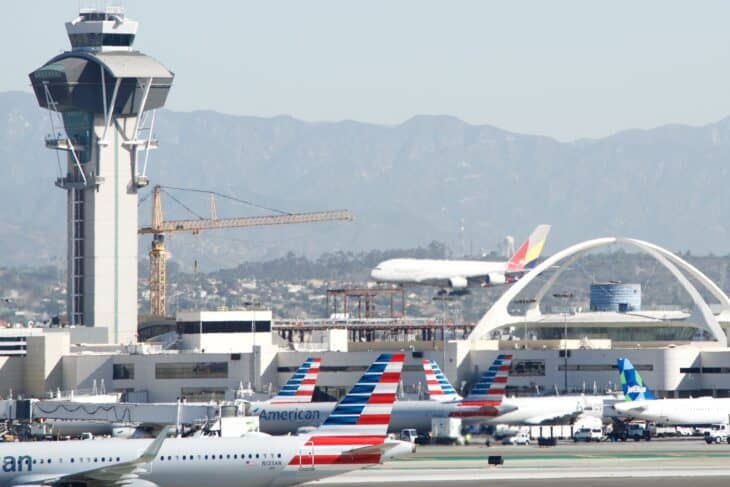
Fox News published a photo of part of a Terminal 7 walkway blocked off after windows shattered, and its correspondent saw airport staff sweeping up glass. It all happened in the middle of the post-Thanksgiving travel rush.
Across the city, the Los Angeles Fire Department sent crews from its 106 neighborhood fire stations to check infrastructure and reported no injuries or structural damage. The National Tsunami Warning Center said there was no tsunami danger.
The ground kept moving. The USGS catalog listed 14 aftershocks of magnitude 2.5 or greater by mid-afternoon, the largest a magnitude 4.5 at 11:41 a.m. close to the first.
How airports and controllers handle an earthquake
A go-around is a routine maneuver, and it is the obvious answer when the ground moves without warning. Nobody in the tower can yet know whether the runway is cracked, lifted or covered in debris, so the safe choice is to keep the airplane in the air until someone looks.
A 2026 feasibility study for California’s Office of Emergency Services, which used LAX as a case study, says controllers facing a quake with no warning are most likely to simply instruct flights to go around. Runways and taxiways are then checked under the airport’s standard post-earthquake inspections before traffic moves again.
How long that takes depends on the shaking. After the 1994 Northridge earthquake, the study notes, LAX closed for several hours for inspection, ran on backup generators through a roughly one-hour power loss, and had ceiling tiles fall, a damage type it calls frequently observed.
The worst case is the runway itself. In the 1989 Loma Prieta earthquake, liquefaction cracked 3,000 feet (914 m) of Oakland’s main runway, which reopened within a couple of hours at 7,000 feet (2,134 m) of usable length.
Control towers are the other weak point. Most airports in the study’s history lost tower windows, likely because shaking is amplified at the top of the tower.
After the 2014 South Napa earthquake, Napa County Airport had no air traffic control for four days until a temporary tower arrived. This year’s twin quakes in Venezuela also damaged the tower at Caracas’s main airport.
Saturday’s quake was far smaller than those, and the USGS assessed a low likelihood that it caused damage. At LAX, the airfield inspections found no issues.
The study also looks at whether early warning could help. The USGS said California’s ShakeAlert system was activated for Saturday’s quake, and the study suggests that seconds of warning could let controllers send aircraft around and stop ground movement before the shaking reaches them.
It also names the obstacle: the FAA restricts the software allowed on a tower supervisor’s computer, so a warning feed there would need FAA approval. It is not known whether the LAX tower received an alert on Saturday.
What is still unconfirmed
The controller’s words come from an unofficial livestream recording, not a released FAA tape. Delta has not publicly named its second flight. AeroCorner found no FAA statement on the go-arounds at the time of writing.
Sources and references used for research and fact-checking.
- US Geological Survey, M 5.0 - 5 km SW of Manhattan Beach, CA (ci41581136)
- US Geological Survey, M 4.5 - 7 km WSW of Manhattan Beach, CA (ci41581512)
- NWS National Tsunami Warning Center, Tsunami Information Statement Number 1 (WEAK53)
- California Governor's Office of Emergency Services / UC Institute of Transportation Studies, Earthquake Early Warning Airport Feasibility Study
Get the Newsletter
The latest aviation news and stories sent to your inbox.
About the Author

AeroCorner News is the aviation news desk of AeroCorner.com. It covers accidents and incidents, safety rulings, airline and airport disruption, and new aircraft. It works from primary sources such as the NTSB, FAA, EASA and the manufacturers' own announcements.