

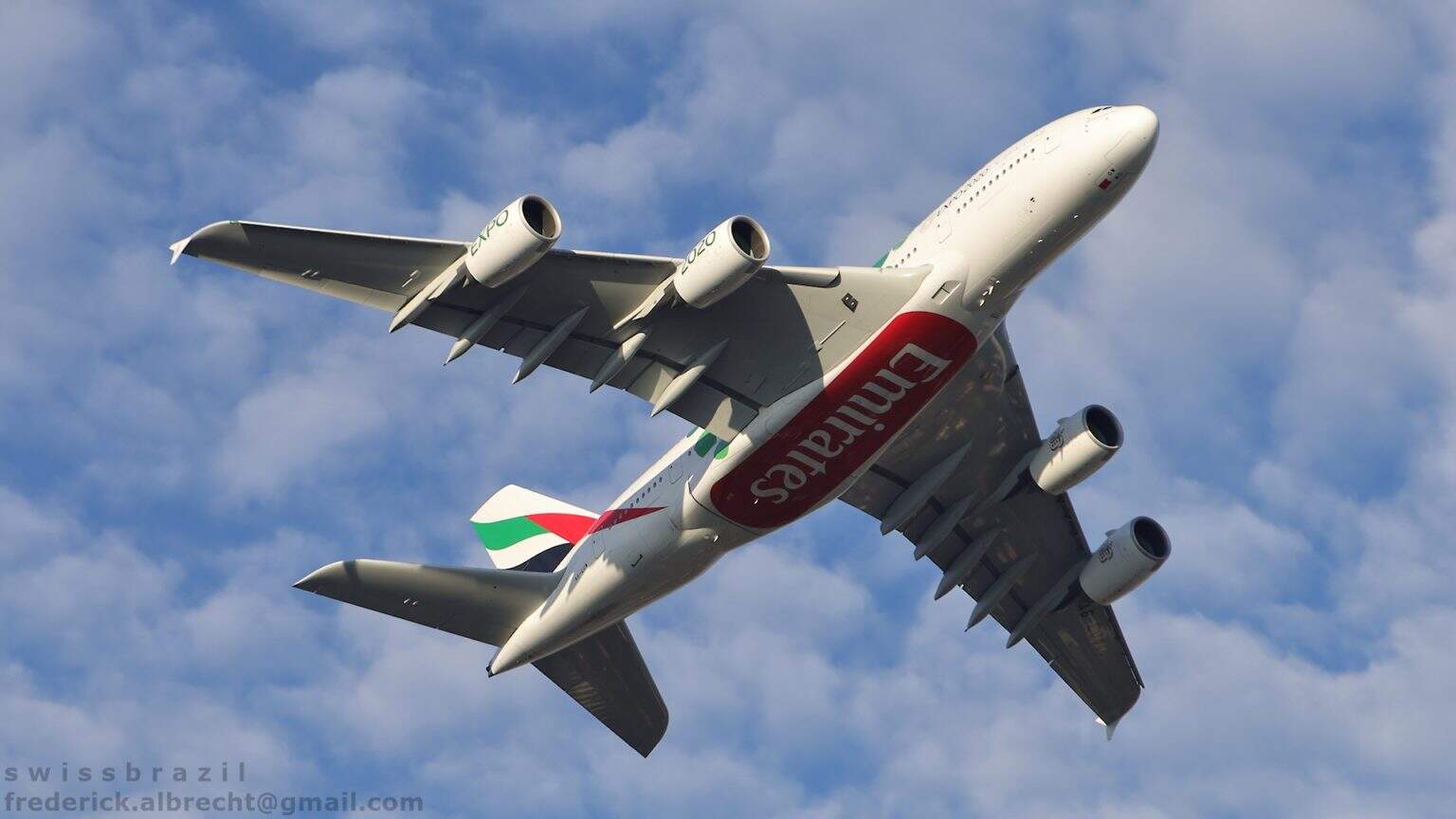
On July 22, 2026, Emirates flight EK302, an Airbus A380 flying from Dubai to Shanghai, diverted to the Chinese city of Hangzhou after thunderstorms closed in on Shanghai Pudong. The 373 passengers then remained stuck aboard the aircraft for more than 10 hours overnight before they were allowed off, according to reporting by the South China Morning Post and Shanghai Daily and to passenger accounts.
How a weather diversion became an overnight ordeal
The A380 had almost reached Shanghai when the weather forced it to hold and then turn away. It circled near Nanjing before landing at Hangzhou Xiaoshan International Airport at around 9 p.m. local time, the outlets reported.
Rather than let everyone off, the crew waited, expecting to continue the short hop to Shanghai once conditions improved. Instead the aircraft’s air conditioning failed, the cabin grew uncomfortable, and one passenger reportedly fainted. The onward flight was pushed back through the night, from around midnight to 3 a.m. to 4:30 a.m., and was finally canceled.
Passengers did not step off until about 7:30 a.m. the next morning, roughly 24 hours after leaving Dubai. Emirates apologized, saying it had provided meals, hotel rooms, and shuttle buses to Shanghai for the affected travelers.
Why you cannot just walk off a diverted international flight
Diversions themselves are routine. Storms recently forced a United jet to land at a US Air Force base after they shut down Phoenix. What turns a diversion into an ordeal is usually not the landing but what happens on the ground afterward, and an international flight makes that harder.
A diversion airport is rarely set up to receive an unplanned arrival from abroad. Passengers off an international flight have to clear immigration and customs, and Hangzhou was not their scheduled port of entry, so border staff and procedures had to be arranged in the middle of the night before anyone could be released into the terminal.
The operating crew was also running out of legal working hours. Pilots and cabin crew can only work a set duty period before they must rest, a fatigue rule meant to keep tired crews out of the cockpit. Once the original crew timed out, the flight could not simply press on, and a replacement A380-qualified crew was not standing by at an airport Emirates does not normally serve.
The size problem
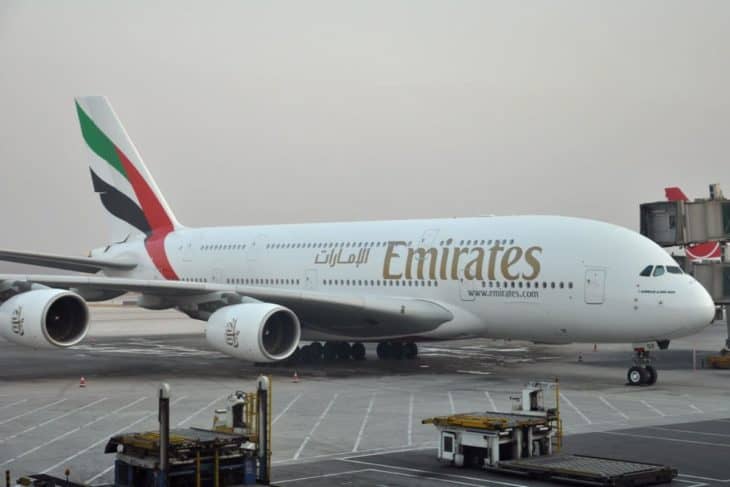
The A380 is the world’s largest passenger jet and can seat well over 500 people. A single diverted A380 can swamp a smaller airport’s ability to clear, house, and re-accommodate everyone at once, in a way a narrowbody full of 150 passengers would not.
There was also no legal clock forcing an earlier release. This is where the AeroCorner context matters: rules on holding passengers aboard a parked aircraft vary sharply by country. Understanding what happens when a flight diverts shows how much depends on local law and ground resources rather than the airline alone.
Reality check
In the United States, federal rules generally require airlines to give passengers a chance to leave the aircraft after a tarmac delay of three hours on domestic flights and four on international ones. China has no equivalent hard deadline, so nothing legally obliged an earlier deplaning in Hangzhou.
Get the Newsletter
The latest aviation news and stories sent to your inbox.
About the Author

Tim is the owner and lead editor of AeroCorner since 2019, overseeing aviation content covering aircraft, airlines, airports, and the broader aviation industry. Through years of researching, writing, editing, and publishing aviation-focused content, he has developed extensive practical knowledge of commercial aviation and air travel. Based in Asia and a frequent traveler himself, Tim also brings firsthand passenger experience to AeroCorner’s coverage. Outside of publishing, he has also explored aviation firsthand through hands-on flight training in New Zealand.