

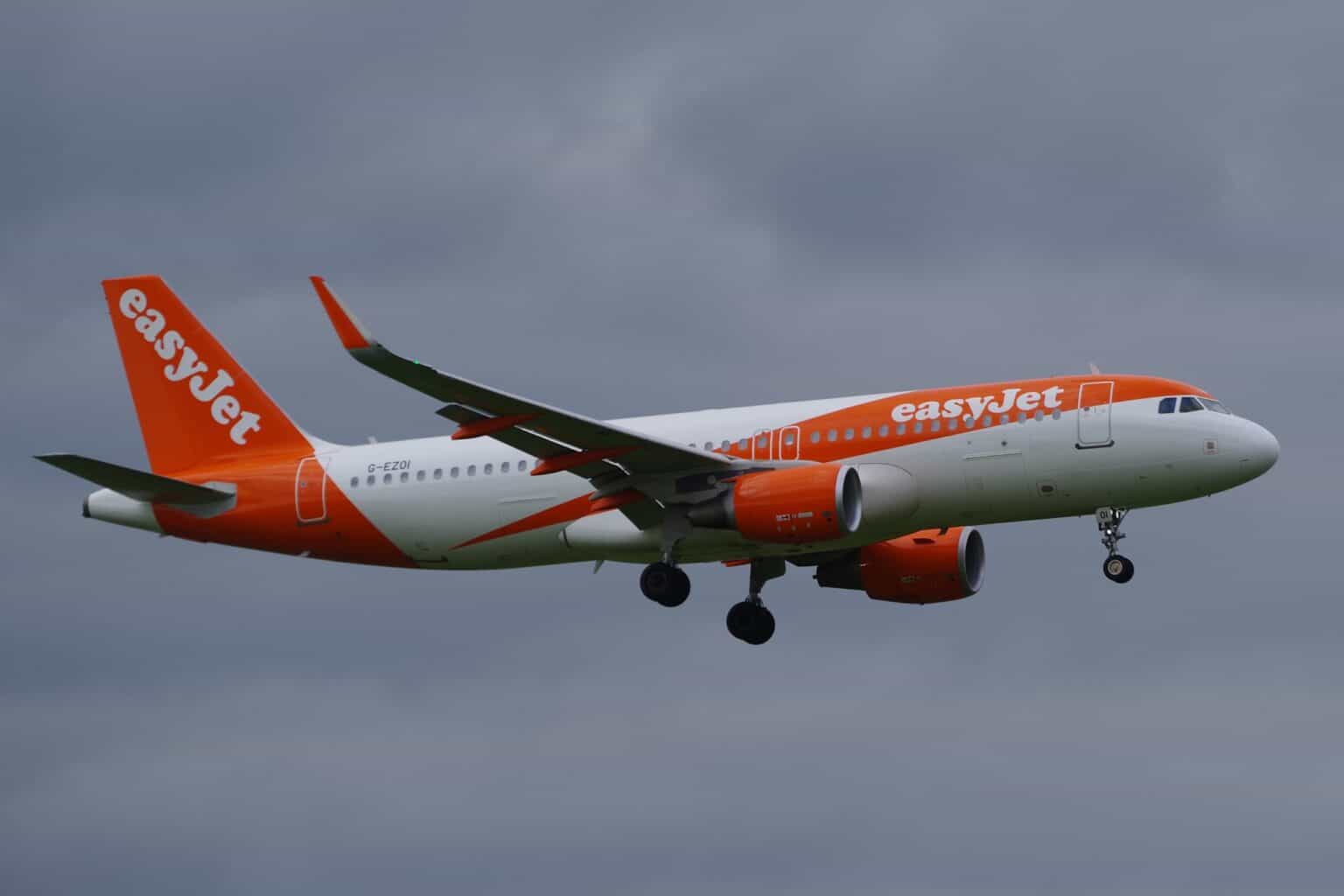
easyJet flight U22014 from Alicante to Manchester declared an emergency and diverted to London Gatwick on September 26, 2026, after a failure in one of its Airbus A320’s three hydraulic systems. The jet, registered G-EZOI, touched down safely at 12:34 p.m. local time.
easyJet attributed the diversion to a technical issue and arranged a replacement aircraft to take passengers on to Manchester, according to AIRLIVE, which reported the emergency on Saturday.
From Alicante to an unplanned stop at Gatwick
The Airbus A320 left Alicante shortly after 11 a.m. local time and climbed to 34,000 feet, routing over northern Spain and up the Atlantic coast of France, AIRLIVE reported. About 90 minutes into the flight, the crew identified a problem with the aircraft’s yellow hydraulic system.
The crew set the emergency transponder code 7700 and asked to divert to Gatwick. Air traffic control was warned that the jet might block the runway if it could not taxi clear on its own, with Luton and Stansted named as alternatives, AIRLIVE reported.
G-EZOI landed on runway 26L at Gatwick Airport at 11:34 UTC. Emergency vehicles met it on the taxiway, and after airport fire crews inspected the outside of the aircraft, it was cleared to taxi to a remote stand under its own power.
Tracking data on FlightAware lists the Alicante to Manchester leg as diverted. It shows a second leg under the same flight number leaving Gatwick at 2:56 p.m. and landing in Manchester at 3:34 p.m.
At the time of writing, easyJet had not publicly said what caused the failure, and no passenger count had been published.
What losing the yellow system takes away
The A320 has three independent hydraulic systems, named green, blue and yellow, each working at about 3,000 psi, according to the UK Air Accidents Investigation Branch (AAIB). Engine-driven pumps normally power green from the left engine and yellow from the right, while blue runs on an electric pump.
A power transfer unit can pass pressure between green and yellow, but no fluid moves between the systems, the AAIB notes. So once a system has leaked its fluid away, the other two cannot top it up.
The three systems split the work, a pattern common to how airliners use hydraulics. On the A320, the normal brakes run on green, while the alternate brakes and the parking brake run on yellow, the AAIB says.
Yellow also drives the number 2 engine’s thrust reverser and is one of two systems that move the flaps. When only yellow is lost, the normal brakes on green remain available, AIRLIVE noted.
Nose-wheel steering decides whether a jet can turn off the runway on its own. Which system powers it varies with the A320’s build standard, and in a 2012 case the NTSB investigated, a JetBlue A320 lost nose-wheel steering on the ground when its green system failed.
A day before U22014, Swiss flight LX2142 landed at Valencia after a hydraulic warning, could not steer off the runway and had to be towed clear. G-EZOI cleared the runway and later taxied to its stand under its own power.
The parking brake matters once the jet reaches its stand. In April 2006 at Heathrow, an A320 that had leaked its yellow fluid rolled about 13 feet (4 m) into the railings beneath an airbridge after its parking brake failed to hold, the AAIB found.
Setting the parking brake had also switched off the pedal brakes, so the crew could not stop it that way either. The collision dented the left engine’s inlet cowl, and no one was hurt.
Sources and references used for research and fact-checking.
Get the Newsletter
The latest aviation news and stories sent to your inbox.
About the Author

Tim is the owner and lead editor of AeroCorner since 2019, overseeing aviation content covering aircraft, airlines, airports, and the broader aviation industry. Through years of researching, writing, editing, and publishing aviation-focused content, he has developed extensive practical knowledge of commercial aviation and air travel. Based in Asia and a frequent traveler himself, Tim also brings firsthand passenger experience to AeroCorner’s coverage. Outside of publishing, he has also explored aviation firsthand through hands-on flight training in New Zealand.