

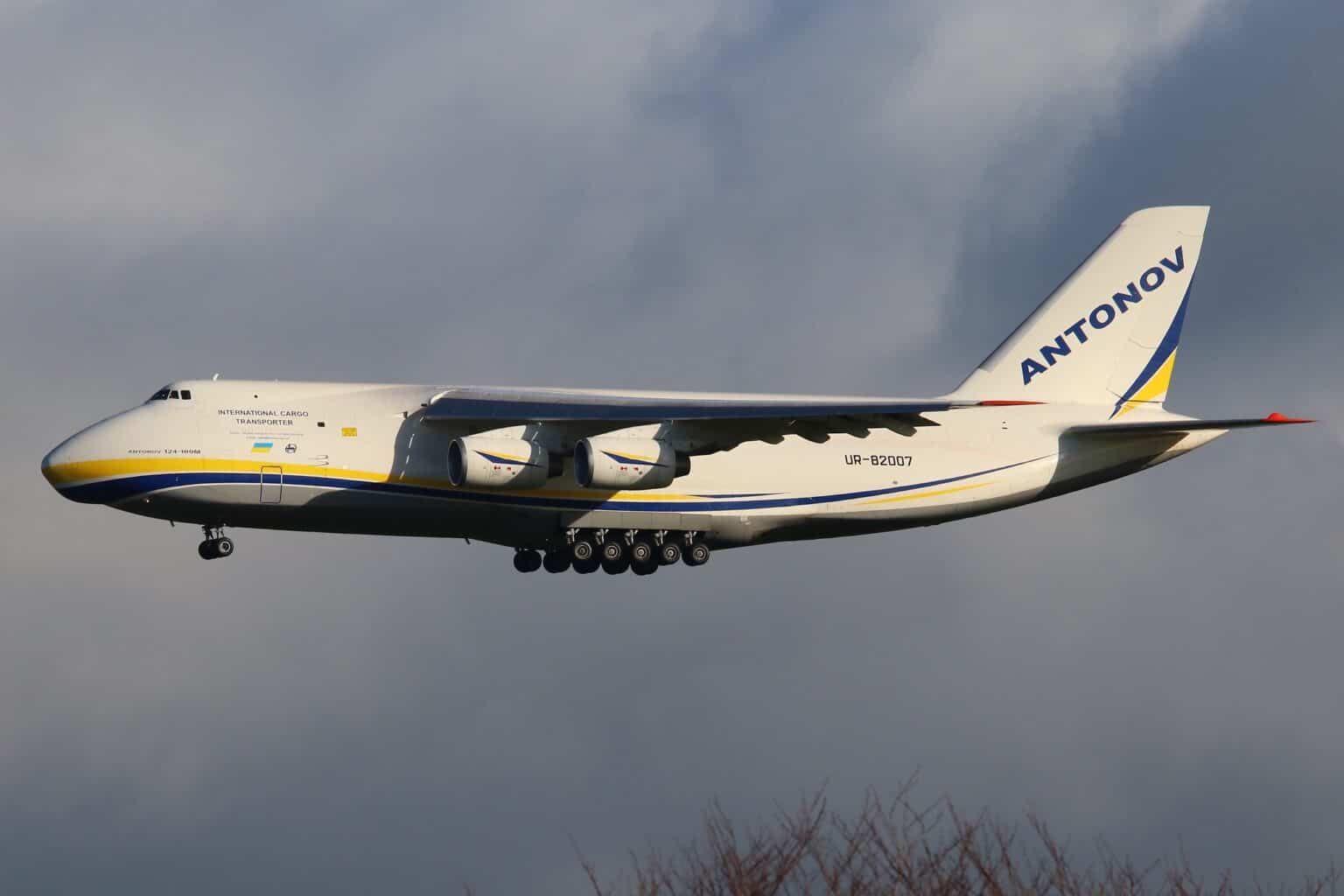
ADB357F, an Antonov An-124 cargo flight from Nagoya to Clark in the Philippines, dropped a part onto the runway as it took off from Chubu Centrair International Airport on Tuesday, November 10, 2026. The airport’s only runway was closed for about 50 minutes while the part was recovered, and some arrivals and departures were affected.
The part has not been publicly identified. Japan’s transport ministry is looking into what happened and why, according to Tokai TV, which aired video of the climb-out.
What happened at Centrair
Citing the airport, Tokai TV reported that the part came off the cargo aircraft shortly after 4 p.m. local time as it was taking off. Airport staff recovered it from the runway, checks found no abnormality, and the runway reopened shortly before 5 p.m.
Nobody was hurt by the falling part, the broadcaster said. NHK put the closure at 50 minutes and said some departures and arrivals were affected.
Neither broadcaster named the aircraft. The Aviation Herald identified it as An-124-100 UR-82007, operating ADB357F, and reported that it dropped the part while climbing out from runway 36.
Tracking data from FlightAware shows ADB357F, logged as an An-124, taking off from Centrair at 4:03 p.m. local time (07:03 UTC). It landed at Clark’s Diosdado Macapagal International Airport at 7:57 p.m. local time, 4 hours and 53 minutes later.
So the jet continued to its destination rather than turning back. The Aviation Herald reported a safe landing on Clark’s runway 02.
Why a dropped part shuts a runway
Anything left on a runway is foreign object debris, the kind of hazard that can be thrown into an engine or cut a tire on the next takeoff. So when something falls off an aircraft, the runway is normally closed until it has been cleared and inspected.
At Chubu Centrair that has a large effect, because the airport south of Nagoya has a single runway, 18/36, 11,483 feet (3,500 m) long. While it is closed, no departure or arrival can use the airport.
Whether the crew knew in flight that something had come off has not been reported. AeroCorner found no statement from Antonov on what the part was or whether the aircraft needed repair at Clark.
Not yet known
Which part fell, whether it was structural or a panel or fairing, and what caused it to separate. Japan’s transport ministry has not published findings, and AeroCorner found no comment from Antonov at the time of writing.
The second An-124 event at Centrair in three weeks
On October 22, 2026, at about 7:20 p.m., an air traffic controller at Centrair saw what looked like fire coming from an Antonov Airlines cargo aircraft that had just landed. The flames went out soon after, the ministry’s Chubu airport office told the Chunichi Shimbun.
The aircraft taxied to the apron on its own, and the runway was closed for about 15 minutes for an inspection. Flight-tracking data cited by LIGA.net identified that jet as a different An-124, UR-82029, arriving as flight ADB5561 from Fairbanks, Alaska.
Antonov told BBC News Ukrainian it would not comment until all the circumstances were established. AeroCorner found no published cause for the October event, and no source has linked the two incidents.
Antonov’s An-124 fleet since 2022
The An-124 Ruslan is a four-engine heavy freighter that first flew in December 1982. Antonov Airlines, the Ukrainian manufacturer’s cargo arm, flies the type on charter work.
Because international flights from Ukraine have not been possible since 2022, Antonov has said that five of its An-124-100s are temporarily based at Leipzig/Halle Airport in Germany. That base was itself the scene of an explosive-rigged drone found near an An-124 in August.
Centrair is a regular stop for the type. The airport’s official social media accounts have posted photos of visiting An-124s several times this year, as Trafficnews has reported.

Get the Newsletter
The latest aviation news and stories sent to your inbox.
About the Author

AeroCorner News is the aviation news desk of AeroCorner.com. It covers accidents and incidents, safety rulings, airline and airport disruption, and new aircraft. It works from primary sources such as the NTSB, FAA, EASA and the manufacturers' own announcements.