

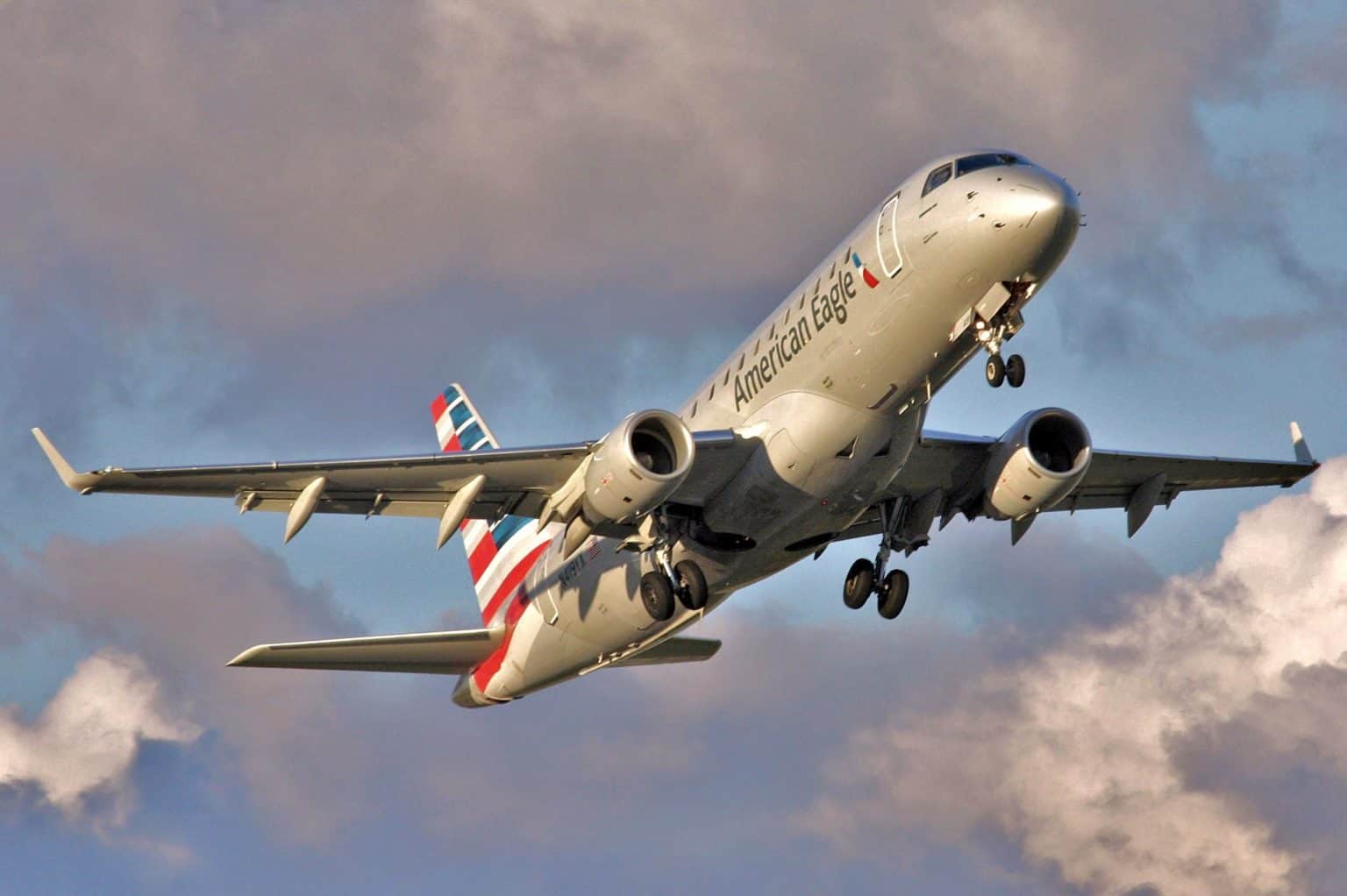
On August 6, 2026, American Airlines flew what it says is the first US commercial passenger flight partly powered by eSAF, a synthetic jet fuel made from captured carbon dioxide and renewable electricity rather than crops or used cooking oil. The flight ran from Corpus Christi International Airport to Dallas Fort Worth International Airport.
A different kind of sustainable fuel
The fuel came from Infinium’s Pathfinder plant in Corpus Christi, described by the company as the world’s first commercial-scale power-to-liquids facility, running since 2023. It combines waste CO2 with hydrogen made using renewable power to build synthetic hydrocarbons, then blends the result with conventional Jet A to meet ASTM International’s fuel specification.
That blending step matters. Most sustainable aviation fuel flying today is made from biological feedstocks such as used cooking oil, animal fat, or energy crops, and supply is capped by how much of that feedstock exists.
Infinium’s process needs only captured carbon, water, and electricity, which removes the feedstock ceiling but adds a different constraint: the cost and availability of clean power at scale.
American said the eSAF was delivered into Corpus Christi’s common fuel system and loaded onto an American Eagle Embraer 175, according to reporting by Dallas Innovates. No modifications to the aircraft, its engines, or airport fueling infrastructure were required, since the blended fuel is a drop-in replacement for standard Jet A.
Why the industry is watching e-fuels
American said the blend can cut lifecycle greenhouse gas emissions by more than 90% compared with conventional petroleum-based jet fuel. “This flight represents a significant moment for aviation,” American CEO Robert Isom said in the companies’ announcement. Infinium CEO Robert Schuetzle called it “another meaningful step forward” for the technology.
Aviation burns nearly 100 billion gallons of jet fuel a year, and SAF of any kind still makes up less than 1% of that total. American has an offtake agreement for Infinium’s next, larger plant, Project Roadrunner.
Roadrunner is financed in part by Breakthrough Energy Catalyst and Brookfield Asset Management, and is expected to start production in 2027 at more than 5 million gallons of eSAF a year, a fraction of one airline’s daily needs but a step toward proving the process can scale.
Key fact
Infinium says its eSAF needs only captured carbon dioxide, water, and renewable electricity, not crops or waste oil, which is what separates it from most sustainable aviation fuel flying today.
Airlines including Boeing, Lufthansa, and Rolls-Royce have been running parallel tests on other fuel-saving and lower-carbon technologies this year, part of a broader push to cut aviation’s carbon footprint without waiting for a single breakthrough fuel to arrive at scale.
Sources and references used for research and fact-checking.
Get the Newsletter
The latest aviation news and stories sent to your inbox.
About the Author

Tim is the owner and lead editor of AeroCorner since 2019, overseeing aviation content covering aircraft, airlines, airports, and the broader aviation industry. Through years of researching, writing, editing, and publishing aviation-focused content, he has developed extensive practical knowledge of commercial aviation and air travel. Based in Asia and a frequent traveler himself, Tim also brings firsthand passenger experience to AeroCorner’s coverage. Outside of publishing, he has also explored aviation firsthand through hands-on flight training in New Zealand.